The olive baboon occupies a broad equatorial belt across Africa, stretching from Mali, Guinea, and Sierra Leone in the west through Nigeria, Cameroon, Chad, the Central African Republic, and the northern Democratic Republic of the Congo to Ethiopia, South Sudan, Uganda, Kenya, and northern Tanzania. Isolated populations also persist around mountain massifs in the Sahara, such as the Aïr Mountains of Niger and the Tibesti Mountains of Chad.
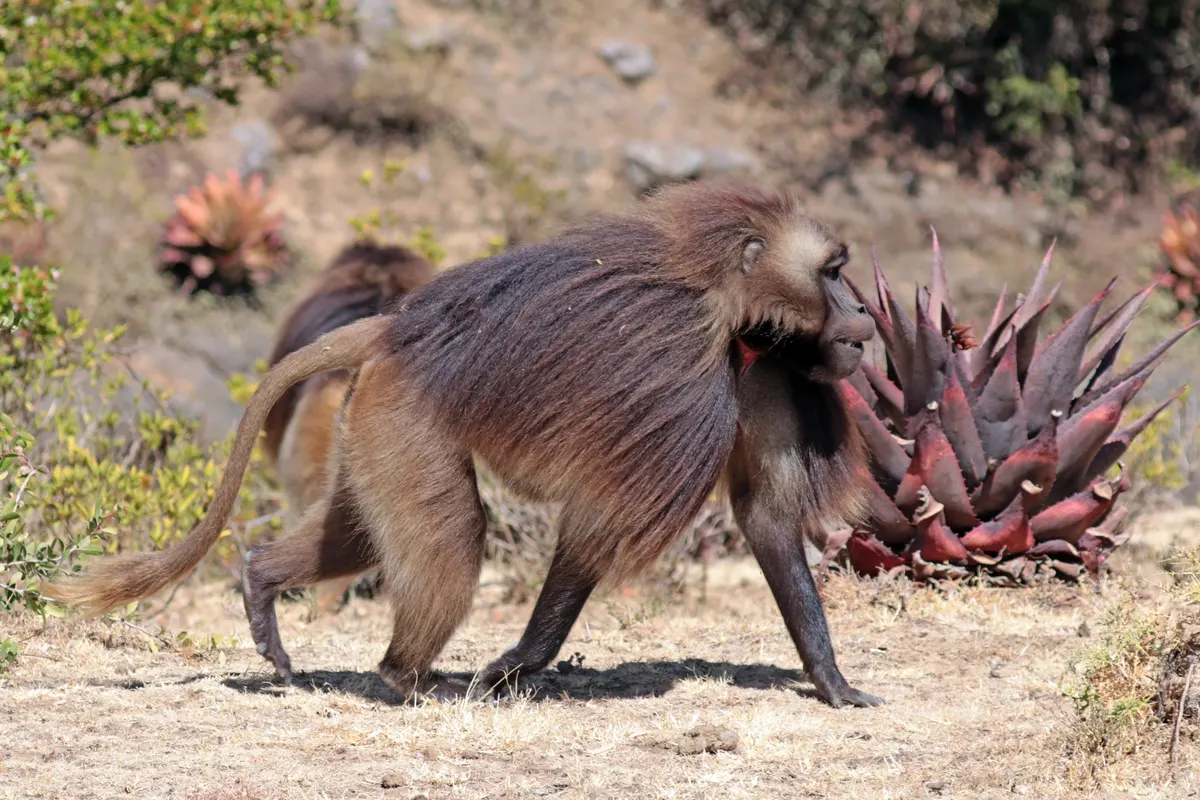
Although often grouped with other "savanna baboons" (yellow, chacma, and Guinea baboons), Papio anubis is a habitat generalist. According to Animal Diversity Web and long-term field studies in Kenya and Tanzania, troops occupy open grassy plains, Acacia and Commiphora bushland, semi-arid steppes, montane slopes up to 4,500 meters, and moist tropical rainforest edges.
Whatever the vegetation, every home range must provide two non-negotiable resources: drinking water within a day's march (unless succulent plants and morning dew bridge brief dry spells) and elevated nighttime sleeping refuges—either sheer rocky cliffs, kopjes, or emergent fever trees and figs—where the troop can climb out of reach of nocturnal ground predators.