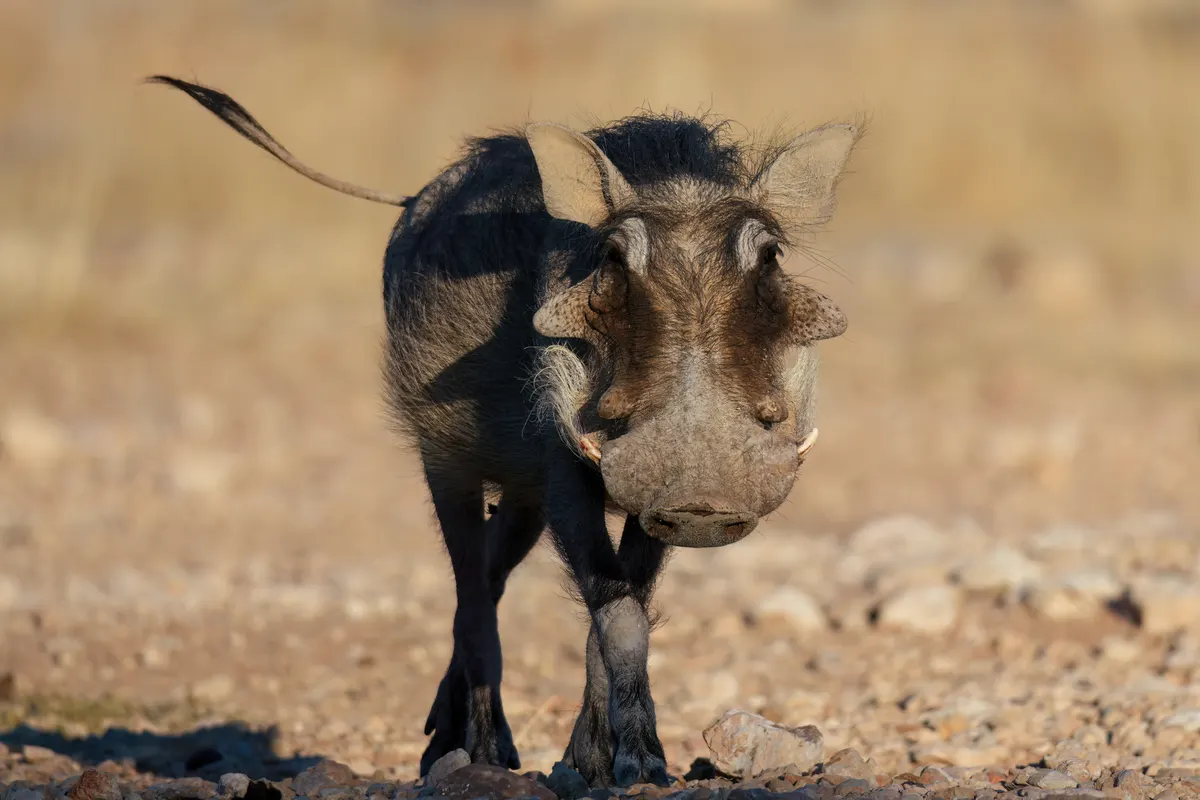
Common warthog standing in dry grassland with curved tusks
The common warthog is a wild African pig marked by facial pads and outward-curving tusks.
MammaliaLeast Concern

Common Warthog

Warthogs rarely dig their own dens; they usually take over burrows excavated by aardvarks and back in rear-first so their tusks face any intruder.

The common warthog is a wild member of the pig family found across savanna and grassland in sub-Saharan Africa. It is recognized by paired facial pads, curved tusks from both canine sets, and the habit of kneeling on padded wrists to graze.

By · Updated

Quick Facts

Common Warthog at a glance

Phacochoerus africanusArtiodactylaSuidae

About their home

Kind of animal

Mammalia

Where they live

What they eat

How safe?

Least Concern

Size and speed

How heavy

45 kg – 150 kg

How long

90 cm – 150 cm

How fast

Up to about 48 km/h

Lifespan

About 7 to 15 years

Core article

Common Warthog: ecology and life history

A closer look at habitat, diet, behavior, reproduction, and conservation.

Start here

Common Warthog

The common warthog is one of the most familiar wild pigs of Africa, seen trotting across open country with its thin tail held straight up. It is a medium-sized member of the family Suidae, built for a life spent grazing in the open and sheltering underground. Two features set it apart from other pigs: the paired thickened pads on its face, from which it takes its name, and the habit of kneeling on its front wrists to feed. Despite an unusual appearance, it is an adaptable and widespread grazer rather than a rare specialist.

Anatomy and Tusks

An adult common warthog measures roughly 0.9 to 1.5 metres in head-and-body length and stands about 63 to 85 centimetres at the shoulder. Weight varies with sex and region: females generally weigh around 45 to 75 kilograms, while larger males can reach 60 to 150 kilograms. The body is sparsely haired, grey to brown, with a mane of longer bristles running along the neck and back.

The most-discussed features are the facial "warts." These are not caused by a virus and are not true warts. They are protective pads of thickened skin and cartilage, arranged in pairs on the sides of the head. They are larger in males and are thought to cushion blows during fights over mates, when rivals push and slash with their heads.

Warthogs carry tusks derived from both the upper and lower canine teeth. The upper canines curve outward and upward and can grow to around 25 centimetres in large males. The shorter lower canines are honed to a sharp edge as they rub against the uppers, making them the more dangerous weapon in close combat. Females have smaller tusks and warts than males but carry the same basic equipment. The head is large and the snout elongated, with a hardened rooting disc used to lever roots and bulbs out of the soil.

Habitat and Distribution

Group of common warthogs on open savanna
Open country suits the warthog's grazing habits and its need to spot predators early.

The common warthog is spread widely across sub-Saharan Africa, from Senegal and other parts of West Africa eastward to Ethiopia, and south through East Africa to Namibia and South Africa. It occupies a broad elevational band, from sea level to around 3,000 metres in some highland areas.

Its preferred country is open savanna and grassland, along with lightly wooded and shrubby areas and floodplain margins. It avoids dense rainforest and true desert. The species tolerates a range of conditions provided there is grazing, access to water or wallows, and holes for shelter. In parts of its range it has adapted to farmland and the edges of settlements, which contributes to its wide distribution.

Water and shade shape daily movements. Warthogs are mainly active by day and retreat to burrows at night and during the hottest hours. Because they cannot cool themselves efficiently, access to mud and dust wallows and to shaded resting sites is an important part of suitable habitat.

Diet and Foraging

Common warthogs at the edge of a waterhole
Warthogs graze by day and visit waterholes and wallows, dropping to their knees to feed on short grass.

The common warthog is best classed as an omnivore, but the great majority of its diet is plant material, and it functions chiefly as a grazer. Short grasses form the staple, especially during the wet season when green growth is abundant. In drier months it relies more on roots, rhizomes, bulbs, and tubers, which it digs up with its snout and tusks.

Other foods include bark, fruit, berries, and fungi. Warthogs occasionally eat invertebrates, eggs, and carrion, and they have been recorded consuming dung, which supplements their intake when preferred foods are scarce. This flexibility helps them persist through seasonal shortages that would challenge a strict grass specialist.

The way a warthog feeds is distinctive. Adults drop onto their front wrists, which are calloused and padded, and shuffle forward on their knees while cropping grass or digging. This posture brings the head close to the ground and suits an animal whose large head and short neck make ordinary bending awkward.

Behavior and Burrow Use

Several common warthogs together on the savanna
Related females and their young travel together, sharing burrows for shelter at night.

Warthogs are social to a moderate degree. Females and their young form small family groups called sounders, while adult males are more often solitary or move in loose bachelor associations, joining females mainly during the breeding season.

Burrows are central to warthog life. The species rarely digs its own dens and instead uses holes excavated by aardvarks and other animals, sometimes enlarging them. A warthog usually reverses into a burrow rear-first, so that its head and tusks face the entrance and can meet any predator that follows. Burrows provide shelter from heat, cold nights, and attack, and they are especially important for protecting young piglets.

When alarmed, a warthog runs with its thin tail held vertically. The raised tail is thought to act as a visual signal that helps members of a group keep contact while moving through tall grass. To manage heat and parasites, warthogs wallow in mud and dust, coating the skin in a layer that cools the body and discourages biting insects.

Reproduction and Young

Breeding is often tied to the seasons, with births concentrated so that young arrive when grazing is plentiful. After a gestation of roughly 170 days, a female gives birth in a burrow to a litter usually of two to four piglets, though larger litters of up to eight are recorded.

The piglets are born relatively undeveloped and remain in the den for the first several weeks, with the sow returning to nurse them. As they grow they begin to follow the mother and graze, and they are generally weaned by around five to six months of age. The burrow remains a refuge throughout early life, and young warthogs are vulnerable to a wide range of predators until they are large and fast enough to escape.

Taxonomy and Relatives

The common warthog belongs to the pig family, Suidae, within the order Artiodactyla, the even-toed ungulates. Its scientific name is Phacochoerus africanus. It was once grouped with the desert warthog, Phacochoerus aethiopicus, but the two are now treated as separate species, with the name aethiopicus restricted to the desert warthog of the Horn of Africa. Several subspecies of the common warthog are recognized across its wide range.

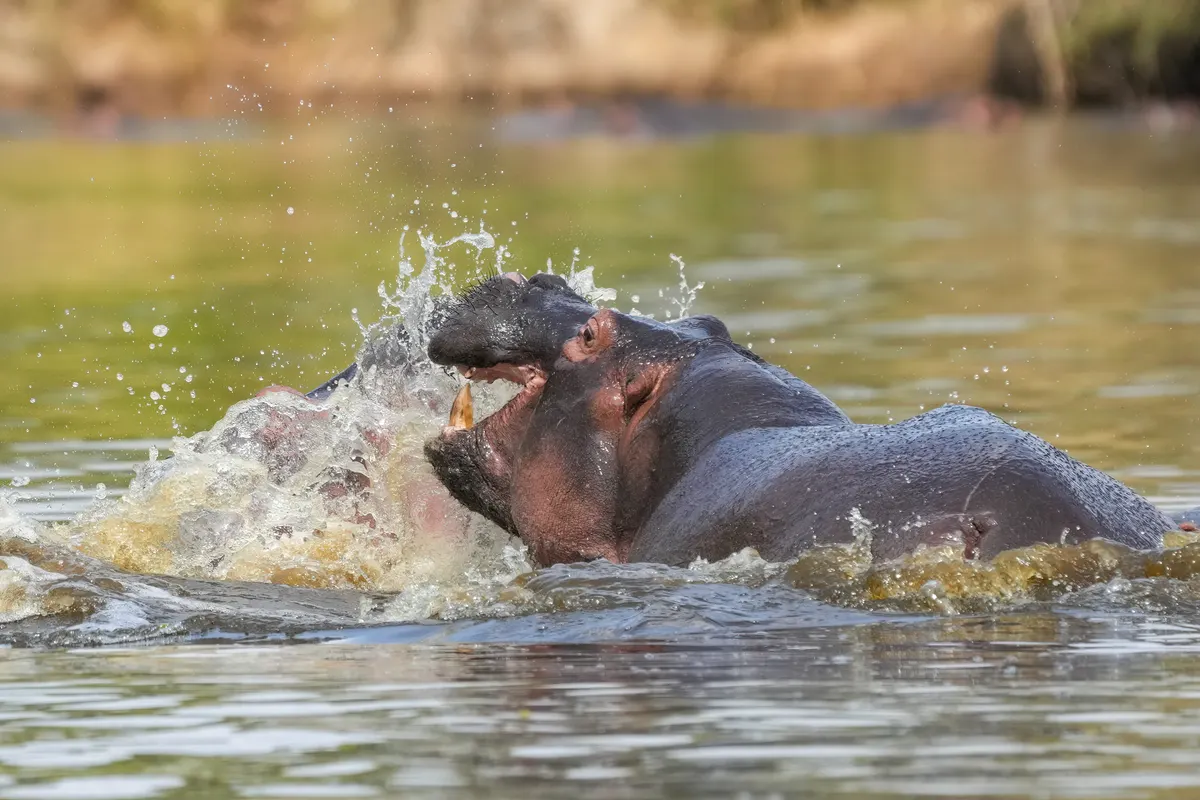
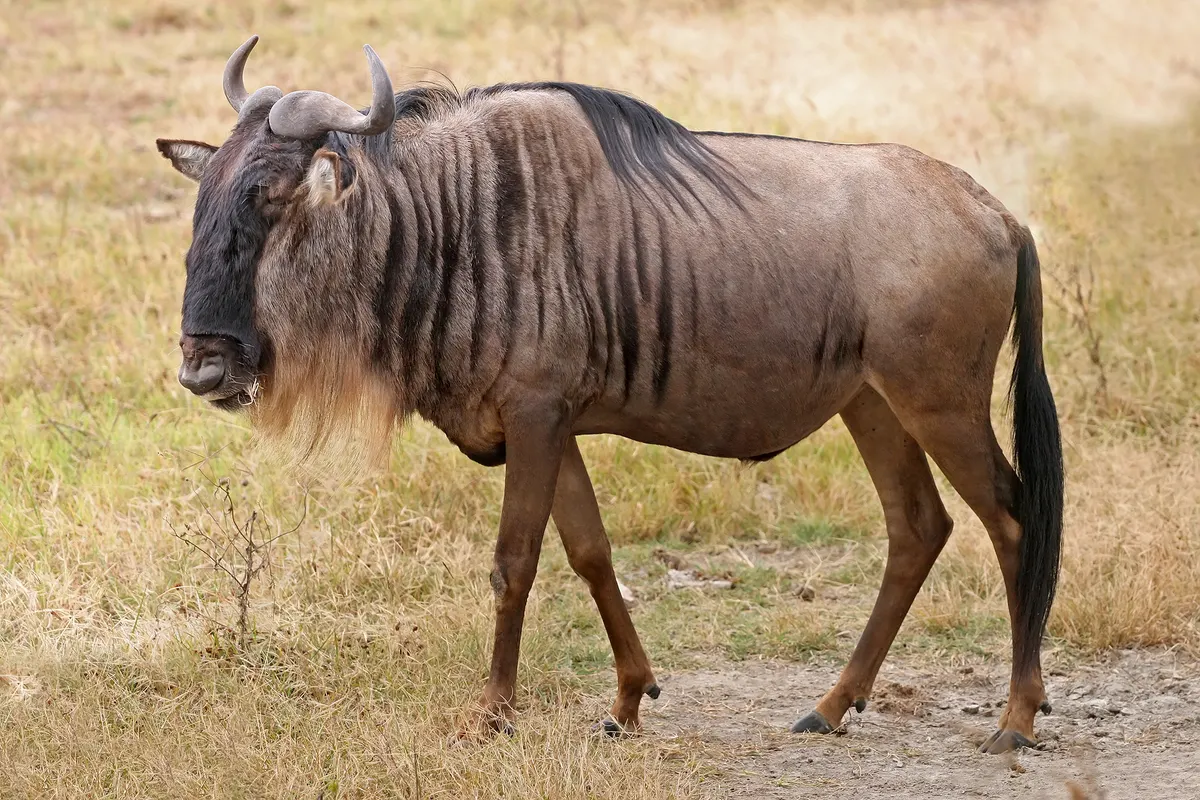
Within the pig family its closest relatives include the bushpig and the red river hog of Africa. More distantly, it shares the even-toed ungulate order with animals such as the hippopotamus, and it lives alongside grazers such as the wildebeest and the zebra across the savanna.

Conservation and Threats

Common warthog in a Uganda national park
Listed as Least Concern, the common warthog remains numerous across protected and pastoral lands.

The IUCN Red List classifies the common warthog as Least Concern. It is widespread, often locally common, and has a high reproductive rate that allows populations to recover from setbacks. In parts of southern Africa it has even expanded its range. The overall population is generally regarded as stable, although numbers have declined in some regions under local pressure.

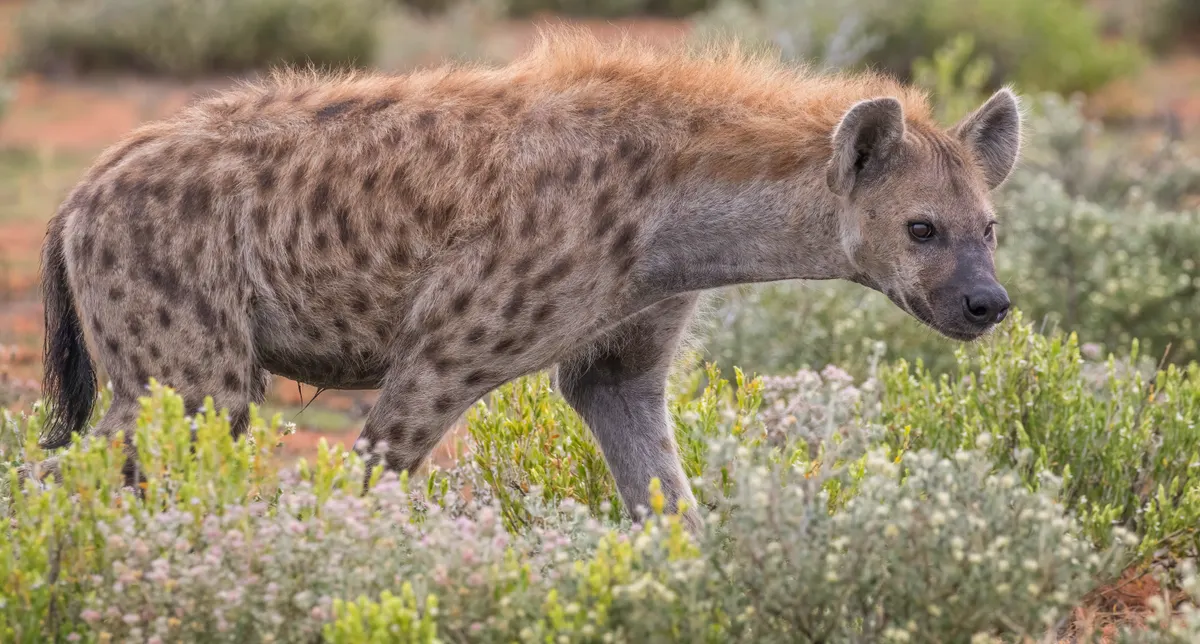
The main threats are hunting for meat and, in places, habitat loss and competition with livestock for grazing and water. Warthogs are also taken by a full set of large African predators, including the spotted hyena, as well as lions, leopards, cheetahs, wild dogs, and crocodiles at water. None of these pressures currently threatens the species as a whole, but they can reduce local populations, which is why regional monitoring remains useful even for a species of least concern.

References and Authoritative Sources

Common Warthog: classification and fun facts

Classification

Scientific Taxonomy
  1. Kingdom

    Animalia

  2. Phylum

    Chordata

  3. Class

    Mammalia

  4. Order

    Artiodactyla

  5. Family

    Suidae

  6. Genus

    Phacochoerus

  7. Species

    P. africanus

Did You Know?

Fun Facts

1

Warthogs rarely dig their own dens; they usually take over burrows excavated by aardvarks and back in rear-first so their tusks face any intruder.

2

They routinely kneel on calloused, padded wrists to crop short grass close to the ground.

3

The facial "warts" are not caused by a virus; they are thickened pads of skin and cartilage that help shield the head during fights.

4

Both the upper and lower canine teeth grow into tusks, and the lower pair is honed razor-sharp by rubbing against the upper pair.

5

When alarmed, a warthog runs with its thin tail held straight up like a flag, helping the group stay together in tall grass.

6

Warthogs use mud and dust wallows to cool down and to reduce parasites, since they lack the sweat glands to shed heat efficiently.

Common Questions

FAQ about Common Warthog

Select a question to reveal the answer.

What is a common warthog?

The common warthog (*Phacochoerus africanus*) is a wild pig of the family Suidae native to sub-Saharan Africa. It is identified by paired facial pads, tusks from both canine sets, and a sparse coat with a mane along the neck and back.

Where do common warthogs live?

They live across sub-Saharan Africa in open savanna, grassland, and light woodland, from Senegal and Ethiopia south to Namibia and South Africa. They avoid dense forest and true desert and depend on burrows for shelter.

What do common warthogs eat?

Warthogs are omnivores but feed mainly by grazing. Their diet is dominated by grasses, roots, bulbs, and rhizomes, supplemented by bark, fruit, and fungi. They occasionally take invertebrates and carrion.

Why do warthogs kneel to graze?

Adults lower onto their front wrists, which are calloused and padded, so they can crop short grass and dig for roots close to the ground. The posture suits an animal with a large head and relatively short neck.

Do warthogs dig their own burrows?

Usually not. They shelter in holes originally dug by aardvarks or other animals, sometimes widening them. A warthog typically reverses into the burrow so its head and tusks face the entrance against predators.

How fast can a common warthog run?

A warthog can sprint at speeds of up to about 48 km/h (30 mph) over short distances, holding its tail erect as it flees toward the nearest burrow.