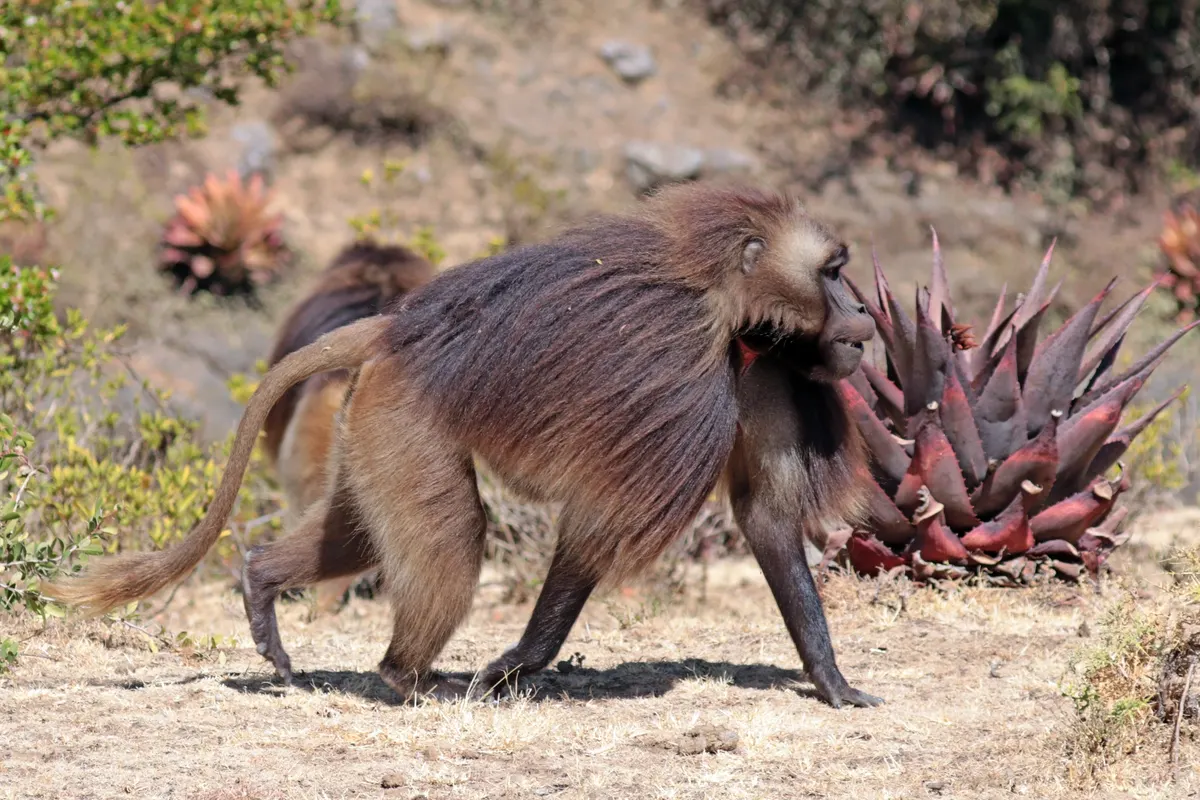
The IUCN lists the gelada as Least Concern, but its population is decreasing. The category reflects a still-substantial population and distribution across several Ethiopian highland systems; it does not imply that every local group is secure.
Agricultural expansion converts grassland, livestock compete for grazing and soil erosion degrades steep slopes. Geladas may be killed after entering crops, and domestic dogs can attack animals near settlements. Climate change may alter the cool, moist conditions that maintain high-elevation pasture.
The Simien Mountains National Park protects one of the best-known populations, and community-conserved landscapes such as Guassa also hold important groups. Long-term field projects identify individual animals and combine behavioral records with genetics, hormones and disease data. That continuity matters because changes in rainfall, livestock pressure or survival may take years to become visible.
Conservation must retain both cliffs and feeding plateaus. Protecting a sleeping escarpment without the surrounding grassland would preserve a refuge but remove the food system that makes it useful.