Wildebeest Facts
"Wildebeest are also called gnus."
Blue wildebeest are rugged antelopes with curved horns and shaggy manes. They form enormous herds on African savannas and are famous for their great...
Loading page content

"Wildebeest are also called gnus."
Blue wildebeest are rugged antelopes with curved horns and shaggy manes. They form enormous herds on African savannas and are famous for their great...
Connochaetes taurinusArtiodactylaBovidae
Explore blue wildebeest photos organized for learning and classroom observation.
Click any photo to view it larger. 8 images available.
Core article
Habitat, diet, behavior, and more — everything on one page.
The African savanna is defined by its sweeping grasslands, dramatic seasons, and the relentless, pounding hooves of the blue wildebeest (Connochaetes taurinus). Often described as having the head of a cow, the mane of a horse, and the body of an antelope, the wildebeest is a rugged, unglamorous survivor built for endurance. Yet, it is this very animal that orchestrates one of the most spectacular biological phenomena on the planet: the Great Migration.
Driven by an ancient, inescapable instinct to follow the seasonal rains, millions of wildebeest form an endless, grunting river of life that flows across the plains of East Africa. Their journey is fraught with peril, from the snapping jaws of massive crocodiles to the relentless pursuit of prides of lions. Despite the staggering mortality rates they endure, the wildebeest is an ecological keystone, acting as the primary lawnmower of the savanna and ensuring the survival of the very ecosystem it traverses.
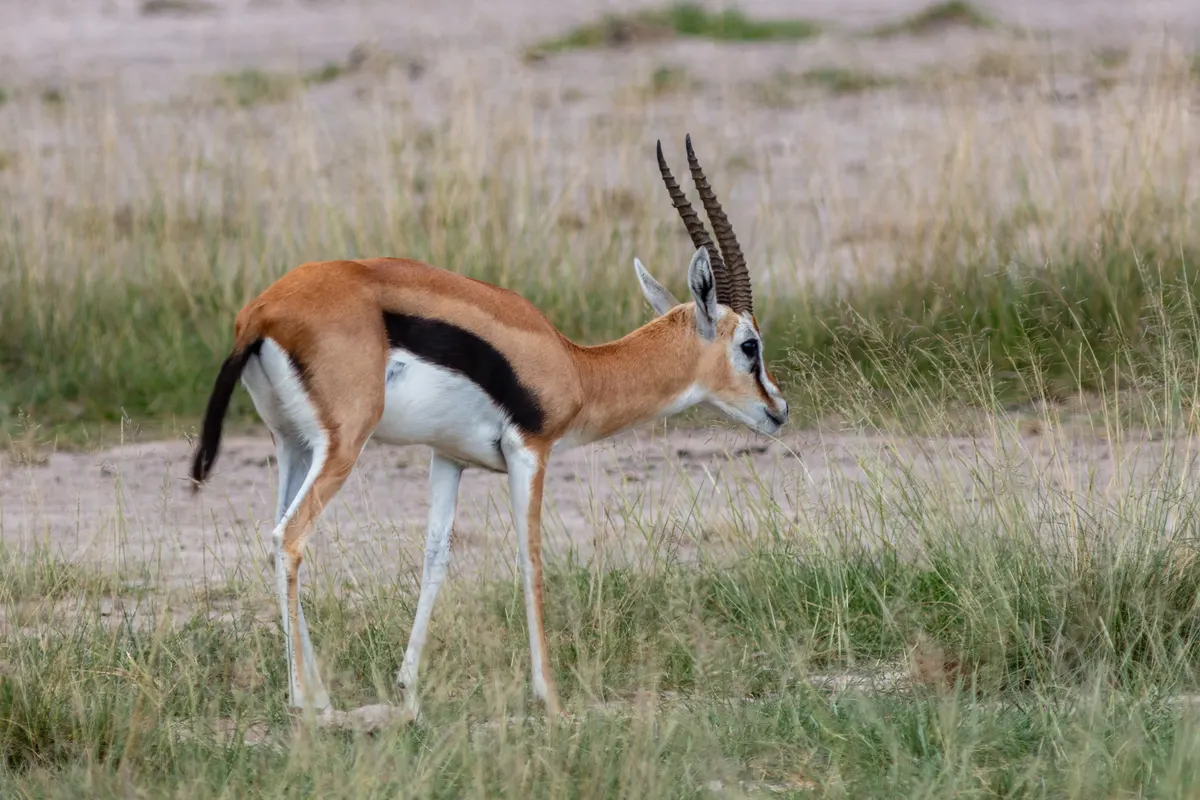
Despite their bovine appearance, wildebeest are true antelopes, sharing a close evolutionary lineage with swift, graceful gazelles rather than domestic cattle.
The wildebeest belongs to the family Bovidae, within the subfamily Alcelaphinae, which includes other large, grazing antelopes like hartebeests and topis. The common name "wildebeest" is derived from Dutch, meaning "wild beast," while their alternate name, "gnu," is an onomatopoeic approximation of the loud, grunting calls they make. There are two recognized species: the black wildebeest of southern Africa, and the much more numerous blue wildebeest (C. taurinus), which is the primary driver of the Great Migration. Evolutionarily, their stocky build and broad muzzles developed as a highly specialized adaptation for bulk-grazing short grasses on the open plains.
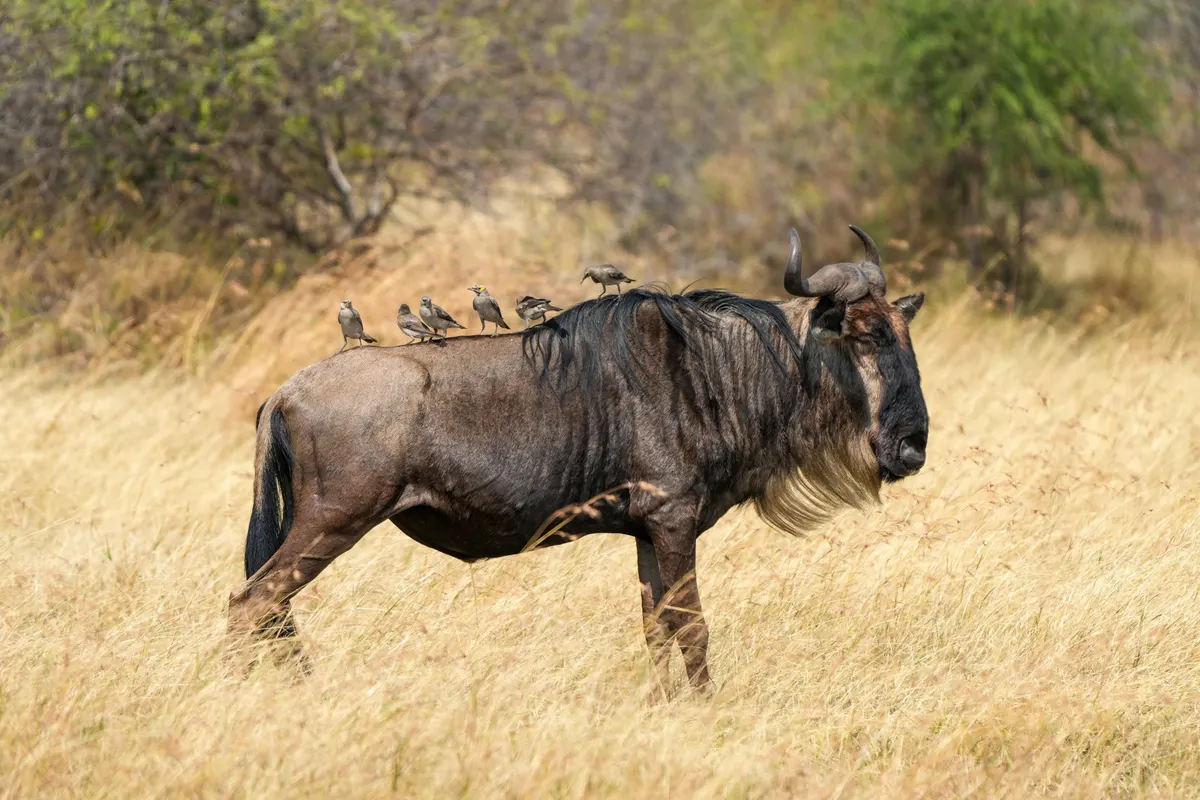
The physical appearance of the blue wildebeest is heavily front-loaded and muscular. They are large antelopes, measuring between 6 to 8 feet in length and weighing between 400 and 600 pounds. They stand higher at the shoulders than at the rump, giving them a distinct, sloping profile.
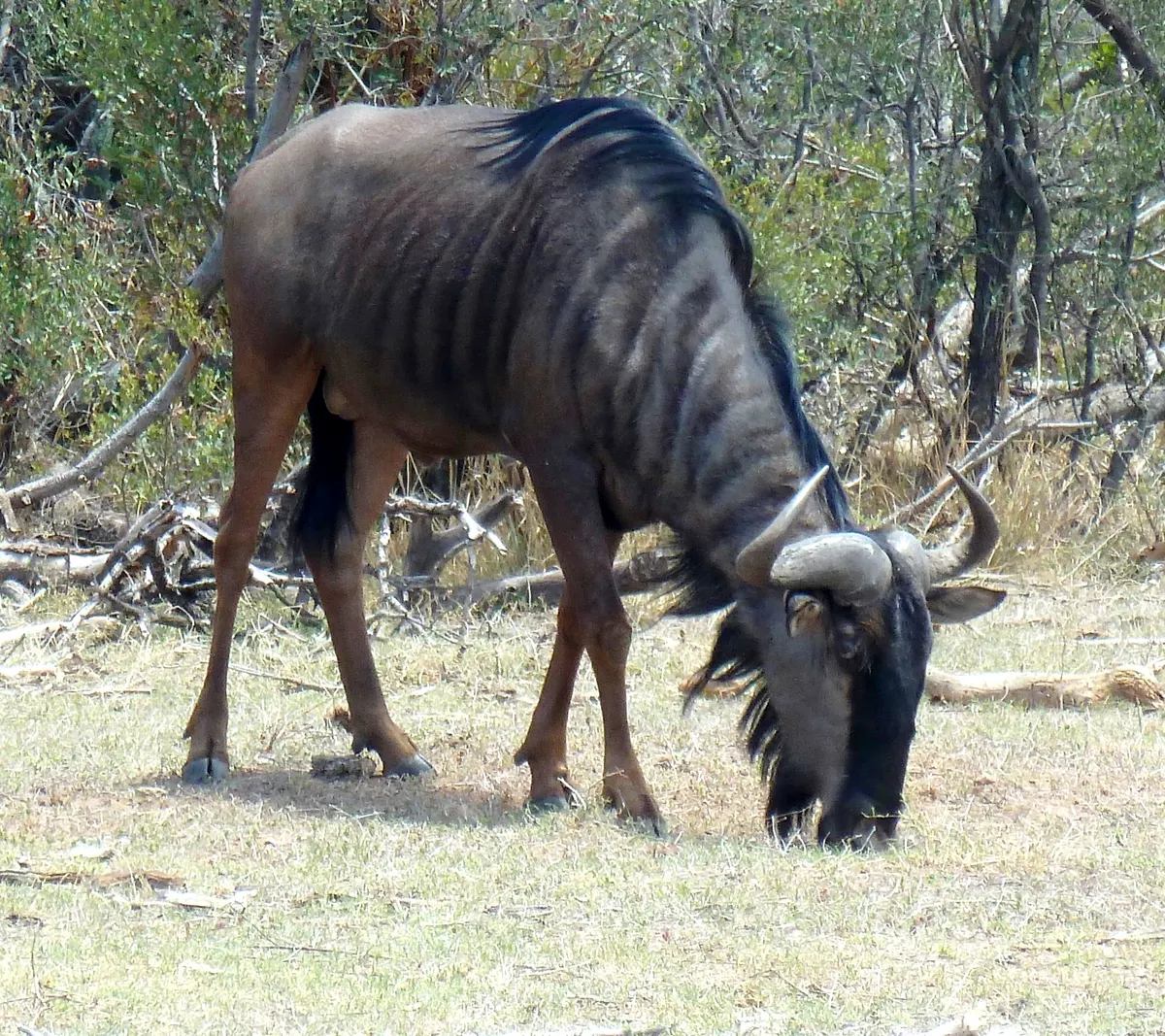
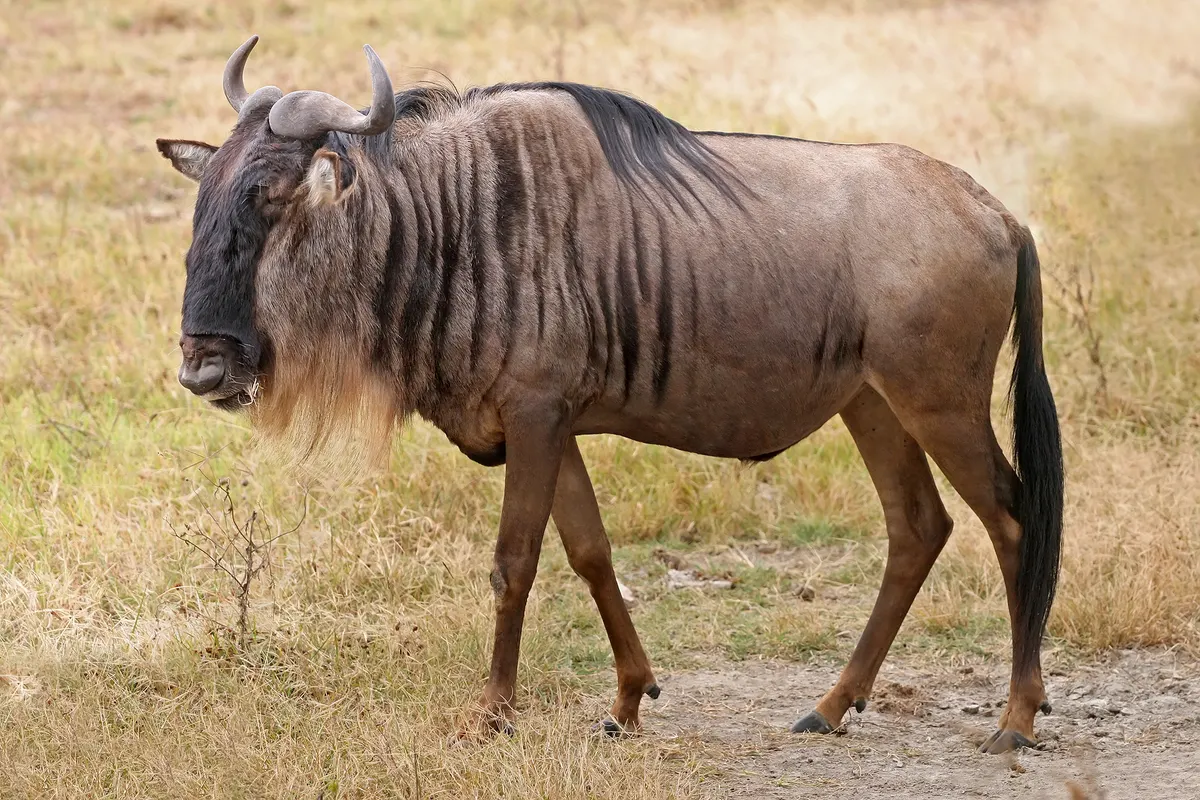
Both males (bulls) and females (cows) possess heavy, unridged horns that curve outward, downward, and then hook sharply upward. Their coat color is a dark, slaty bluish-grey (giving them their name), marked by dark vertical bands down their neck and ribs. They possess a thick, shaggy black mane on their neck, a long black tail that resembles a horse's, and a long beard hanging from their throat.
While they lack the delicate grace of a gazelle, wildebeest are built for supreme cardiovascular endurance. Their large hearts and lungs allow them to trot steadily for days on end without exhaustion. When threatened, they are capable of explosive bursts of speed, reaching up to 50 miles per hour to outrun predators. Their broad, flat muzzles are perfectly adapted for acting like a biological lawnmower, allowing them to crop short grasses incredibly close to the ground.

Blue wildebeest are endemic to the savannas and grasslands of eastern and southern Africa. Their populations are primarily concentrated in countries such as Kenya, Tanzania, Botswana, South Africa, Namibia, Zimbabwe, and Zambia.
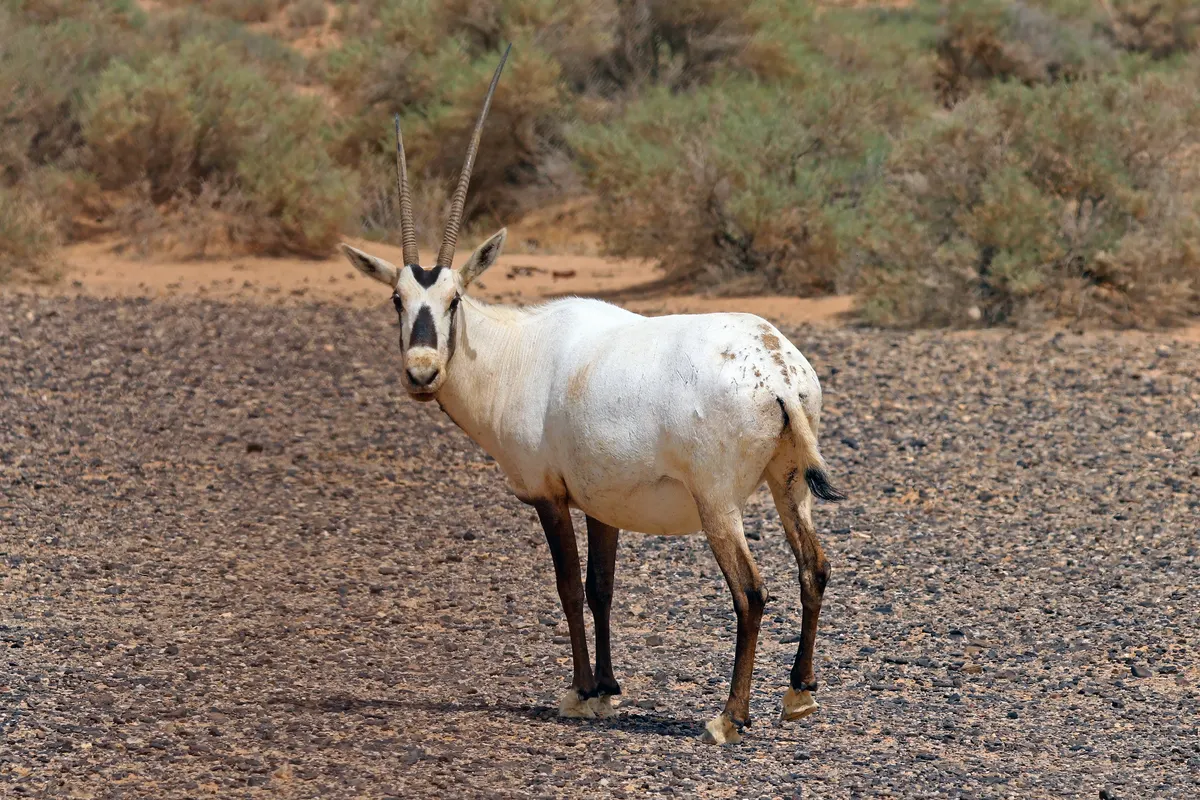
They thrive in open short-grass plains and acacia woodlands. The defining requirement of their habitat is the availability of fresh drinking water. Unlike desert-adapted antelopes like the oryx, which can survive for weeks without drinking by extracting moisture from their food, the wildebeest is highly water-dependent. They must drink at least every other day, a biological requirement that dictates their massive, continuous migrations in search of rain-fed puddles and flowing rivers.

The wildebeest is an obligate herbivore and a highly specialized bulk grazer. Their diet consists almost entirely of short, nutrient-rich savanna grasses, fresh shoots, and occasional leaves.
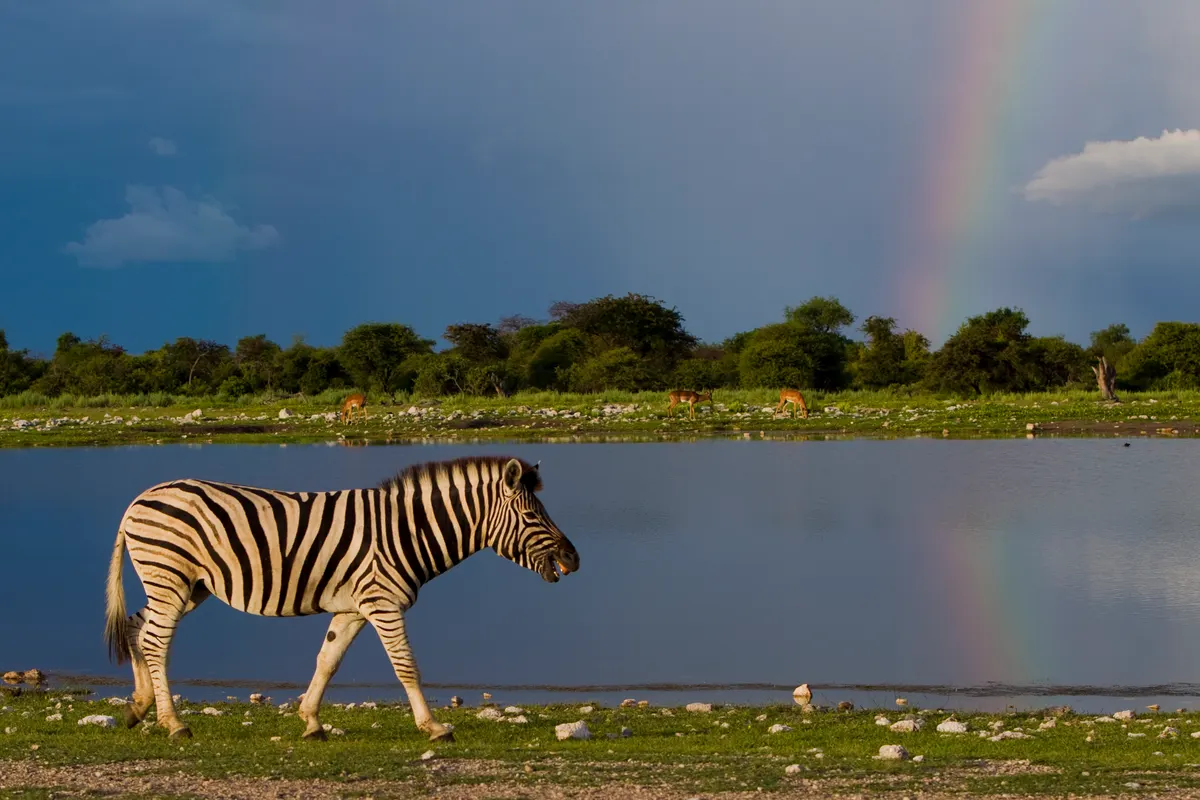
Their feeding strategy is deeply intertwined with the presence of other herbivores, specifically zebras. During the migration, zebras typically move into tall grass areas first. The zebras' digestive systems can handle the tough, fibrous upper stalks of the grass. Once the zebras have eaten the tall grass, they expose the tender, green, protein-rich shoots near the soil—the exact food source the wildebeest requires. Using their broad muzzles, the wildebeest then crop this short grass to the root.
This relentless grazing is essential for the health of the savanna. By consuming massive quantities of grass, they prevent devastating wildfires, and their millions of hooves break up the soil, fertilizing it with vast amounts of dung and urine, prompting explosive new growth when the rains finally return.

Wildebeest are profoundly social herd animals. While small, resident herds exist in southern Africa, the populations of the Serengeti in Tanzania and the Maasai Mara in Kenya form mega-herds that can number over 1.5 million individuals.
The herds are constantly communicating through a cacophony of loud, low-pitched grunts, snorts, and moans. There is little permanent social structure within these massive aggregations; herds are fluid, constantly splitting and merging.
The defining behavior of the species is the Great Migration. Driven by the scent of rain and lightning on the horizon, the herds travel in a continuous, 1,800-mile circular route tracking the seasonal rains to find fresh grass. The most dramatic and dangerous moments of this journey are the river crossings (such as the Mara River). Driven by herd mentality and sheer desperation for fresh pasture on the other side, thousands of wildebeest will plunge down steep muddy banks into turbulent waters, facing drowning, trampling, and the jaws of massive Nile crocodiles waiting in ambush.

Reproduction is highly synchronized, an evolutionary strategy known as predator swamping. The mating season, or rut, occurs over a brief three-week period in May or June. The savanna erupts into chaos as dominant bulls establish temporary, moving territories. They aggressively herd females and engage in violent, dust-kicking fights with rival males, clashing their curved horns together in brutal tests of strength.
Following a gestation period of roughly 8.5 months, the calving season begins. In an astonishing display of synchronization, nearly half a million calves are born within a two- to three-week window in February. This overwhelming abundance of prey ensures that predators (lions, hyenas, and leopards) become totally satiated, allowing the vast majority of calves to survive.
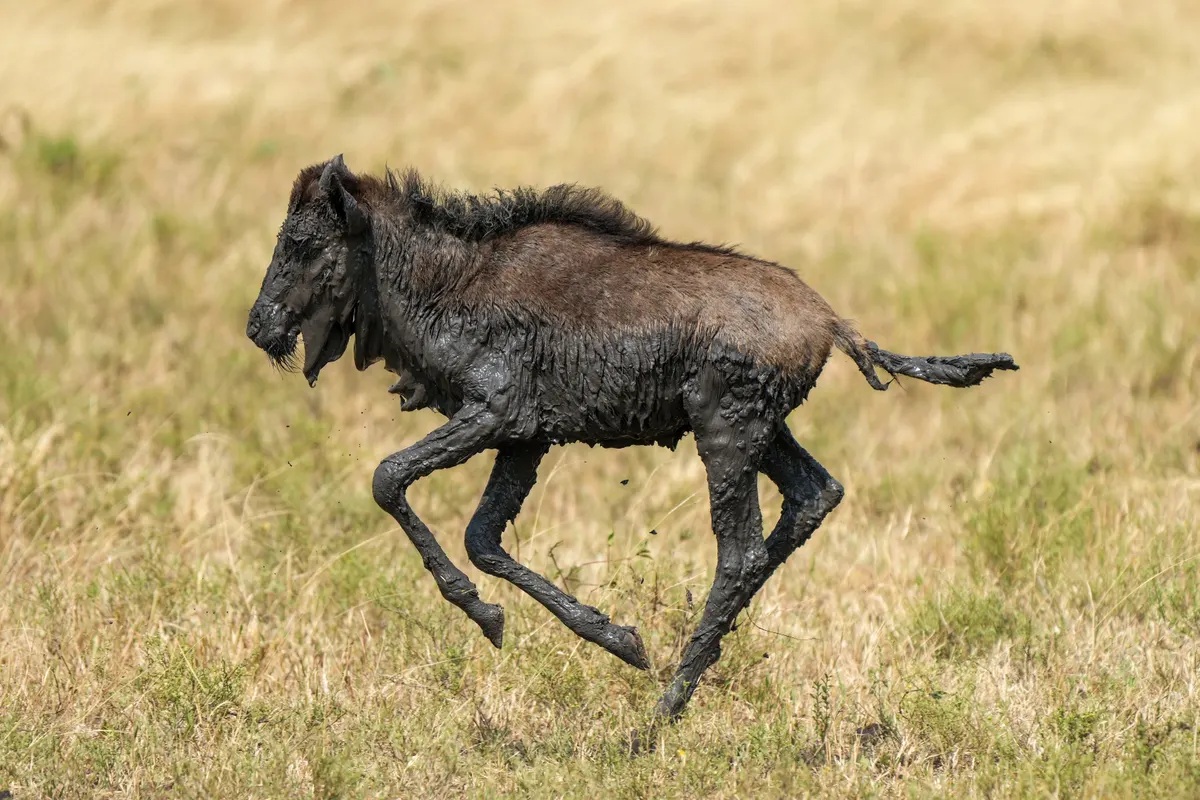
Unlike many ungulates that hide their young in the brush, wildebeest calves are highly precocial. A newborn calf can stand within minutes of birth and is capable of running with the herd at full speed within an hour. They are deeply bonded to their mothers, recognizing them by scent and vocalization in the chaos of the herd. In the wild, a wildebeest can live for 15 to 20 years.
(Population and conservation trend data sourced from the IUCN Red List of Threatened Species)
The blue wildebeest is currently evaluated as a species of Least Concern by the International Union for Conservation of Nature (IUCN). Their overall population is vast and currently stable, particularly within the protected confines of the Serengeti-Mara ecosystem.
However, outside of these massive national parks, their populations are severely fragmented and declining. The greatest threat to the wildebeest is the interruption of their traditional migration routes. The expansion of human settlements, agricultural lands, and specifically the construction of hundreds of miles of veterinary fencing (designed to separate wild animals from domestic cattle) have completely blocked access to critical dry-season water sources in places like Botswana, leading to the starvation and death of hundreds of thousands of wildebeest. Additionally, illegal poaching for bushmeat remains a persistent threat across their range.
To learn more about the wildebeest and the ecology of the Great Migration, consult the following authoritative resources:
Wildebeest are also called gnus.
Hundreds of thousands migrate across the Serengeti each year.
Calves can run within minutes of being born.
Wildebeest must drink water regularly.
Their herds make loud grunting and gnu-like calls.
River crossings during migration are dangerous because of crocodiles.
Select a question to reveal the answer.
A wildebeest is a large African antelope with curved horns and a shaggy mane. The blue wildebeest is the most common species.
Blue wildebeest live on savannas and grasslands in eastern and southern Africa, especially Kenya, Tanzania, and Botswana.
Wildebeest graze on short grasses. They follow rains to find fresh green pasture.
Wildebeest migrate to follow seasonal rains and find new grass and water.
A baby wildebeest is called a calf. Most calves are born during the same few weeks each year.
Yes. Wildebeest belong to the antelope family Bovidae, along with gazelles and cattle relatives.
Blue wildebeest are listed as Least Concern, but migration routes can be threatened by fences and habitat loss.