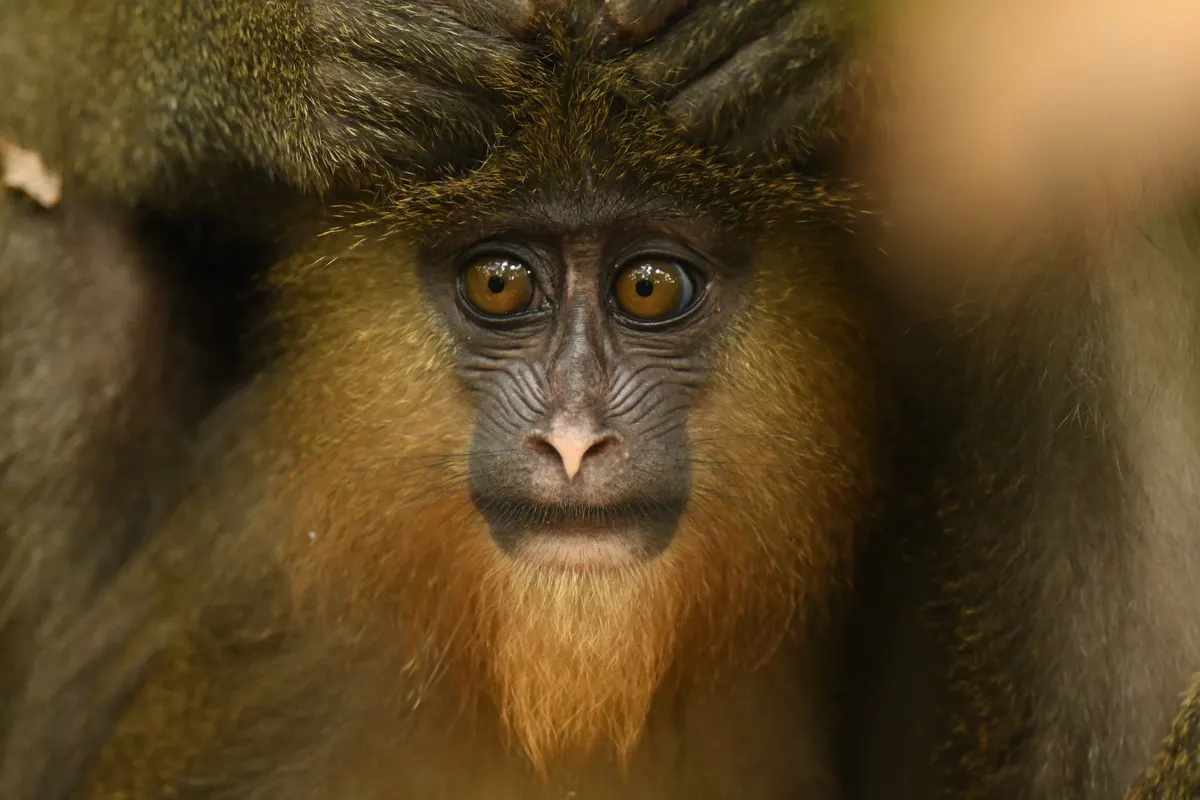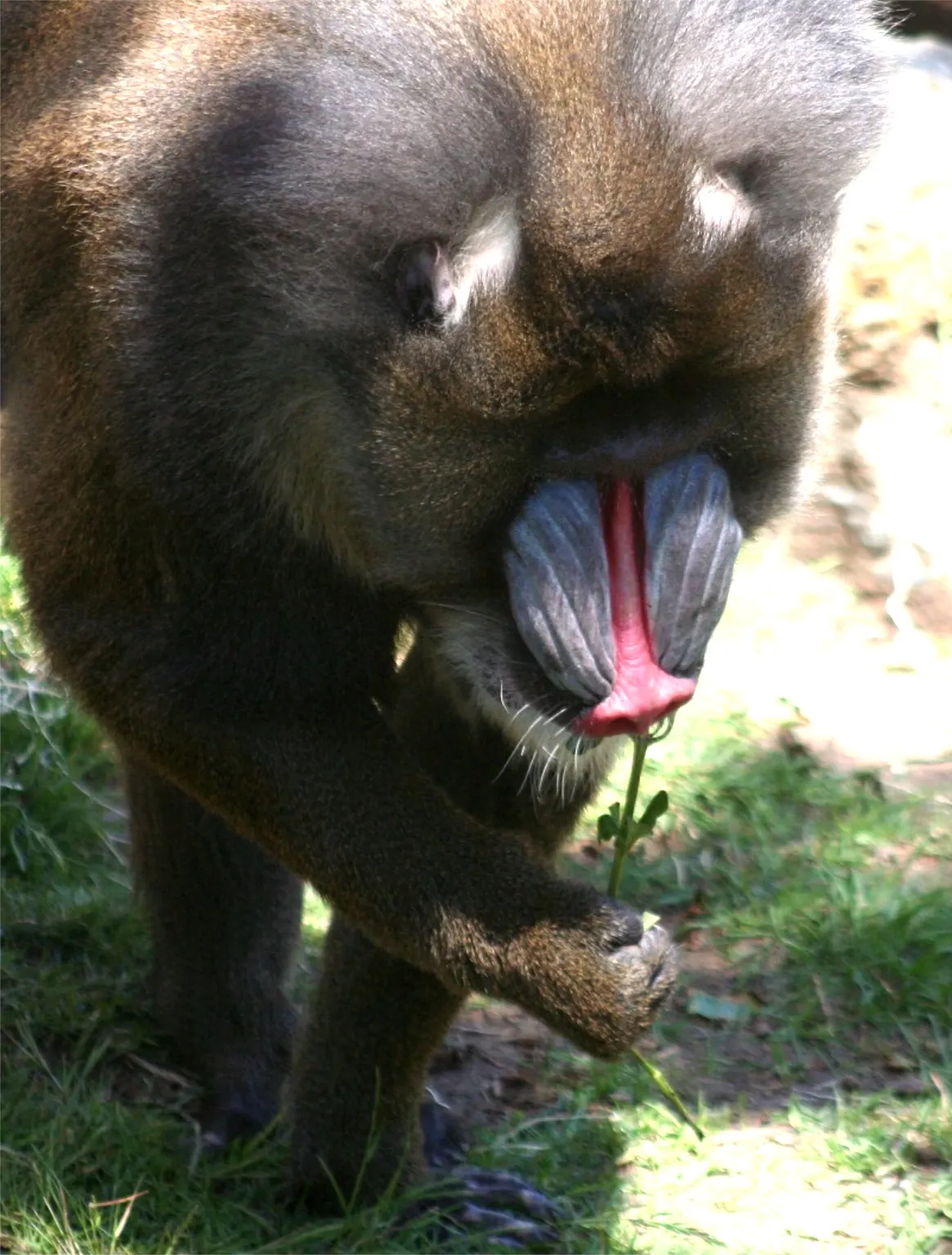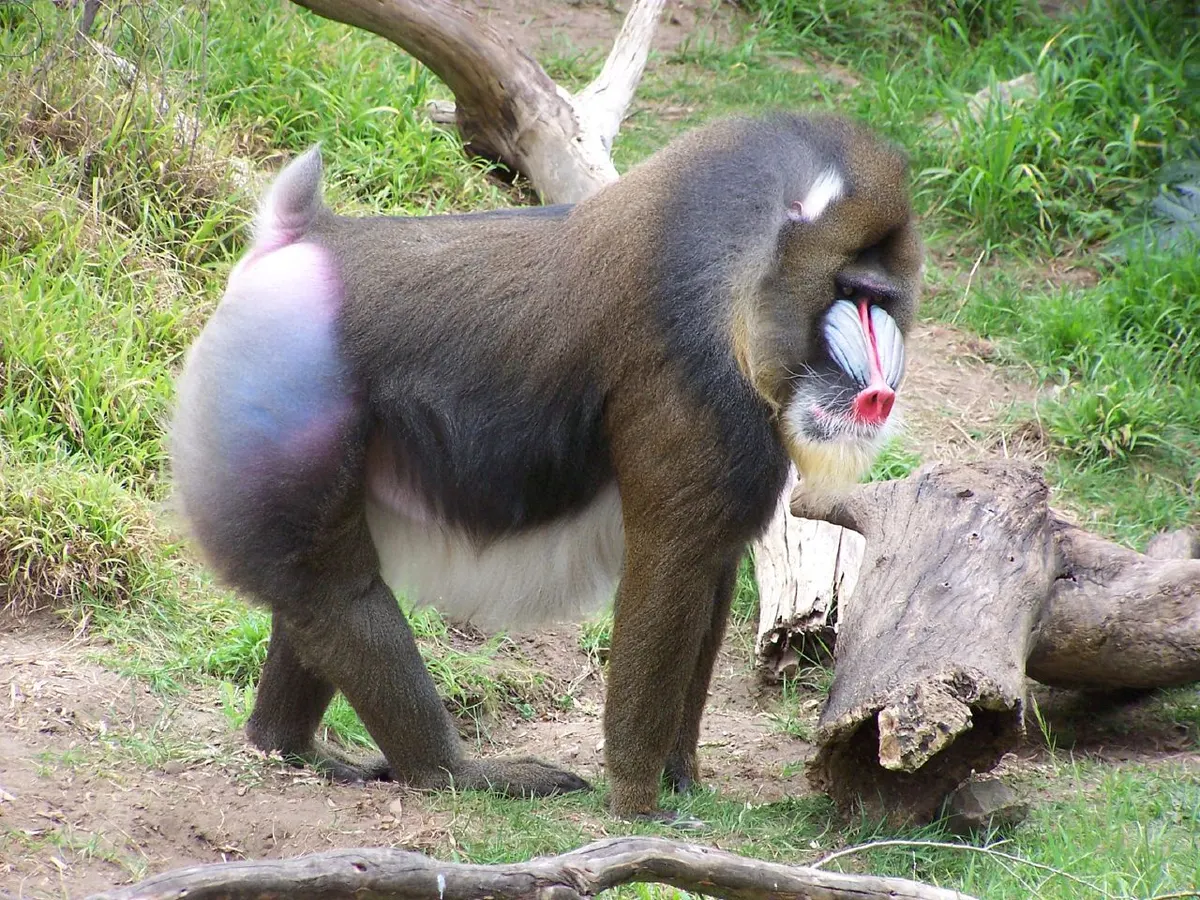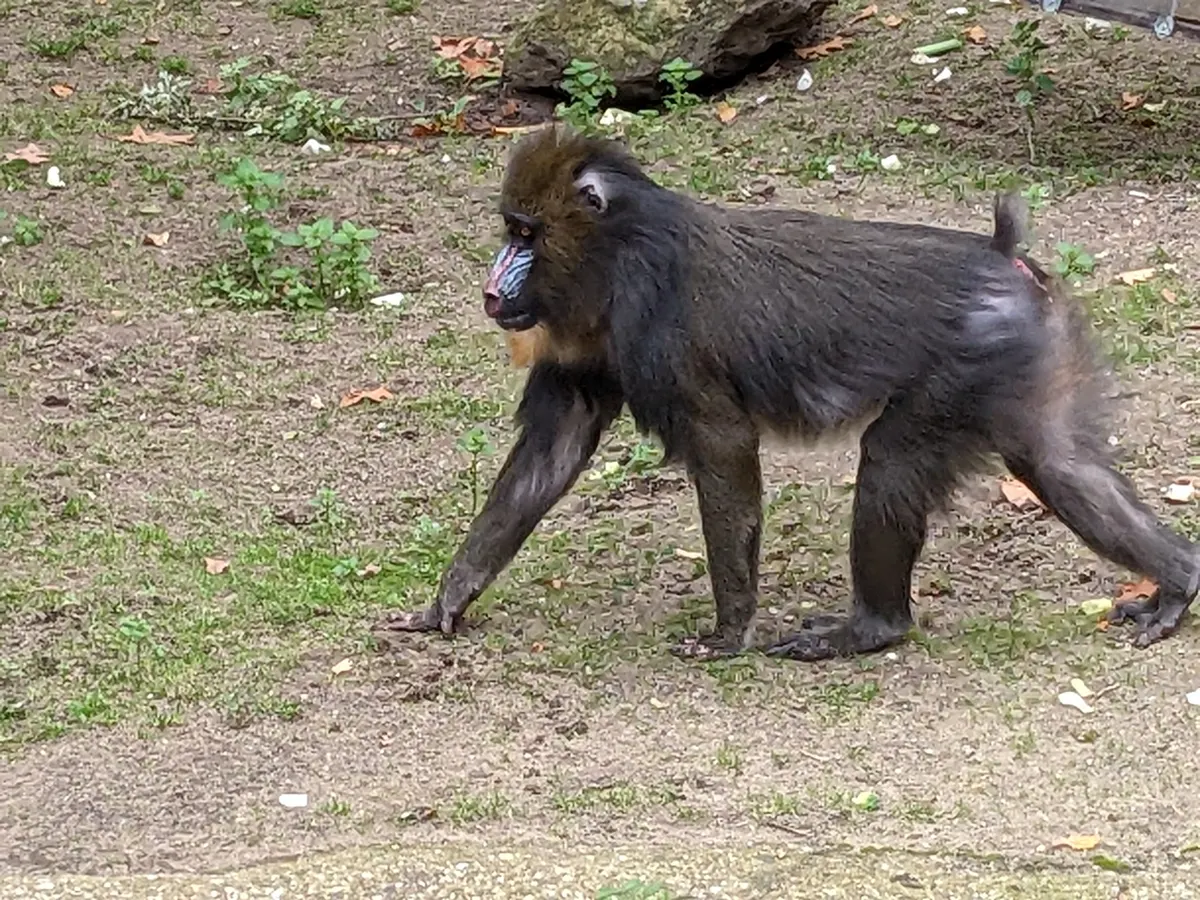
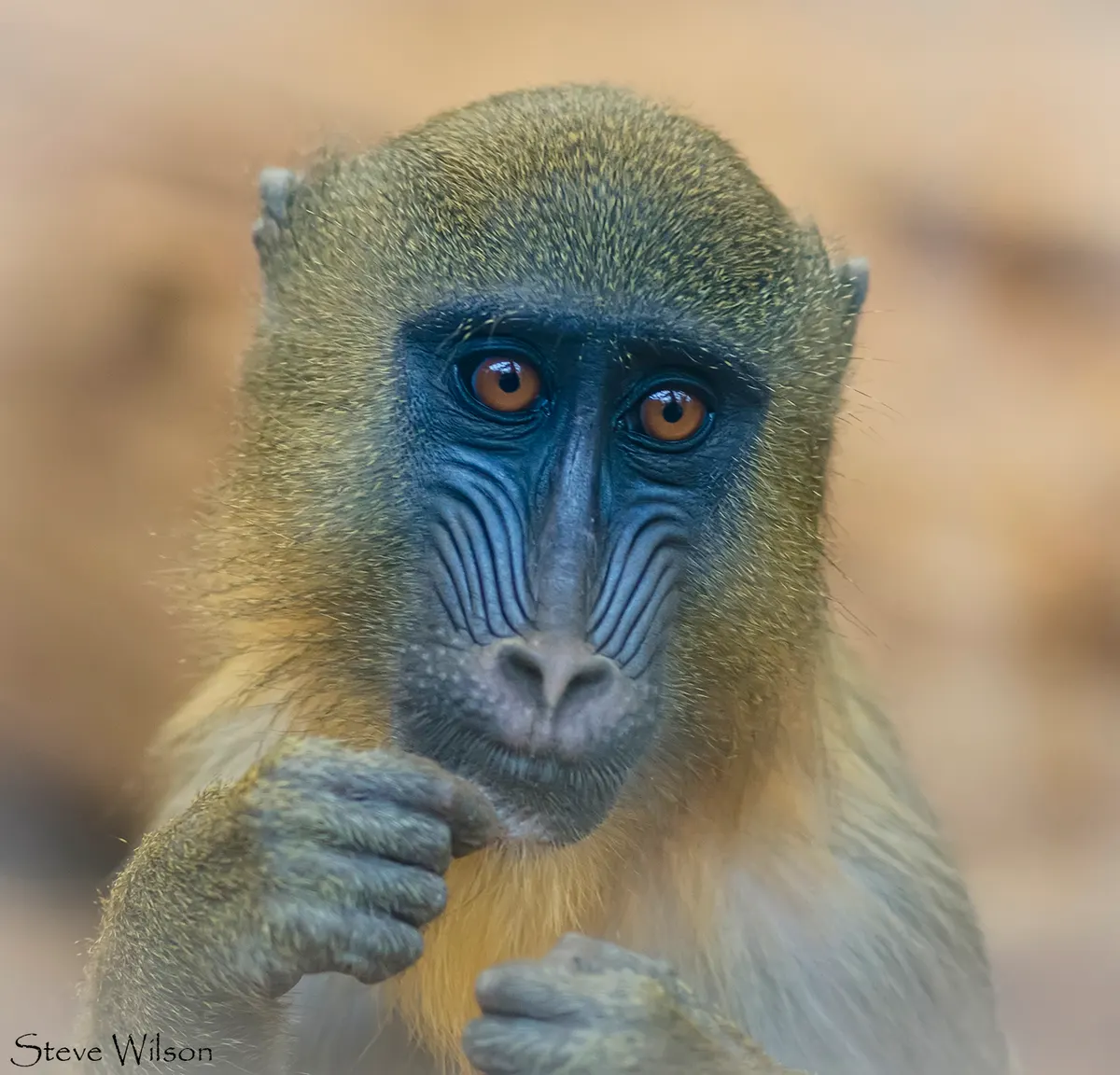
Adult male mandrills have red and blue facial markings.
MammaliaVulnerable
Mandrill Facts
“Adult male mandrills have the most colorful faces of any mammal—vivid blue ridges on the nose and a red stripe down the center, which become more intense when excited.”
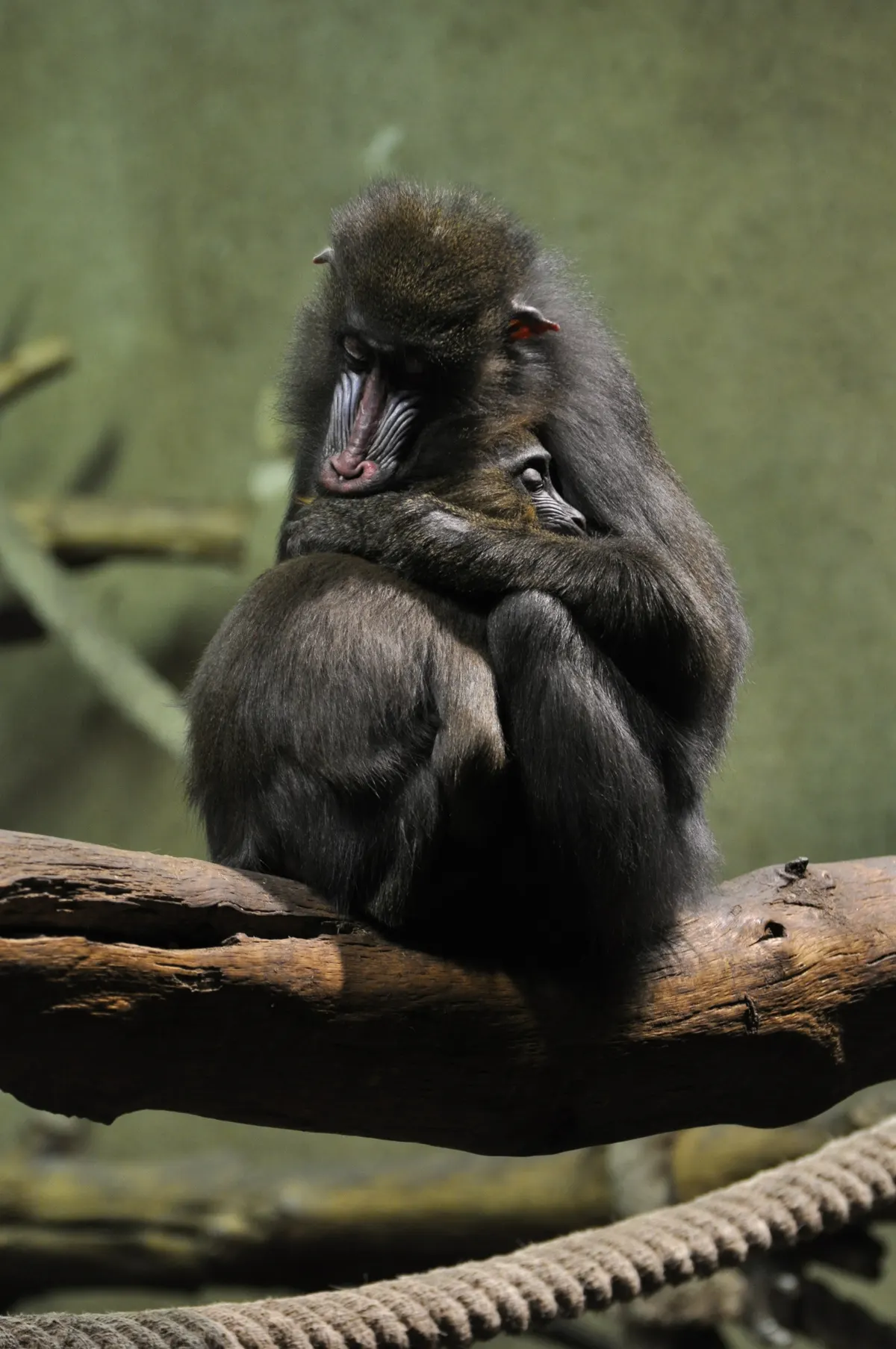
Mandrills are large, vividly colored monkeys of Central African rainforests. Females and young can gather in very large social groups, foraging across the forest floor for fruit, seeds, fungi, and small animals while storing food temporarily in cheek pouches.