Zebra Facts
"Every zebra has a unique stripe pattern."
Zebras are striped hoofed mammals that live in African grasslands and savannas. They graze in herds, stay alert together, and use speed and powerful kicks...
Loading page content

"Every zebra has a unique stripe pattern."
Zebras are striped hoofed mammals that live in African grasslands and savannas. They graze in herds, stay alert together, and use speed and powerful kicks...
Explore zebra photos for learning and classroom observation, from striped foals and herd life to wide-open African grasslands.
Click any photo to view it larger. 8 images available.
Core article
Habitat, diet, behavior, and more — everything on one page.
Standing out against the golden hues of the African savanna in a dizzying array of black and white stripes, the plains zebra (Equus quagga) is one of the most visually striking mammals on Earth. As an iconic member of the horse family, the zebra is synonymous with the wild, untamed expanses of the African continent. Yet, these brilliant stripes are not merely a fashion statement; they are a complex evolutionary adaptation that continues to baffle and fascinate scientists today.
Highly social, deeply vocal, and fiercely protective of their family units, zebras are a cornerstone species of the grassland ecosystem. They undertake massive, perilous migrations in search of fresh grazing, relying on the safety of the herd and their own powerful, bone-shattering kicks to fend off the continent's most lethal predators. From the intricate social dynamics of their harems to the mystery of their striped coats, the zebra is a magnificent example of specialized survival on the open plains.
Zebras are odd-toed ungulates and represent a distinct and highly specialized branch of the equine family tree.
The family Equidae encompasses all horses, donkeys, and zebras. Within the genus Equus, there are three distinct living species of zebra: the Grévy's zebra (E. grevyi), the mountain zebra (E. zebra), and the most numerous and widespread species, the plains zebra (E. quagga). Historically, the plains zebra included the famous quagga, a subspecies that was hunted to extinction in the late 19th century. Evolutionarily, zebras split from the ancestors of horses and donkeys roughly 4 million years ago, evolving their unique coat patterns as an adaptation to the specific parasitic and predatory pressures of the African environment.
The plains zebra is a robust, powerfully built equine, slightly smaller and stockier than a typical domestic horse. Adults typically measure between 6.5 and 8.5 feet in length and stand 4 to 5 feet tall at the shoulder. They possess significant bulk, weighing anywhere from 440 to nearly 1,000 pounds.
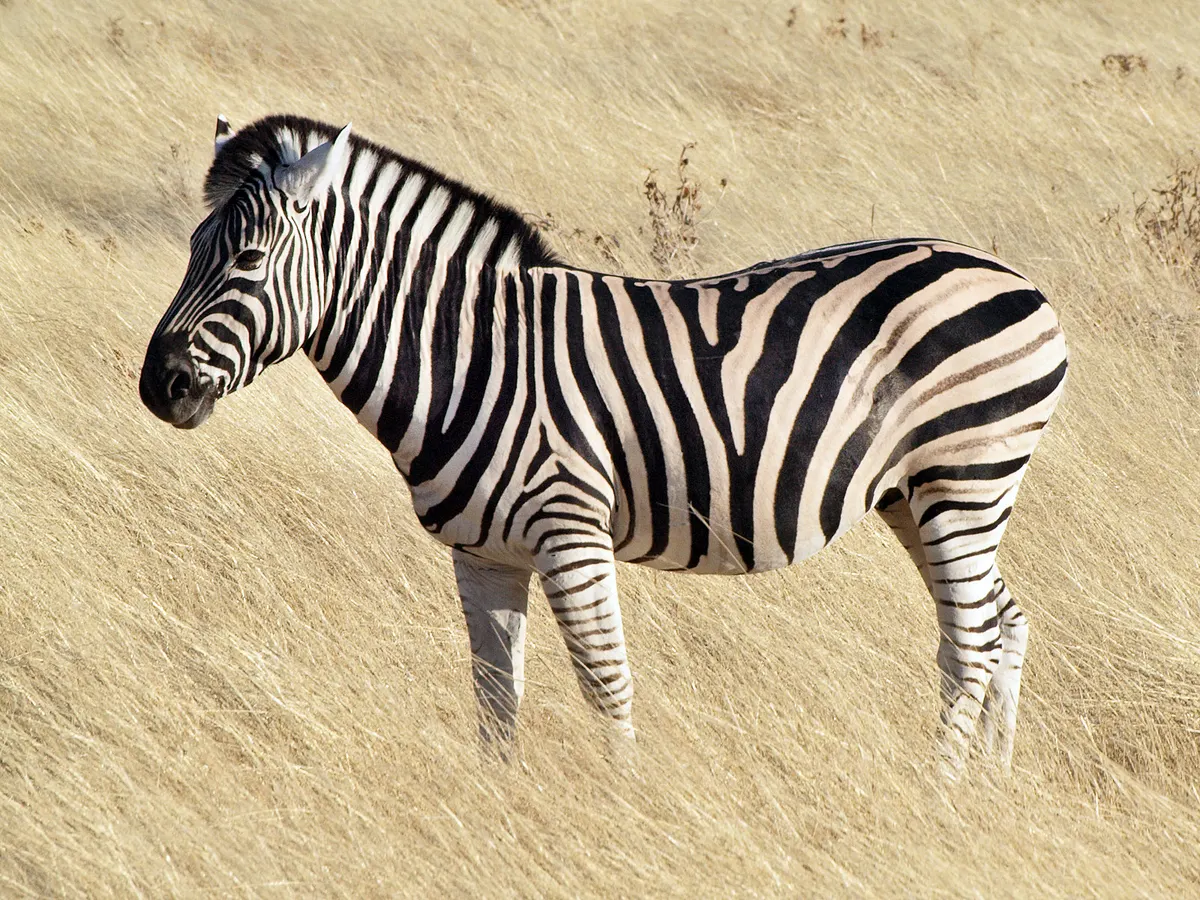
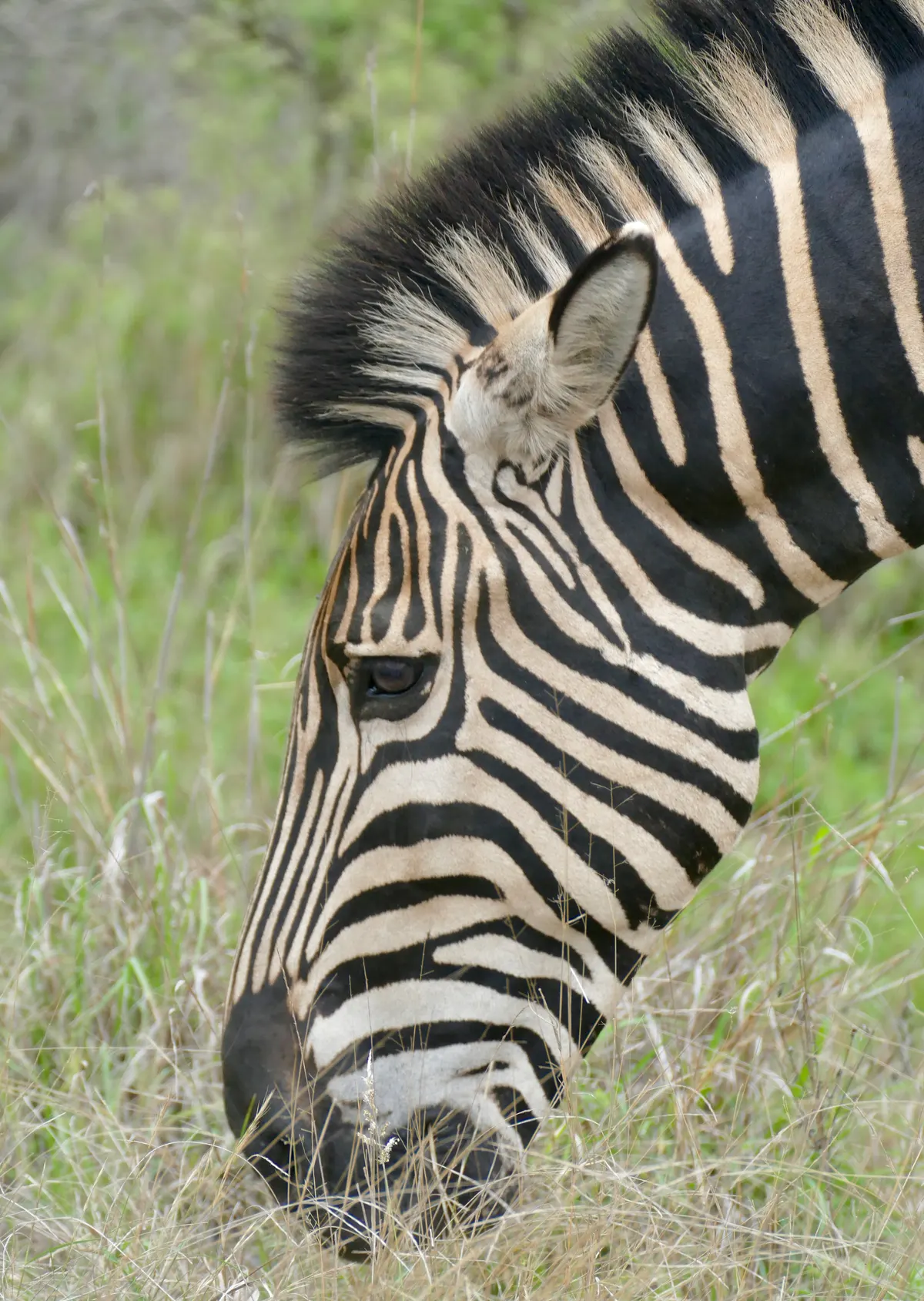
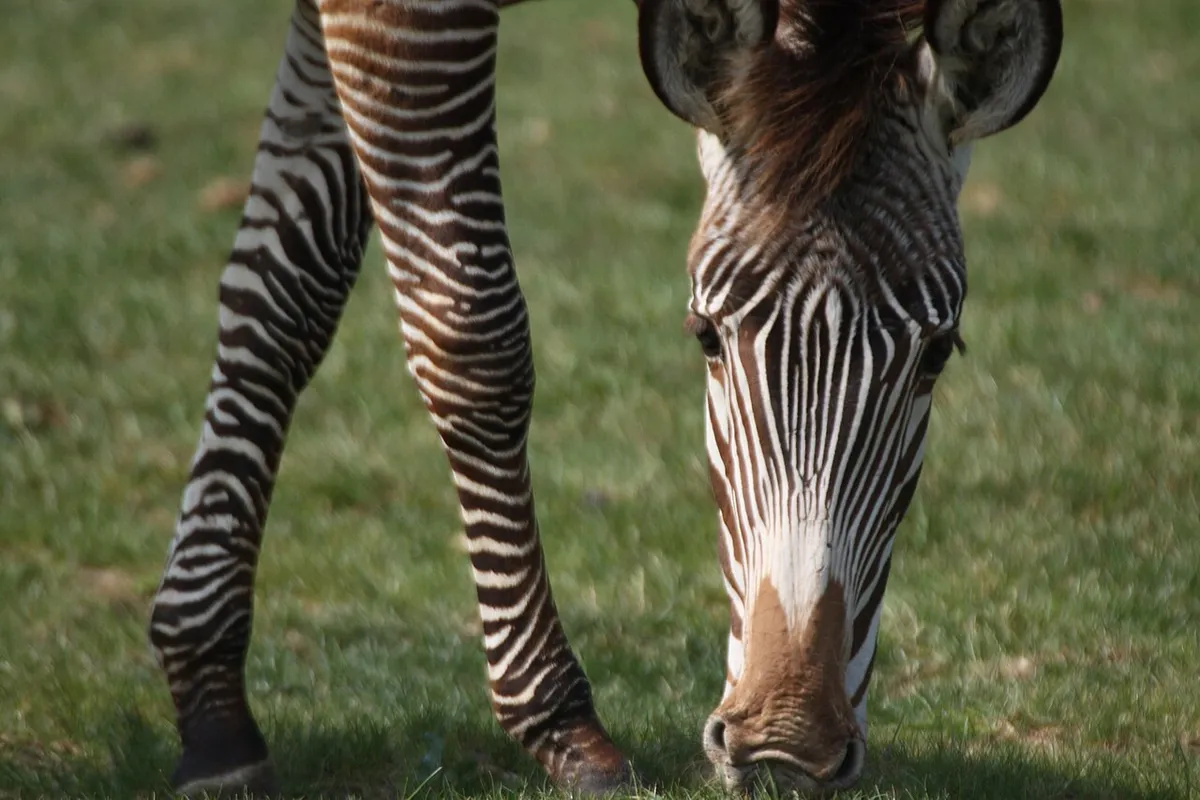
Their most defining physical characteristic is, undoubtedly, their coat. Unlike a horse, a zebra's mane is short, stiff, and stands straight up from the neck. The striking black-and-white striped pattern covers their entire body, including their mane, tail, and face. Every single zebra possesses a stripe pattern as entirely unique as a human fingerprint, allowing individuals within a herd to recognize one another.
The exact evolutionary purpose of these stripes remains a subject of intense scientific debate. While they were long thought to provide camouflage against the tall savanna grass or to confuse the eyes of a charging lion (the "motion dazzle" effect), recent prevailing theories suggest the stripes act as a highly effective pest deterrent. Studies have shown that the alternating black and white patterns disrupt the visual systems of biting tsetse flies and horseflies, preventing these disease-carrying insects from successfully landing on the zebra's coat.
Physically, they are equipped for both grazing and defense. They have high-crowned, heavily enameled teeth perfect for grinding tough, abrasive savanna grasses. Their vision is exceptional; with eyes positioned high and on the sides of their skull, they have a wide-angle field of view to spot stalking predators. If forced to fight, a zebra's hind legs can deliver a lethal kick capable of shattering a lion's jaw.

The plains zebra is the most geographically widespread of all zebra species. They are endemic to the eastern and southern regions of the African continent, with significant populations in Kenya, Tanzania, Botswana, Namibia, Zimbabwe, and South Africa.
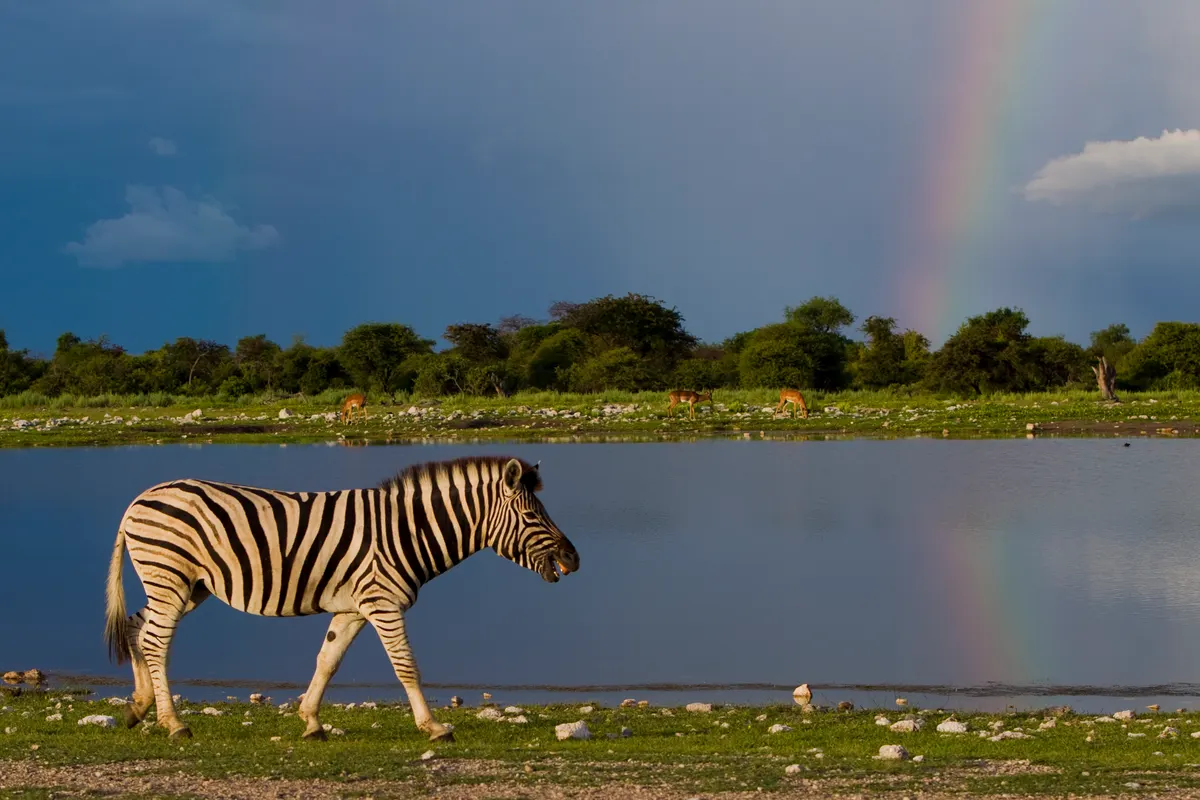
They are highly adaptable but thrive primarily in treeless grasslands, savanna woodlands, and open scrublands. They generally avoid dense tropical rainforests, true deserts, and extensive wetlands. Like the wildebeest they frequently migrate with, zebras are heavily water-dependent. They cannot survive long without drinking, restricting their range to areas within a day's walk of reliable rivers or waterholes.

Zebras are obligate herbivores and dedicated grazers. Their diet consists almost entirely of various species of savanna grass, though they will occasionally browse on young shoots, stems, and leaves during severe dry seasons.
Their digestive system is unique and highly efficient. As hindgut fermenters, zebras process fibrous plant material much faster than ruminants (like wildebeest or cattle). This allows them to extract nutrients from coarse, dry, low-quality grasses that other herbivores simply cannot digest. Because of this, zebras act as the "pioneers" of the savanna. During the Great Migration, zebras are often the first animals to enter an area of tall, mature grass. They consume the tough, fibrous upper stalks, exposing the tender, nutrient-rich green shoots below, which are subsequently eaten by the following herds of wildebeest and gazelles.

The social life of the plains zebra is incredibly complex and deeply bonded. Unlike massive, unstructured herds of antelope, zebra society is built upon small, tight-knit family groups called "harems."
A typical harem consists of a single dominant stallion, several mares (females), and their recent offspring (foals). The hierarchy within the harem is strictly maintained; the stallion defends the group from predators and rival males, while the mares establish a pecking order among themselves. When the harem travels, they move in a specific, single-file order: the dominant mare leads, followed by her foals, then the other mares in descending rank, with the stallion aggressively bringing up the rear to watch for lions or hyenas.
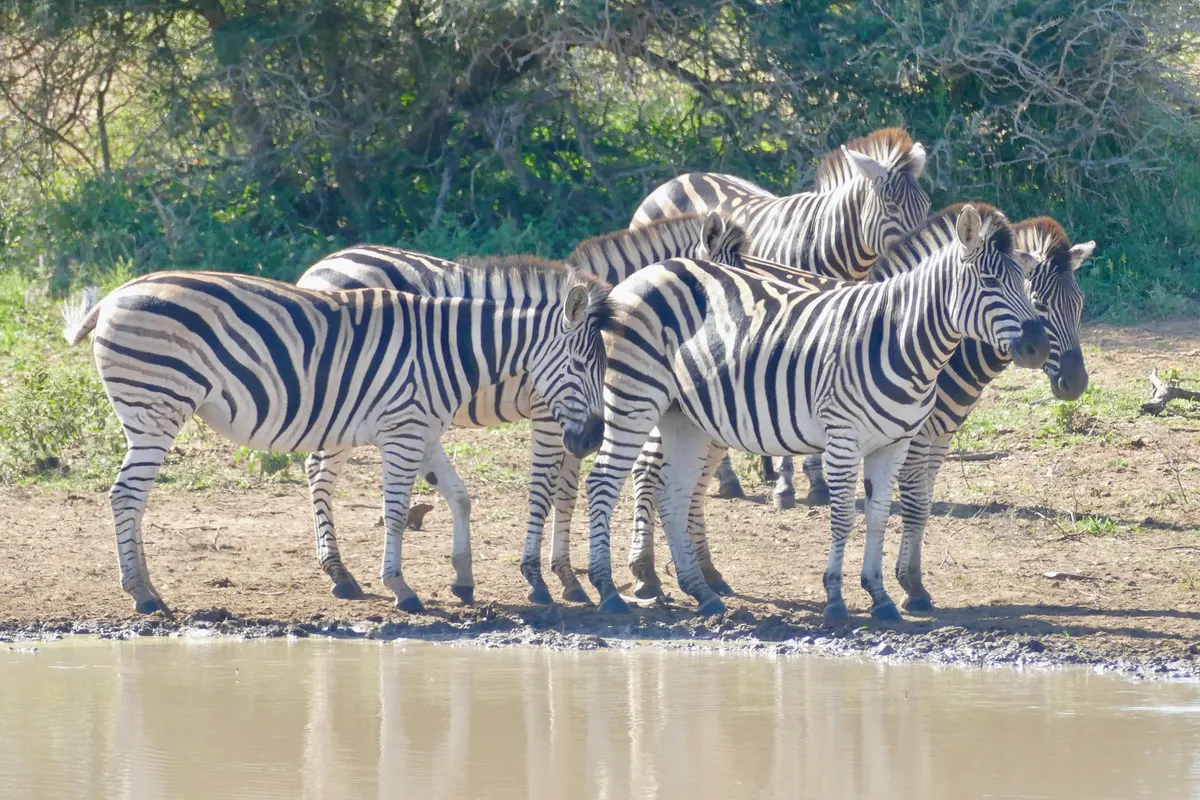
Multiple harems often aggregate to form massive "super-herds" containing thousands of individuals, particularly during migrations or when gathering at water sources. However, even within a crowd of thousands, a harem remains a distinct, cohesive unit. They are highly vocal, communicating through high-pitched barks, whinnies, and yips. Mutual grooming—where two zebras stand side-by-side facing opposite directions and nibble on each other's necks—is a vital social behavior that reduces stress, removes parasites, and reinforces social bonds.

Reproduction within the harem is exclusive to the dominant stallion. Mating occurs year-round, though birth peaks are often synchronized with the onset of the rainy season, ensuring the mother has access to rich, green grass to produce milk.
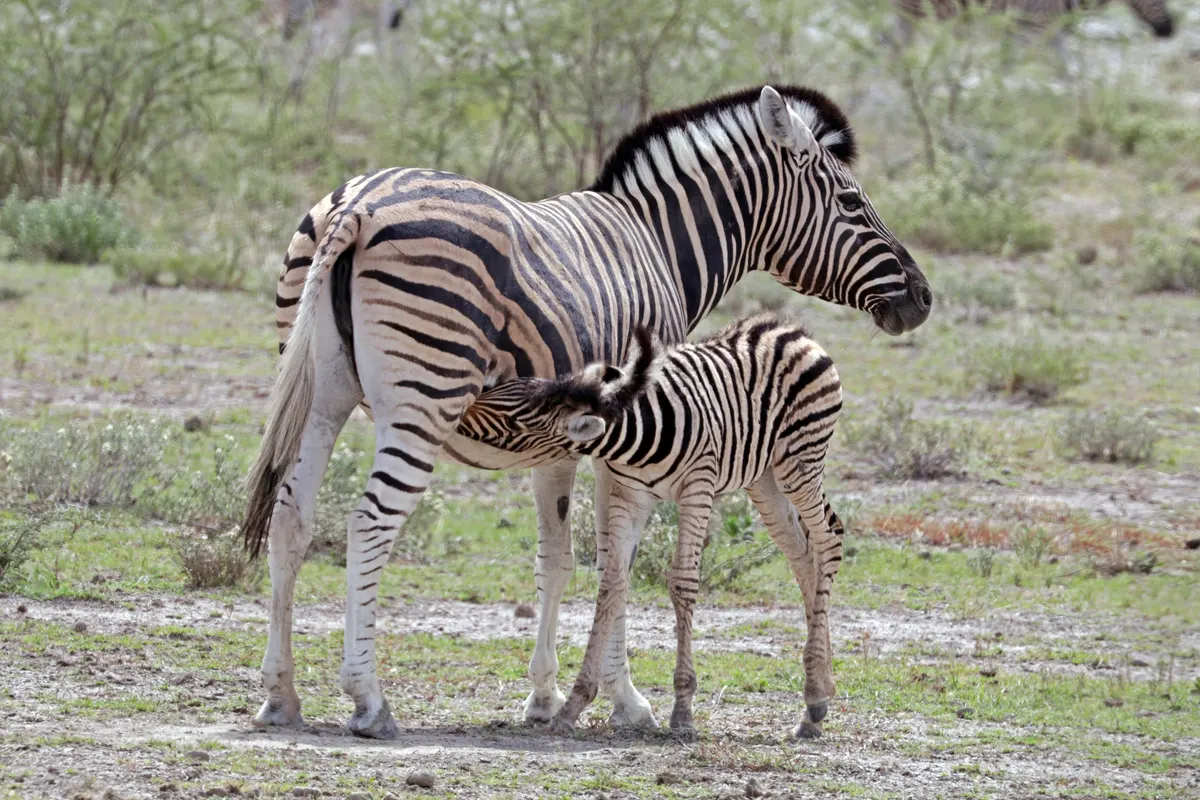
The gestation period is lengthy, lasting between 12 and 13 months. The mare gives birth to a single foal, which is born with brown and white stripes rather than the striking black and white of adults. In an incredible display of precocial development, the foal is capable of standing within 15 minutes of birth and can run with the herd within an hour—a vital necessity for surviving in a landscape teeming with predators.
During the first few days of life, the mother aggressively shields her foal from the rest of the herd, allowing the infant to memorize her specific stripe pattern, voice, and scent. The foal nurses for nearly a year but begins eating grass within a few weeks. Young males will eventually leave the harem to form "bachelor groups" until they are strong enough to challenge a stallion for a harem of their own. In the wild, zebras can live for 20 to 25 years.
(Population and conservation trend data sourced from the IUCN Red List of Threatened Species)
The plains zebra is currently classified as Near Threatened by the International Union for Conservation of Nature (IUCN), and its global population trend is decreasing.
While they remain relatively numerous in protected national parks like the Serengeti and the Maasai Mara, they face significant threats outside of these boundaries. The primary danger is habitat fragmentation and loss due to the expansion of human agriculture and livestock farming, which directly competes with zebras for grazing land and water. The erection of veterinary fencing to separate wild animals from domestic cattle often blocks ancient migration routes, leading to mass die-offs during droughts. Furthermore, zebras are illegally hunted (poached) for their meat and highly prized striped skins.
To learn more about the zebra and savanna ecology, consult the following authoritative resources:
Every zebra has a unique stripe pattern.
A zebra foal can stand shortly after birth.
Zebras use powerful kicks to defend themselves from predators.
Zebras often live in herds with a lot of calling and body signals.
Scientists still study exactly how stripes help zebras the most.
Zebras can travel long distances to find fresh grazing and water.
Select a question to reveal the answer.
A zebra is an African hoofed mammal related to horses and donkeys. It is famous for its black-and-white striped coat.
Zebras live in African savannas, grasslands, and open woodlands where they can graze and move in herds.
Zebras are herbivores. They mainly eat grass, along with some shoots and stems.
Stripes may help confuse biting insects, make moving herds harder for predators to track, and help zebras recognize one another.
A baby zebra is called a foal. Foals can stand and follow the herd soon after birth.
A zebra can run up to about 40 miles per hour and can also kick very hard if cornered.
Yes. Zebras usually live in family groups or larger herds, which helps them watch for danger together.
Some zebra populations are under pressure from habitat loss and fences. This page focuses on the plains zebra, which faces regional declines.