African Elephant Facts
"An elephant trunk has thousands of muscles."
African elephants are the largest land animals on Earth and use their trunks for smelling, touching, drinking, and gathering food.
Loading page content

"An elephant trunk has thousands of muscles."
African elephants are the largest land animals on Earth and use their trunks for smelling, touching, drinking, and gathering food.
This gallery supports both the core page and image search visibility.
Click any photo to view it larger. 8 images available.
Core article
Habitat, diet, behavior, and more — everything on one page.
The African elephant stands as a massive pillar of the savanna ecosystem, a megaherbivore whose very existence shapes the landscape it inhabits. With a silhouette that commands the horizon, Loxodonta africana is not merely the largest terrestrial animal on Earth; it is a profound display of evolutionary engineering. From the thousands of muscle fascicles intricately woven into its prehensile trunk to its seismically sensitive footpads, every anatomical feature of the African elephant is a specialized adaptation for survival in the demanding environments of the African continent. This species exemplifies complex cognition, displaying long-term memory, intricate social hierarchies, and emotional depth rarely observed outside of hominids and cetaceans.
The scientific classification of the African savanna elephant places it within the kingdom Animalia, phylum Chordata, class Mammalia, and order Proboscidea. Once a diverse order comprising mastodons, gomphotheres, and mammoths, Proboscidea is today represented solely by the family Elephantidae. Within this family, the genus Loxodonta contains two distinct extant species: the savanna elephant (Loxodonta africana) and the smaller forest elephant (Loxodonta cyclotis).
Diverging from their Asian cousins (Elephas maximus) roughly 6 to 7.6 million years ago, Loxodonta africana evolved to conquer the expansive, sun-drenched grasslands of Africa. Fossil records indicate that early proboscideans originated in Africa during the Paleocene epoch, initially appearing as small, amphibious creatures resembling modern tapirs. Over millions of years, selective pressures for reaching higher foliage, defending against mega-predators, and traversing vast distances drove the evolutionary trajectory toward gigantism. Today, the African elephant stands as the ultimate manifestation of these ancient selective pressures, retaining primitive traits such as prolonged gestation while boasting highly derived characteristics like its elongated proboscis.
The sheer scale of Loxodonta africana is staggering. Adult males frequently reach lengths between 18 and 24 feet and stand a towering 13 feet at the shoulder, with weights maximizing at an astounding 13,000 pounds. Females exhibit significant sexual dimorphism, generally being smaller but still reaching up to 8,000 pounds.
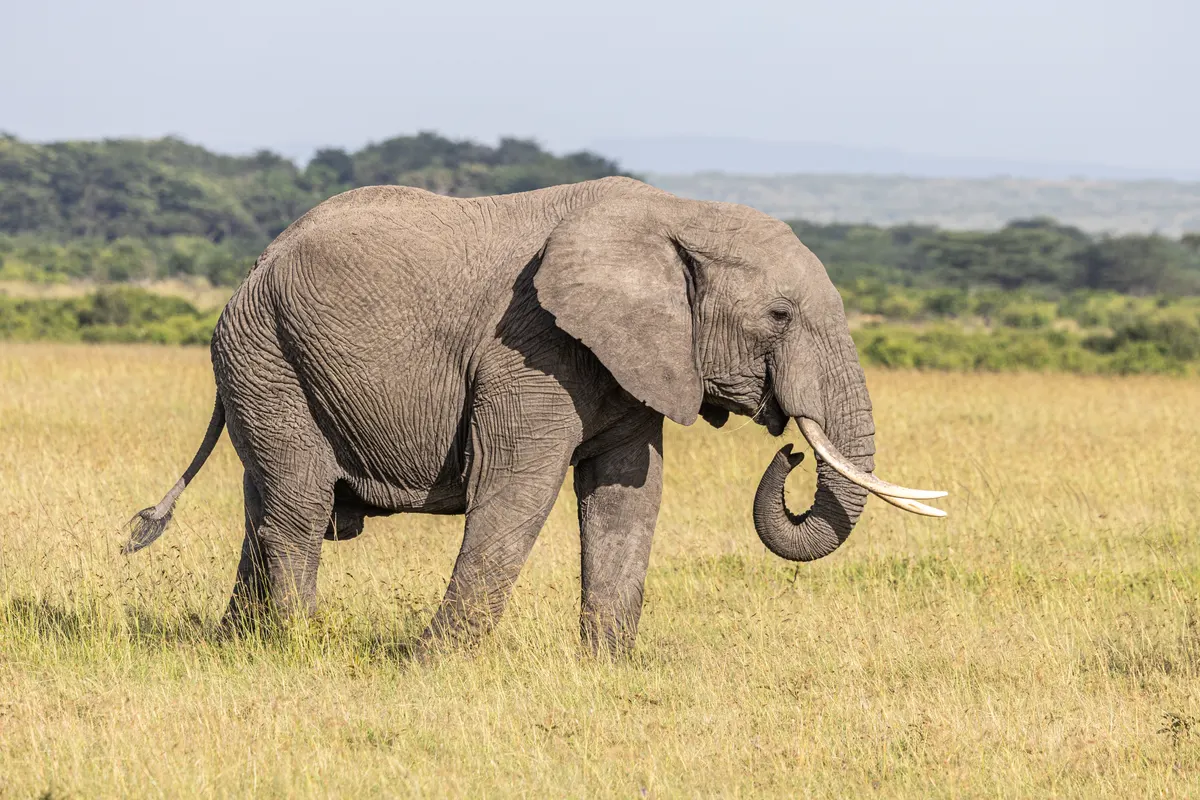
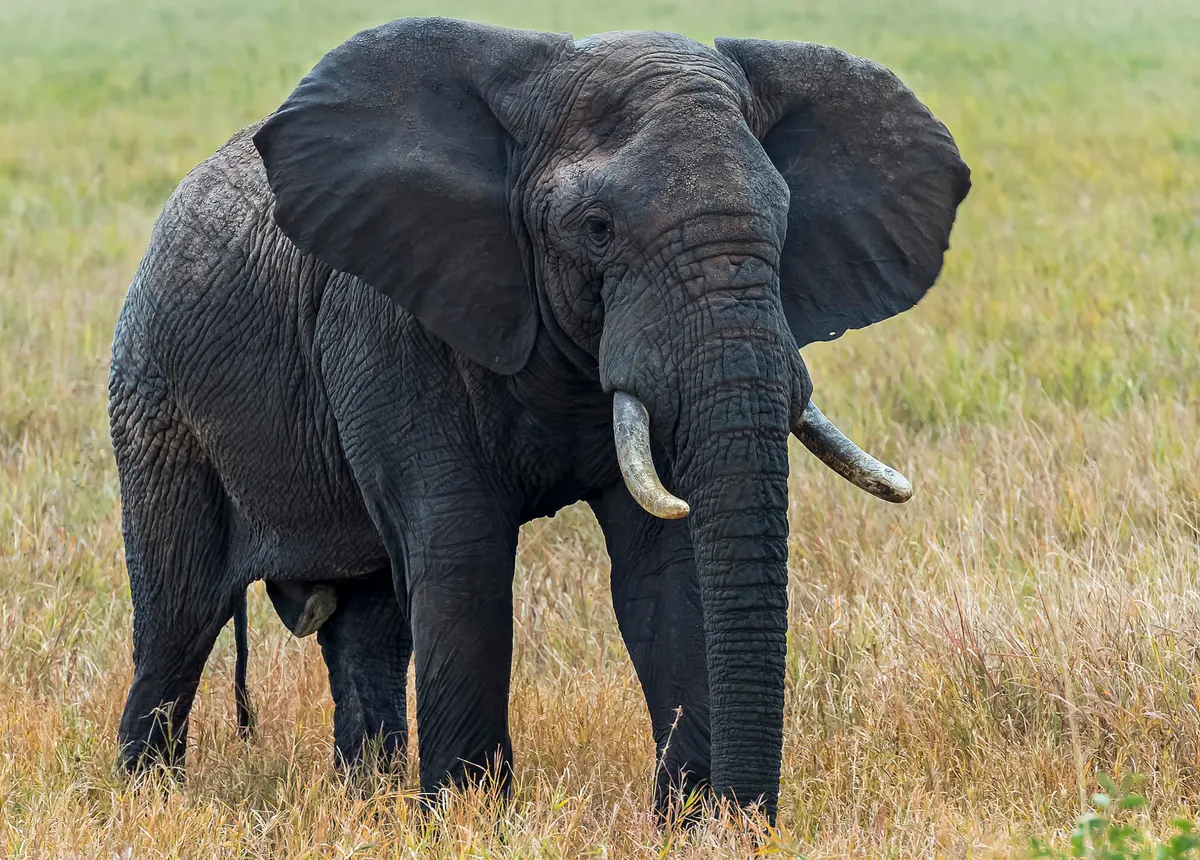
The most iconic morphological feature is undoubtedly the proboscis, or trunk. A fusion of the upper lip and nose, the trunk lacks any skeletal support, operating entirely as a muscular hydrostat. Composed of an estimated 40,000 distinct muscle fascicles, it possesses the delicate motor control required to pluck a single blade of grass and the sheer kinetic force necessary to uproot a mature acacia tree. The African elephant's trunk terminates in two opposing, finger-like projections, affording it a high degree of tactile dexterity.
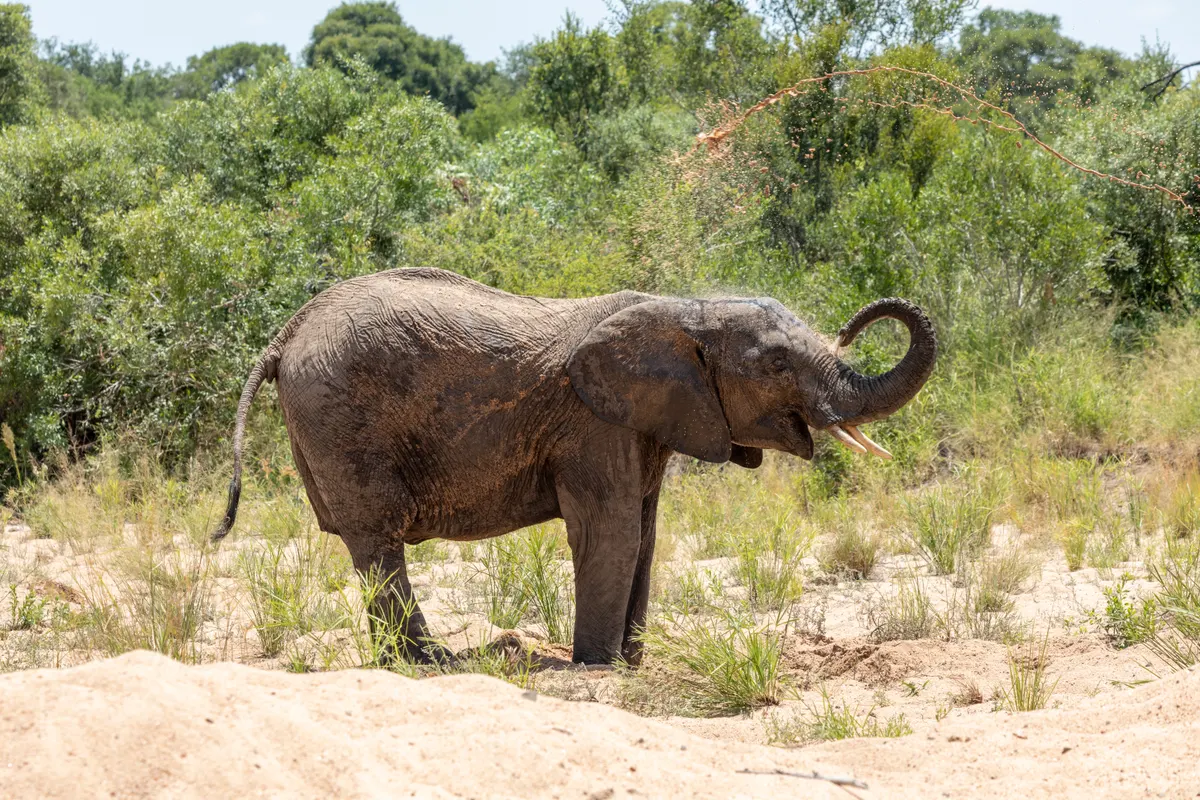
Thermoregulation is a critical challenge for a creature of this mass living in equatorial climates. To combat hyperthermia, African elephants have evolved massive pinnae (ears) measuring up to six feet in length. These ears are heavily vascularized; by flapping them, the elephant creates a localized breeze, cooling the blood circulating through a dense network of capillaries before it returns to the core body. Additionally, their skin, which can be up to 1.5 inches thick, is highly rugose (wrinkled). These deep fissures trap moisture and mud, effectively increasing the skin's surface area to enhance evaporative cooling and providing a robust physical barrier against ultraviolet radiation and ectoparasites.

Endemic to the continent of Africa, Loxodonta africana boasts a broad, albeit increasingly fragmented, distribution. Historically spanning from the Mediterranean coast to the Cape of Good Hope, their current range is largely restricted to Sub-Saharan Africa, with significant populations concentrated in countries such as Botswana, Zimbabwe, Kenya, and Tanzania.
Their primary habitat consists of tropical and subtropical savannas, grasslands, and semi-arid scrub forests. These ecosystems are defined by pronounced wet and dry seasons, forcing the elephants into a nomadic lifestyle dictated by the availability of water and forage. As keystone species, they actively engineer their biomes. By uprooting trees, they maintain the open canopy of the savanna, preventing the encroachment of woodlands and promoting the growth of grasses that sustain vast herds of ungulates. Furthermore, during severe droughts, elephants utilize their tusks to excavate dry riverbeds, accessing subterranean water tables and creating essential oases for countless other species.

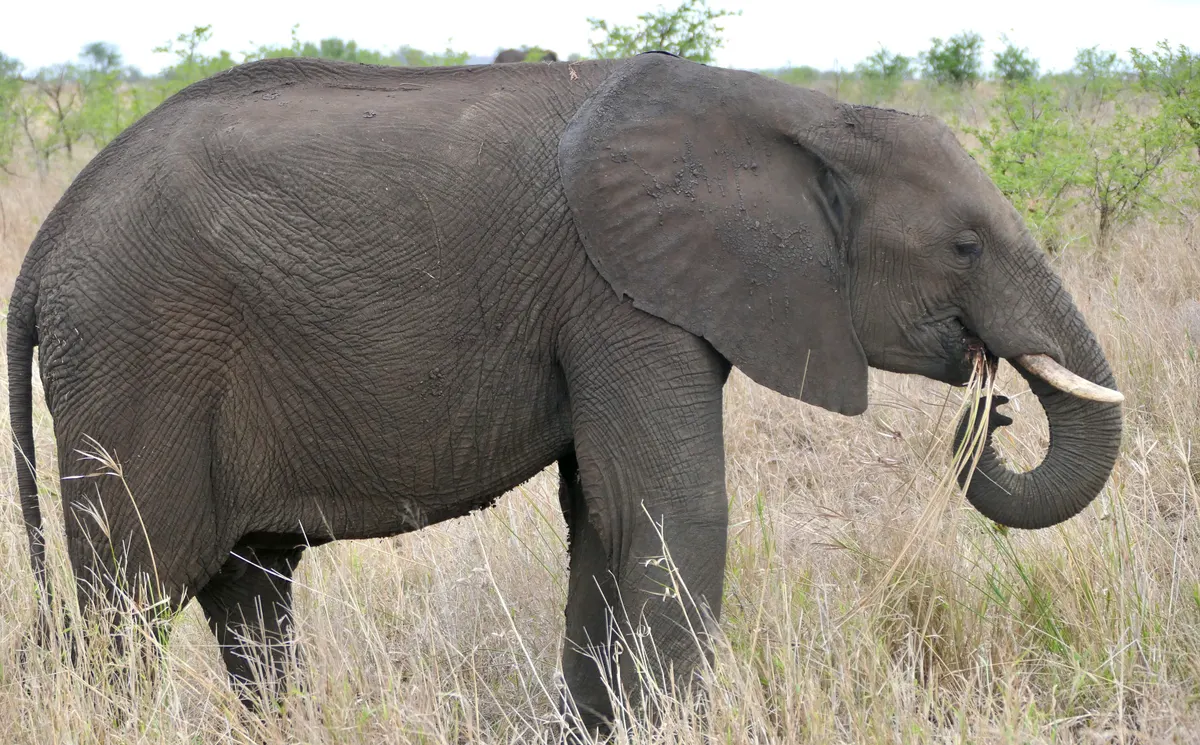
As obligate megaherbivores, African elephants require a massive caloric intake to maintain their massive bodies, consuming up to 300 pounds of vegetation in a single 24-hour cycle. Their diet is highly versatile and seasonally dependent, encompassing grasses, leaves, twigs, bark, roots, and fruit. During the wet season, their feeding strategy shifts primarily toward grazing on protein-rich grasses. Conversely, the dry season necessitates a browsing strategy, where they strip foliage and bark from woody plants.
The mechanical processing of this fibrous diet relies on highly specialized dentition. African elephants possess a polyphyodont dental replacement system. Instead of vertical eruption, their molars emerge horizontally from the rear of the jaw, gradually pushing forward to replace worn teeth. An elephant will cycle through six sets of these massive, brick-like molars over its 60 to 70-year lifespan. Once the final set is severely abraded, the animal often succumbs to starvation, a natural biological limit to their longevity.
Their digestive tract is adapted for hindgut fermentation. Lacking the multi-chambered stomachs of ruminants, elephants utilize a massive caecum populated by symbiotic bacteria to break down cellulose. Despite this adaptation, their digestive efficiency is relatively low, processing only about 40% of what they consume, meaning their dung remains rich in undigested seeds and nutrients, functioning as a crucial fertilizer and seed dispersal mechanism across the savanna.

The social architecture of Loxodonta africana is one of the most complex in the animal kingdom, characterized by a deep-rooted matriarchal system. The fundamental social unit is the family group, consisting of closely related females—sisters, daughters, and aunts—and their immature offspring. At the helm is the matriarch, typically the oldest and most experienced female. Her encyclopedic memory is the key to the herd's survival; she retains spatial knowledge of migratory routes, distant water sources, and seasonal foraging grounds accumulated over decades.
Males, upon reaching sexual maturity between the ages of 10 and 15, are gradually excluded from the natal herd. They adopt a more solitary existence or form loose, transient bachelor coalitions. Periodically, mature males enter a physiological state known as "musth." Characterized by a massive surge in testosterone—often 60 times the basal level—musth induces heightened aggression and an overwhelming drive to mate. During this period, males secrete a pungent fluid from their temporal glands and continuously dribble highly odorous urine, broadcasting their physiological status to both potential mates and rival males. Combat between musth males is a brutal, seismic affair involving ferocious tusk clashes and wrestling that can result in fatal puncture wounds.
Communication among African elephants is multi-modal, utilizing tactile, visual, olfactory, and acoustic signals. They are particularly renowned for their use of infrasound—low-frequency vocalizations below the threshold of human hearing (under 20 Hertz). These powerful acoustic waves can propagate through the ground and air for several miles, allowing widely dispersed herds to coordinate movements, broadcast reproductive readiness, and alert others to danger.

The reproductive biology of the African elephant is marked by intense maternal investment and an extended developmental period. The gestation period lasts an astonishing 22 months, the longest of any terrestrial mammal. This prolonged embryonic development is necessary for the formation of the calf's complex neurological architecture.
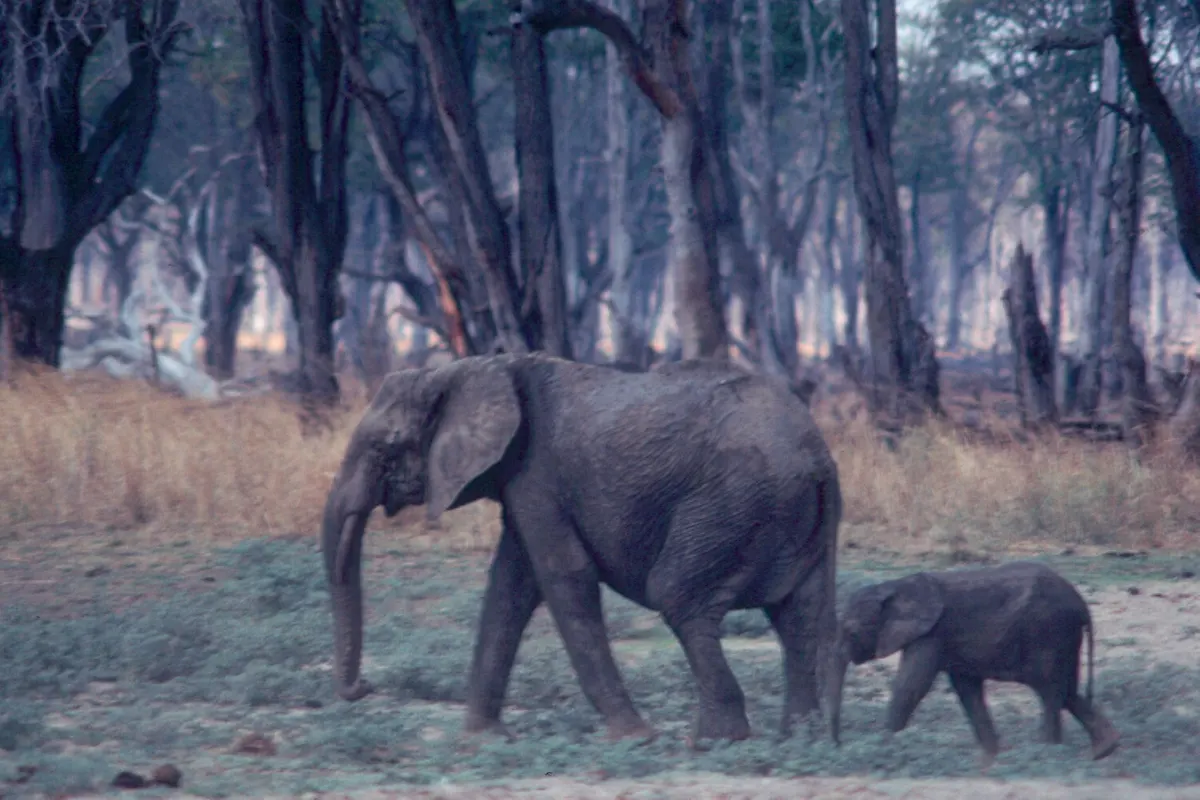
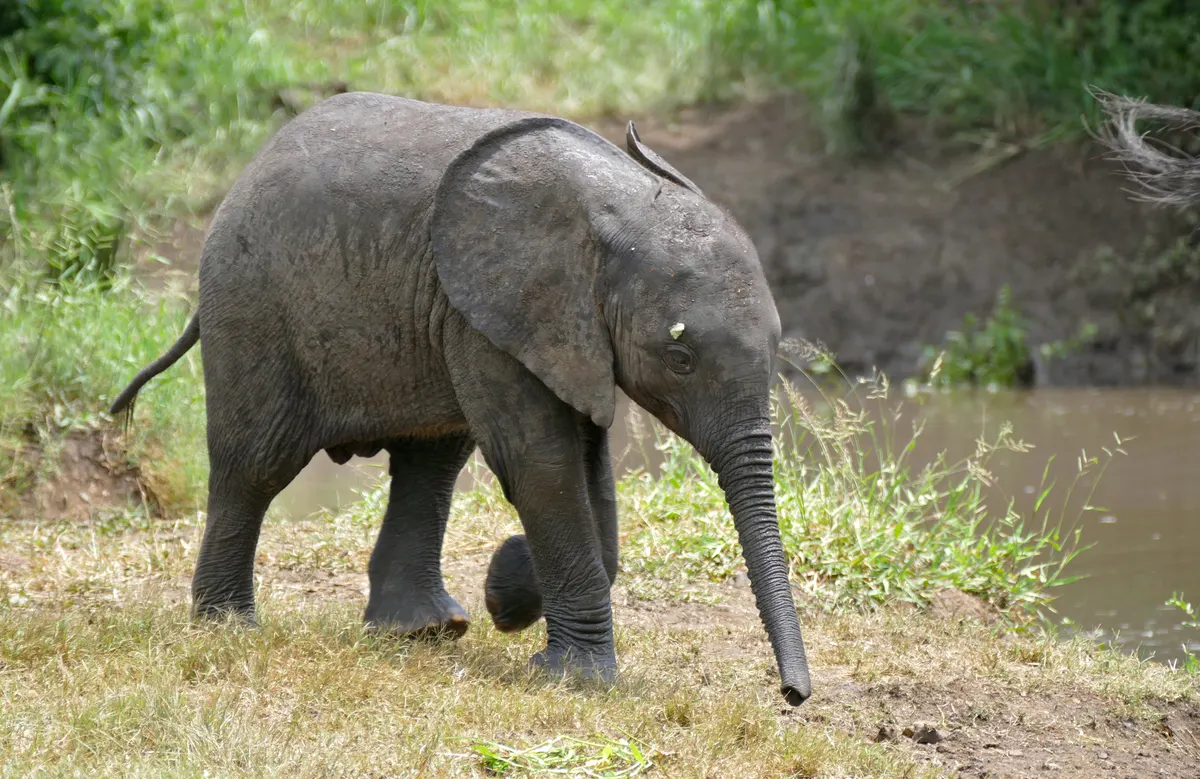
Calves are born weighing approximately 200 to 250 pounds and are initially highly vulnerable. They rely heavily on the herd for protection against predators such as lions and spotted hyenas. The phenomenon of allomothering is prevalent; younger, nulliparous females actively assist in caring for the calf, gaining vital maternal experience while allowing the biological mother to forage efficiently.
Nursing continues for up to three years, although calves begin experimenting with solid vegetation at a few months of age, often consuming the feces of adult herd members to inoculate their sterile hindguts with the symbiotic bacteria necessary for cellulose digestion. Development is agonizingly slow. Elephants do not reach full physical maturity until their late twenties or early thirties, and they boast a wild lifespan of 60 to 70 years, a longevity intrinsically linked to their slow metabolic rate and lack of natural predators in adulthood.
(Population and conservation trend data sourced from the IUCN Red List of Threatened Species)
Despite their formidable size and cognitive brilliance, Loxodonta africana is classified as Endangered on the IUCN Red List, with populations experiencing a severe and ongoing decline. The primary driver of this demographic collapse is the illegal wildlife trade. Poaching for ivory—the heavily calcified dentin of their elongated incisors—has decimated herds across the continent. Driven by demand in international black markets, sophisticated poaching syndicates utilize automatic weapons and poison to harvest tusks, often wiping out entire family units in a single night.
Habitat fragmentation poses a parallel, insidious threat. As human populations expand, agricultural development and infrastructure projects sever historical migratory corridors. This encroachment restricts elephants to isolated protected areas, leading to localized overpopulation, severe environmental degradation within reserves, and escalating human-wildlife conflict. When elephants raid crops, they are frequently killed by retaliatory farmers, further exacerbating the population decline.
Conservation strategies demand a multi-faceted approach: rigorous anti-poaching enforcement, the dismantling of global ivory trafficking networks, and the establishment of transfrontier conservation areas to reconnect fragmented habitats. Without aggressive, internationally coordinated intervention, the African savanna risks losing its most monumental architect.
An elephant trunk has thousands of muscles.
Elephants use mud like sunscreen.
Large ears help release body heat.
Families are led by experienced females called matriarchs.
Select a question to reveal the answer.
The trunk helps an elephant smell, touch, drink, and gather food.
They eat plants such as grasses, bark, leaves, and fruit.