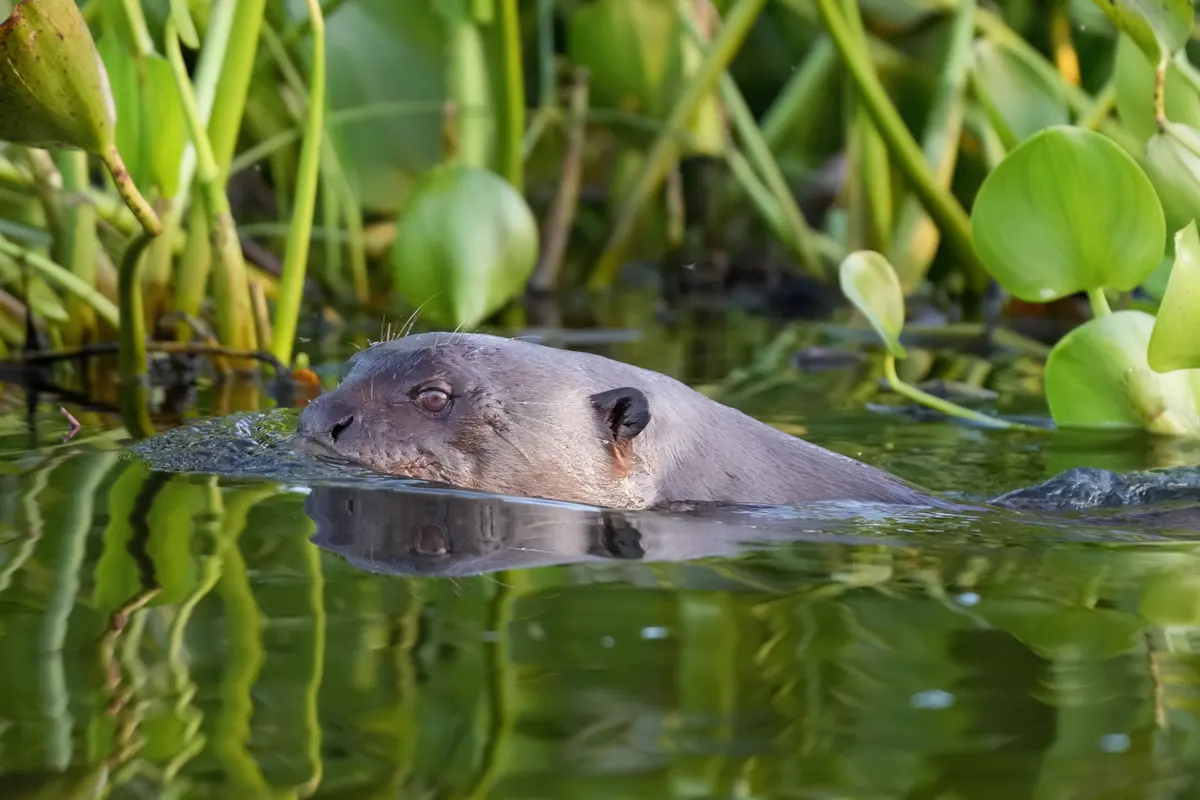
The giant otter is the longest member of the weasel family and a social predator of South American rivers.
MammaliaEndangered
Giant Otter
“In Spanish-speaking regions the giant otter is nicknamed lobo de rio, the river wolf, for the way its family groups hunt together.”
The giant otter is a large, highly social carnivore of South America's tropical rivers and wetlands. It is the longest member of the weasel family and lives in noisy family groups that hunt fish together.