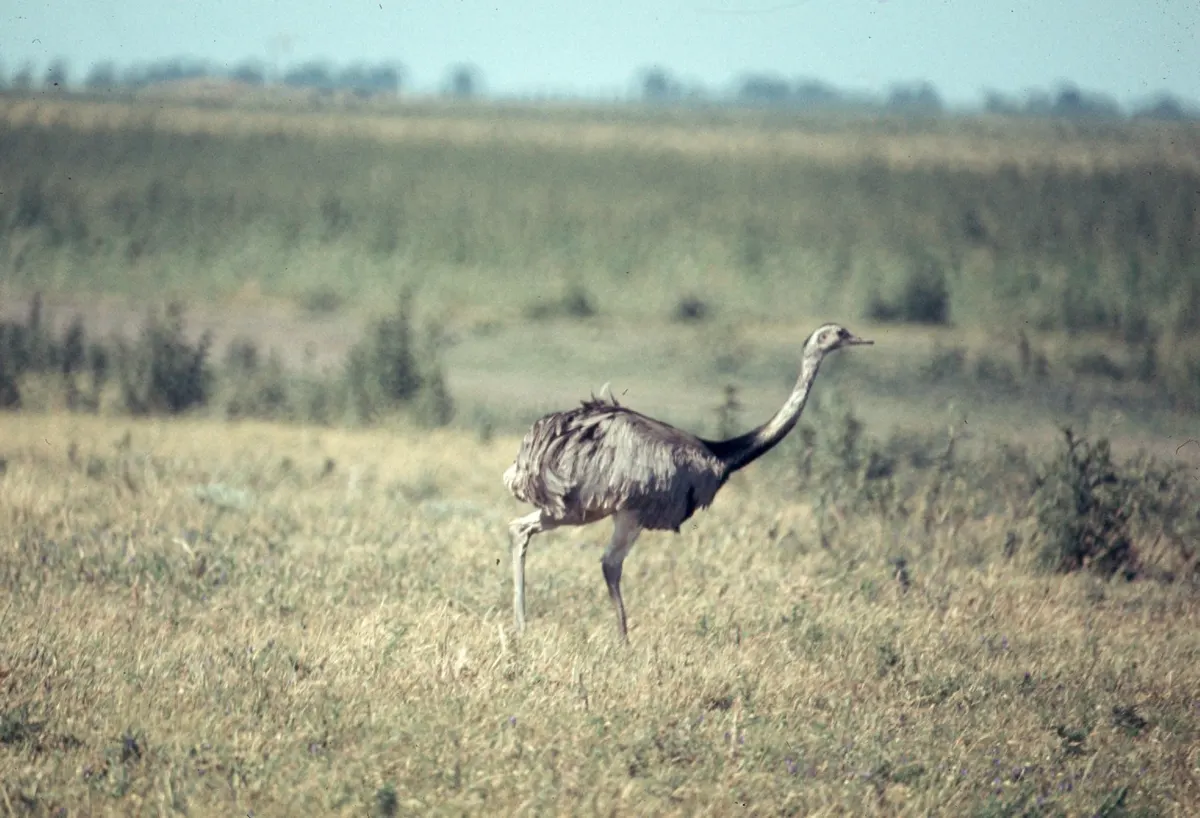
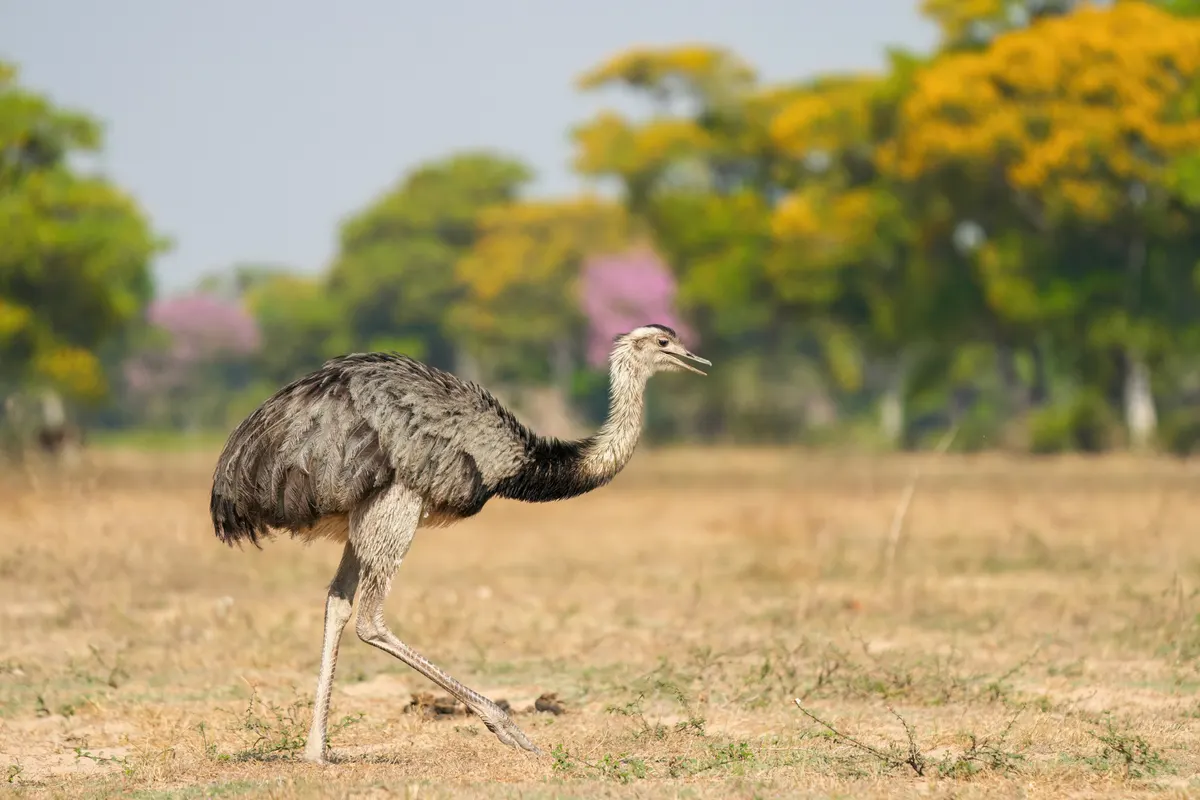
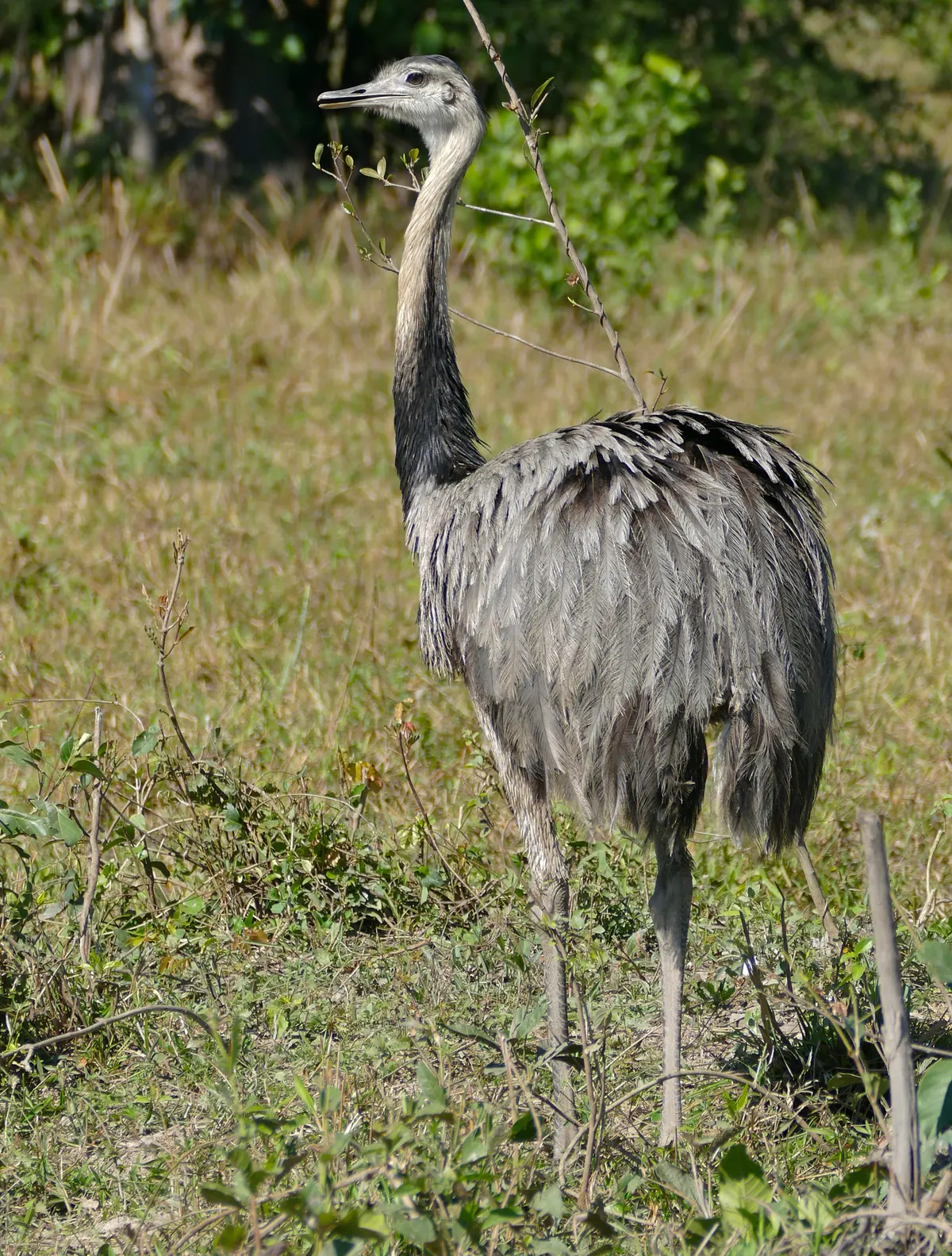
Large grey-brown flightless rhea standing in open grassland
The greater rhea is the largest bird in the Americas, a flightless relative of ostriches and emus.
AvesNear Threatened

Greater Rhea

The greater rhea is the largest bird in the Americas, standing up to about 1.7 metres tall.

The greater rhea is a large flightless ratite of South American grasslands and the largest bird in the Americas. Males build the nest, incubate eggs laid by several females, and raise the chicks alone.
By · Updated

Quick Facts

Greater Rhea at a glance

Rhea americanaRheiformesRheidae

About their home

Kind of animal

Aves

Where they live

What they eat

How safe?

Near Threatened

Size and speed

How heavy

20 kg – 40 kg

How long

1.2 m tall – 1.7 m tall

How fast

Fast runner, up to about 60 km/h in short bursts

Lifespan

About 10 to 15 years

Core article

Greater Rhea: ecology and life history

A closer look at habitat, diet, behavior, reproduction, and conservation.

Start here

Greater Rhea

The greater rhea is the largest bird in the Americas, a flightless ratite that ranges across the grasslands and pampas of eastern and central South America. Standing up to about 1.7 metres tall, it is a distant relative of the ostrich and emu rather than of any flying bird. Much of what makes the species distinctive happens on the ground and around the nest, where a single male takes on almost all of the work of raising the next generation.

Anatomy and Feathers

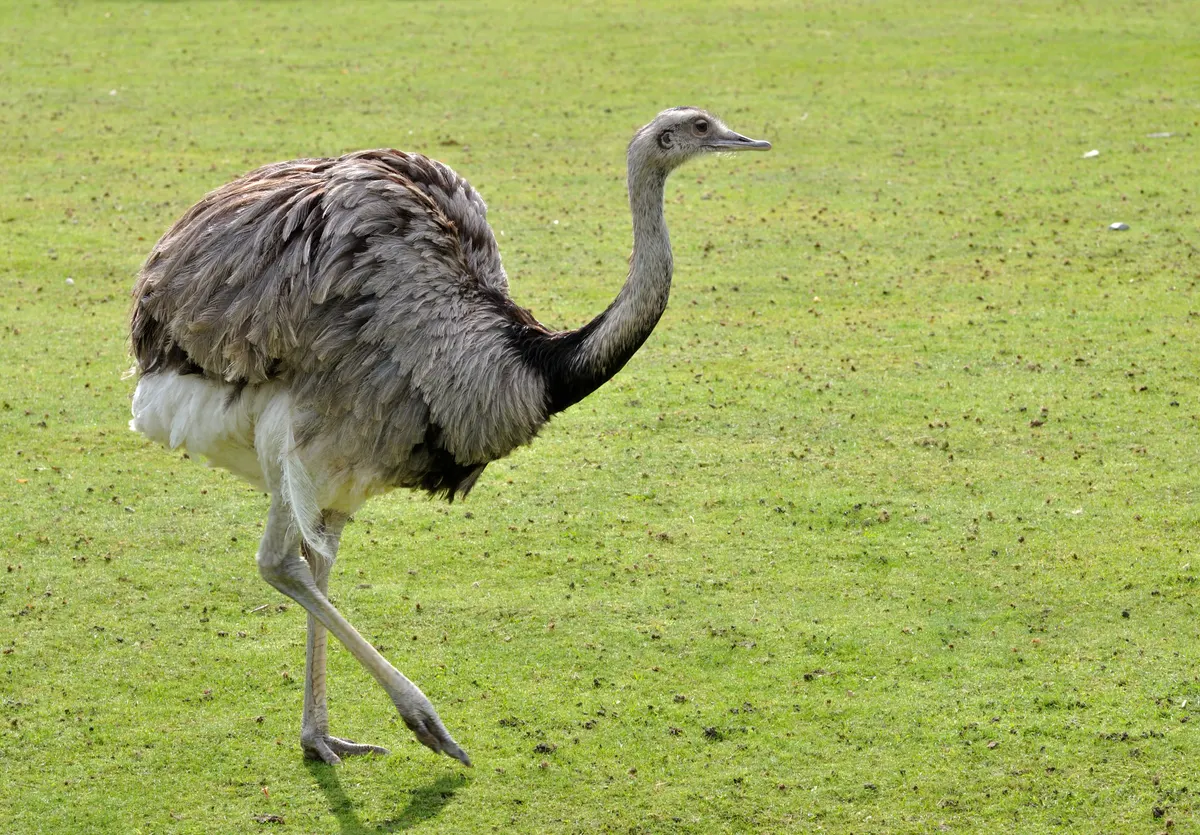
Greater rhea walking while feeding
Rheas swallow grit to help grind food and can go long stretches getting water from plants.

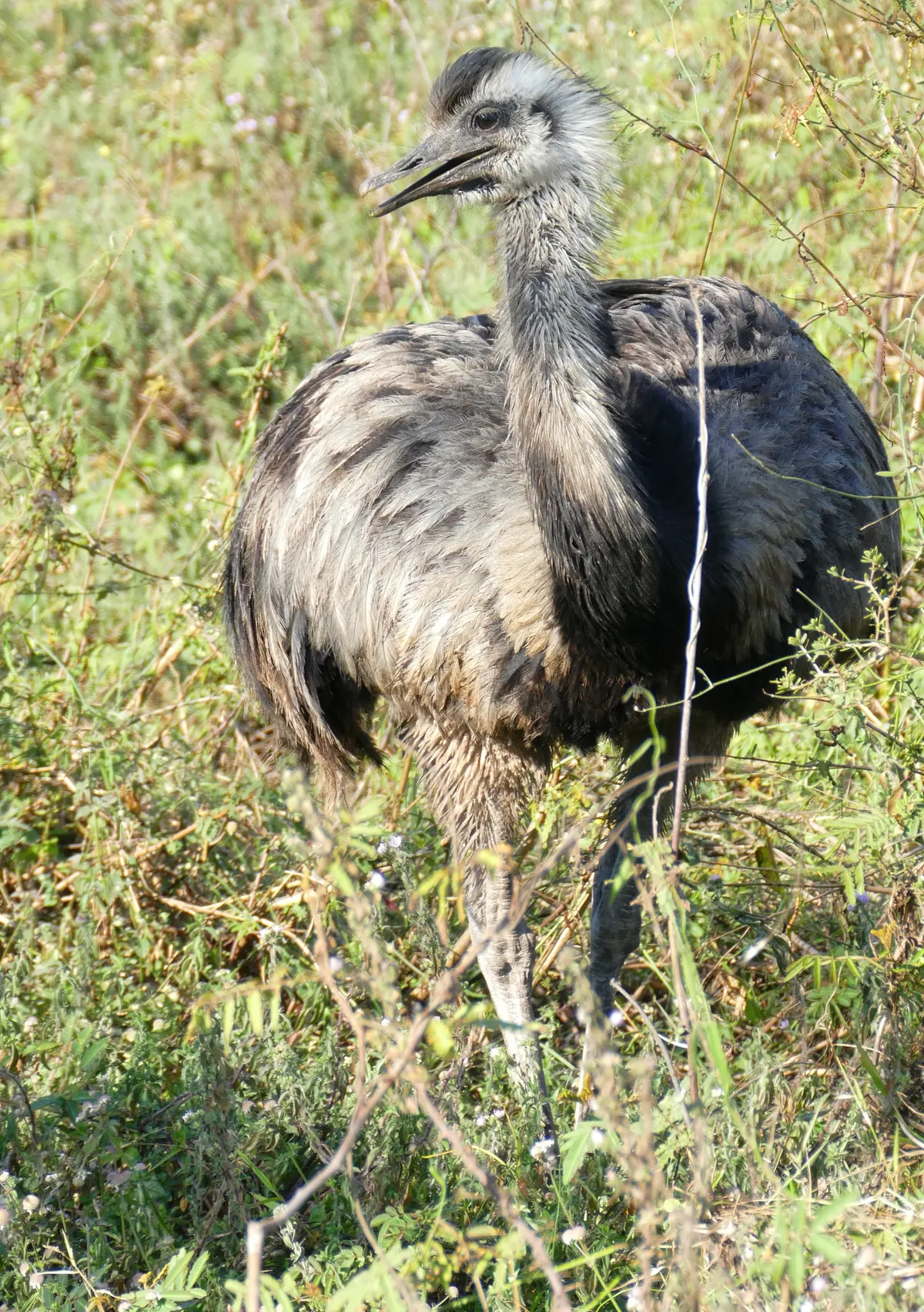
An adult greater rhea stands roughly 1.2 to 1.7 metres tall and weighs about 20 to 40 kilograms, with males usually larger and darker than females. The plumage is loose and shaggy, grey to grey-brown, and blends into dry grassland. Unlike most birds, rheas have no tail feathers, and the soft body plumage gives them a somewhat untidy outline.

The wings are large for a flightless bird but carry no flight function. Instead they act as counterbalances: when a running rhea makes a sharp turn, it raises one wing and lowers the other to stay upright, and the same wings are spread during courtship displays. The legs are long and muscular, built for sustained running, and each foot has three forward-facing toes with no hind toe, which suits movement over open ground. Like other ratites, rheas lack the deep keeled breastbone that anchors the large flight muscles of flying birds.

Habitat and Distribution

Greater rhea in tall grassland
Open country lets rheas spot predators early and feed on scattered plants and insects.

Greater rheas are birds of open country. They occupy grassland, savanna, pampas, and scrub, generally at lower elevations and often near water. They avoid dense humid forest, which does not provide the open sightlines and running room the species depends on.

The native range covers Brazil, Argentina, Uruguay, Paraguay, and Bolivia, spanning several million square kilometres. Within that area the species is divided into a handful of subspecies that differ only slightly in size and shade. A separate, well-documented feral population lives in northern Germany, descended from a small group of birds that escaped a farm around the year 2000 and established itself in the countryside of Schleswig-Holstein and Mecklenburg-Vorpommern.

Diet and Foraging

The greater rhea is an omnivore, though the diet is overwhelmingly plant-based. It feeds mainly on broad-leaved foliage, seeds, and fruit, favouring dicot plants over grasses and generally avoiding cereal grains. Animal food makes up a small part of the intake: insects, scorpions, and occasional small vertebrates such as rodents, reptiles, and small birds.

Rheas forage while walking through open vegetation, cropping leaves and picking up fallen seeds and fruit. Like many plant-eating birds, they swallow small stones that lodge in the gizzard and help grind fibrous food, and they are known to be attracted to shiny objects, which they sometimes swallow as well. On farmland they will feed among crops, which brings them into conflict with growers in some areas.

Behavior and Breeding

Greater rhea moving through grass
A single male incubates a communal clutch for about six weeks, then raises the chicks alone.

Outside the breeding season, greater rheas are social and gather in mixed flocks that can range from about ten to a hundred birds. These flocks give many eyes for spotting predators across the open plains. When alarmed, a rhea runs rather than hides, often in a zigzag path, raising the wings alternately to help it change direction at speed.

The breeding season transforms this social pattern. Flocks break up and males become territorial, courting groups of females with spread-wing displays and low booming calls that are otherwise rare in this generally quiet bird. The mating system is unusual: a male is polygynous, gathering several females, while each female is serially polyandrous, moving between males and laying eggs for more than one of them over a season.

Reproduction and Young

The male does nearly all of the parental work. He scrapes and builds a ground nest, and the females of his group lay their eggs into that single communal clutch before moving on. As a result one nest can hold a large number of eggs, commonly around 20 to 30 and sometimes many more when several females contribute; totals of 50 or more have been recorded.

The male alone incubates the clutch for roughly six weeks, about 29 to 43 days depending on conditions. He then guards and leads the chicks, which are called chicks or hatchlings, for several months after they hatch. During this period he defends the brood aggressively and may even threaten approaching females. The young grow quickly on the same broad diet as adults and reach breeding age at about two to three years. This arrangement, in which the male incubates and raises the brood of multiple females, is a defining feature of the species and is shared in various forms with other ratites.

Taxonomy and Relatives

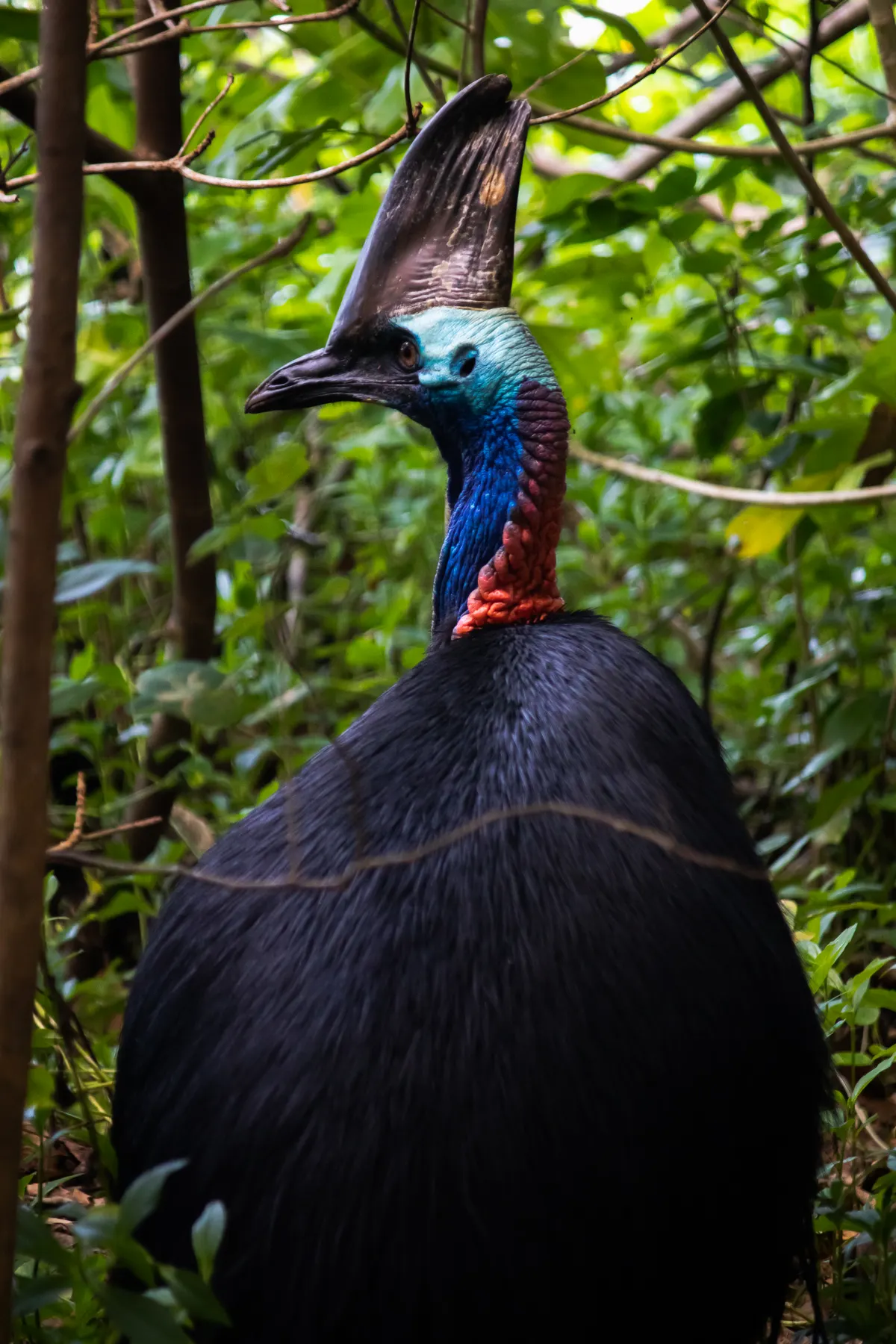
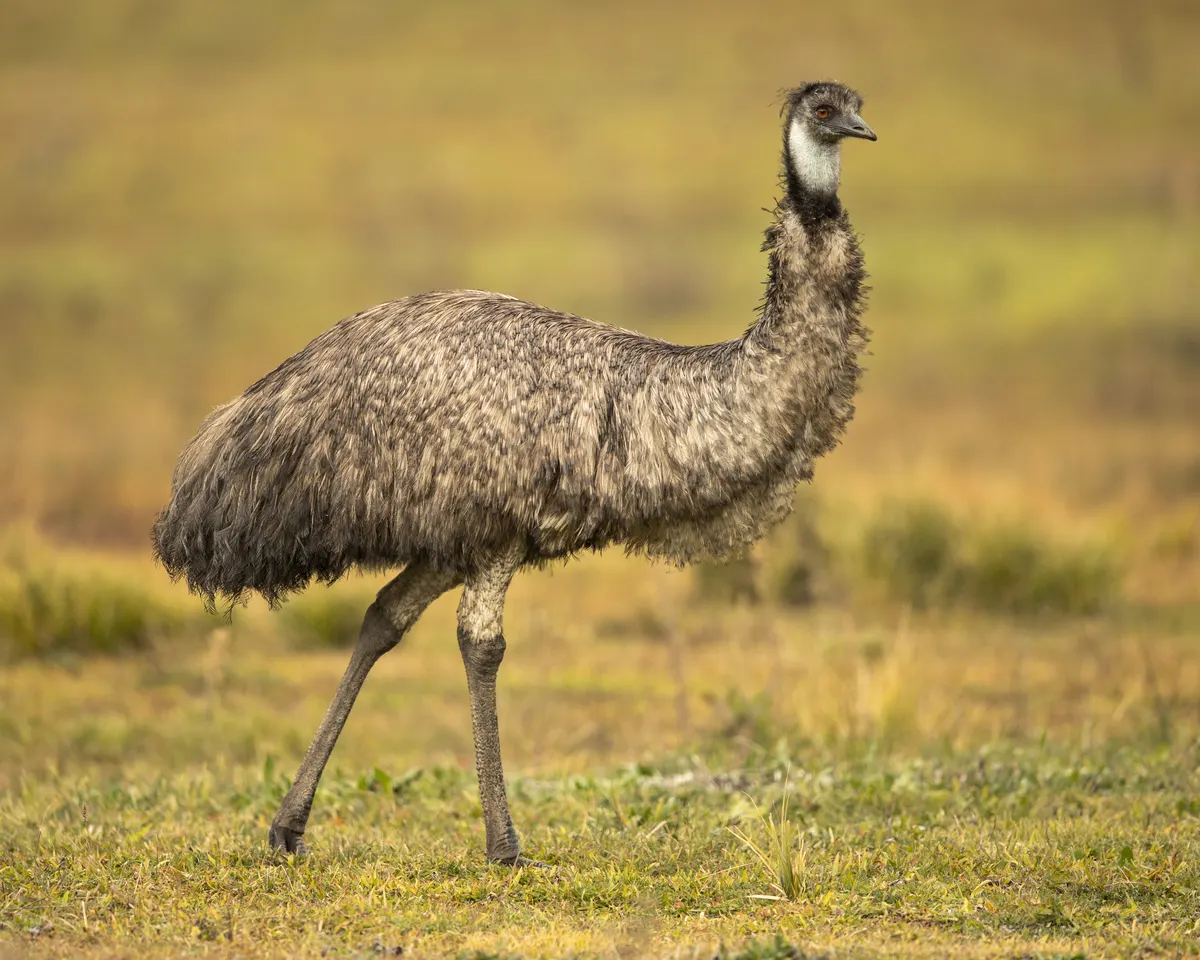
The greater rhea belongs to the order Rheiformes and the family Rheidae, one of two living rhea species alongside the smaller lesser or Darwin's rhea. Rheas are ratites, the group of flightless birds with a flat, un-keeled breastbone. Their closest relatives on other continents are the ostrich of Africa, the emu and cassowary of Australia and New Guinea, and the kiwi of New Zealand.

These birds share a flightless, running body plan but reached it on separate landmasses as the southern continents drifted apart, which is why they look broadly similar while differing in size, plumage, and behaviour. The greater rhea occupies the ecological role in South America that the ostrich fills in Africa and the emu fills in Australia: a large, ground-dwelling grazer of open plains.

Conservation and Threats

Greater rhea standing in grassland
Listed as Near Threatened, rheas are declining as grasslands are converted to farmland.

The IUCN Red List classifies the greater rhea as Near Threatened, with a population trend listed as decreasing. Although the species still occupies a very large range, numbers are falling across much of it.

The main pressures are hunting and habitat loss. Rheas are killed for meat, feathers, and leather, and their eggs are collected; at the same time the grasslands they depend on are being converted to cropland and cattle pasture, and crop burning removes cover and food. On farmland they are sometimes treated as pests. The species is listed on CITES Appendix II, which regulates international trade, and it is farmed commercially in parts of the Americas and Europe for meat, eggs, oil, and leather. Continued monitoring of wild populations matters most where hunting and grassland conversion overlap.

References and Authoritative Sources

Greater Rhea: classification and fun facts

Classification

Scientific Taxonomy
  1. Kingdom

    Animalia

  2. Phylum

    Chordata

  3. Class

    Aves

  4. Order

    Rheiformes

  5. Family

    Rheidae

  6. Genus

    Rhea

  7. Species

    R. americana

Did You Know?

Fun Facts

1

The greater rhea is the largest bird in the Americas, standing up to about 1.7 metres tall.

2

Like the ostrich and emu, it is a flightless ratite; its wings are used for balance and display, not flight.

3

A single male incubates the eggs of several females and then raises the whole brood of chicks by himself.

4

One communal nest can hold dozens of eggs; totals of 50 or more from many females have been recorded.

5

A feral population has lived in northern Germany since a few birds escaped a farm around 2000.

6

Rheas swallow pebbles and are often drawn to shiny objects, which they may also swallow.

Common Questions

FAQ about Greater Rhea

Select a question to reveal the answer.

What is a greater rhea?

The greater rhea (*Rhea americana*) is a large flightless bird of South American grasslands. It belongs to the ratites, the same broad group as ostriches, emus, cassowaries, and kiwis, and it is the largest native bird in the Americas.

Where do greater rheas live?

They live in open grassland, savanna, pampas, and scrub across eastern and central South America, in Brazil, Argentina, Uruguay, Paraguay, and Bolivia. A feral population has also established itself in northern Germany.

What do greater rheas eat?

They are omnivores. Most of the diet is plant material such as broad-leaved foliage, seeds, and fruit, supplemented by insects and occasional small vertebrates. They generally avoid grasses and cereal grains.

Can a greater rhea fly?

No. Greater rheas are flightless. Their large wings are used to keep balance during fast turns while running and in courtship displays rather than for flight.

Do male greater rheas raise the young?

Yes. The male builds the nest, several females lay eggs in it, and the male alone incubates the communal clutch for about six weeks and then guards and rears the chicks for several months.

Are greater rheas endangered?

The IUCN Red List rates the greater rhea as Near Threatened with a decreasing population. The main pressures are hunting and the conversion of grassland to farmland and ranchland.