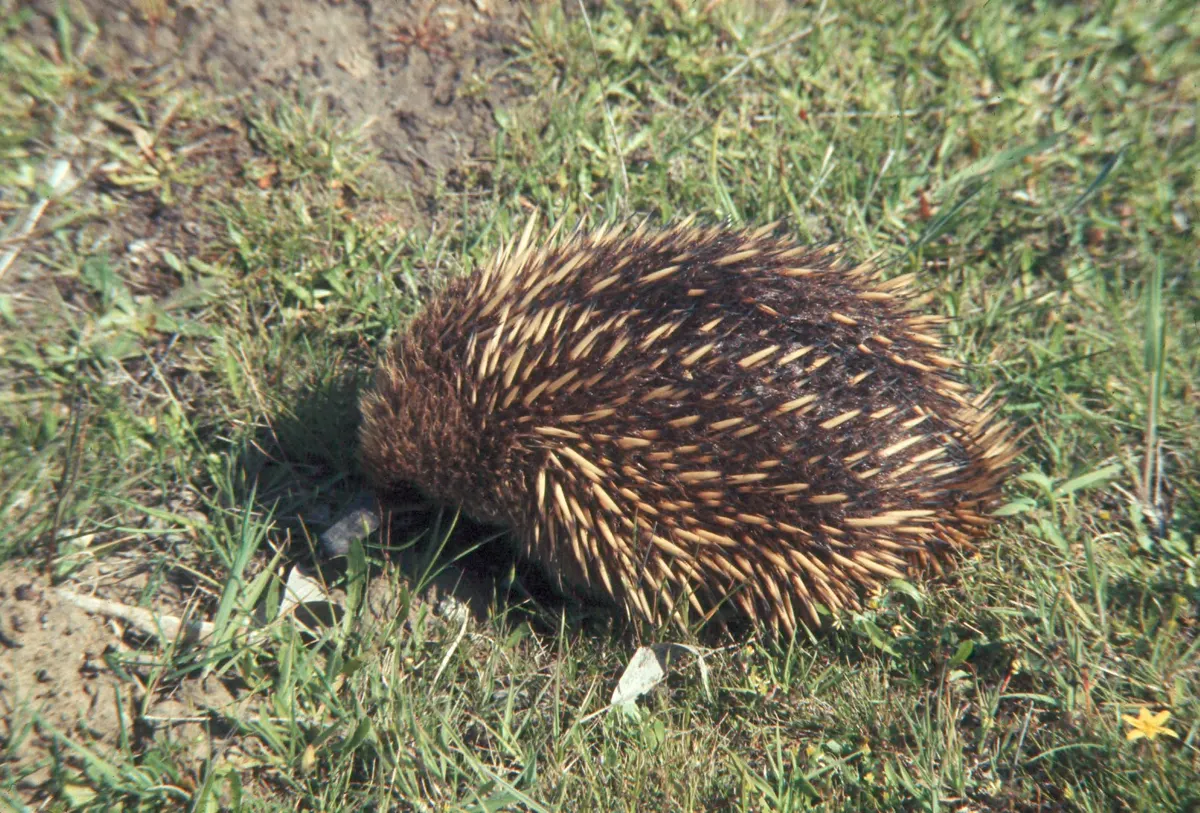
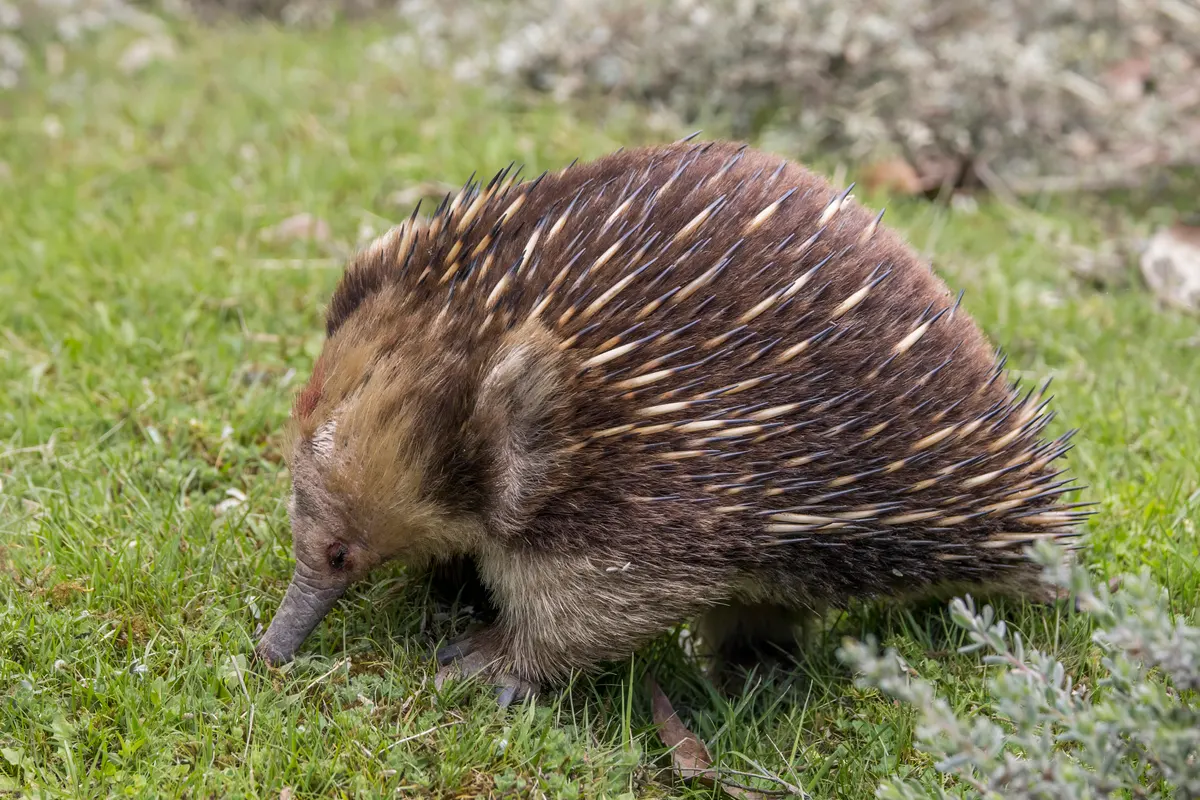
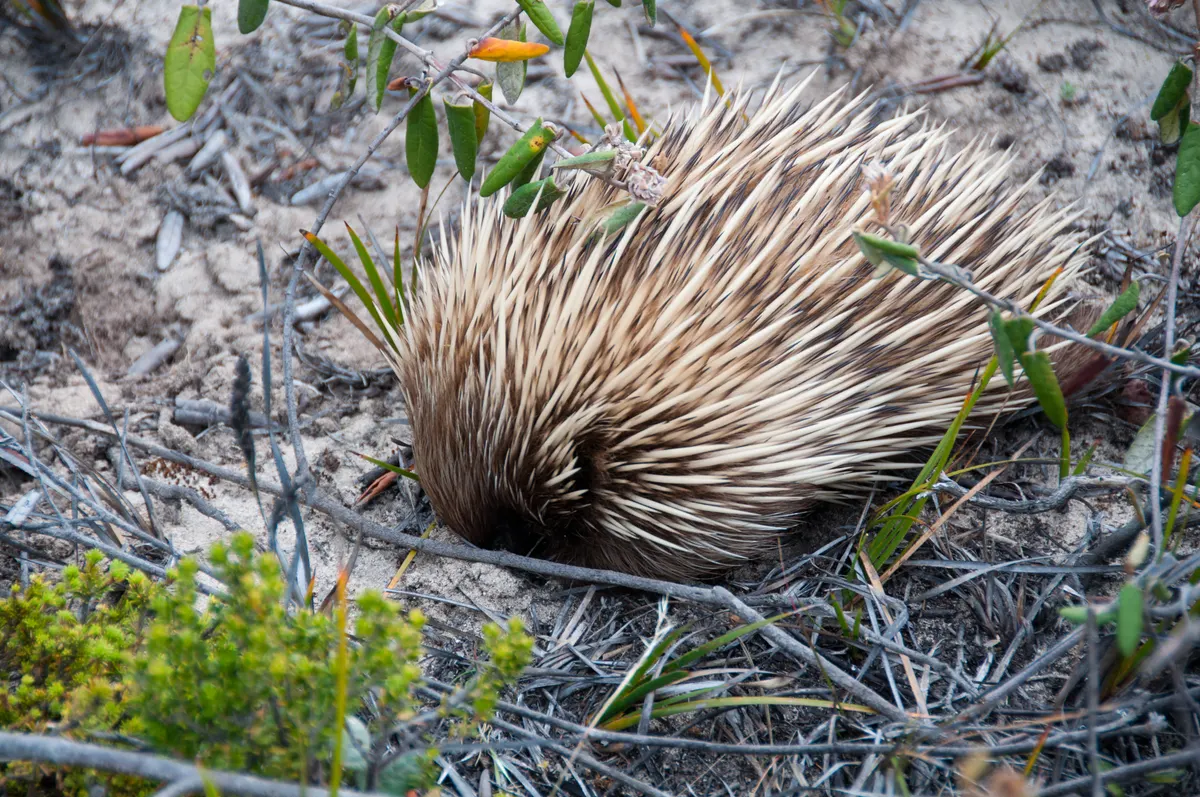
Short-beaked echidna walking across leaf litter with spines raised
The short-beaked echidna is a spiny, egg-laying monotreme found across most of Australia.
MammaliaLeast Concern

Short-beaked Echidna

The echidna is one of only five living species of egg-laying mammals, a group called monotremes that also includes the platypus.

The short-beaked echidna is an egg-laying mammal, or monotreme, found across Australia and New Guinea. Covered in coarse fur and sharp spines, it uses a long sticky tongue to feed on ants, termites, and other invertebrates. It is one of only five living monotreme species and shares that group with the platypus.
By · Updated

Quick Facts

Short-beaked Echidna at a glance

Tachyglossus aculeatusMonotremataTachyglossidae

About their home

Kind of animal

Mammalia

Where they live

What they eat

How safe?

Least Concern

Size and speed

How heavy

2 kg – 7 kg

How long

30 cm – 45 cm

How fast

Slow walker, but a rapid digger

Lifespan

Commonly 10 to 15 years, with rare individuals much older

Core article

Short-beaked Echidna: ecology and life history

A closer look at habitat, diet, behavior, reproduction, and conservation.

Start here

Short-beaked Echidna

The short-beaked echidna is one of the few mammals that lays eggs. Together with the platypus it belongs to the monotremes, an ancient lineage that split from other mammals long ago and survives today in only five species. Small, rounded, and covered in spines, the echidna is among the most widely distributed native mammals in Australia, yet it is easy to overlook as it shuffles through leaf litter or digs into loose soil in search of ants and termites.

Anatomy and Spines

An adult short-beaked echidna measures roughly 30 to 45 centimetres in length and weighs between about 2 and 7 kilograms, with animals in cooler southern regions tending to be larger. The back and sides are covered in barbless spines, modified hairs that can reach around five centimetres long, set among coarse fur that is denser in colder parts of the range. The spines are the animal's main defence and give it a compact, low profile.

The "beak" is a slender, tubular snout housing the nostrils and a small mouth. There are no teeth. Instead the echidna feeds with a long, sticky tongue that can extend well beyond the tip of the snout and grinds food against hard pads at the back of the mouth. The snout also carries electroreceptors, sensory structures that detect the faint electrical signals given off by the muscles of insect prey. The short-beaked echidna has far fewer of these receptors than the platypus, but they still help it locate prey in moist soil and rotting wood.

Habitat and Distribution

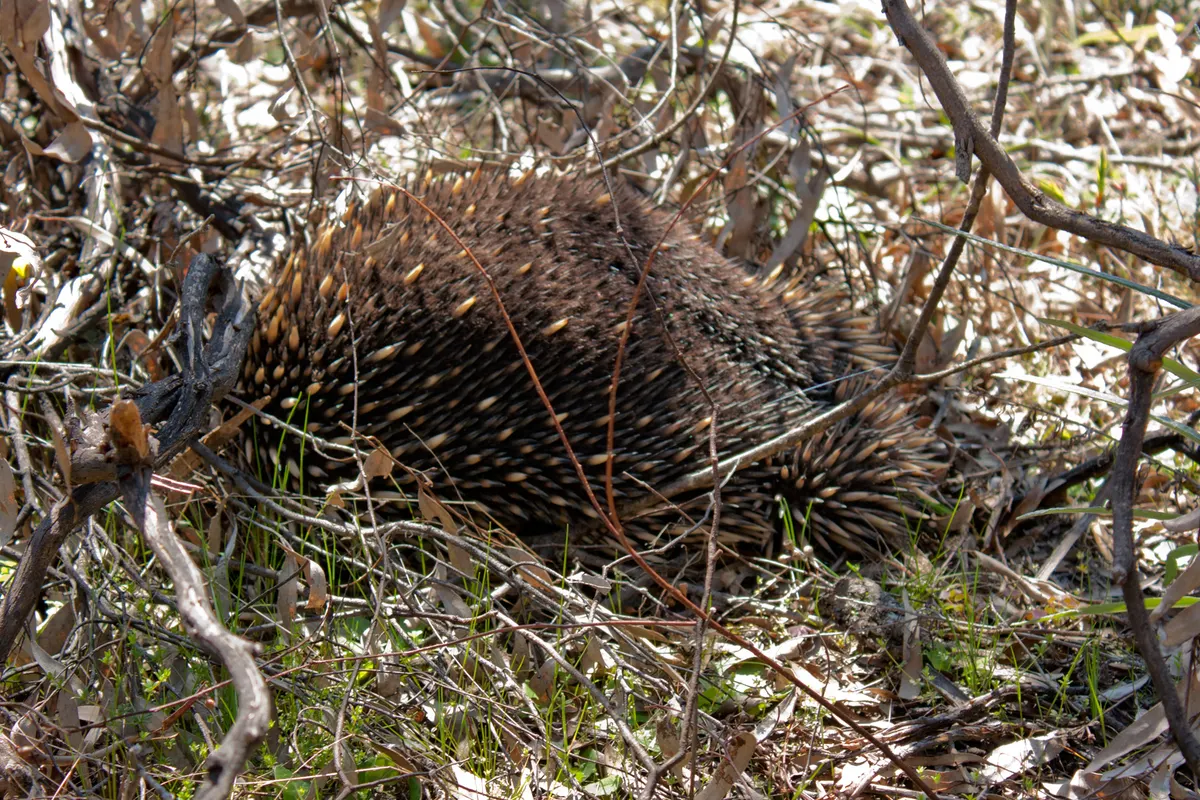
Echidna crossing open ground in dry Australian woodland
From alpine areas to arid country, echidnas persist wherever they can dig for prey and find shelter.

The short-beaked echidna is native to mainland Australia, Tasmania, Kangaroo Island, and southern and eastern New Guinea. It is one of the most broadly distributed native mammals in Australia, and its tolerance of different conditions is a large part of that success.

It occupies a wide span of environments: temperate and tropical forest and woodland, heath, grassland, agricultural land, and semi-arid and arid country. Echidnas have been recorded from sea level to elevations above 1,600 metres. Rather than depending on a single vegetation type, they rely on the presence of ants and termites and on soil or debris they can dig into for food and shelter. This adaptability lets them persist in landscapes ranging from the fringes of the desert to alpine areas that receive snow.

Diet and Foraging

Short-beaked echidna nosing through soil and leaf litter while foraging
Echidnas have no teeth and grind insects between hard pads at the base of the tongue.

Echidnas are carnivores in the sense that they eat animal matter, but in practice they are specialised insectivores. Ants and termites make up the bulk of the diet, supplemented by beetle larvae, earthworms, and other soil invertebrates. The common name "spiny anteater" reflects this feeding habit, although the echidna is not related to true anteaters.

Foraging is mostly a matter of digging and probing. Using strong limbs and heavy claws, an echidna breaks open ant nests, termite mounds, and rotting logs, then sweeps up prey on its tongue. Because it has no teeth, it relies on the tongue's stickiness and the grinding pads to process food, swallowing quantities of soil and nest material along the way. A single animal can turn over a surprising amount of ground during a night or day of feeding, and in doing so it helps aerate soil and control insect numbers.

Behaviour and Defence

Short-beaked echidnas are mainly solitary and range over overlapping home areas rather than defended territories. Activity patterns shift with temperature: they may be active by day in cooler weather and more nocturnal or crepuscular in the heat. In cold periods, and especially in southern and alpine populations, echidnas enter torpor and can hibernate, lowering their body temperature and metabolic rate to conserve energy.

Their defence does not rely on speed. When threatened on soft ground, an echidna digs straight down with all four feet until only a shield of spines remains at the surface. On hard ground it curls into a tight, spiny ball or wedges itself into a crevice. These tactics, combined with cryptic colouring, make an undisturbed echidna difficult for a predator to handle.

Reproduction and the Puggle

Breeding occurs in the Australian winter, roughly June to August. During this period several males may follow a single female in a line known as a "mating train," sometimes for days before mating. After a gestation of about 23 days, the female lays a single leathery egg directly into a temporary pouch that forms on her belly.

The egg hatches after about 10 to 11 days, producing a tiny, blind, hairless young called a puggle. The puggle stays in the pouch, feeding on milk secreted from patches of skin rather than from teats, which monotremes lack. As its spines begin to develop, the mother moves it to a nursery burrow and returns periodically to nurse it. Weaning takes place over several months, and young echidnas reach sexual maturity at several years of age. Echidnas are notably long-lived for their size, with wild animals commonly reaching well into their teens and captive individuals recorded at around 45 to 50 years.

Taxonomy and Evolution

The short-beaked echidna (Tachyglossus aculeatus) is the only living species in the genus Tachyglossus. The name comes from Greek words meaning "fast tongue," a reference to its feeding. Its relatives are the long-beaked echidnas of New Guinea, in the genus Zaglossus.

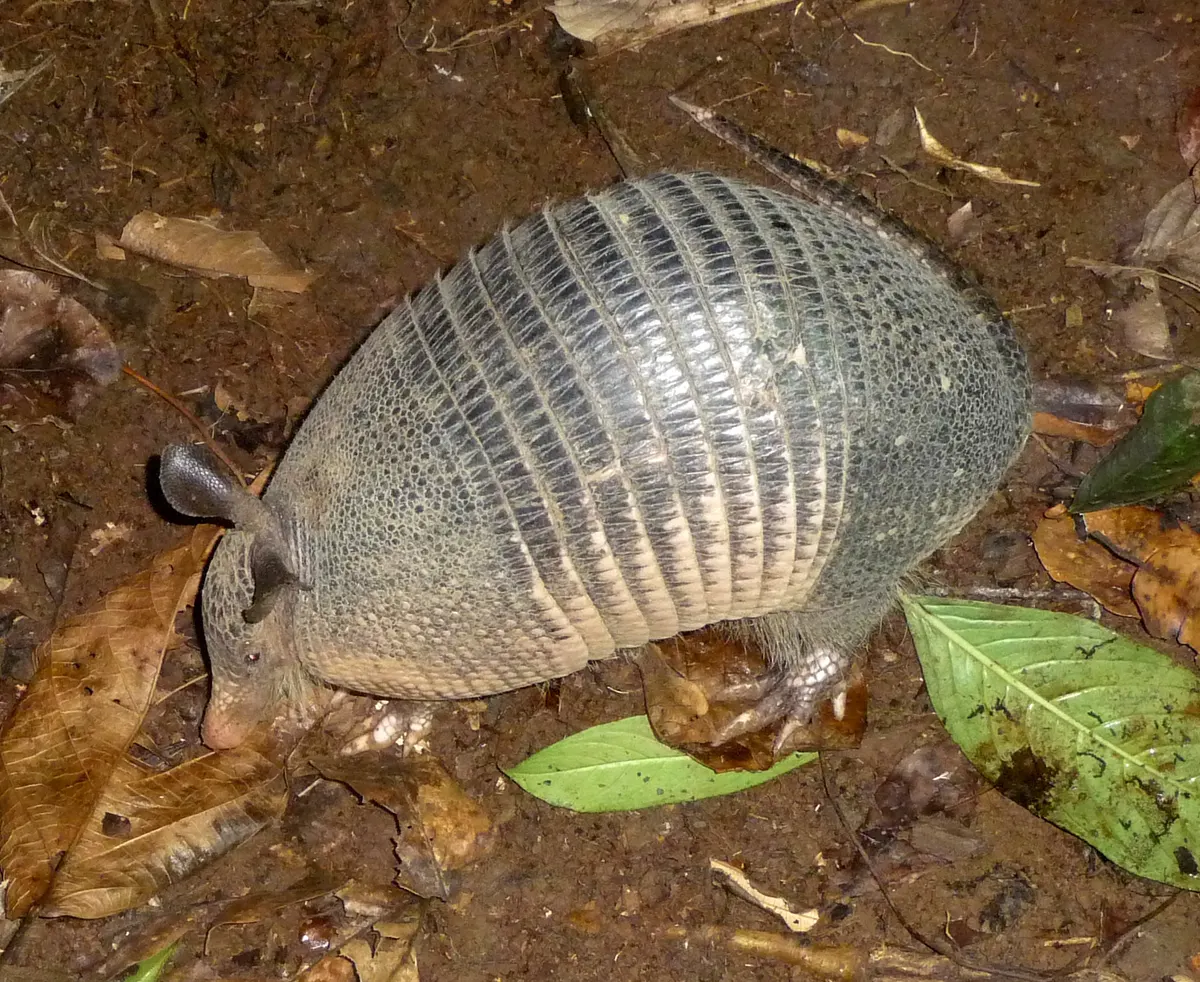
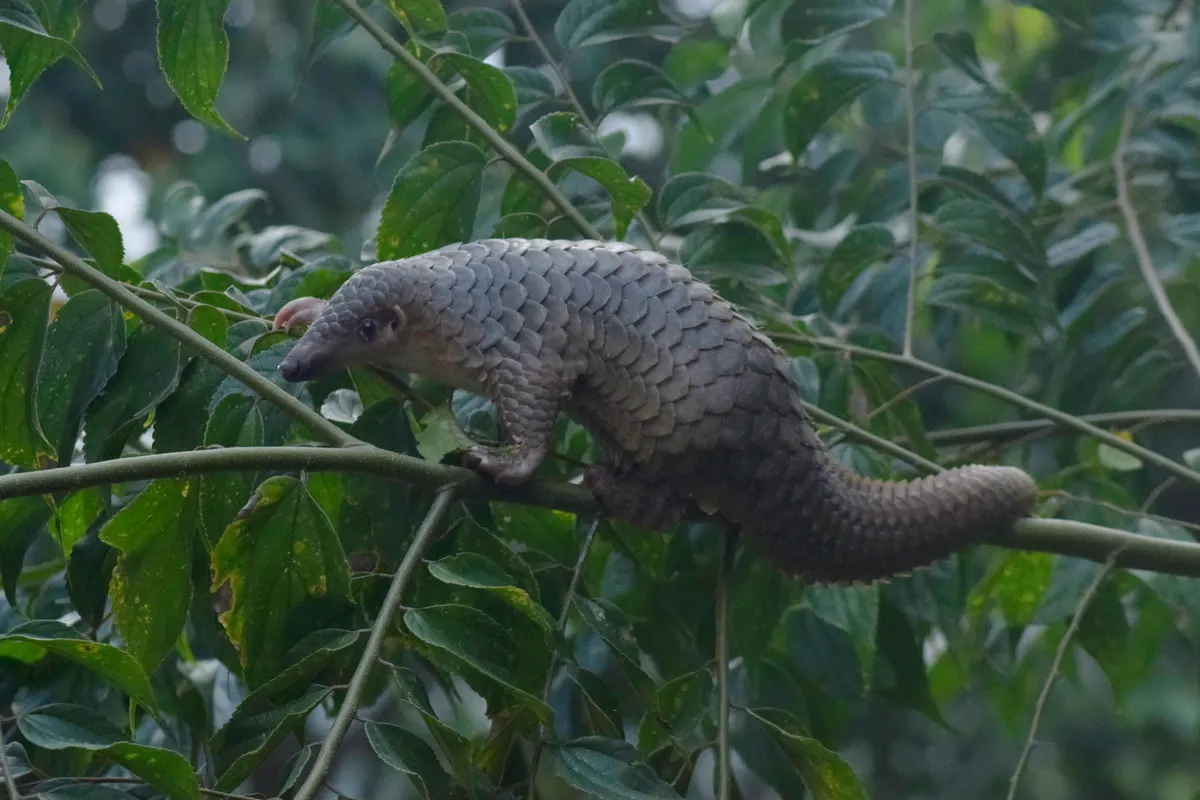
Echidnas and the platypus form the order Monotremata, the only mammals that lay eggs. Monotremes retain a mix of traits: they produce milk and have fur like other mammals, but they also lay eggs and have a single body opening, the cloaca, used for reproduction and waste. This combination reflects an early divergence in mammalian history, which is why echidnas are often described as evolutionarily distinct. Their egg-laying and electroreception are shared, in modified form, with the platypus. Distant placental mammals such as the pangolin and the armadillo look superficially similar because they are also armoured, digging insectivores, but they are not close relatives.

Conservation and Threats

Echidna in tall grass within an open Australian landscape
Echidnas occur from sea level to over 1,600 metres, one of the broadest ranges of any Australian mammal.

The IUCN Red List classifies the short-beaked echidna as Least Concern, with a population trend assessed as stable. This reflects its broad range, large total numbers, and ability to live across many habitat types, including some modified and agricultural land. The species is not considered at risk across most of its range.

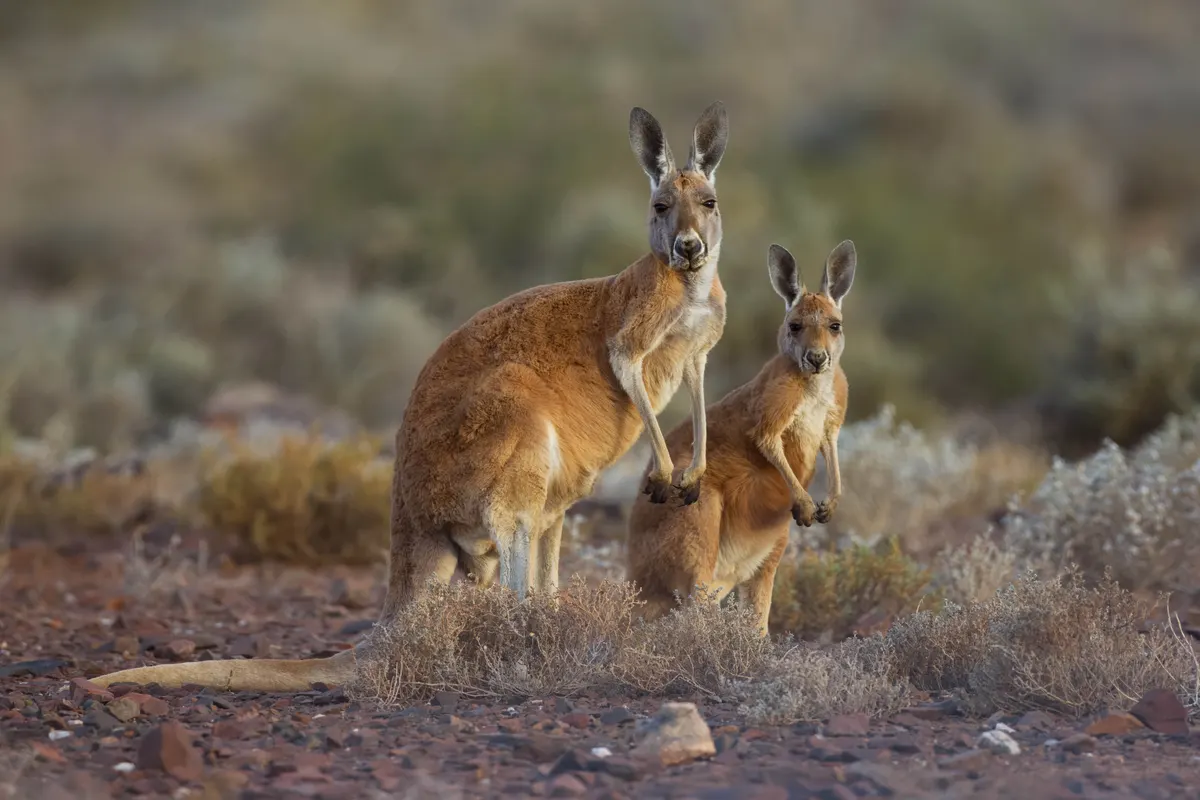
Local pressures still exist. Vehicles kill many echidnas on roads, and introduced predators such as red foxes and feral cats can take young or exposed animals. Habitat clearing, hot fires, and hot weather during breeding can also affect survival in places. Some isolated forms are of greater concern: the Kangaroo Island subspecies (Tachyglossus aculeatus multiaculeatus) is recognised as threatened. As with many widespread species, the overall Least Concern listing does not mean every population is secure, and monitoring remains useful where several threats overlap. The echidna's closest relatives, the platypus and Australia's marsupials such as the kangaroo, face their own regional pressures, underscoring the value of maintaining native habitat.

References and Authoritative Sources

Short-beaked Echidna: classification and fun facts

Classification

Scientific Taxonomy
  1. Kingdom

    Animalia

  2. Phylum

    Chordata

  3. Class

    Mammalia

  4. Order

    Monotremata

  5. Family

    Tachyglossidae

  6. Genus

    Tachyglossus

  7. Species

    T. aculeatus

Did You Know?

Fun Facts

1

The echidna is one of only five living species of egg-laying mammals, a group called monotremes that also includes the platypus.

2

A newly hatched echidna is called a puggle and develops inside a temporary pouch on the mother's belly.

3

Echidnas have no teeth and grind food between hard pads at the base of the tongue and the roof of the mouth.

4

Electroreceptors in the snout help echidnas sense the faint electrical signals of insect prey in moist soil.

5

When threatened on hard ground, an echidna wedges itself down and curls into a ball, leaving only spines exposed.

6

During cold weather echidnas can lower their body temperature and enter torpor or hibernation to save energy.

Common Questions

FAQ about Short-beaked Echidna

Select a question to reveal the answer.

What is a short-beaked echidna?

The short-beaked echidna (*Tachyglossus aculeatus*) is an egg-laying mammal, or monotreme, native to Australia and New Guinea. It is covered in fur and spines and is the only living species in the genus *Tachyglossus*.

Do echidnas really lay eggs?

Yes. The female lays a single leathery egg directly into a temporary pouch on her belly. The egg hatches after about 10 to 11 days, making the echidna one of the few mammals that reproduces this way.

What do short-beaked echidnas eat?

They are insectivores that feed mainly on ants and termites, along with beetle larvae, earthworms, and other soil invertebrates. They break open nests with their claws and collect prey on a long, sticky tongue.

What is a baby echidna called?

A baby echidna is called a puggle. It hatches blind and hairless, stays in the mother's pouch, and is later moved to a nursery burrow as its spines begin to grow.

How do echidnas defend themselves?

Echidnas rely on their spines and digging ability rather than speed. On soft ground they burrow straight down until only the spines are exposed, and on hard ground they curl into a tight, spiny ball.

Are echidnas related to the platypus?

Yes. The echidna and the platypus are the only living monotremes, mammals that lay eggs. They share features such as a low body temperature, a single body opening called a cloaca, and electroreception used to find prey.