
Animal guides
Why Do Platypuses Have Duck-Like Bills?
A platypus bill is a soft sensory organ that detects touch, water pressure, and electrical signals from prey.
By An Nguyen · Published · Updated
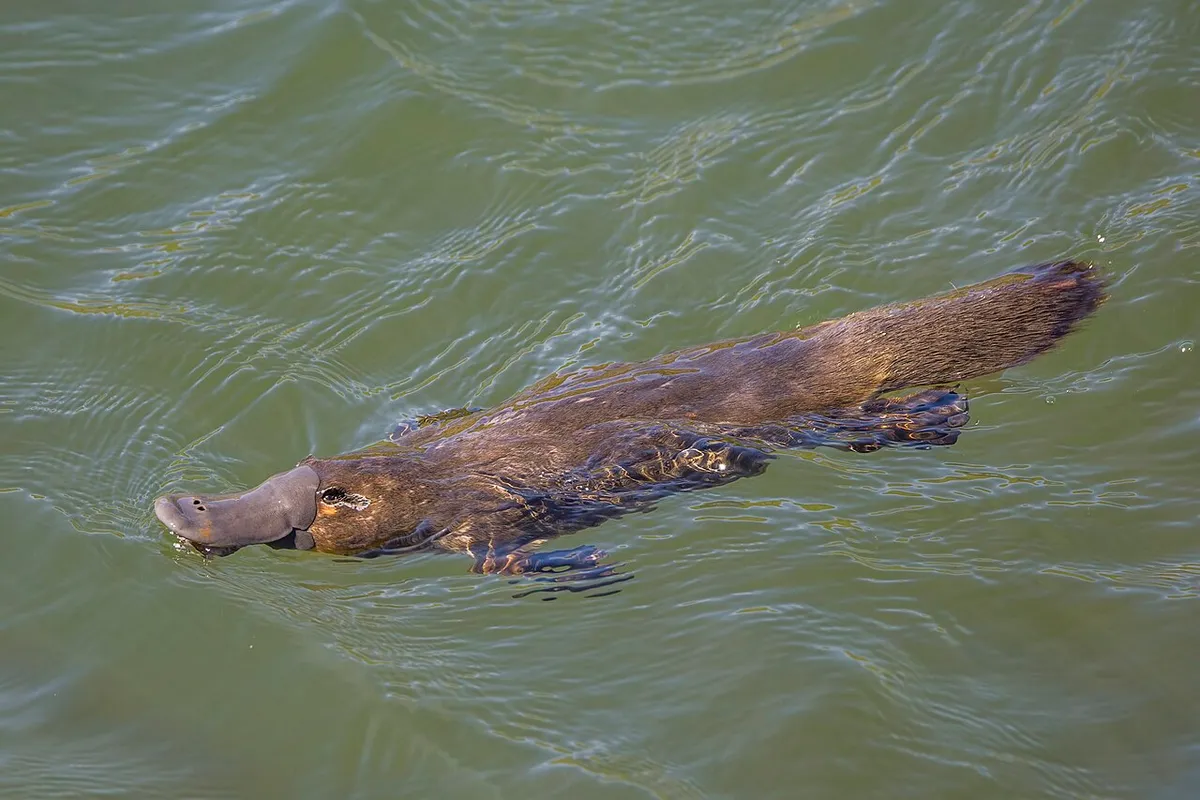
A platypus has a broad bill because it is an underwater sensory organ. Thousands of touch receptors and electroreceptors in the soft skin detect pressure and weak electrical signals from moving prey. The bill resembles a duck's in outline, but it works differently from a bird's hard beak.
When a platypus dives, it closes its eyes, ears, and nostrils. The bill then provides much of the information used to locate insect larvae, worms, and crustaceans along the bottom of streams and rivers.
The bill is a sensing surface
The platypus bill can detect touch and tiny electrical signals produced by prey. This ability is called electroreception. Small animals such as insect larvae and crustaceans create weak electrical fields when their muscles move. A platypus can use those signals, along with pressure and touch, to locate food in cloudy water.
That is why the bill is broad and sensitive rather than hard and pointed. Its primary role is detecting and collecting prey, not biting like a bird's beak.
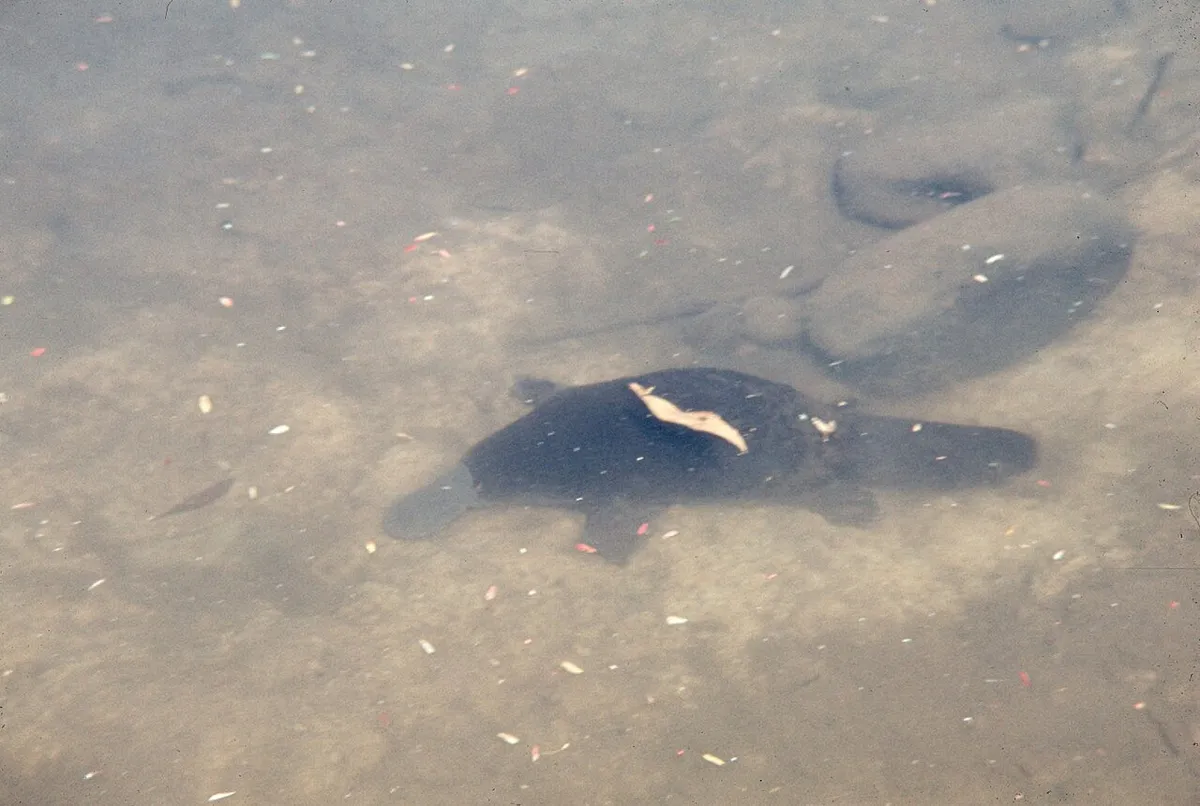
Photo by Warren Garst via Wikimedia Commons, CC BY-SA 4.0.

Finding prey without sight
Platypuses feed mostly on aquatic invertebrates. They search underwater, gather food in cheek pouches, and return to the surface to grind it up. Since many streams are murky and the animal may forage at night, vision is not enough.
The bill solves that problem. It gives the platypus a way to map prey movements close to its face. The animal sweeps its bill as it moves, combining signals from pressure receptors and electroreceptors.
This also explains why the bill looks oversized compared with the head. A wider sensing surface gives more information about what is happening in front of the animal. For a predator working in dim water, that is valuable.
Built for rivers, not for ducks
The rest of the body matches the same lifestyle. Webbed feet help in water. A dense coat traps air for insulation. The animal nests in burrows along banks and returns to freshwater to feed. The bill is the most famous piece of that toolkit, but it only makes sense as part of a semi-aquatic hunting system.
Australia's freshwater wetlands are where this design earns its keep. A bill tuned for electrical and tactile cues is useful in silted pools, leaf litter, and night foraging—conditions where a hard, keratinized bird beak would be the wrong tool.
Not a duck, not a simple oddity
The platypus is often described as strange because it combines traits that seem mismatched: a mammal that lays eggs, has webbed feet, and carries a broad bill. But those traits are not random decorations. Each one fits the animal's semi-aquatic life.
The bill is especially easy to misunderstand because humans compare shapes visually. It looks like a duck bill, so the comparison sticks. Functionally, though, it is a mammalian sensory organ used for underwater hunting. Egg-laying places the platypus among monotremes alongside the short-beaked echidna, not among birds.
Males also carry venomous spurs on the hind limbs, another trait that surprises people expecting a harmless river mascot. That detail belongs to defence and competition among adults, while the bill belongs to daily feeding.
The short answer
The platypus bill is an underwater sensing tool. Its duck-like outline is a coincidence of shape, not evidence that the animal is related to ducks. The real value is electroreception, touch, and pressure sensing while foraging underwater.
For habitat, diet, venom, breeding, and conservation status, see the full platypus profile.