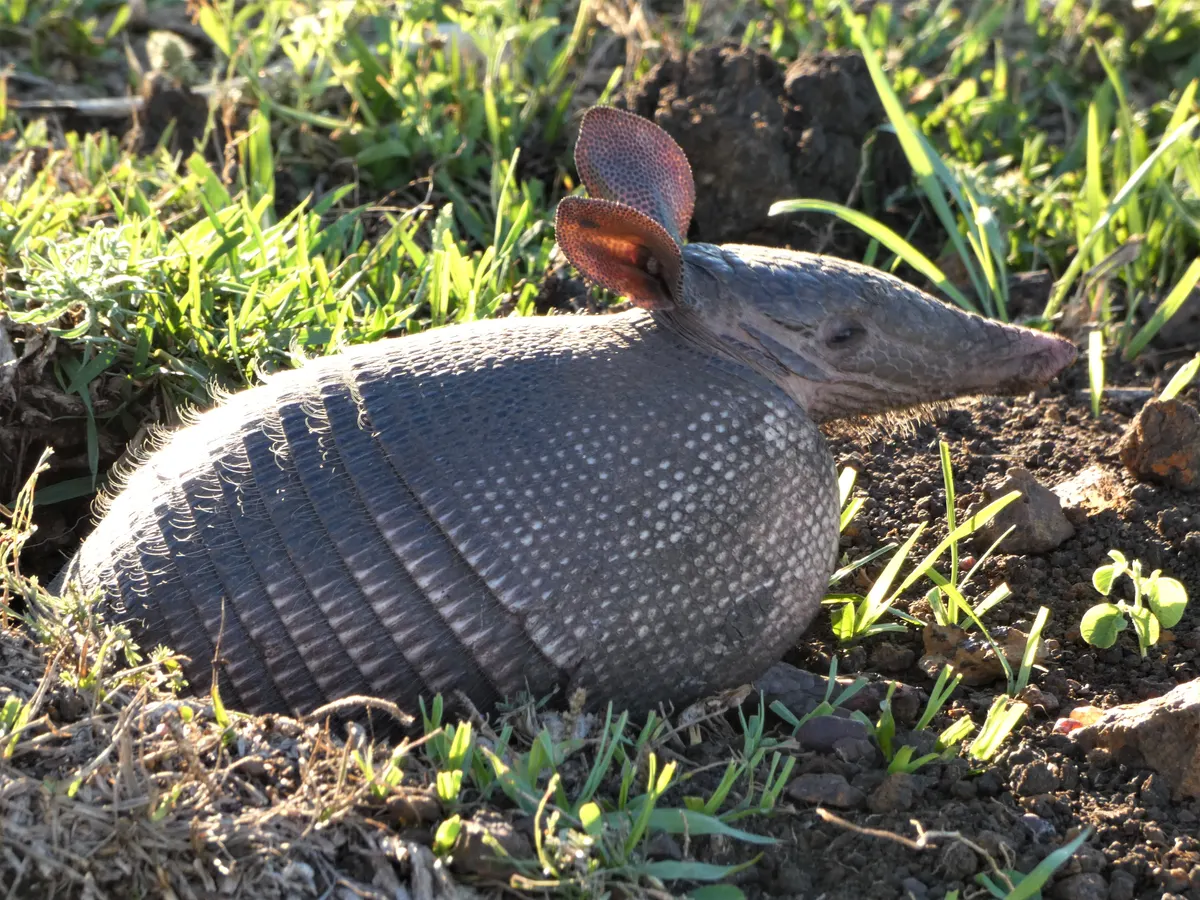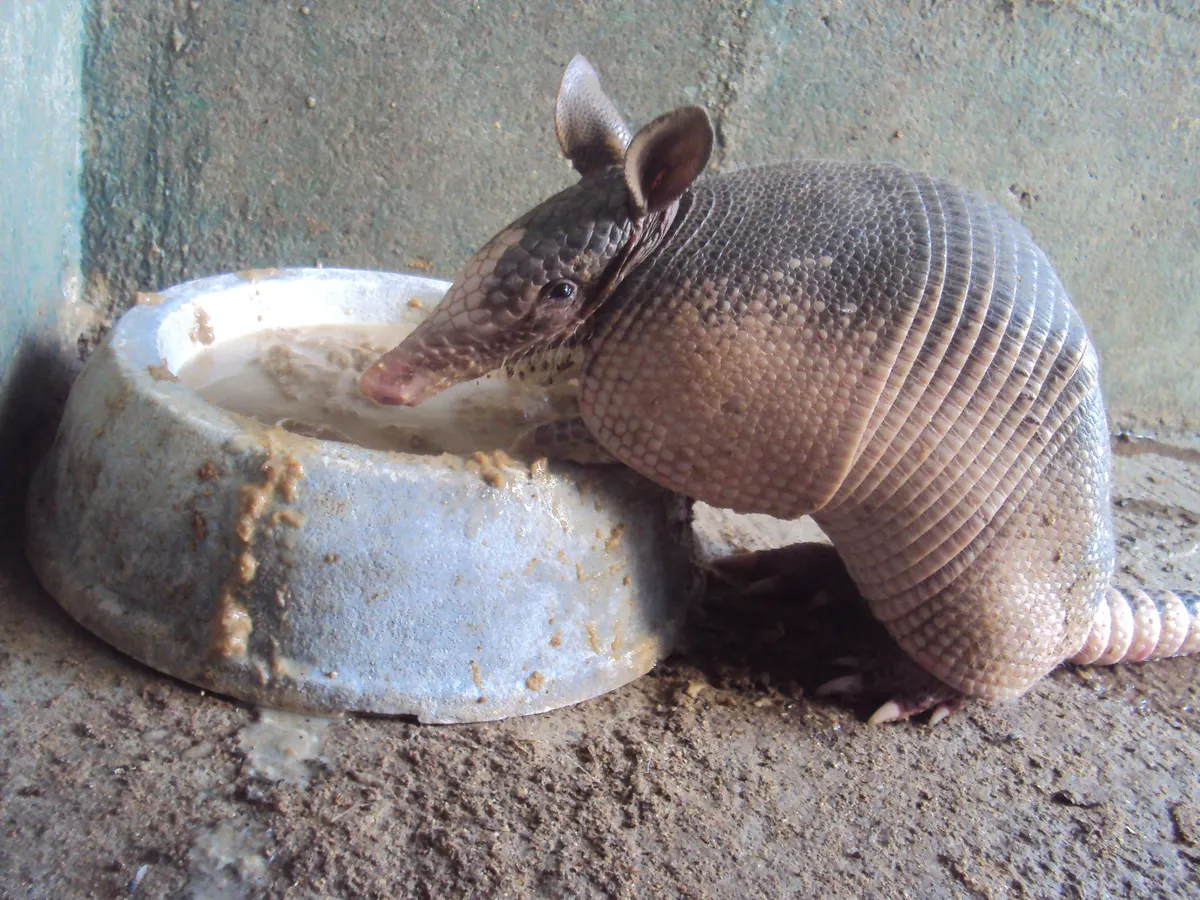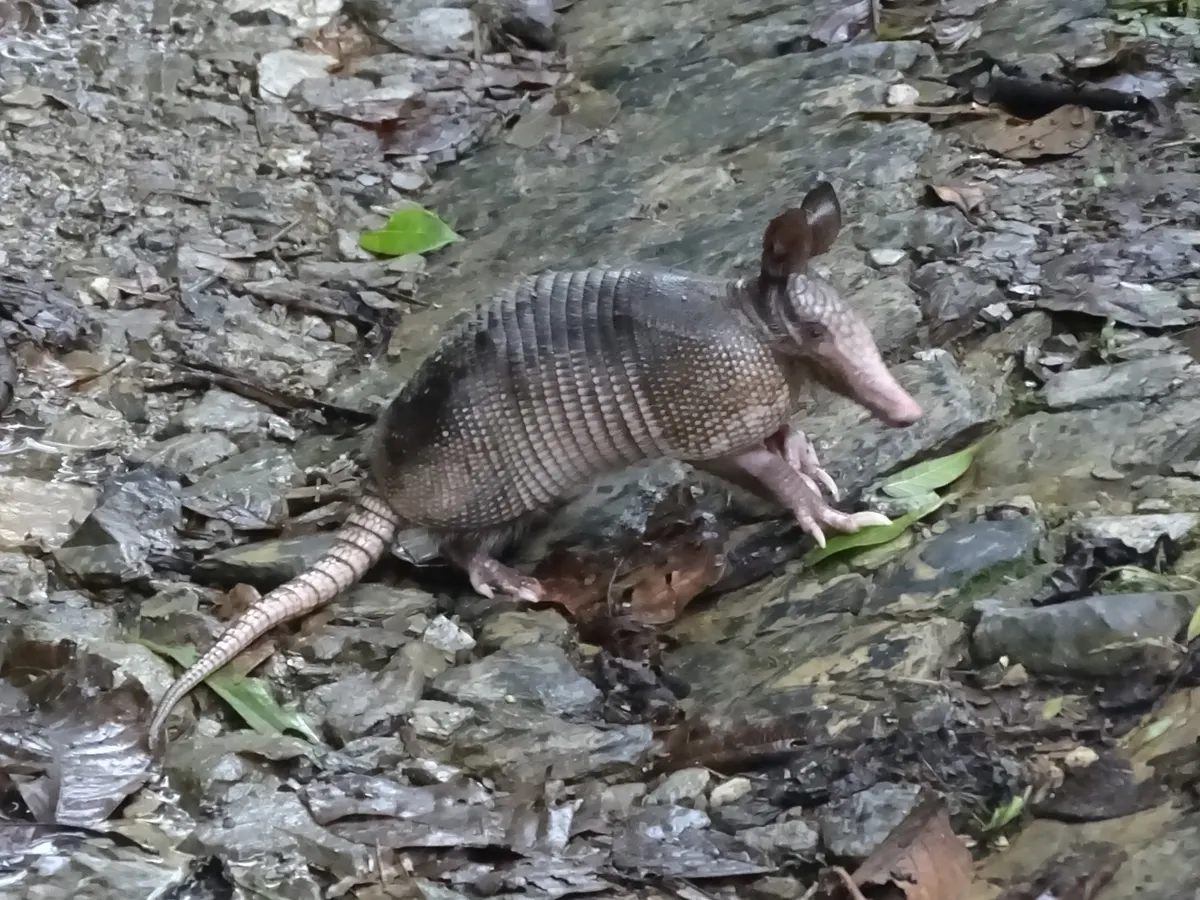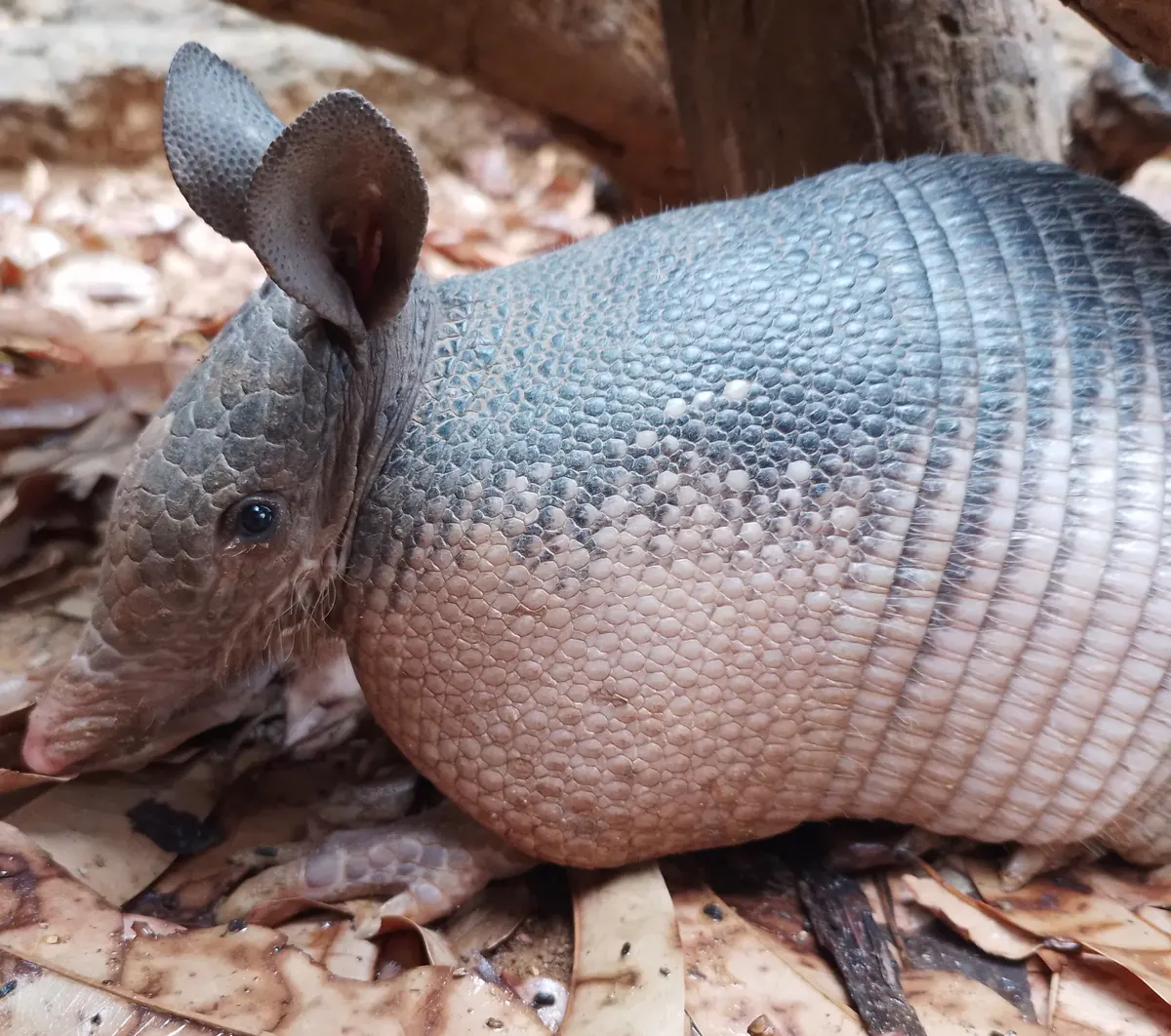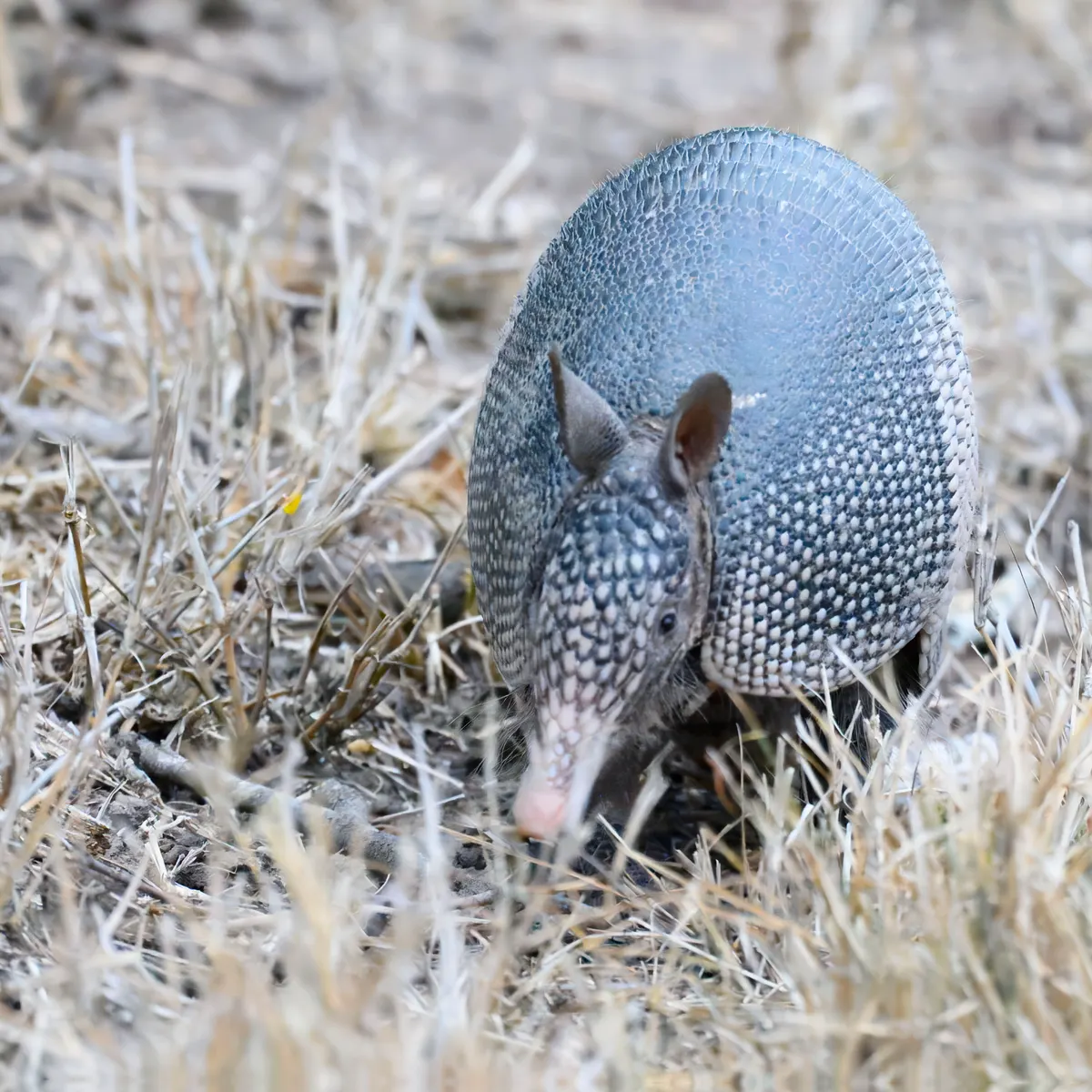
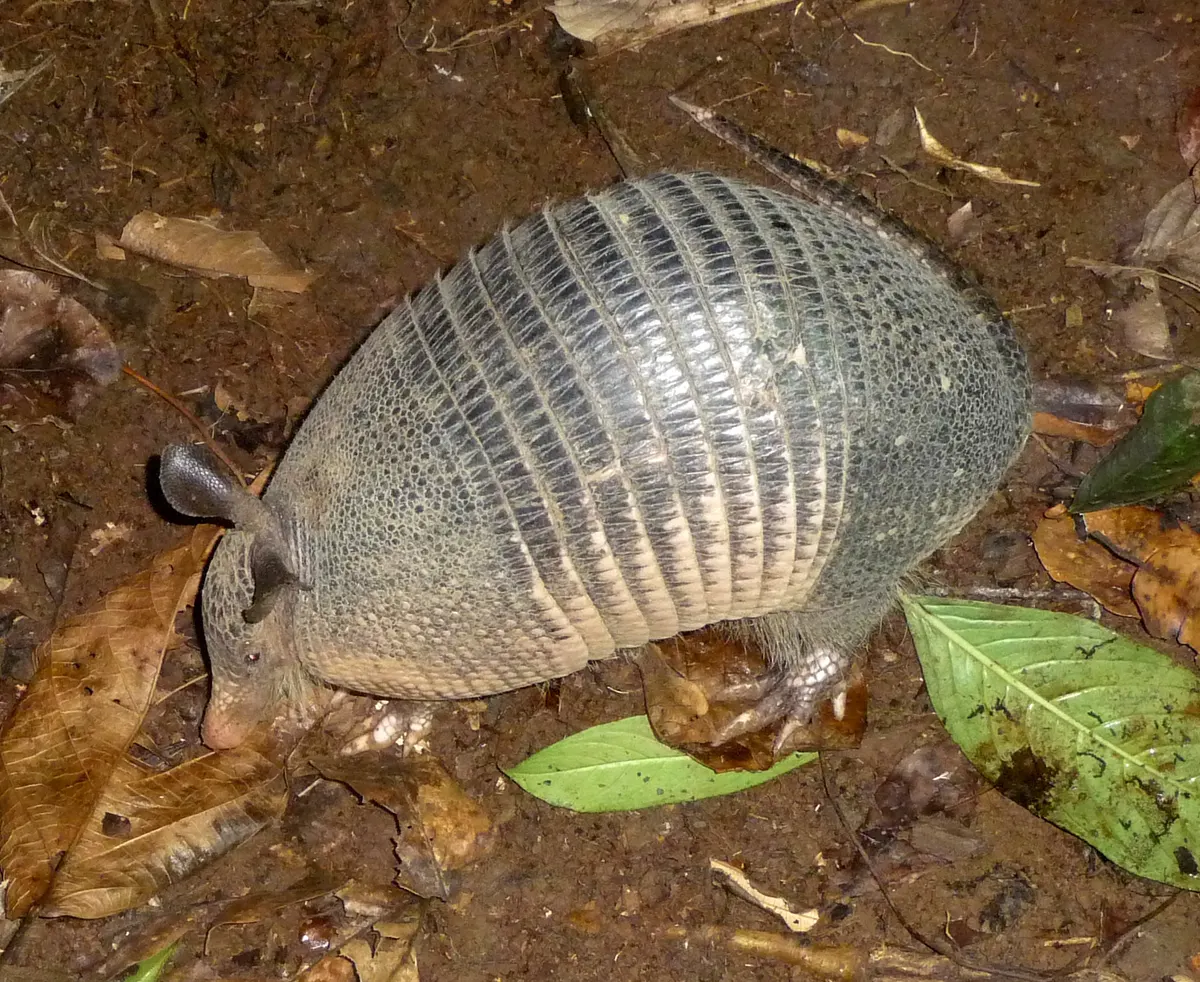
The nine-banded armadillo measures 15 to 23 inches (38–58 cm) in body length, with an additional 9 to 15-inch (23–38 cm) armored tail, and weighs 8 to 17 pounds (3.5–7.7 kg). The body plan is distinctive: a pointed, pig-like snout, large upright ears, short powerful legs with heavy claws, and a long, stiff tail.
The defining anatomical feature is the carapace — a shell composed of bony osteoderms covered by keratinous skin. The shell consists of a solid shoulder shield, a solid hip shield, and nine (sometimes eight or ten) movable bands across the midsection that allow limited flexibility. Contrary to popular belief, the nine-banded armadillo cannot roll into a ball — only the South American three-banded armadillo (Tolypeutes) can fully enclose itself within its shell.
Armadillo eyesight is poor, but their olfactory system is highly developed. They can detect insects buried several inches underground through soil and leaf litter. The tongue is long, sticky, and muscular, adapted for extracting ants and termites from narrow tunnels. The claws on the forelimbs are disproportionately large and powerful, optimized for rapid digging — an armadillo can excavate a burrow in minutes.