Binturong with shaggy black fur and tufted ears resting on a branch
The binturong, or bearcat, is the largest civet and one of few carnivores with a prehensile tail.
MammaliaVulnerable

Binturong

The binturong is the largest member of the civet family, Viverridae, reaching up to 20 kg.

The binturong is a large, tree-dwelling viverrid from South and Southeast Asia. It is the biggest member of the civet family, has a fully prehensile tail, and eats mainly fruit, making it an important disperser of strangler fig seeds.

By · Updated

Quick Facts

Binturong at a glance

Arctictis binturongCarnivoraViverridae

About their home

Kind of animal

Mammalia

Where they live

What they eat

How safe?

Vulnerable

Size and speed

How heavy

9 kg – 20 kg

How long

61 cm – 96 cm

How fast

Slow, deliberate climber

Lifespan

Up to about 18 years

Core article

Binturong: ecology and life history

A closer look at habitat, diet, behavior, reproduction, and conservation.

Start here

Binturong

The binturong (Arctictis binturong) is a large, shaggy-coated mammal of the South and Southeast Asian rainforest. English speakers often call it the bearcat, but it is neither a bear nor a cat. It belongs to Viverridae, the family of civets and genets, and it is the biggest member of that family. Most of its life is spent above the ground, moving slowly through the canopy on strong limbs and a long, gripping tail.

Two features make the binturong stand out even among tree-dwelling carnivores: a fully prehensile tail that works as an extra limb, and scent glands whose odor is regularly compared to buttered popcorn. Both are practical tools for an animal that climbs, forages, and communicates in dense forest where line of sight is short.

Anatomy and the Prehensile Tail

An adult binturong measures roughly 61 to 96 cm in head-and-body length, with a tail nearly as long as the body again, so total length can approach two metres. Recorded weights range from about 9 to 20 kg. Females are on average around 20% larger and heavier than males and are the dominant sex, an unusual pattern among carnivores.

The coat is long, coarse, and mostly black, often tipped with grey, and the face carries stiff white whiskers and tufted ears. These sensory whiskers help the animal judge gaps and surfaces in low light.

The tail is the defining structure. The binturong is one of only two carnivores with a truly prehensile tail; the other is the kinkajou of the American tropics, which makes the binturong the only Old World carnivore with this trait. The underside of the tail tip is thickened and roughened, and the animal can wrap it around a branch to anchor itself while reaching for fruit. Its feet are semi-plantigrade, with flexible ankle joints that rotate the hind feet backward. That flexibility lets a binturong climb down a trunk head first, gripping bark with curved claws.

Habitat and Distribution

Binturong moving along a thick branch
Strong limbs and a gripping tail let the binturong forage and rest high in the forest canopy.

The binturong lives in tall, dense tropical forest, including primary rainforest and, in places, secondary and disturbed woodland where fruiting trees remain. It is strongly arboreal, though heavy adults move deliberately and will cross the ground between trees rather than leap.

Its range covers South and Southeast Asia. Verified range states include northeastern India, Nepal, and Bhutan in the north and west, through Myanmar, Thailand, Laos, Cambodia, and Vietnam, south into Peninsular Malaysia and the islands of Indonesia, and east to the Philippine island of Palawan. Across this range zoologists recognize about nine subspecies, usually grouped into a northern Indo-Chinese set and a southern Sundaic set. Populations are patchy and generally tied to intact forest.

Diet and Foraging

Binturong reaching forward on a branch
Beyond fruit, binturongs take shoots, eggs, small animals, and carrion when available.

Although it sits in the order Carnivora, the binturong is best described as an omnivore that leans heavily toward fruit. Figs are a staple, and the animal also takes other soft fruit, tree shoots, and leaves. When the chance arises it eats small mammals, rodents, birds, eggs, fish, earthworms, insects, and carrion, so its diet shifts with what the forest offers.

This fruit-heavy diet gives the binturong an ecological role larger than its numbers suggest. It is one of very few animals able to pass the tough seeds of the strangler fig through its gut intact. Digestive processing softens the seed coat, and seeds deposited away from the parent plant are more likely to germinate. Because strangler figs are themselves important to many forest species, the binturong functions as a seed disperser that helps maintain the wider community.

Foraging happens both day and night, with activity concentrated around dawn and dusk. Individuals move slowly and methodically, using the tail as a safety line while feeding at the ends of branches.

Behavior and Communication

Binturong resting alone in dappled light
Adults hold overlapping ranges and communicate largely through scent marks.

Binturongs are largely solitary, holding overlapping home ranges that they mark with scent. The best-known signal comes from perineal scent glands near the base of the tail. Their secretion carries the compound 2-acetyl-1-pyrroline, or 2-AP, the same molecule responsible for the aroma of popcorn and cooked rice. As a binturong moves through its range, it drags the gland and its urine across branches, leaving a chemical record of identity and presence that other individuals can read.

Beyond scent, binturongs use a range of vocalizations, including chuckles and low grunts when content and hisses, snarls, and wailing calls when disturbed. They are not fast animals; their strength is in careful, sure-footed climbing rather than speed. When threatened, an individual may freeze, retreat along a branch, or defend itself with teeth and claws.

Reproduction and Young

Mating can occur through the year, but births show a peak from about January to March. One reason is delayed implantation: females are among the relatively few mammals able to hold a fertilized egg before it implants in the uterus, which lets them time birth to favorable conditions. Reported gestation, measured from implantation, is about 91 days, within a range of roughly 84 to 99 days.

A litter usually contains two young, though it can range from one to six. The newborns, commonly called cubs, are born in a sheltered spot such as a tree hollow and depend on the mother in their early weeks. Females reach breeding condition at around two to three years of age.

Taxonomy and Relatives

The binturong is the only species in the genus Arctictis, within the family Viverridae. Viverrids are small to medium carnivores of Africa and Asia, and the binturong is the family's largest member. Its closest relatives are other civets and genets rather than the bears or cats its nickname suggests.

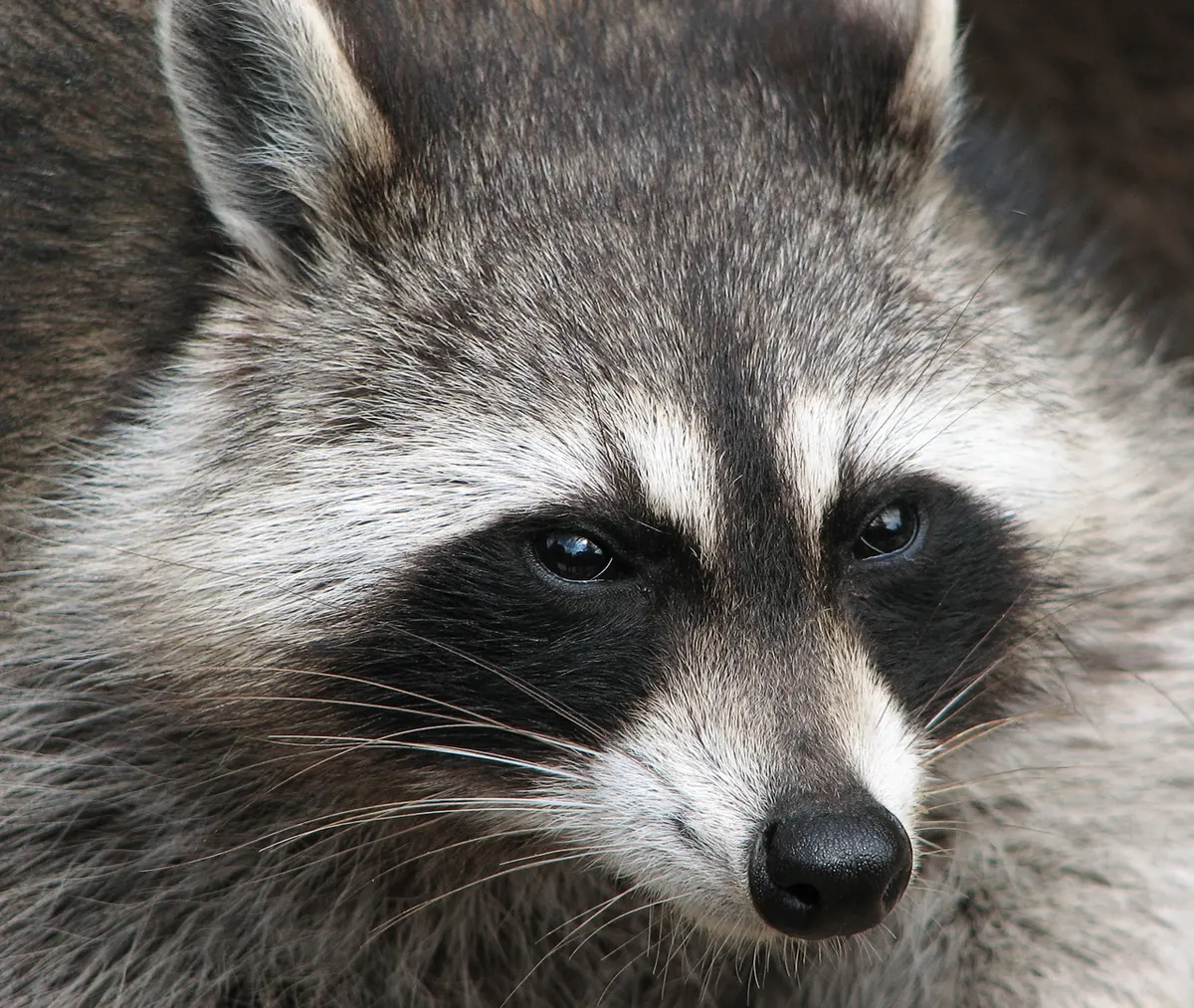
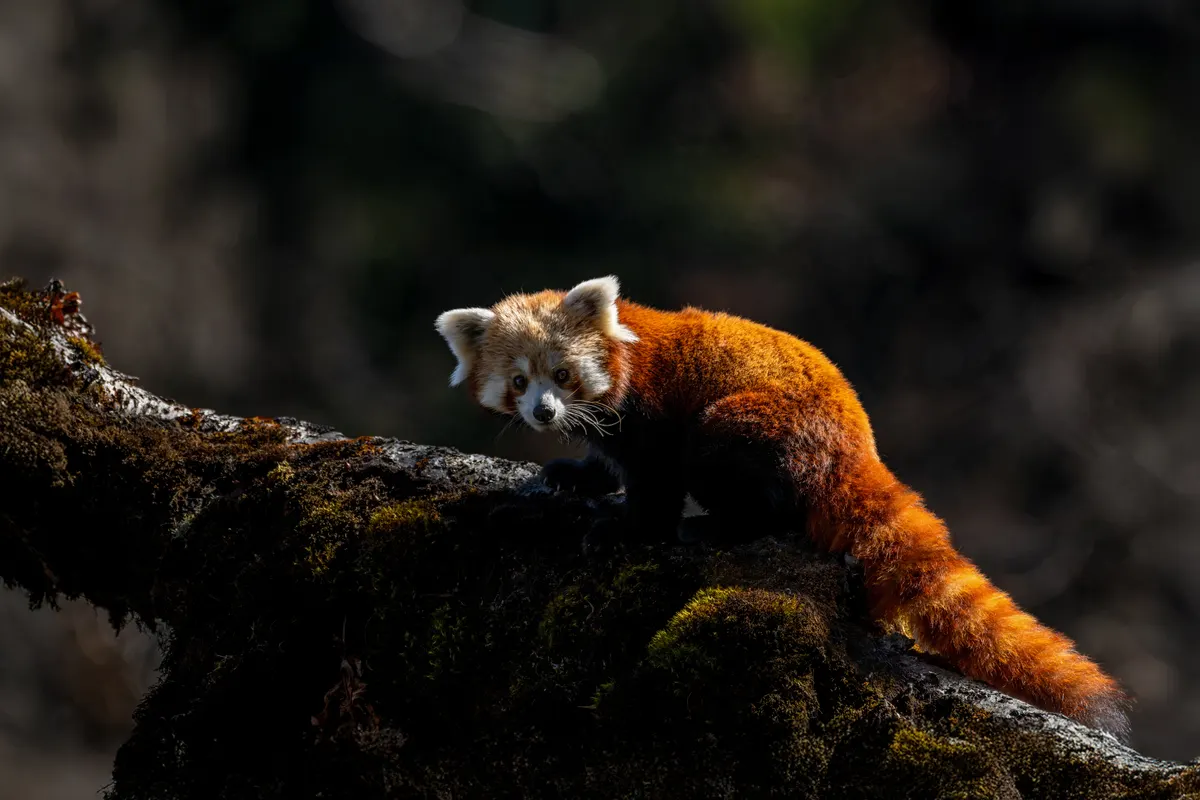
Comparisons with more familiar animals can be useful for placing it. Like the red panda, it is an arboreal, fruit-eating carnivoran that is not closely related to the animals it superficially resembles. It shares its Southeast Asian forests with the sun bear, a true bear that also climbs and feeds partly on fruit. Its prehensile tail and omnivorous, opportunistic feeding invite comparison with the New World raccoon, while its role as a semi-aquatic-adjacent forest carnivoran differs sharply from that of the otter, a mustelid built for water.

Conservation and Threats

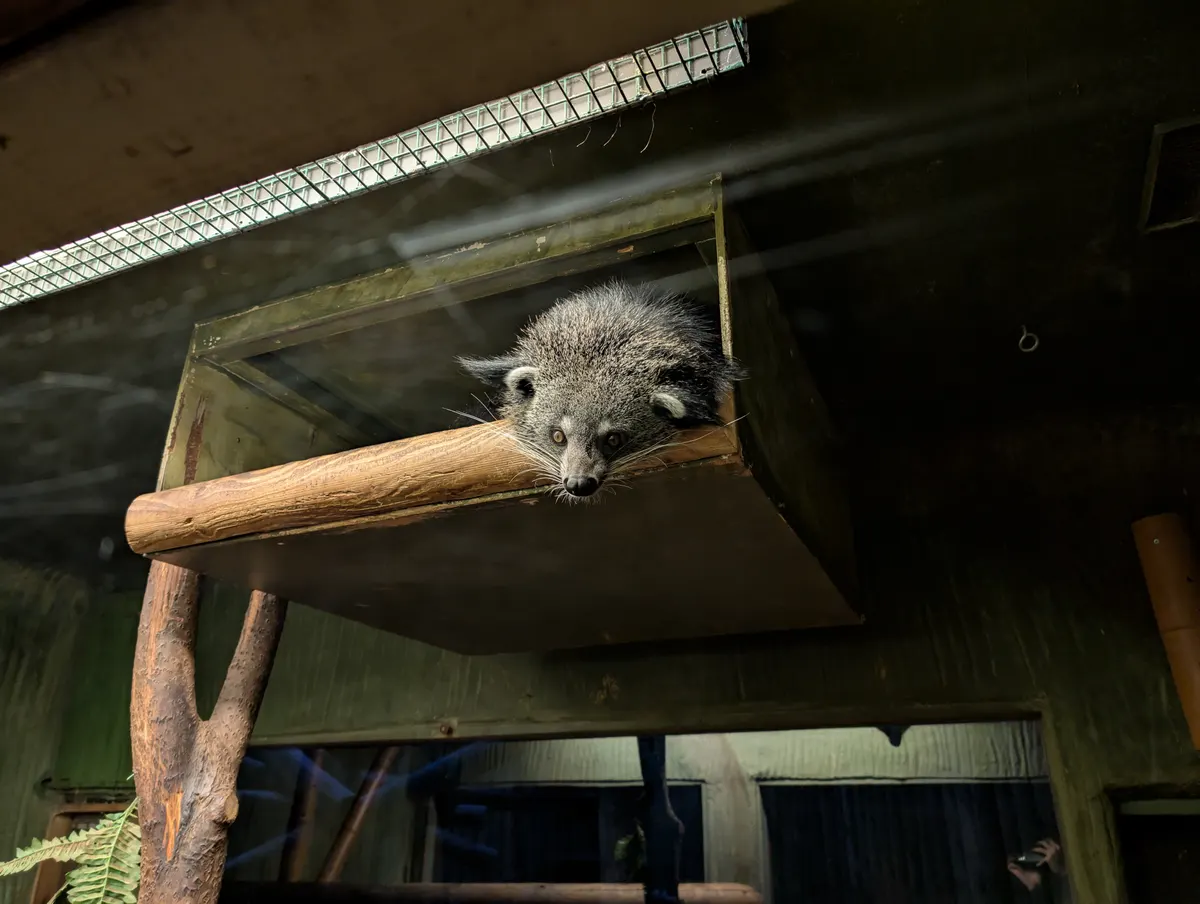
Binturong resting on a raised wooden structure
Habitat loss and the wildlife trade have made the binturong Vulnerable across its fragmented range.

The IUCN Red List classifies the binturong as Vulnerable with a decreasing population trend. Assessments estimate a decline of more than 30% over roughly the past three decades, and the trend is expected to continue without stronger protection.

The main pressures are habitat loss and hunting. Logging, conversion of forest to plantation and farmland, and forest degradation remove the mature fruiting trees the species depends on. Binturongs are also hunted for meat and traditional uses and captured for the pet trade. Because the animal breeds slowly and needs large tracts of intact forest, these pressures are difficult for populations to absorb. Conservation depends on protecting forest habitat, enforcing laws against poaching and trafficking, and monitoring the scattered populations across its wide range.

The familiar odor can be traced to a specific volatile compound, but its production pathway remains less certain. See why binturongs smell like popcorn for the chemical evidence and scent-marking context.

References and Authoritative Sources

Binturong: classification and fun facts

Classification

Scientific Taxonomy
  1. Kingdom

    Animalia

  2. Phylum

    Chordata

  3. Class

    Mammalia

  4. Order

    Carnivora

  5. Family

    Viverridae

  6. Genus

    Arctictis

  7. Species

    A. binturong

Did You Know?

Fun Facts

1

The binturong is the largest member of the civet family, Viverridae, reaching up to 20 kg.

2

Its scent glands give off an aroma often compared to buttered popcorn, produced by the compound 2-acetyl-1-pyrroline (2-AP).

3

It is one of only two carnivores with a truly prehensile tail; the other is the kinkajou of the American tropics.

4

Despite belonging to the order Carnivora, the binturong eats mainly fruit and is considered a frugivore.

5

It is one of the few animals whose gut can process and disperse the seeds of the strangler fig, helping the trees regenerate.

6

Flexible ankle joints let the binturong rotate its hind feet and climb down tree trunks head first.

Common Questions

FAQ about Binturong

Select a question to reveal the answer.

What is a binturong?

The binturong (*Arctictis binturong*) is a large, tree-dwelling mammal in the civet family, Viverridae. It is also called the bearcat, though it is neither a bear nor a cat. It is the only species in its genus.

Where do binturongs live?

Binturongs live in the tall, dense tropical forests of South and Southeast Asia, from northeastern India, Nepal, and Bhutan through Myanmar, Thailand, Laos, Cambodia, and Vietnam to Malaysia, Indonesia, and the Philippine island of Palawan.

What do binturongs eat?

They are omnivores that eat mainly fruit, especially figs. They also take shoots and leaves, small mammals, birds, eggs, fish, insects, and carrion when available.

Why do binturongs smell like popcorn?

Scent glands near the tail release a compound called 2-acetyl-1-pyrroline (2-AP), the same molecule that gives popcorn and cooked rice their smell. Binturongs use this scent to mark territory and communicate.

Is a binturong a bear or a cat?

Neither. The nickname bearcat comes from its shaggy coat and rounded face, but the binturong belongs to Viverridae, the family of civets and genets, within the order Carnivora.

Are binturongs endangered?

The IUCN Red List classifies the binturong as Vulnerable with a decreasing population. Numbers are thought to have fallen by more than 30% in recent decades because of deforestation, hunting, and the wildlife trade.