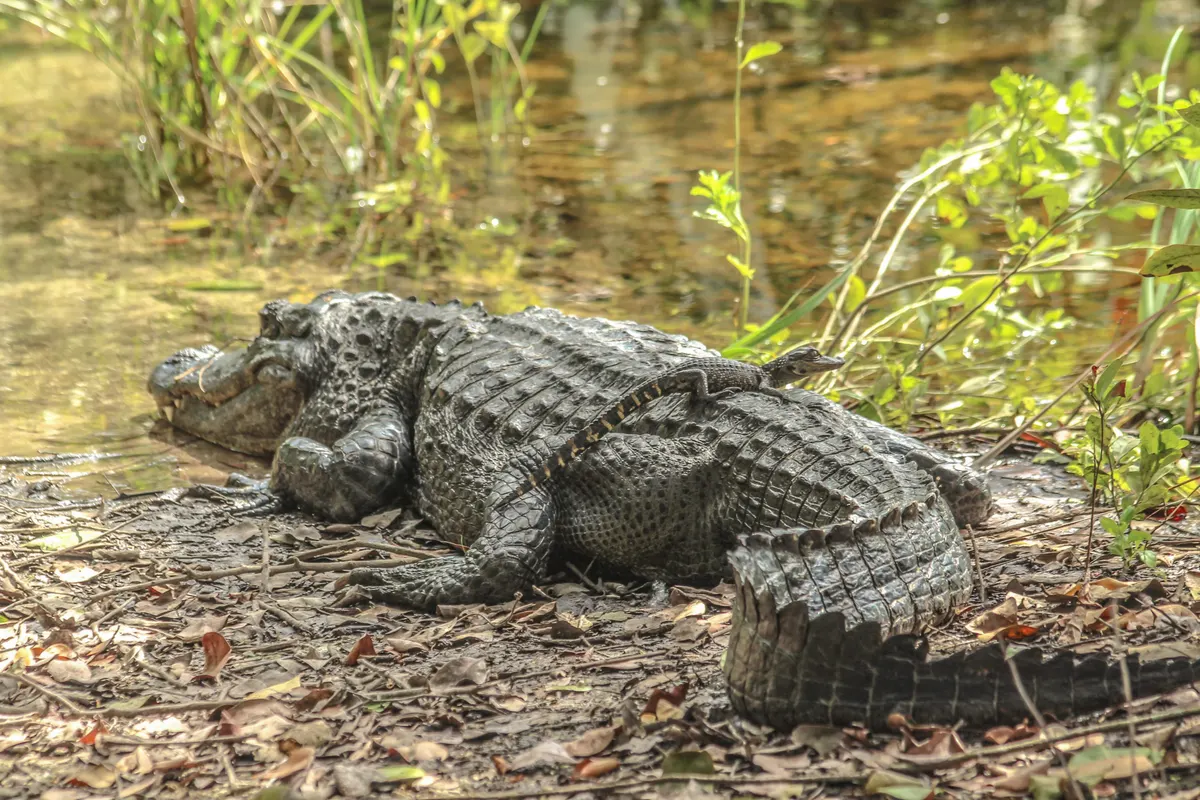
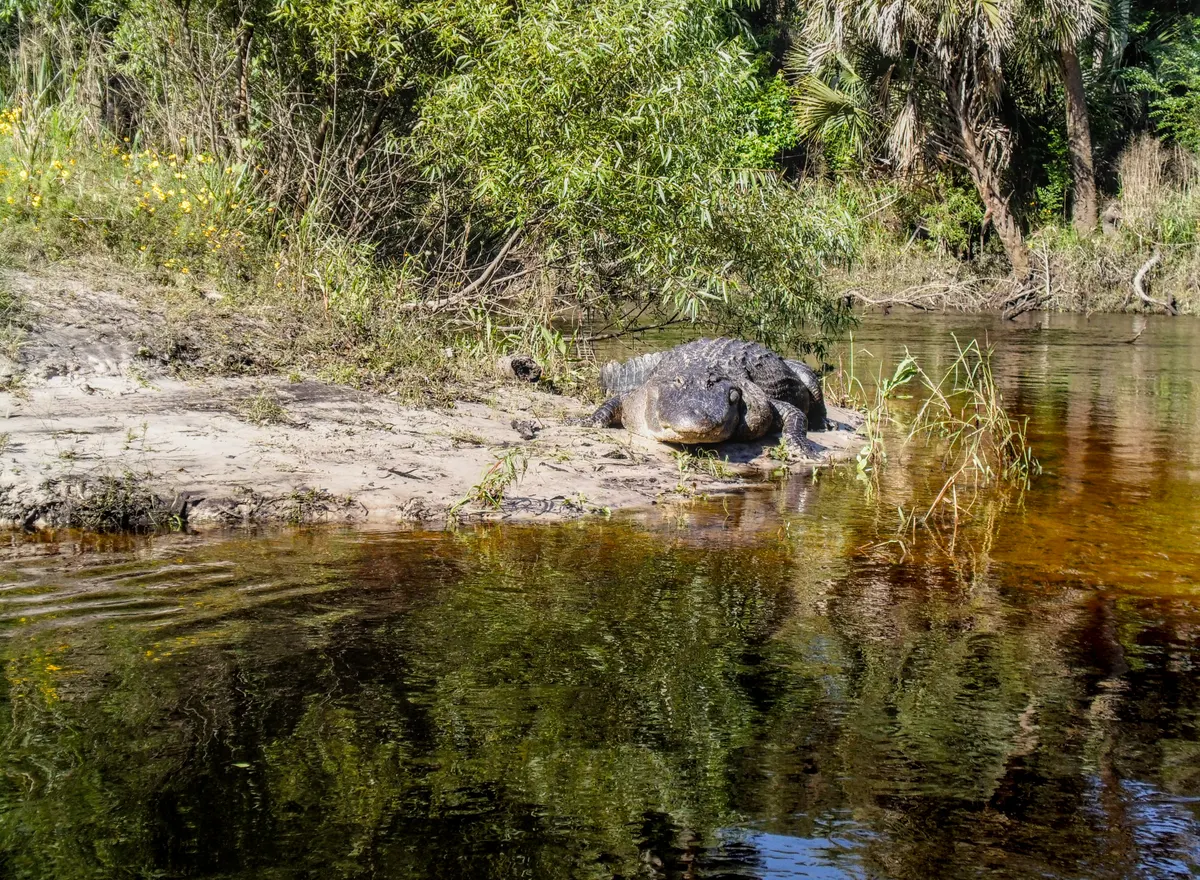
American alligator basking on a riverbank in Central Florida
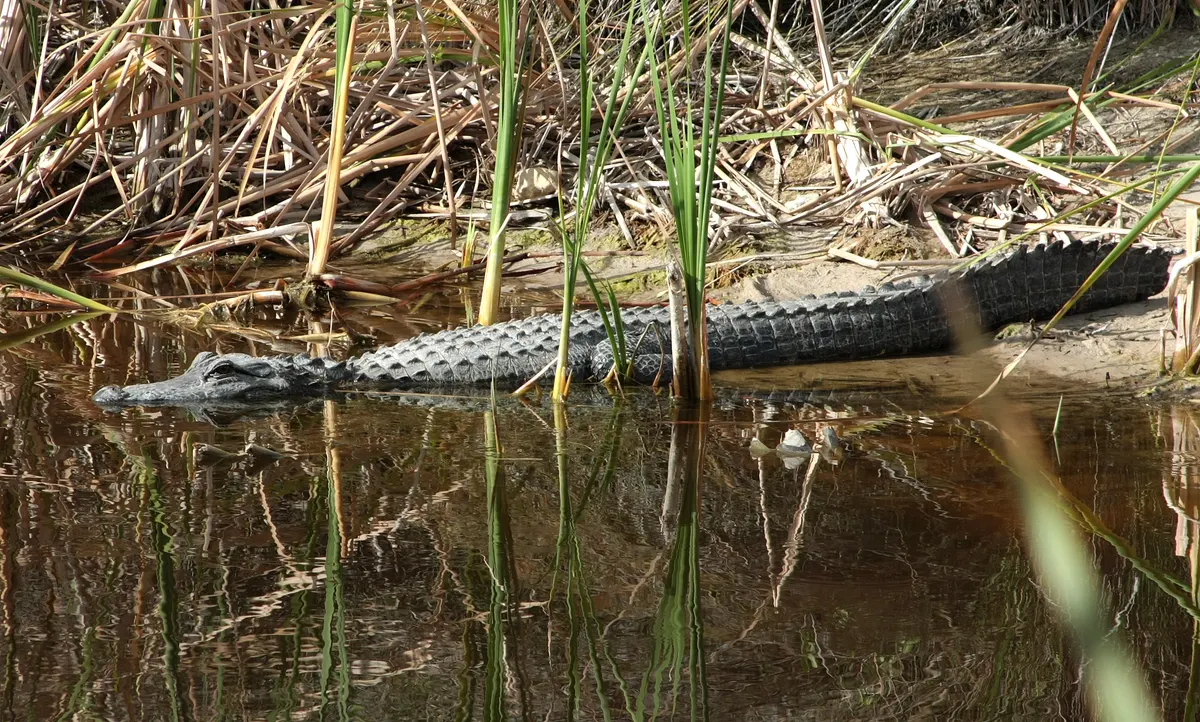
American alligators bask along freshwater rivers, lakes, and marshes of the Southeast.
ReptiliaLeast Concern

American Alligator Facts

American alligators dig deep holes that hold water for fish and turtles in dry seasons.

The American alligator is a large freshwater crocodilian of the southeastern United States. It lurks in wetlands, digs water-holding holes, and ambushes fish, turtles, birds, and mammals.
By · Updated

Quick Facts

American Alligator at a glance

Alligator mississippiensisCrocodiliaAlligatoridae

About their home

Kind of animal

Reptilia

Where they live

What they eat

How safe?

Least Concern

Size and speed

How heavy

200 pounds – 800 pounds

How long

8 feet – 13 feet

How fast

Explosive lunges in water; short bursts of running on land

Lifespan

About 35 to 50 years

Core article

American Alligator: ecology and life history

A closer look at habitat, diet, behavior, reproduction, and conservation.

Start here

American Alligator

The American alligator (Alligator mississippiensis) is a living armored boat of the southeastern United States — a freshwater carnivore that rules wetland edges from North Carolina to Texas. It sinks until only eyes and nostrils break the surface, then waits. Thick hide, a heavy tail, and patient ambush make it one of North America's most recognizable reptiles, and a keystone animal that engineers the marshes it lives in.

Armor, Ambush, and a Snout Built for the Job

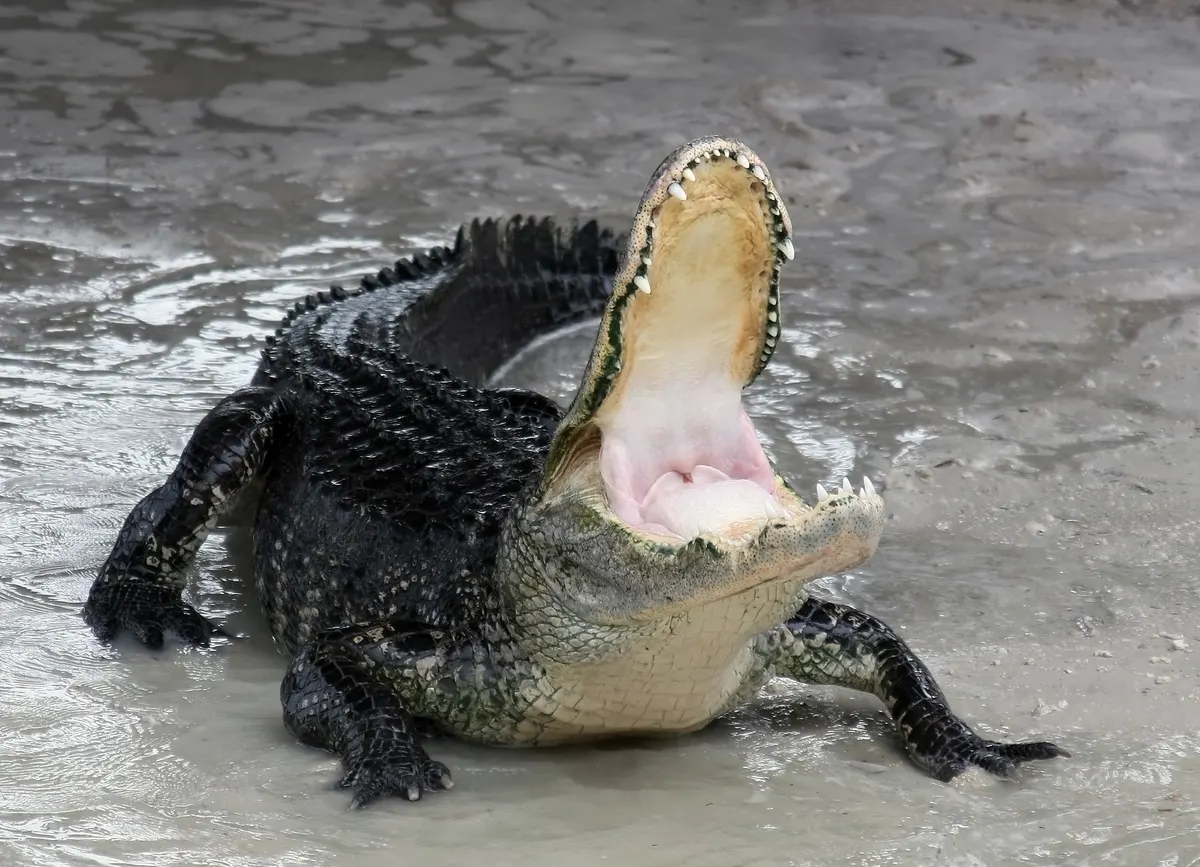
Adults usually run 8 to 13 feet, with big males approaching or topping 14 feet and several hundred pounds; females stay smaller. The broad, U-shaped snout sets alligators apart from most crocodiles, and when the mouth shuts, the lower teeth tuck out of sight — a quick field clue. Bony plates called osteoderms armor the thick skin. Eyes, ears, and nostrils sit high on the head so the animal can watch and breathe while submerged; a clear third eyelid protects the eyes underwater, and a throat flap seals the airway so it can open its jaws below the surface without drowning. The muscular tail drives sudden surges and the thrashing "death roll." Alligators are close kin to the smaller Chinese alligator and, more distantly, to crocodiles and caimans — a lineage that has held warm American wetlands for millions of years.

Where American Alligators Live

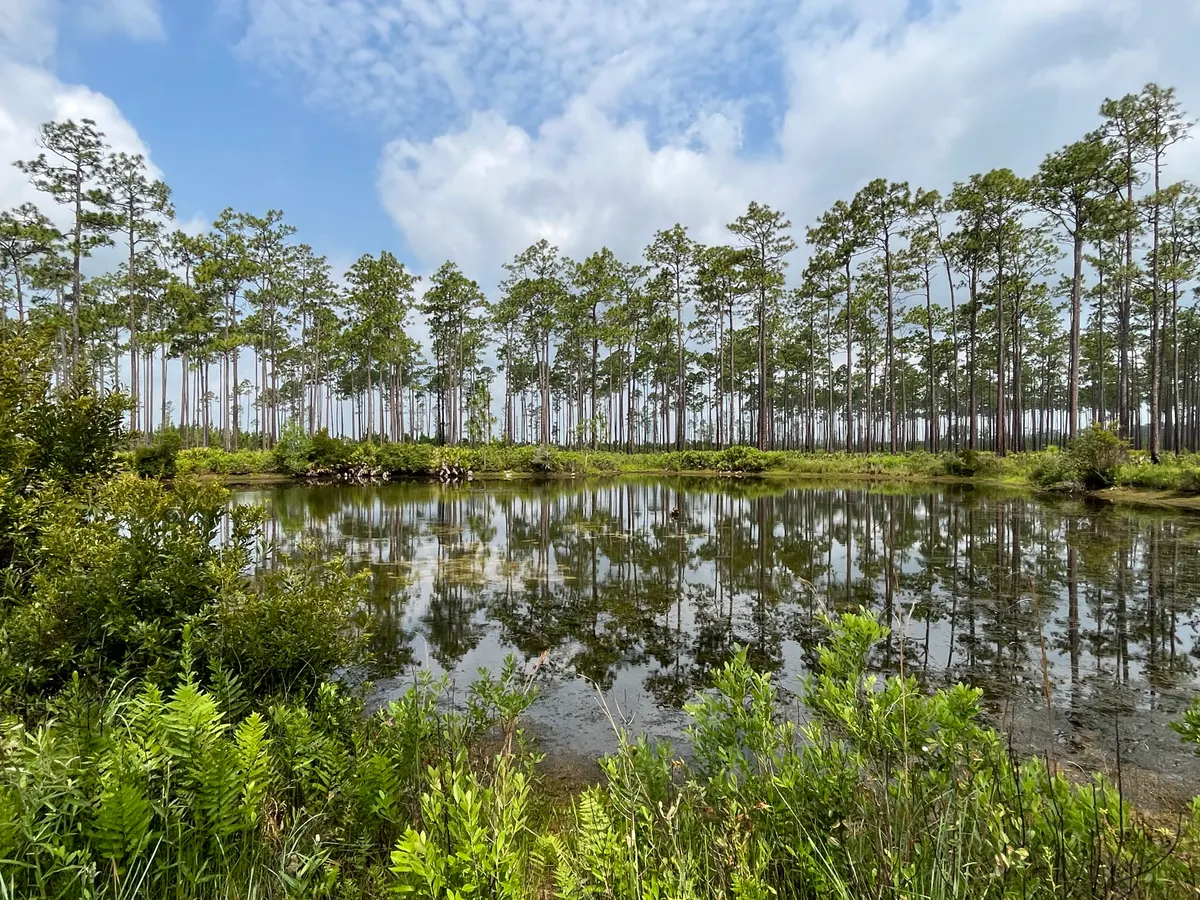
Open water and swamp vegetation in Okefenokee Swamp Georgia
Blackwater swamps and marsh edges are classic American alligator country.

Alligators occupy marshes, cypress swamps, river floodplains, lakes, canals, and some brackish coastal water across the U.S. Southeast. The strongholds are Florida's Everglades and Big Cypress, Georgia's Okefenokee Swamp, Louisiana's coastal marshes, and refuge wetlands from the Carolinas to eastern Texas. They are ecosystem engineers: adults dig "gator holes" that hold water through drought, creating refuges that fish, turtles, and wading birds depend on. Because they are cold-sensitive, they go inactive in cold snaps and shelter in dens or deep water until it warms.

What American Alligators Eat

American alligator with mouth partly open in defensive posture
Ambush hunters swallow prey whole or tear larger animals into chunks.

Alligators are opportunistic carnivores whose menu grows with them. Hatchlings take insects, small fish, and amphibians; adults move on to fish, turtles, waterbirds, snakes, and mammals that come to drink. Big prey may be seized, dragged under, and torn apart with a spinning death roll. Hunting is almost always ambush — the animal floats motionless, then explodes forward in a snap of jaws. Digestion slows in cool weather, so a single large meal can sustain an adult for weeks, an efficiency that lets alligators thrive where prey shifts with the seasons.

Behavior: Solitary Hunters That Gather at Good Water

Adult American alligator with a small hatchling nearby in Everglades
Young stay near the mother for months while learning wetland routes.

Outside nesting season alligators are largely solitary, though many will share a productive lake or swamp. In spring, males bellow to claim territory and draw females — deep calls that carry across the marsh and make the water dance above their backs. Disputes are settled with size displays, hissing, and sometimes serious bites. They bask to warm up after cool nights and hunt most actively in darkness. On land they can sprint in short bursts, but water is where they win. People should keep their distance: feeding wild alligators is illegal in many states precisely because it teaches them to approach humans.

Life Cycle: Warm Nests and a Guarding Mother

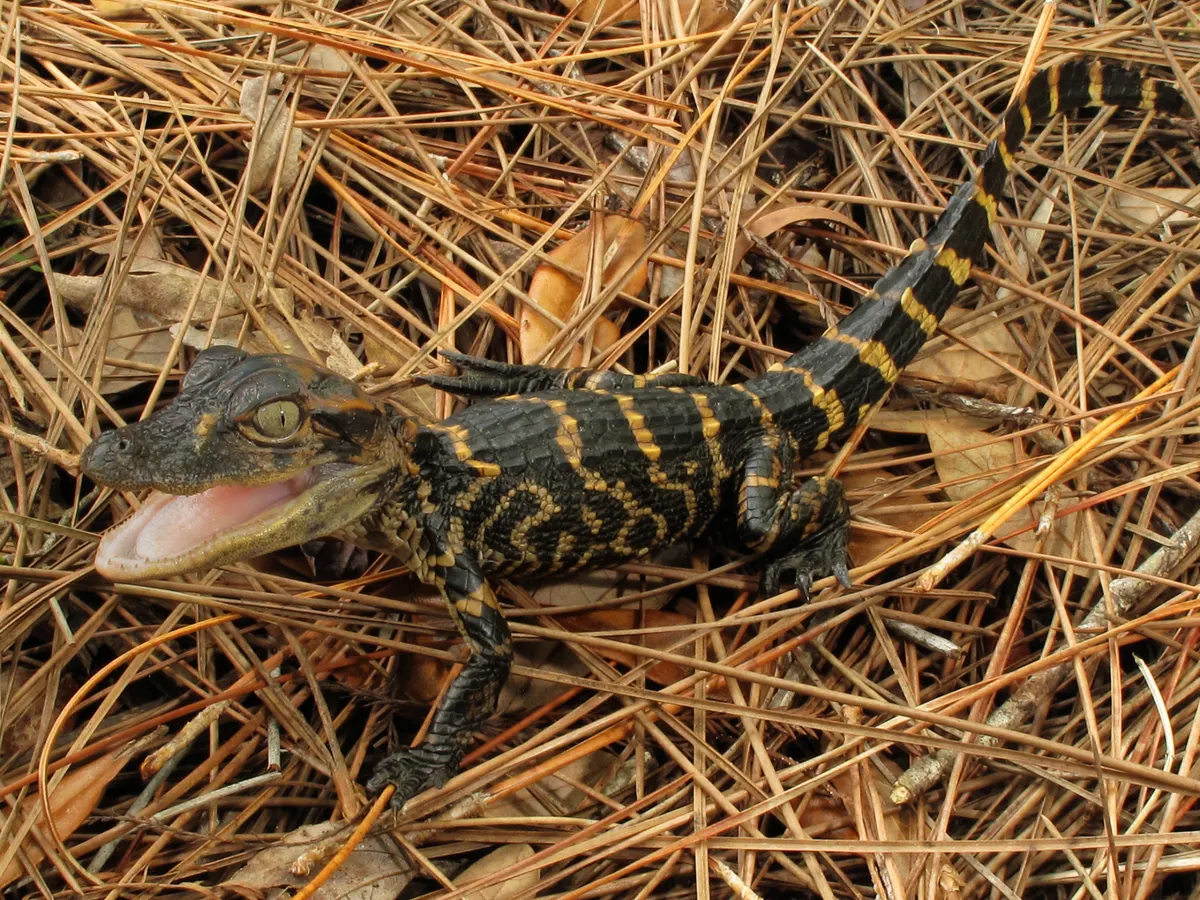
Juvenile American alligator showing yellow banding on dark scales
A clutch may hold 20 to 50 eggs, but many hatchlings do not survive.

Breeding peaks in spring. The female builds a mound of vegetation and mud near the water and lays roughly 20 to 50 eggs; as the plant matter composts it warms the clutch for about 65 days. Nest temperature sets the sex of the young — warmer nests skew male, cooler nests female. When the hatchlings chirp, the mother opens the nest and may carry her babies gently to the water in her jaws. Young keep bright yellow banding for camouflage, and many are still lost to raccoons, birds, snakes, and large fish, but a guarding mother improves the odds through the first months. Survivors grow slowly into apex predators; wild alligators often live several decades, and some in captivity pass 70 years.

Conservation: A Recovery Success Still Worth Guarding

American alligator beside a Florida highway near wetland habitat
The species is endemic to the southeastern United States mainland wetlands.

The American alligator is listed as Least Concern, with stable or recovering numbers after hunting drove it near commercial extinction in the early 1900s. Legal protection and managed harvest programs brought it back across much of its range — a genuine conservation success. Threats persist, though: wetland drainage, coastal development, and water pollution shrink or degrade habitat, roads kill wanderers, and illegal feeding breeds dangerous conflict. Protecting freshwater wetlands, and respecting wildlife-viewing rules, keeps alligators and the many species that rely on their gator holes secure.

References and Authoritative Sources

American Alligator: classification and fun facts

Classification

Scientific Taxonomy
  1. Kingdom

    Animalia

  2. Phylum

    Chordata

  3. Class

    Reptilia

  4. Order

    Crocodilia

  5. Family

    Alligatoridae

  6. Genus

    Alligator

  7. Species

    A. mississippiensis

Did You Know?

Fun Facts

1

American alligators dig deep holes that hold water for fish and turtles in dry seasons.

2

Mothers may carry hatchlings to water gently in their mouths.

3

A broad U-shaped snout helps tell alligators from many crocodile species.

4

Nest temperature helps decide whether eggs hatch as males or females.

5

Adults can go months without a big meal after a large feast.

6

They can stay underwater for long periods by slowing their heart rate.

Common Questions

FAQ about American Alligator

Select a question to reveal the answer.

What is an American alligator?

The American alligator (*Alligator mississippiensis*) is a large freshwater reptile in the crocodilian group. It is native to the southeastern United States and is one of only two living alligator species.

Where do American alligators live?

They live in wetland habitats such as marshes, swamps, rivers, lakes, and some brackish coastal areas from North Carolina and Texas south through Florida.

What do American alligators eat?

American alligators are carnivores. They eat fish, turtles, birds, mammals, snakes, and other animals they can ambush near the water.

How are alligators different from crocodiles?

American alligators usually have a broader, U-shaped snout, and their lower teeth are mostly hidden when the mouth is closed. Crocodiles often show a prominent lower tooth and prefer more salt-tolerant habitats in many regions.

How big do American alligators get?

Most adults are about 8 to 13 feet long. Large males can weigh several hundred pounds; females stay smaller on average.

What is a baby alligator called?

A baby alligator is called a hatchling. Hatchlings have bright yellow bands that help camouflage them in grassy wetlands.

Show 2 more questionsExpand
Are American alligators endangered?

They are listed as Least Concern after strong recovery from earlier hunting pressure. Local threats still include habitat loss, roadkill, and human conflict.

Do alligator mothers protect their young?

Yes. Females build nests of vegetation, guard the eggs, and often stay near hatchlings for months, sometimes carrying them to water.