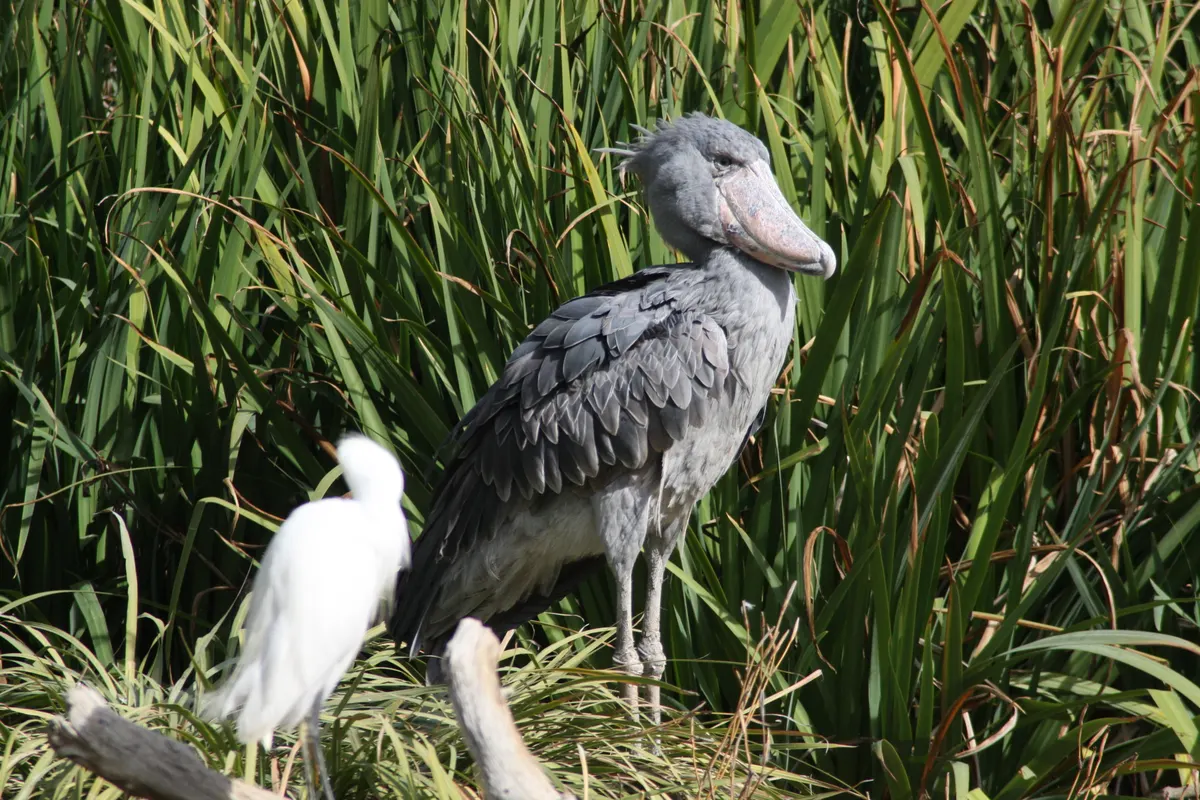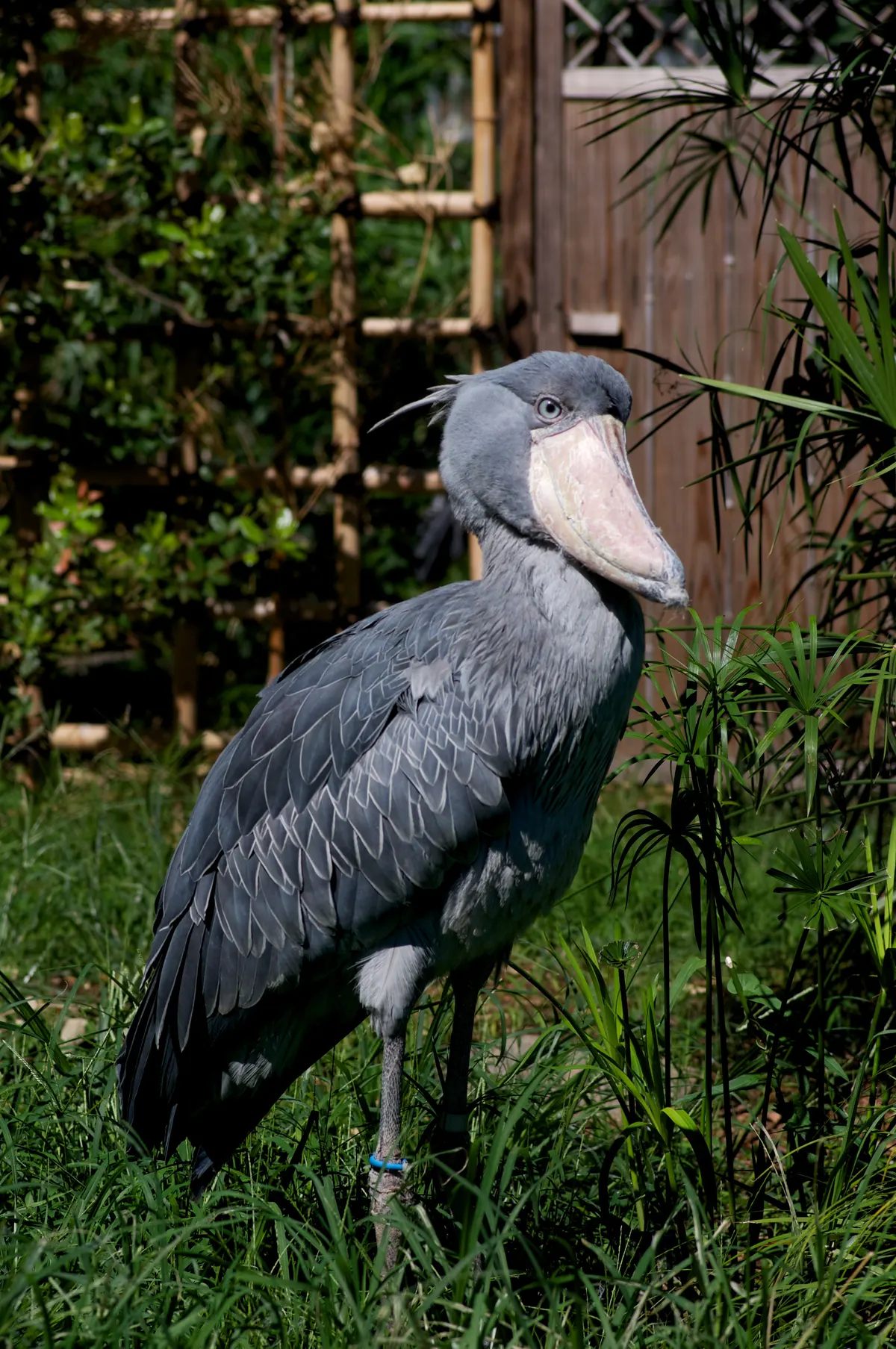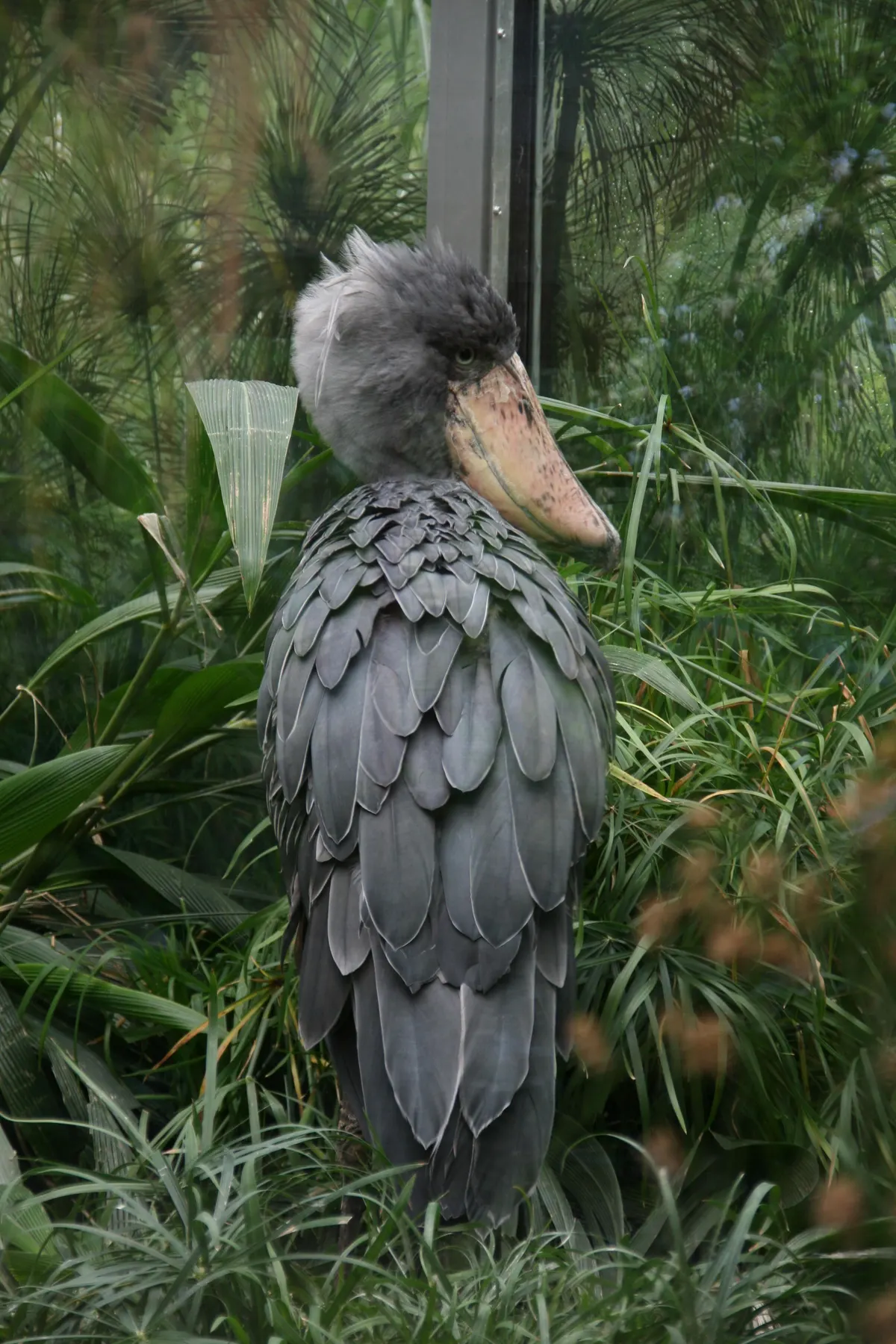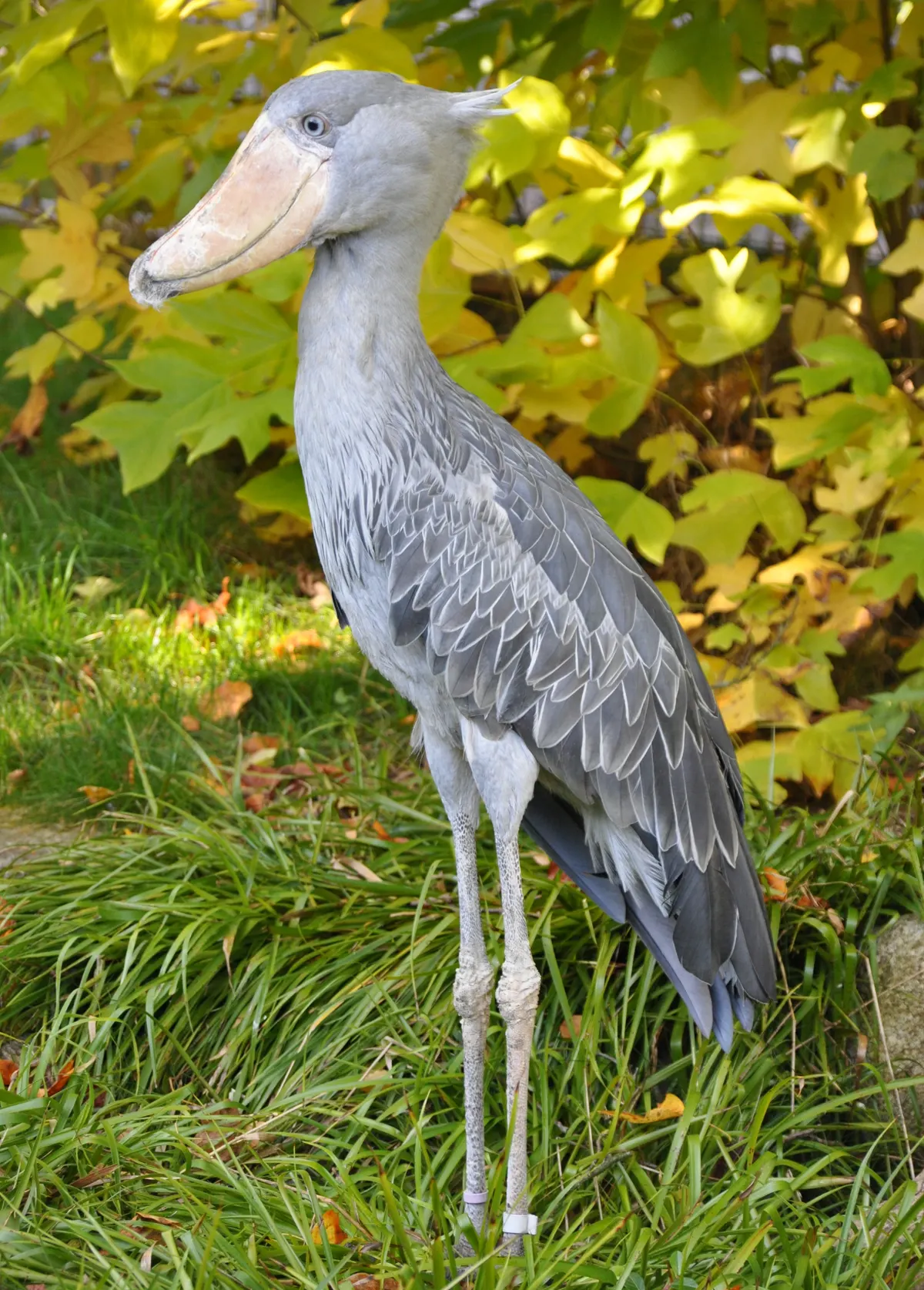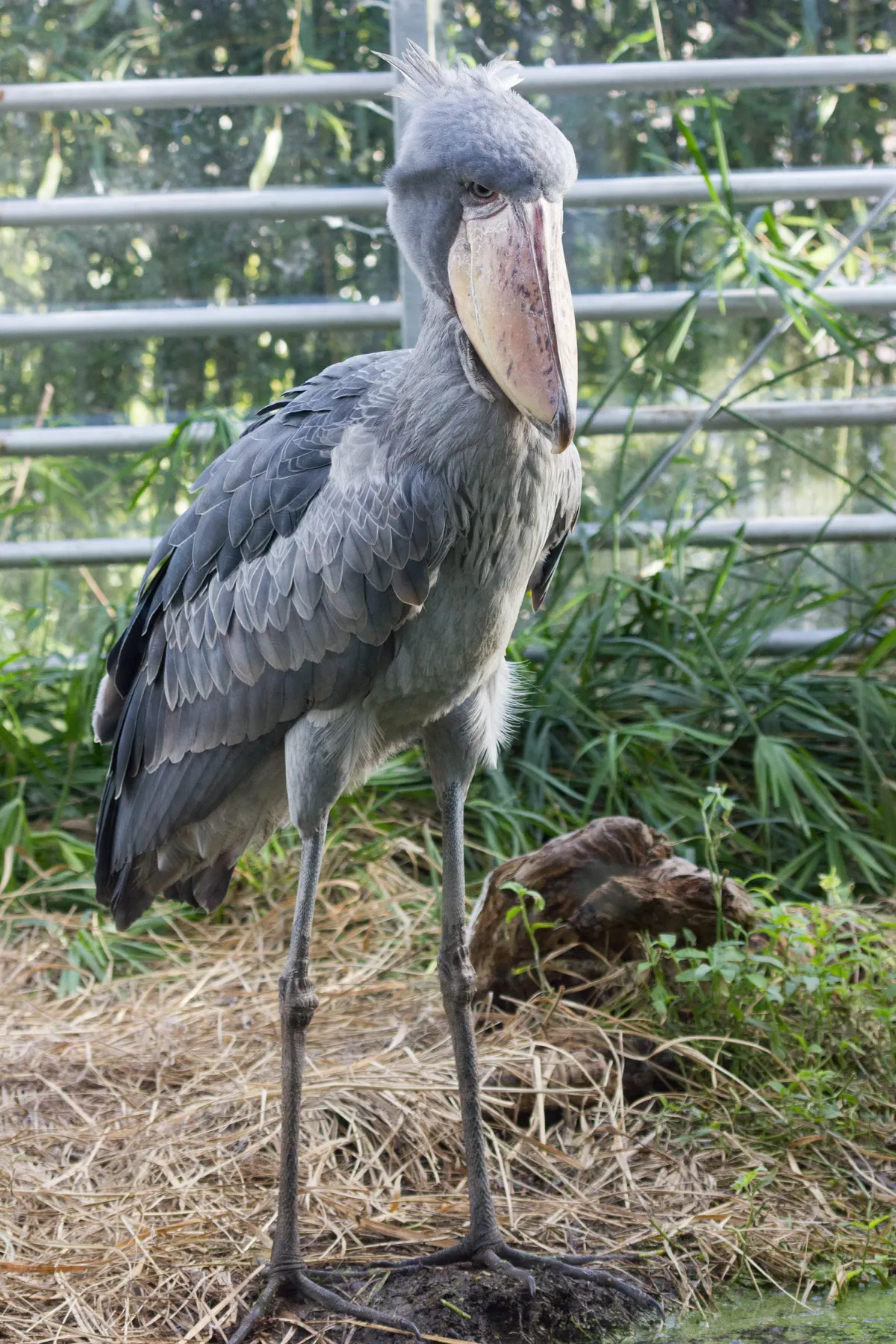
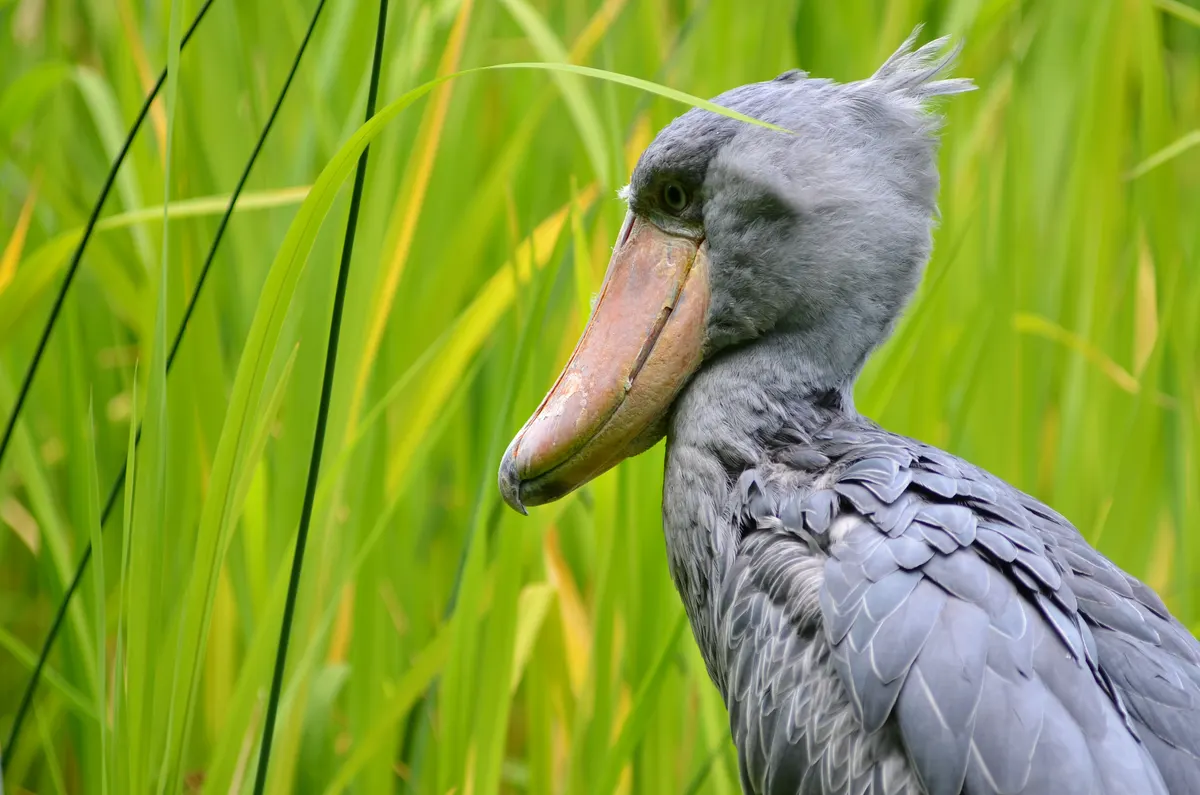
A towering presence in the marsh, a mature shoebill stands between 3.5 and 5 feet tall and weighs between 9 and 15 pounds. Its plumage is predominantly a slate-bluish gray, blending seamlessly into the shadowy, misty environments of the dense swamp.
The defining morphological feature of Balaeniceps rex is undeniably its beak. Measuring up to 9 inches long and 4 inches wide, it is the third-longest bill of any extant bird, trailing only pelicans and large storks. This massive, hollow structure is reinforced with strong bony struts and features razor-sharp tomia (mandibular edges) that act like shears to decapitate prey or slice through thick aquatic vegetation. The upper mandible terminates in a sharp, decurved hook, heavily utilized to grip slippery, thrashing prey.
To support the immense weight of this beak, the shoebill possesses a highly muscular neck and a large head. Their eyes are oriented forward, granting them excellent binocular vision, crucial for calculating precise strike distances in murky water. Their feet are enormous, featuring elongated, completely unwebbed toes. This adaptation acts like a snowshoe, distributing their weight evenly and preventing them from sinking into the unstable, floating mats of vegetation that characterize their habitat.