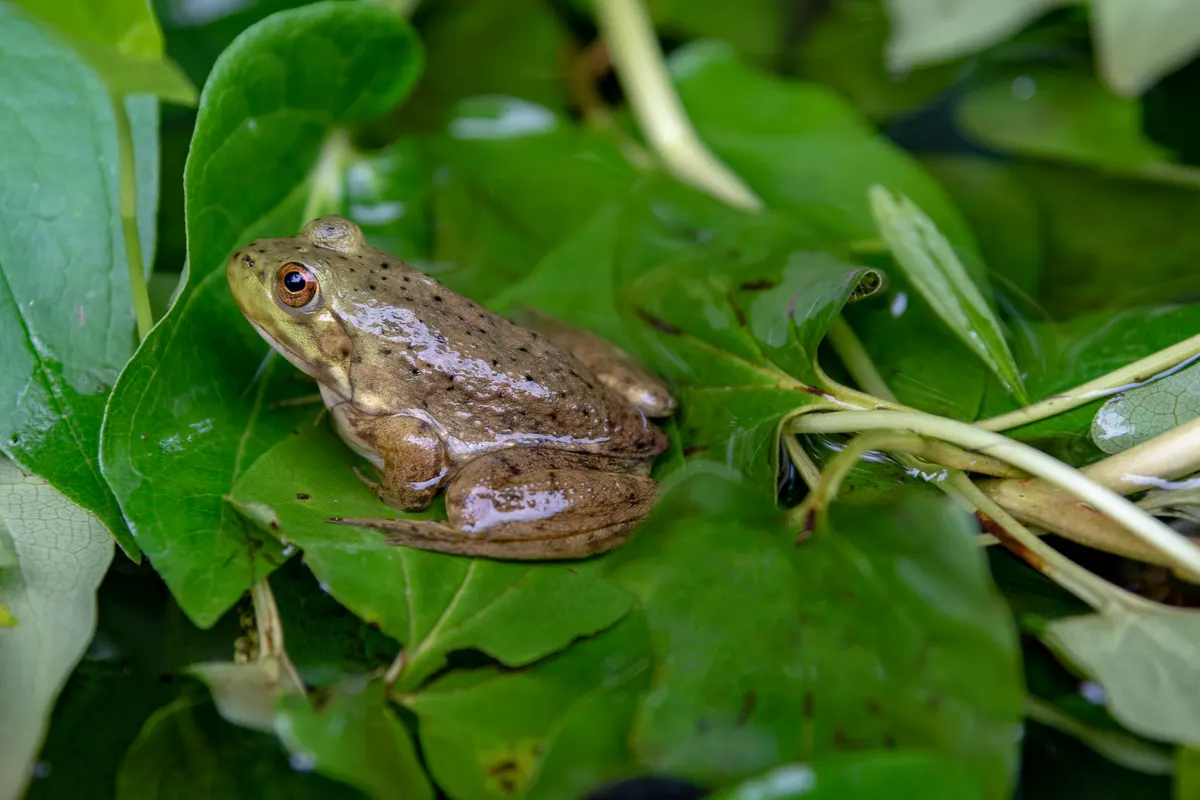
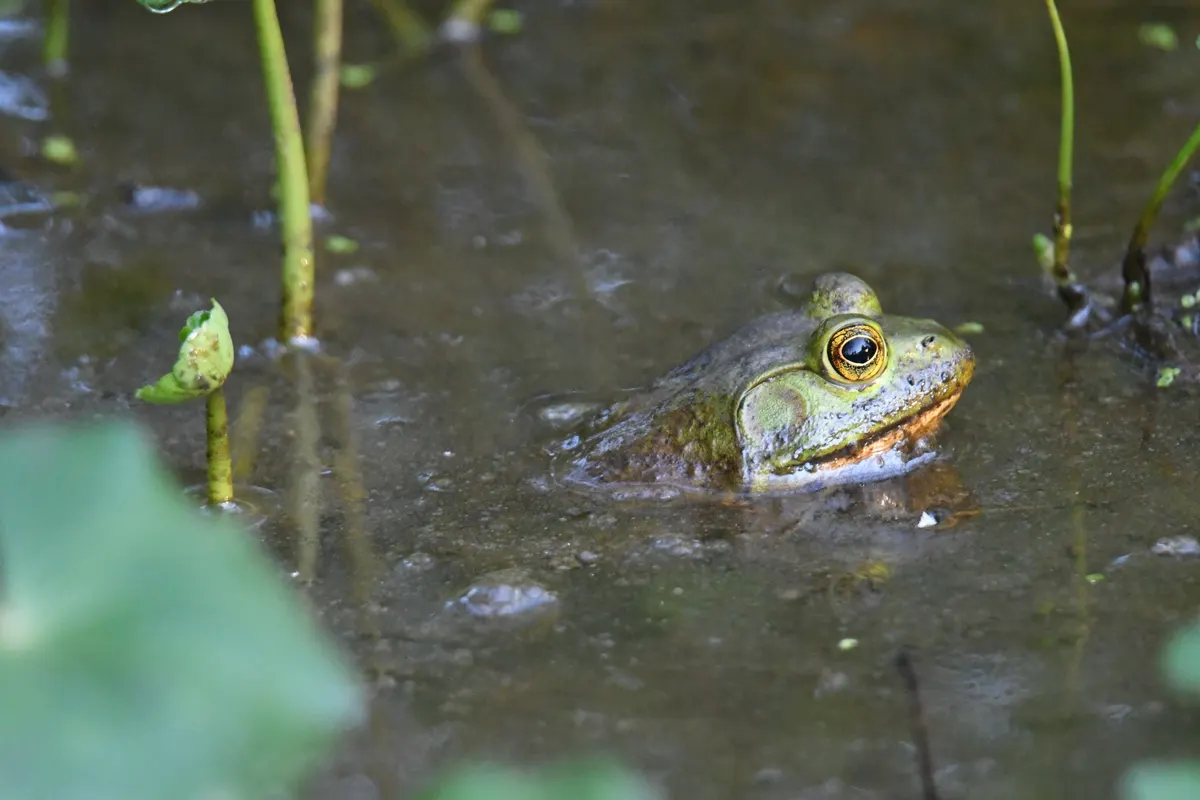
American bullfrog with head above the surface of a wetland pond
The American bullfrog is the largest native frog in North America, common in ponds and marshes.
AmphibiaLeast Concern

American Bullfrog Facts

Bullfrog tadpoles can take up to two or three years to become frogs in cold climates, far longer than most native frogs.

The American bullfrog is the largest native frog in North America, living in ponds, lakes, and marshes east of the Rocky Mountains. Introduced widely through the frog-leg food trade, it is now established on four other continents, where it is considered one of the world's most damaging invasive amphibians.
By · Updated

Quick Facts

American Bullfrog at a glance

Lithobates catesbeianusAnuraRanidae

About their home

Kind of animal

Amphibia

Where they live

What they eat

How safe?

Least Concern

Size and speed

How heavy

0.5 ounces (14 g) – 1.5 pounds (0.5 kg) for large individuals

How long

3.5 inches (9 cm) – 6 inches (15 cm), rarely to 8 inches (20 cm)

How fast

Powerful jumper covering several feet in a single leap; a strong, efficient swimmer

Lifespan

About 7 to 9 years

Core article

American Bullfrog: ecology and life history

A closer look at habitat, diet, behavior, reproduction, and conservation.

Start here

American Bullfrog

The American bullfrog (Lithobates catesbeianus) is the largest native frog in North America, a heavily built carnivore that dominates the ponds, lakes, and marshes it inhabits. Native to eastern North America, it has been introduced to western North America, Europe, Asia, and South America, largely through the frog-leg food trade, and is now considered one of the world's most widespread invasive amphibians.

Taxonomy and Evolution

The American bullfrog belongs to the family Ranidae, the true frogs, within the genus Lithobates (formerly classified under Rana in older literature). It is closely related to other North American true frogs such as the green frog and pickerel frog, but is markedly larger than most of its relatives.

The species is named for naturalist Mark Catesby, who documented much of the flora and fauna of the American Southeast in the 18th century. Bullfrogs evolved as large, generalist predators suited to permanent freshwater habitats across the eastern half of the continent.

Anatomy and Physical Characteristics

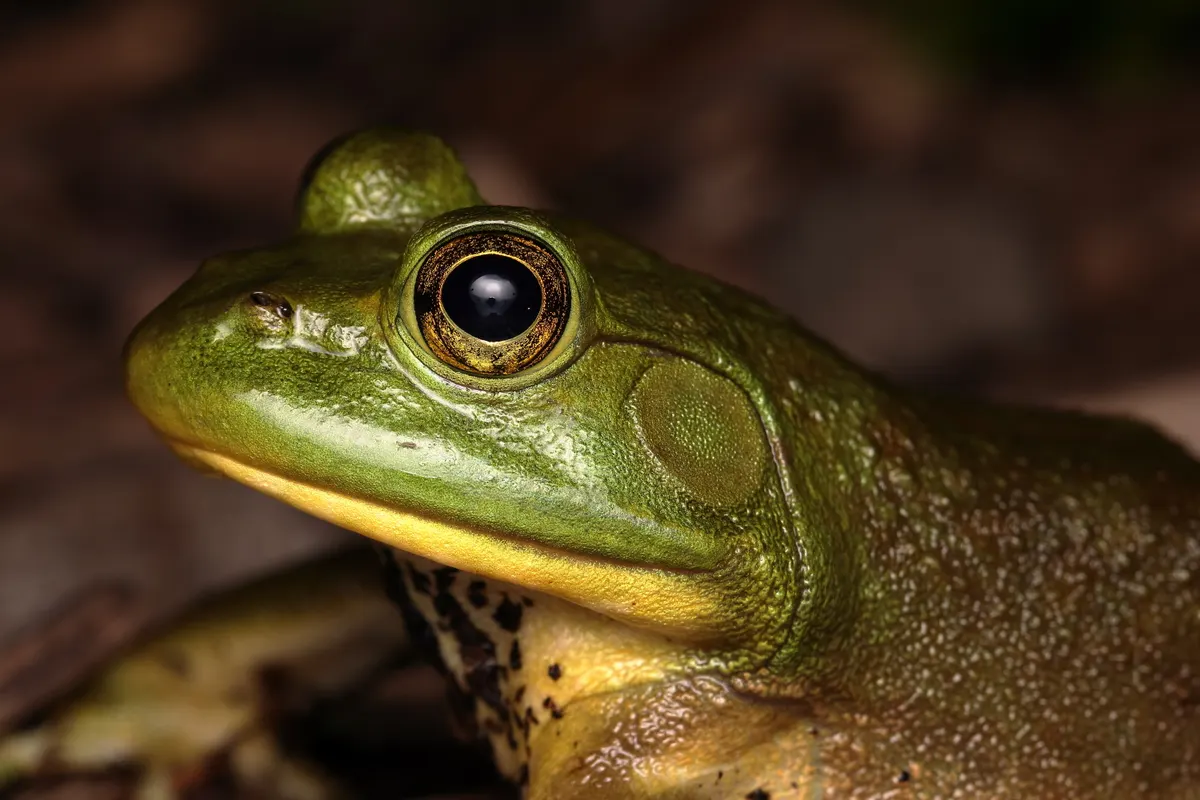
Adult bullfrogs typically measure 3.5 to 6 inches (9 to 15 cm) in body length, with large individuals occasionally approaching 8 inches (20 cm). Weight ranges from a fraction of an ounce in juveniles to as much as 1.5 pounds (0.5 kg) in the largest adults. Coloring is mottled green to brown, providing camouflage against pond vegetation and mud.

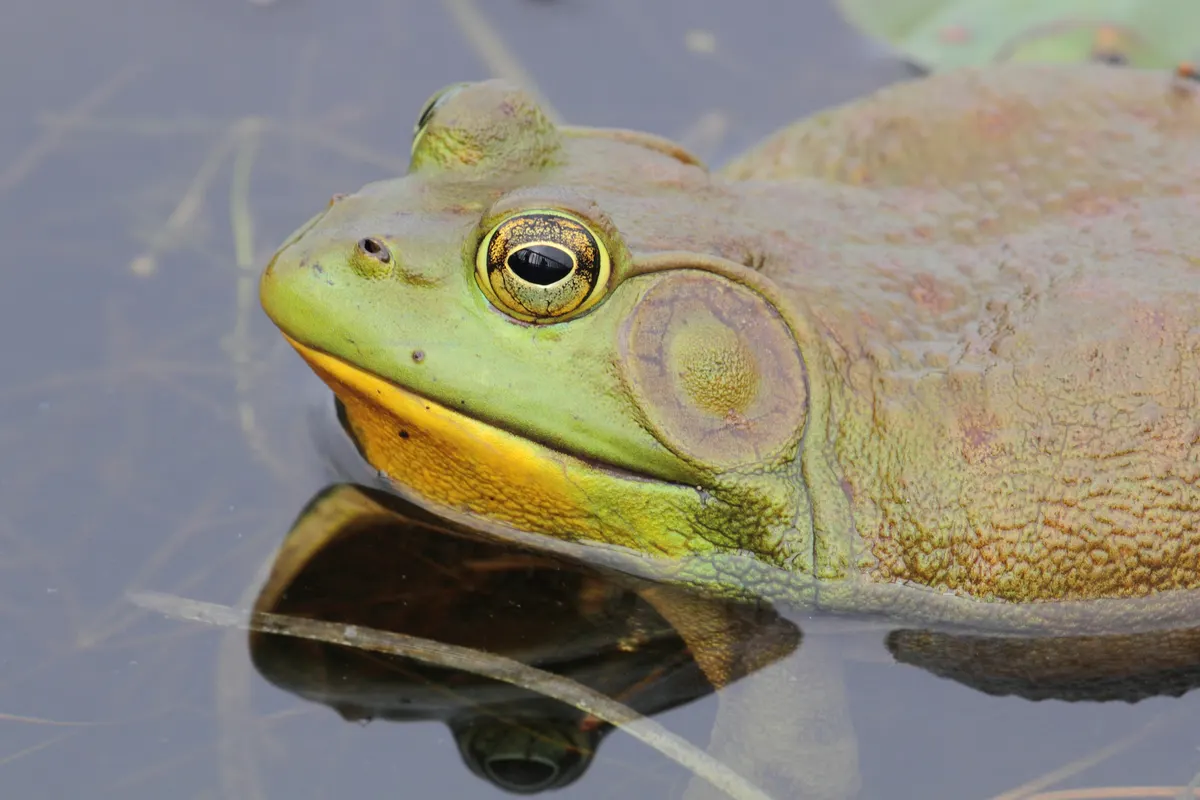
A key identifying feature is the tympanum, the external eardrum, visible as a large circular patch behind each eye; in males it is noticeably larger than the eye itself. Bullfrogs lack the dorsolateral ridges (raised skin folds) found on many other North American frogs, giving their back a smoother profile. Powerful, muscular hind legs with extensively webbed feet drive both jumping and swimming.

Habitat and Distribution

American bullfrog resting at the edge of a Quebec wetland
Permanent ponds, marshes, and slow streams give bullfrogs the deep water cover they need.

Bullfrogs live in wetland habitats with permanent standing water, including ponds, lakes, marshes, and slow-moving stretches of streams and rivers. They favor sites with soft, muddy banks and dense vegetation for cover, and readily colonize artificial waters such as reservoirs, farm ponds, and drainage ditches.

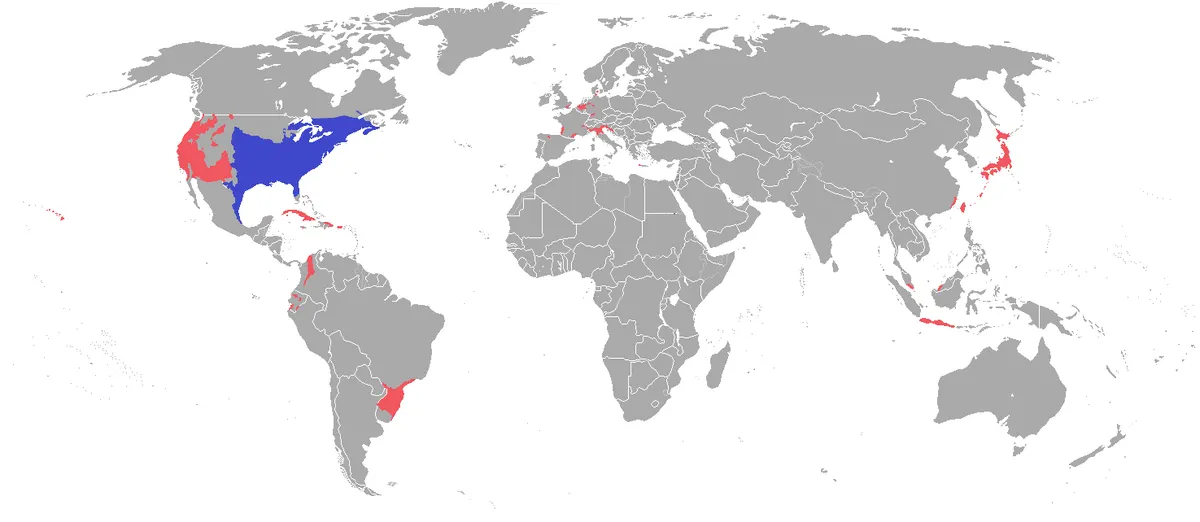
Their native range covers eastern North America, from southern Canada and the Great Lakes region south through the central and eastern United States into northeastern Mexico. Since the early 20th century, bullfrogs have been introduced far beyond this range — to the western United States, and to countries including Belgium, France, Italy, South Korea, Japan, China, Taiwan, Brazil, and Colombia — mostly through deliberate releases tied to the frog-leg food trade and the pet and bait trades. In these introduced regions, bullfrogs are established as breeding populations rather than occasional escapees.

Diet and Feeding Strategies

American bullfrog active at night beside water
Bullfrogs are sit-and-wait predators that ambush insects, fish, and smaller frogs near water.

Bullfrogs are opportunistic carnivores that eat almost any animal small enough to swallow. Prey includes insects, crayfish, small fish, other frogs, small snakes, small birds, and small mammals; there are even documented cases of bullfrogs catching bats at the water's surface. This unusually broad diet, combined with a willingness to eat other frog species — including smaller members of their own species — makes them effective and disruptive predators wherever they are established.

Hunting follows a sit-and-wait pattern. A bullfrog positions itself at the water's edge or partly submerged, remains motionless, and lunges with its wide mouth when prey comes within range. Most hunting activity occurs at night or during dawn and dusk hours.

Social Structure and Behavior

Juvenile American bullfrog sitting on damp ground
Young bullfrogs leave the water after metamorphosis but stay close to wet cover.

Bullfrogs are largely solitary outside the breeding season and defend territories around favored basking and hunting sites, particularly males guarding stretches of shoreline. Males announce and defend territory with a deep, resonant call often described as sounding like "jug-o-rum," audible over long distances across open water.

Aggregations form during the breeding season, when males call from fixed positions to attract females and will grapple with rival males that intrude on a claimed territory. Bullfrogs are largely nocturnal and crepuscular, most active from dusk through the night.

Life Cycle and Reproduction

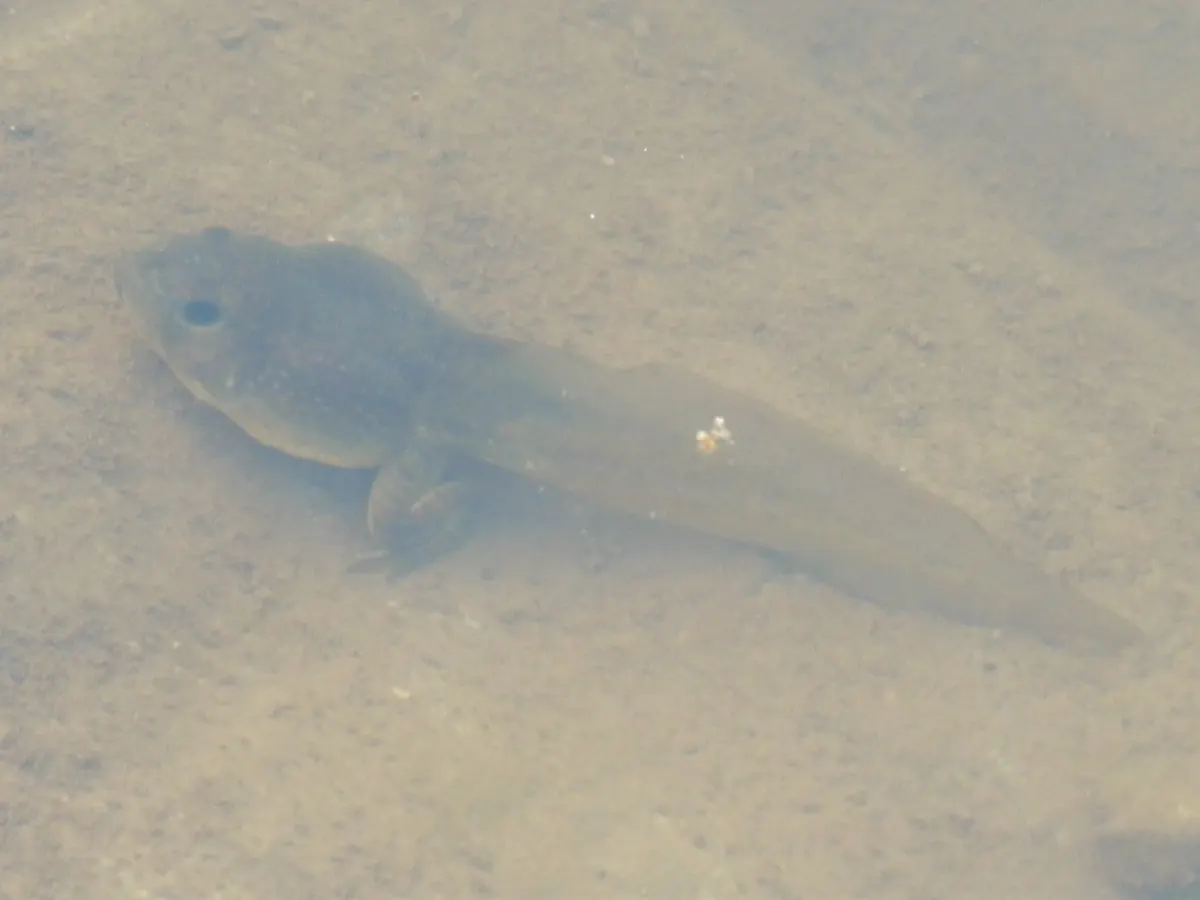
American bullfrog tadpole with developing hind legs
Bullfrog tadpoles can spend more than a year growing before they become land-capable frogs.

Breeding occurs in spring and summer once water temperatures warm sufficiently. A female lays her eggs in a large surface film on the water, with a single clutch commonly containing 2,000 to 20,000 eggs — among the largest clutch sizes of any North American frog. Eggs hatch within about three to five days into tadpoles.

The tadpole stage is unusually long for a frog. In warm climates, tadpoles can complete metamorphosis into froglets within about a year, but in colder regions development can stretch to two or three years before the tadpole transforms. This extended larval period is one of the species' most distinctive traits and contributes to its ecological footprint, since tadpoles themselves compete with and are preyed upon by other aquatic wildlife for extended periods. Once mature, bullfrogs typically live 7 to 9 years in the wild and can reach 16 years in captivity.

Conservation Status and Threats

Map showing native and introduced American bullfrog range worldwide
American bullfrogs are native to eastern North America but now occur as invasive populations elsewhere.

(Population and conservation trend data sourced from the IUCN Red List of Threatened Species)

The American bullfrog is classified as Least Concern, with a population trend listed as Increasing. Within its native eastern North American range, populations are generally stable and the species faces the ordinary pressures of wetland habitat loss and water pollution.

The larger conservation concern runs in the opposite direction: outside its native range, the bullfrog is regarded as a harmful invasive species. Introduced populations prey heavily on native frogs, tadpoles, invertebrates, and small vertebrates, and can outcompete native amphibians for food and breeding sites. Bullfrogs are also implicated in spreading amphibian chytrid fungus (Batrachochytrium dendrobatidis) to native frog populations that lack resistance to it. Several countries and regions, including parts of the European Union, restrict or prohibit the keeping, sale, and release of American bullfrogs specifically because of this invasive impact.

References and Authoritative Sources

American Bullfrog: classification and fun facts

Classification

Scientific Taxonomy
  1. Kingdom

    Animalia

  2. Phylum

    Chordata

  3. Class

    Amphibia

  4. Order

    Anura

  5. Family

    Ranidae

  6. Genus

    Lithobates

  7. Species

    L. catesbeianus

Did You Know?

Fun Facts

1

Bullfrog tadpoles can take up to two or three years to become frogs in cold climates, far longer than most native frogs.

2

Introduced through the frog-leg food trade and the pet and bait trades, bullfrogs are now established on every continent except Antarctica and Australia.

3

The male's deep "jug-o-rum" call, which gives the species its common name, can carry a considerable distance across open water.

4

Bullfrogs regularly eat other, smaller frog species, a major reason they harm native amphibians where they have been introduced.

5

A single female can lay thousands of eggs in one clutch, helping populations expand quickly in new territory.

6

Bullfrogs can leap several times their own body length and are strong enough swimmers to cross substantial stretches of open water.

Common Questions

FAQ about American Bullfrog

Select a question to reveal the answer.

What is an American bullfrog?

The American bullfrog (*Lithobates catesbeianus*) is the largest native frog in North America, a heavily built carnivore that lives in and around permanent bodies of water.

Where do American bullfrogs live natively, and where have they been introduced?

Bullfrogs are native to eastern North America, from southern Canada through the central and eastern United States into northeastern Mexico. They have since been introduced to western North America, Europe, Asia, and South America, including Belgium, France, Italy, South Korea, Japan, China, Taiwan, Brazil, and Colombia.

What do American bullfrogs eat?

As opportunistic carnivores, bullfrogs eat almost anything they can overpower, including insects, crayfish, small fish, other frogs, small snakes, small birds, small mammals, and even bats.

Why are American bullfrogs considered invasive and harmful?

Outside their native range, bullfrogs prey heavily on native frogs, tadpoles, and other small wildlife, and can spread amphibian diseases such as chytrid fungus. Their large clutch sizes and generalist diet let them establish quickly in wetland habitats, often displacing native amphibian species.

How big do American bullfrogs get?

Adults typically measure 3.5 to 6 inches (9 to 15 cm) in body length and can occasionally approach 8 inches (20 cm), with large individuals weighing up to about 1.5 pounds (0.5 kg).

How long do bullfrog tadpoles take to become frogs?

In warm conditions, metamorphosis can complete within about a year, but in cold climates bullfrog tadpoles may take up to two or three years to develop into frogs — an unusually long larval stage among North American amphibians.

Show 2 more questionsExpand
Are American bullfrogs dangerous to humans?

No. Bullfrogs pose no venom or bite threat to people and are not dangerous to handle. Their impact is ecological, through predation on native wildlife in areas where they are invasive.

Are American bullfrogs endangered?

No. The species is listed as Least Concern with an increasing population, driven largely by its expanding introduced range outside eastern North America.