Kangaroo Facts
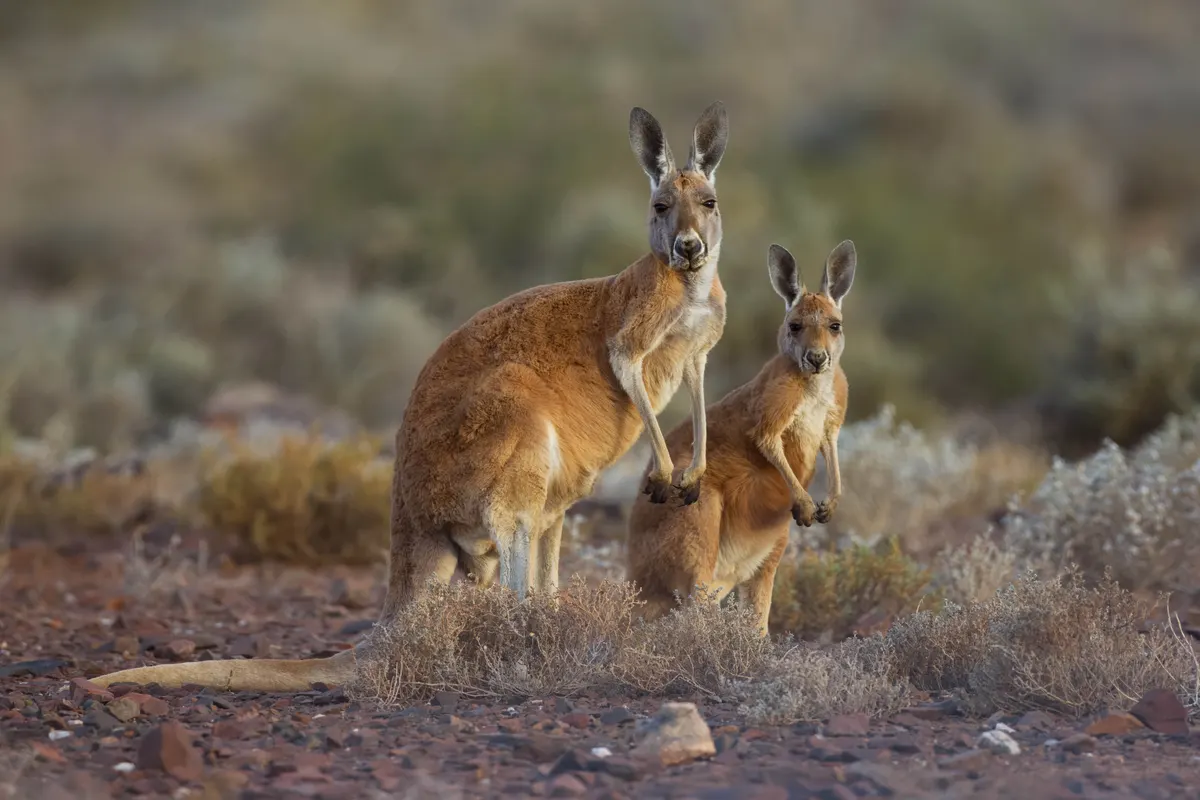
"A red kangaroo cannot walk easily on its hind legs but can hop very fast."
Red kangaroos are Australia's largest marsupials. They hop across dry grasslands on powerful hind legs, carry joeys in a pouch, and graze mostly on plants.
Loading page content

"A red kangaroo cannot walk easily on its hind legs but can hop very fast."
Red kangaroos are Australia's largest marsupials. They hop across dry grasslands on powerful hind legs, carry joeys in a pouch, and graze mostly on plants.
Explore red kangaroo photos organized for learning and classroom observation.
Click any photo to view it larger. 8 images available.
Core article
Habitat, diet, behavior, and more — everything on one page.
The red kangaroo (Macropus rufus) is an iconic symbol of the Australian outback. As the largest living marsupial and the largest terrestrial mammal native to Australia, this formidable creature is perfectly engineered to survive in one of the planet's harshest, most arid environments. Renowned for its unique bipedal hopping, muscular physique, and complex reproductive biology, the red kangaroo dominates the open plains and dry scrublands. They are highly efficient biological machines, utilizing specialized anatomy and water-conservation strategies to thrive where other large herbivores would quickly perish.
The red kangaroo is a prime example of marsupial evolution, belonging to a diverse family known as the "large-footed" marsupials.
The Macropodidae family includes kangaroos, wallabies, tree-kangaroos, and pademelons. The genus Macropus encompasses the largest of these species. The evolutionary divergence of kangaroos is intimately tied to the increasing aridity of the Australian continent over the past 15 million years. As dense rainforests retreated and open grasslands expanded, kangaroos evolved their efficient hopping locomotion to traverse vast distances between sparse food and water resources.
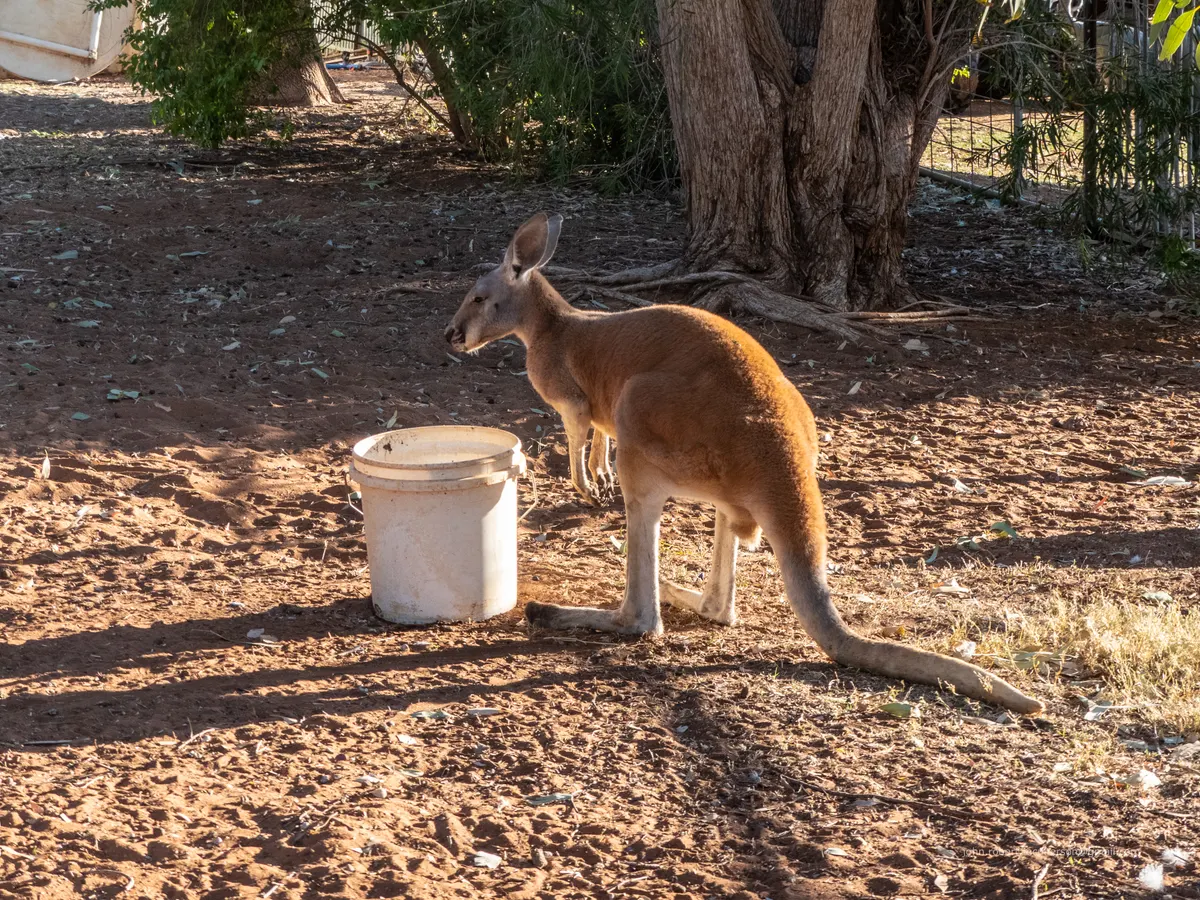
The red kangaroo exhibits extreme sexual dimorphism. Mature males, often referred to as "boomers," can stand up to 6 feet tall and weigh up to 200 pounds. They boast a striking reddish-brown pelage and heavily muscled shoulders and forearms. Females, known as "flyers" or "does," are significantly smaller—rarely exceeding 80 pounds—and typically have a bluish-grey coat.
Their anatomy is a masterclass in biomechanical efficiency:

The red kangaroo has the largest geographic range of any macropod, distributed across the vast, arid interior of mainland Australia. They avoid the coastal fringes, dense forests, and the tropical north, favoring environments with low rainfall.
Their preferred biomes include:

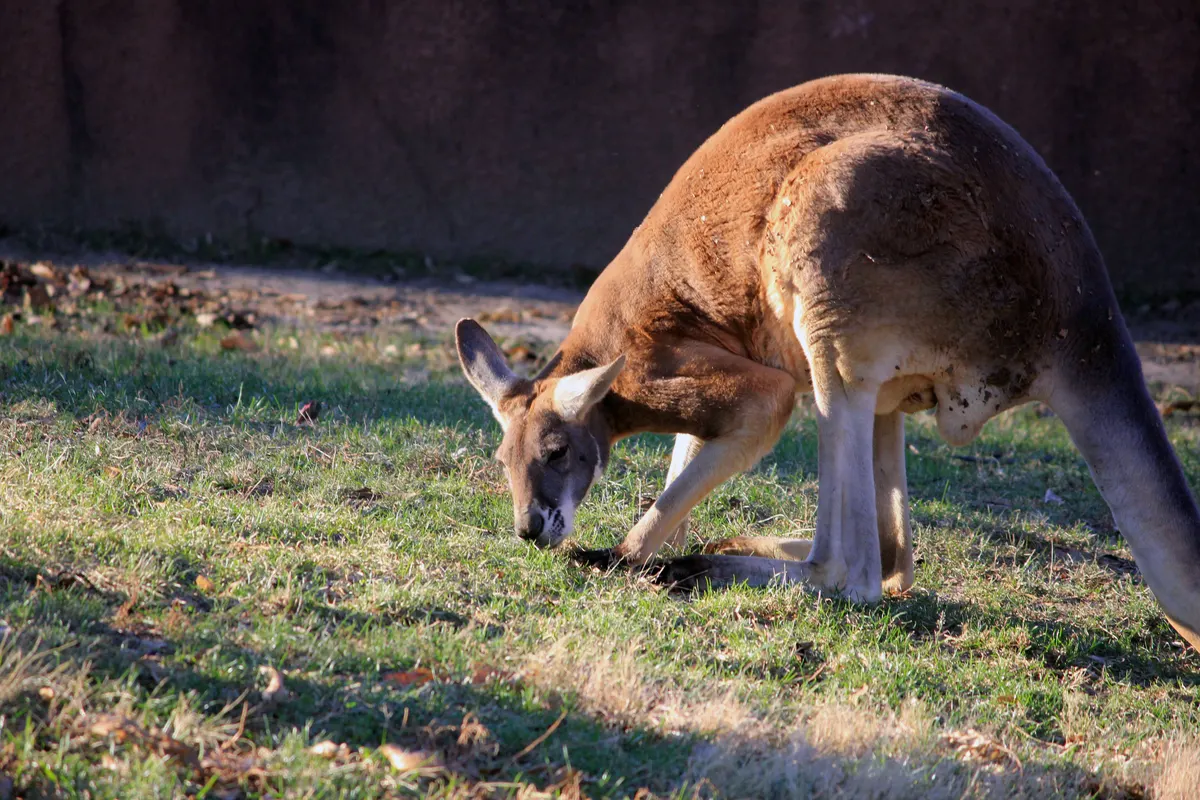
Kangaroos are strict herbivores and predominantly grazers. Their diet consists mostly of:
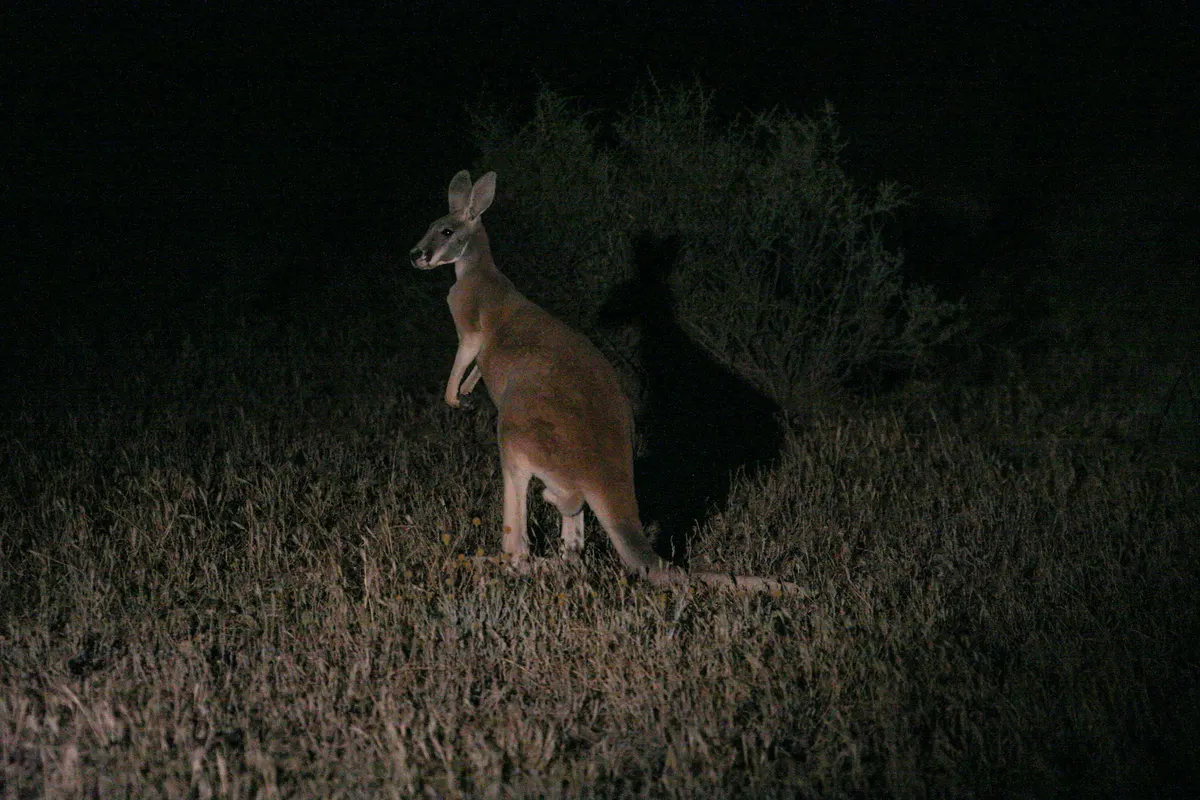
Red kangaroos are highly nomadic, tracking unpredictable rainfall across the outback to locate fresh green shoots. They are crepuscular and nocturnal, grazing mostly during the cooler hours of dawn, dusk, and night to minimize water loss. Remarkably, in times of adequate rainfall, a red kangaroo can acquire almost all its necessary hydration from the vegetation it consumes, surviving for months without drinking liquid water.

Red kangaroos are highly gregarious, forming loose social aggregates known as "mobs." A mob can consist of a few individuals to several hundred, particularly when congregating around a scarce water source or a flush of green grass. Mobs are fluid, with individuals frequently joining and leaving.
The social hierarchy is dominated by large, aggressive males. To secure mating rights, males engage in spectacular and violent displays known as "boxing." These encounters begin with ritualized displays of muscle flexing and ground scratching. If neither retreats, the males grapple with their forearms, attempting to throw their opponent off balance. The climax of the fight involves the males balancing entirely on their tails, lifting both hind legs, and delivering a devastating, disemboweling kick with their sharp toe claws.
Unlike many large mammals, kangaroos do not maintain strict, defendable territories, likely because the resources in their arid environment are too unpredictable to successfully monopolize.

The reproductive biology of the kangaroo is astonishingly complex, featuring embryonic diapause and the simultaneous production of different types of milk.
(Population and conservation trend data sourced from the IUCN Red List of Threatened Species)
The IUCN lists the red kangaroo as a species of Least Concern. With an estimated population fluctuating in the tens of millions, they remain abundant and widespread.
However, they are not entirely free from pressures:
A red kangaroo cannot walk easily on its hind legs but can hop very fast.
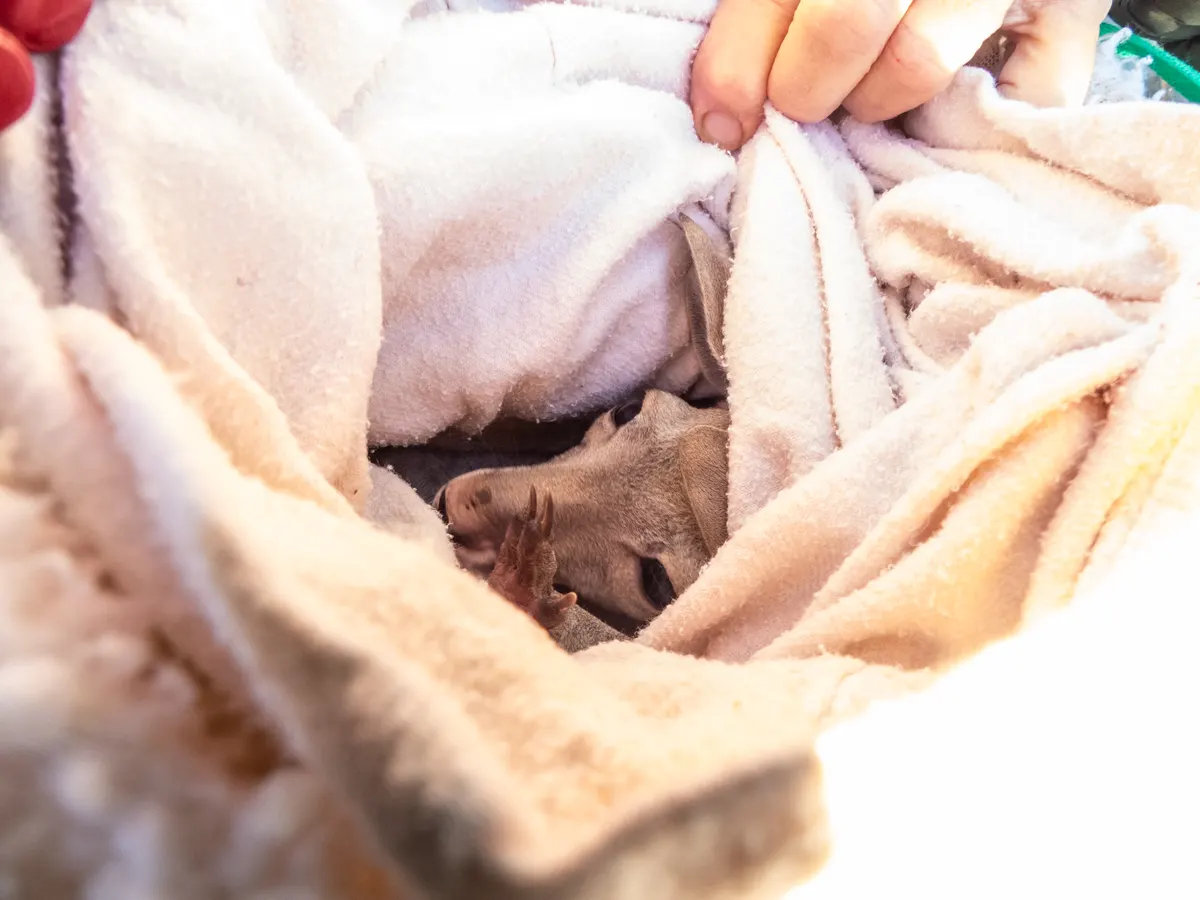
Joeys are born tiny and finish growing inside the mother's pouch.
Male kangaroos sometimes box with their front legs during disputes.
A kangaroo's tail helps it balance and can support its weight while sitting.
Red kangaroos are the largest marsupials in the world.
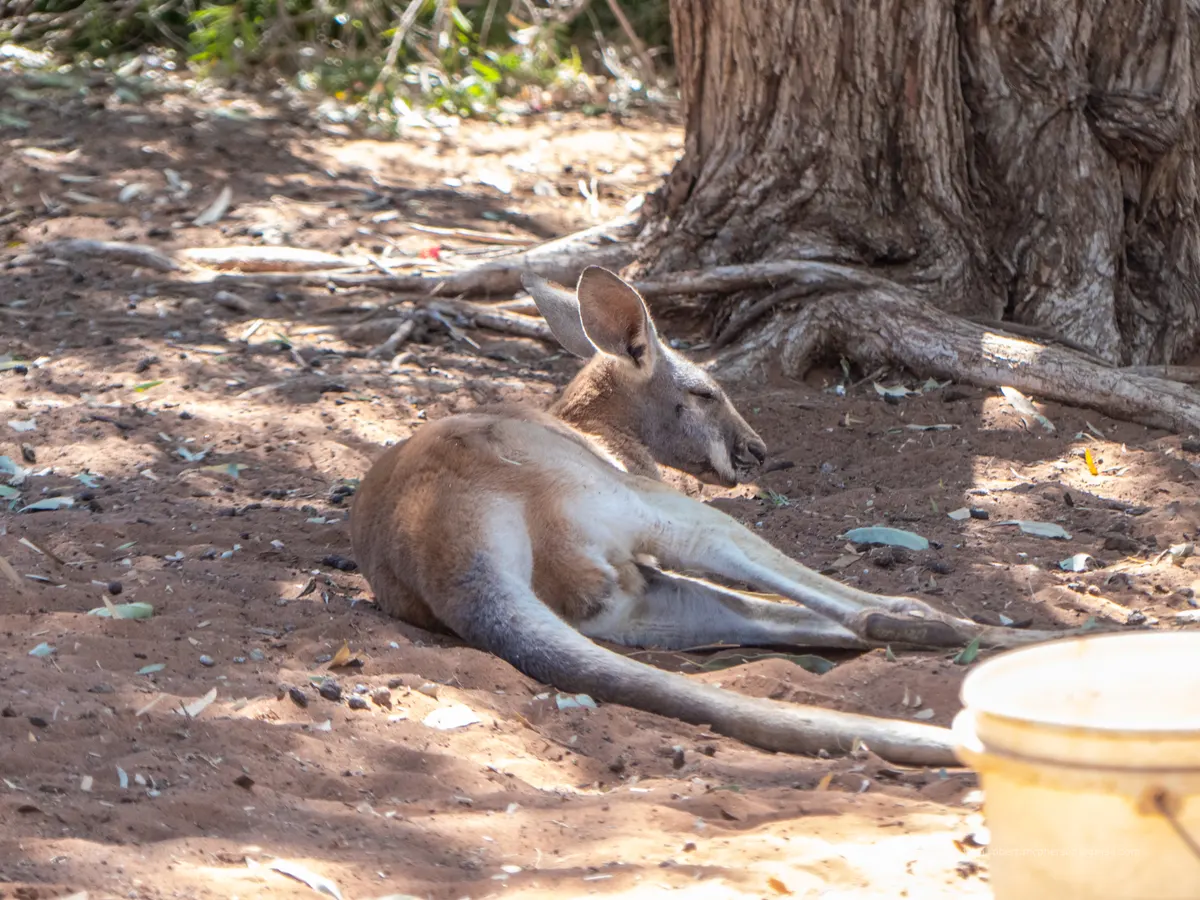
Kangaroos often rest in the shade during the hottest part of the day.
Select a question to reveal the answer.
A kangaroo is a marsupial mammal from Australia that moves by hopping and raises its young in a pouch.
Red kangaroos live across dry inland Australia in grasslands, scrub, and open woodlands.
Kangaroos are herbivores that graze on grasses, leaves, and shrubs.
A baby kangaroo is called a joey. Joeys grow inside the mother's pouch after birth.
Hopping lets kangaroos move quickly across open ground while saving energy over long distances.
A red kangaroo can leap more than 6 feet high and cover more than 25 feet in one bound.
Red kangaroos are listed as Least Concern and remain widespread, though drought can be hard on local populations.