Eagle Facts
"A bald eagle is not really bald—it has white feathers on its head."
Eagles are powerful birds of prey with sharp eyesight, hooked beaks, and strong talons. The bald eagle lives across North America near lakes and coasts,...
Loading page content

"A bald eagle is not really bald—it has white feathers on its head."
Eagles are powerful birds of prey with sharp eyesight, hooked beaks, and strong talons. The bald eagle lives across North America near lakes and coasts,...
Haliaeetus leucocephalusAccipitriformesAccipitridae
Explore eagle photos organized for learning and classroom observation.
Click any photo to view it larger. 8 images available.
Core article
Habitat, diet, behavior, and more — everything on one page.
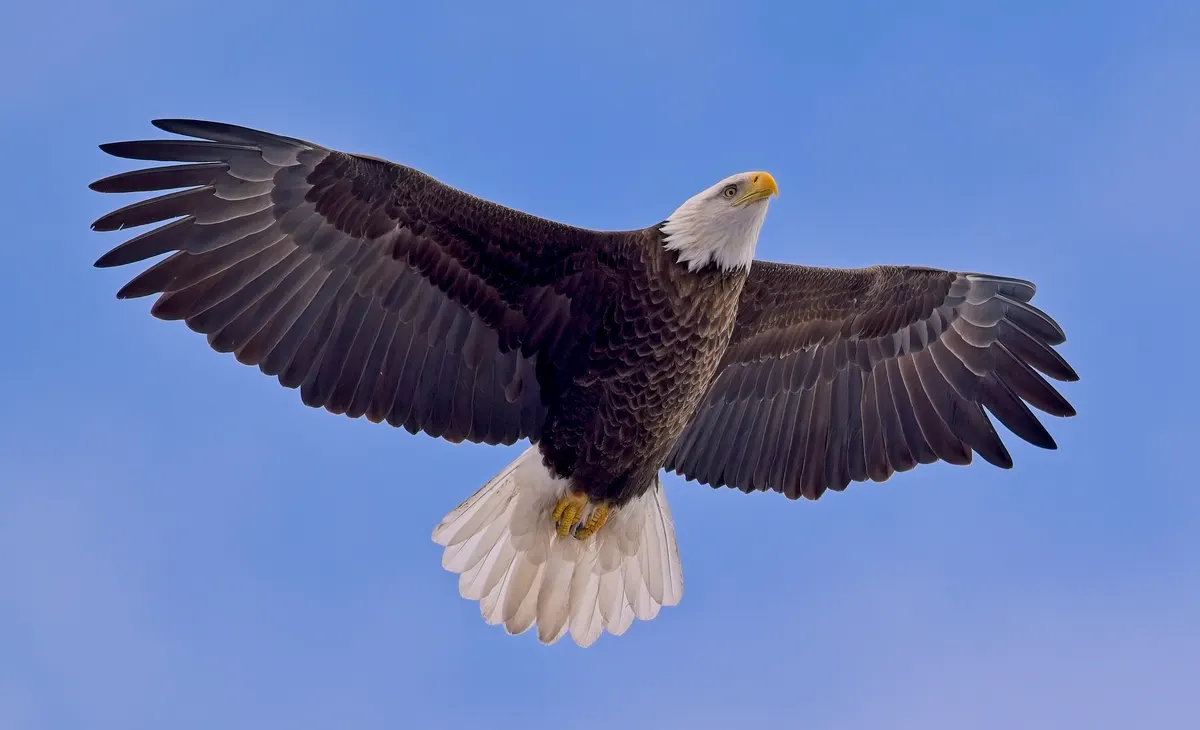
The bald eagle (Haliaeetus leucocephalus) is a massive, formidable bird of prey and the undisputed sovereign of North America’s riparian and coastal ecosystems. Instantly recognizable by its stark white head and deeply curved yellow beak, this raptor is engineered for aerial dominance and devastating predatory strikes. Boasting a wingspan of up to 7.5 feet and weighing between 6 and 14 pounds, the bald eagle leverages powerful thermals to soar effortlessly for hours. When a target is spotted, they transition from passive soaring to a terrifying, high-speed stoop, reaching dive speeds of up to 100 miles per hour before extending razor-sharp talons to crush their prey.
Scientifically named Haliaeetus leucocephalus, which roughly translates to "white-headed sea eagle," the bald eagle is classified in the kingdom Animalia, phylum Chordata, and the class Aves. It belongs to the order Accipitriformes (the diurnal birds of prey) and the family Accipitridae, which it shares with hawks, kites, and Old World vultures.
Evolutionarily, sea eagles are among the oldest genera of living birds of prey. Their lineage diverged millions of years ago, adapting specifically to exploit aquatic ecosystems rather than deep terrestrial forests. The characteristic "bald" head (derived from the Old English word "balde," meaning white) is a trait shared by several fish-eating eagles globally, a convergent evolutionary signal of maturity and social dominance among conspecifics.
The anatomy of a bald eagle is heavily optimized for strength, visual acuity, and flight efficiency. To support a massive 7.5-foot wingspan, the eagle's skeleton is composed of pneumatized (hollow) bones, drastically reducing their overall weight without sacrificing structural integrity.
Their visual system is arguably their most lethal weapon. An eagle's eyes are roughly the same size as a human's, but they are packed with significantly more sensory cells (photoreceptors). They possess two foveae per eye, allowing them to simultaneously focus straight ahead and to the periphery. This grants them binocular vision so acute they can spot a fish breaking the water's surface from several hundred feet in the air.
Their lower anatomy is equally specialized. The eagle's legs are devoid of feathers on the lower half to reduce drag in the water, terminating in massive, heavily muscled feet. Their talons act as lethal grappling hooks, backed by a grip strength roughly ten times that of a human hand, designed to pierce vital organs and crush the spine of their prey upon impact.

The bald eagle is strictly endemic to North America, with its vast range spanning from the boreal forests of northern Canada and Alaska, down through the contiguous United States, and into northern Mexico.
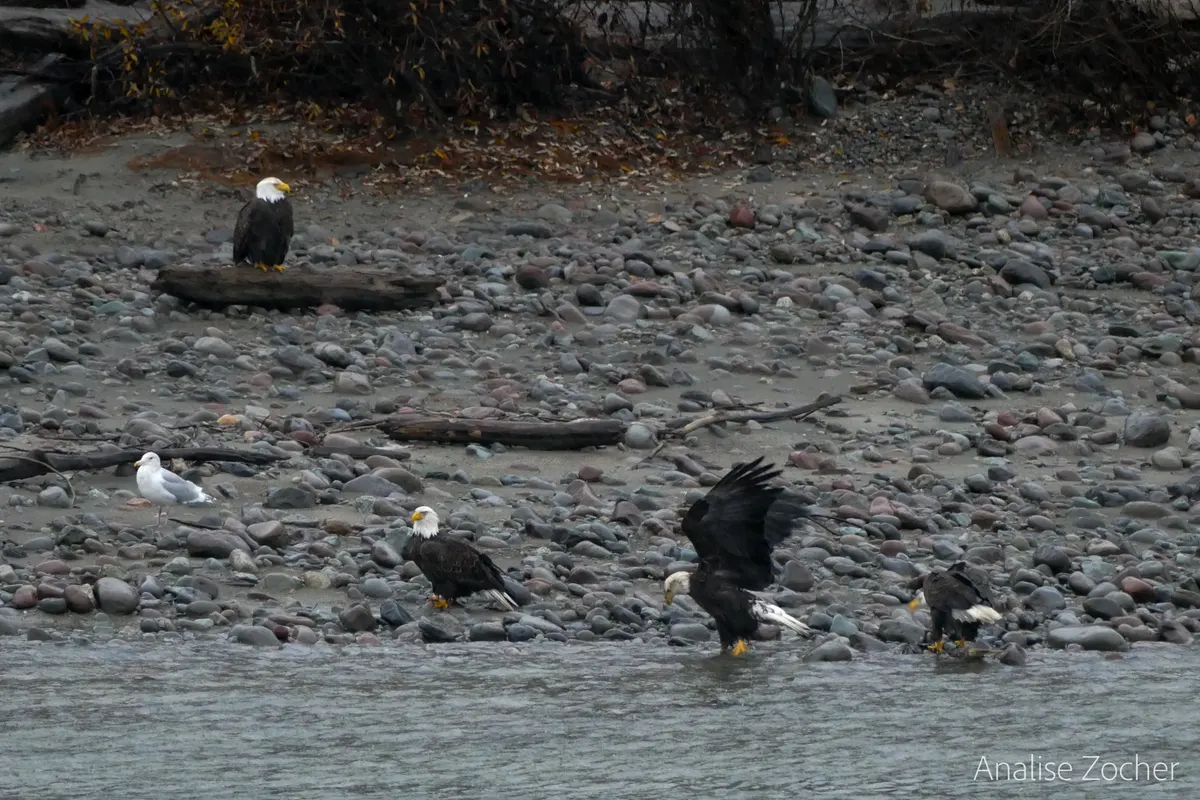
Their habitat selection is rigidly dictated by two requirements: mature, old-growth trees for nesting and immediate proximity to large bodies of open water. They thrive in coastal estuaries, massive freshwater lakes, expansive wetlands, and along major river systems. During harsh winters when northern lakes freeze over, bald eagles exhibit nomadic migration, traveling hundreds of miles south to congregate around open water, particularly downstream of hydroelectric dams where stunned fish are readily available.

While commonly romanticized as noble hunters, bald eagles are highly opportunistic carnivores and aggressive kleptoparasites (thieves). Their preferred diet is predominantly fish (piscivorous), but they readily consume waterfowl, small mammals like rabbits, and crustaceans.
When hunting, an eagle will either soar high above the water or watch from a commanding perch. Upon locating a fish near the surface, the eagle executes a shallow, high-speed glide, extending its talons at the very last second to snatch the fish without breaking its flight momentum.
However, they are equally known for their ruthlessly pragmatic scavenging behavior. Eagles frequently gorge on carrion, heavily utilizing winter-killed deer or salmon carcasses. Furthermore, they are notorious for aerial piracy, actively harassing smaller raptors—such as ospreys—chasing them relentlessly until the exhausted osprey drops its hard-earned catch, which the eagle then snatches mid-air.

Bald eagles are highly territorial and generally solitary outside of the breeding season, though they will tolerate large, tense aggregations around abundant winter food sources.
Their social structure is deeply anchored in monogamous pair bonding. A mated pair will aggressively defend a territory of up to 2 to 6 square miles, violently chasing away rival eagles. Courtship is a breathtaking display of aerial acrobatics. The most famous ritual is the "cartwheel display," where the male and female lock talons high in the air and spiral into a free-fall, only breaking apart mere feet before hitting the ground. This dangerous display tests the fitness and trust of the partner.

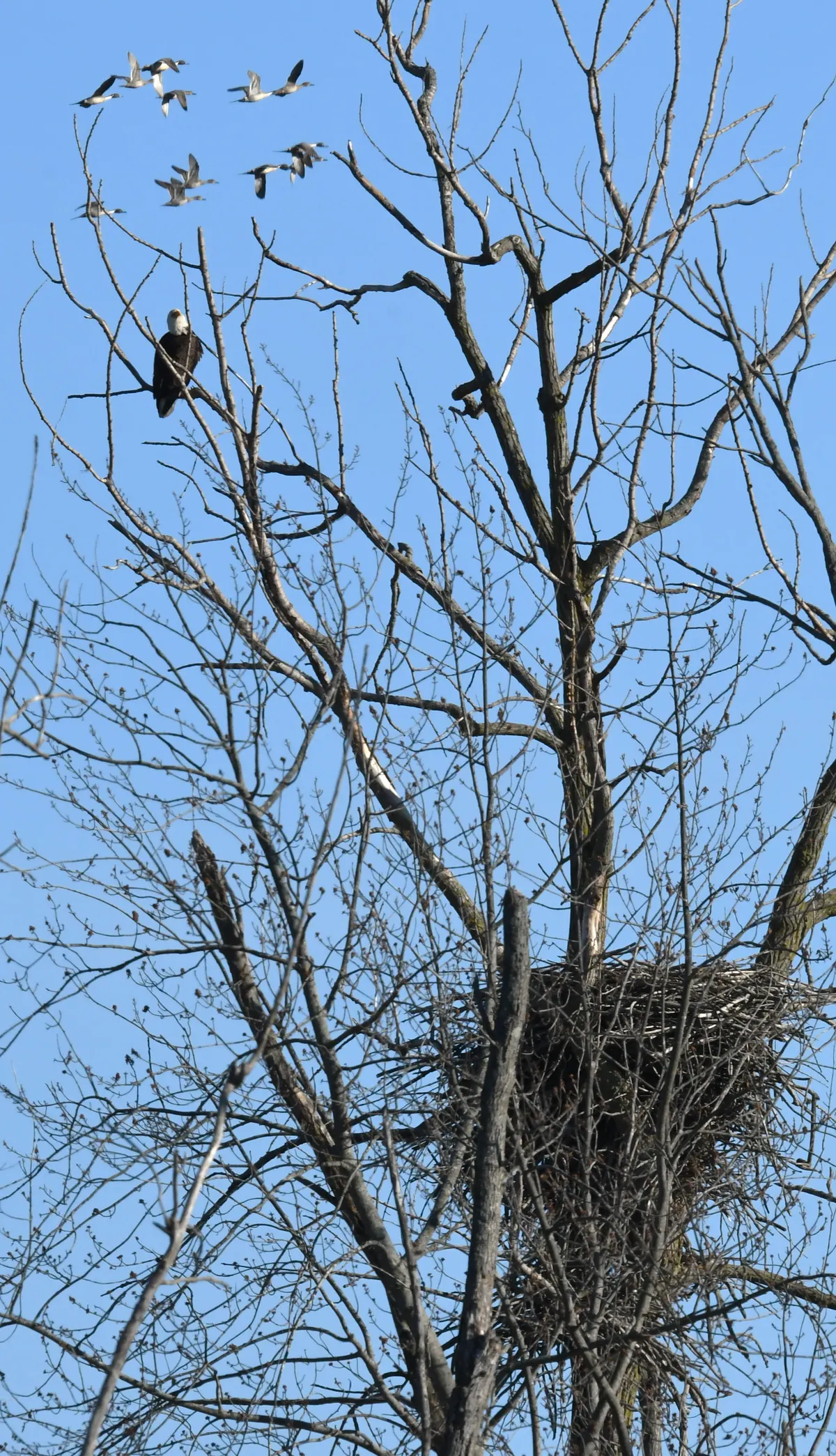
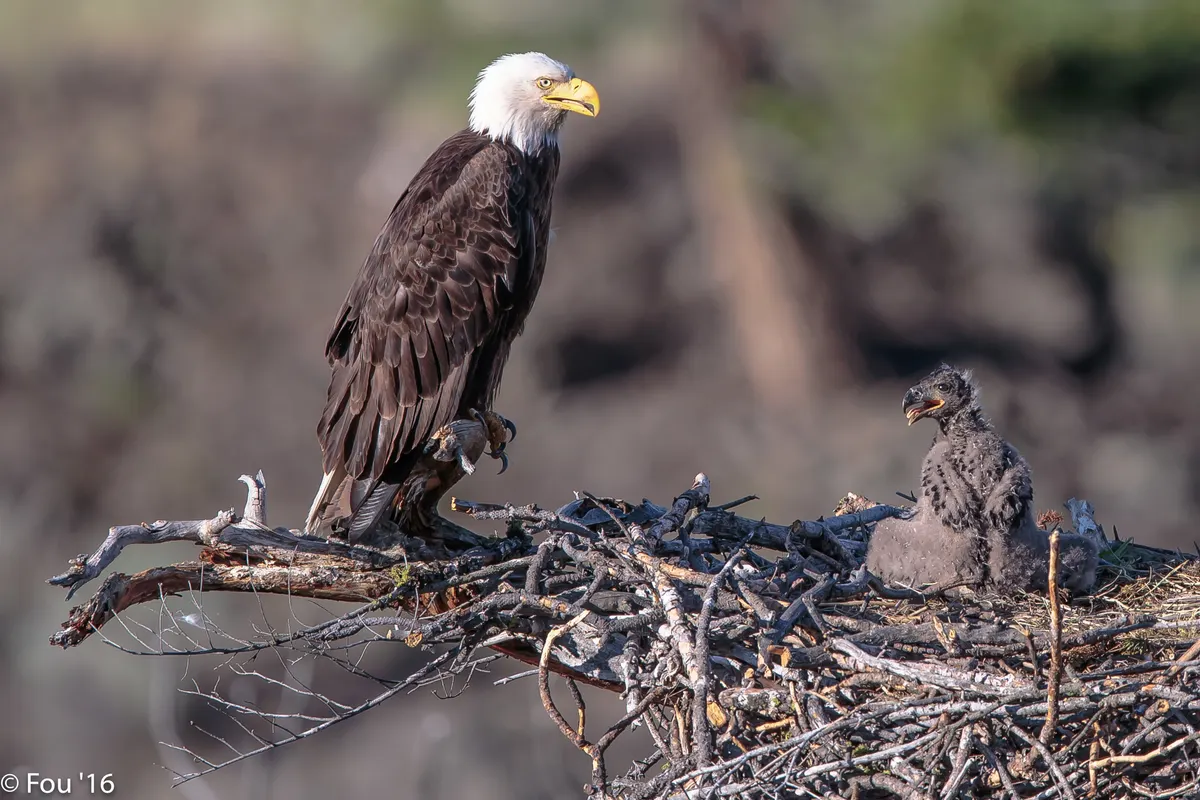
The reproductive investment of the bald eagle is massive. A mated pair builds the largest nest (eyrie) of any North American bird, constructed high in the canopy of a massive tree. They add to the nest every year; older nests can span 10 feet across and weigh well over a ton.
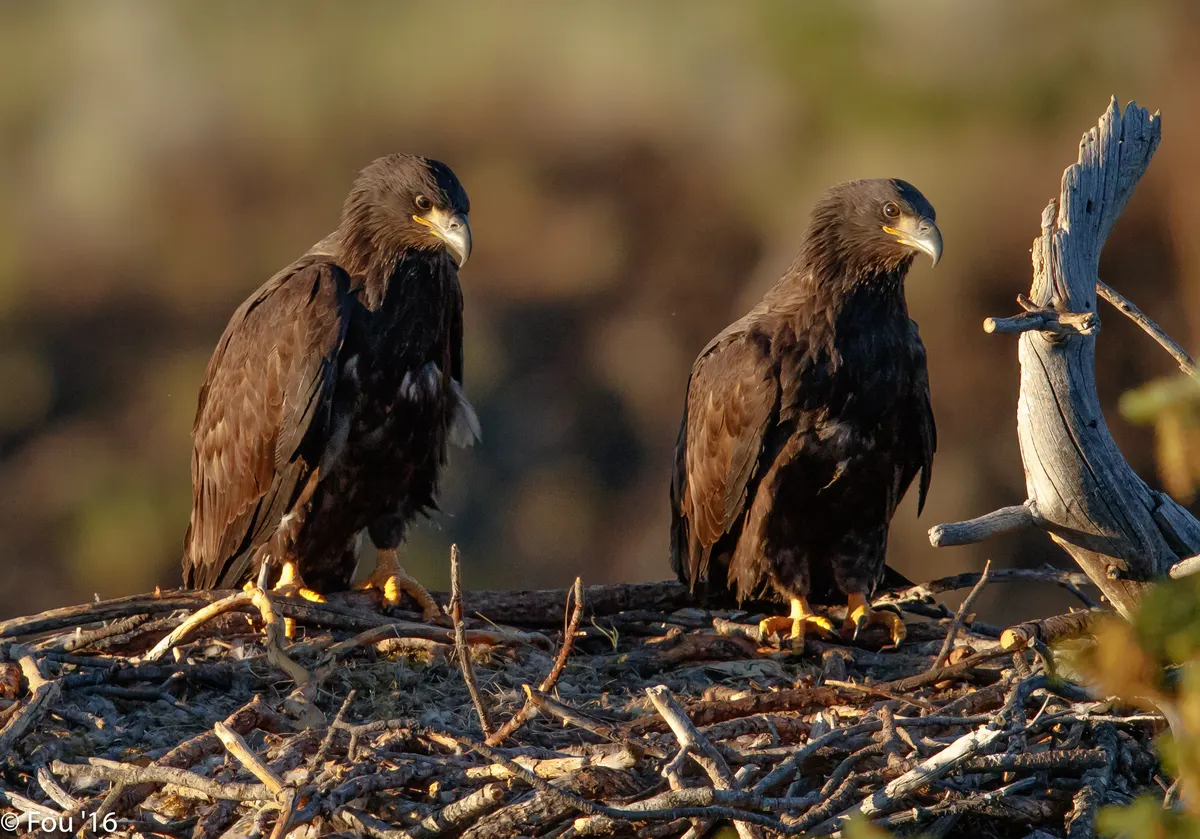
The female typically lays 1 to 3 eggs, which incubate for roughly 35 days. The hatching of the eaglets introduces a harsh biological reality: siblicide. The first-hatched, larger chick will often aggressively dominate and occasionally kill its younger, smaller sibling to monopolize food brought by the parents. The surviving eaglets fledge (learn to fly) at about 10 to 12 weeks. Juvenile bald eagles are entirely dark brown; they do not acquire the iconic white head and tail feathers, or sexual maturity, until they are roughly 5 years old. In the wild, they boast a robust lifespan of 20 to 30 years.
(Population and conservation trend data sourced from the IUCN Red List of Threatened Species)
The bald eagle is a profound conservation success story, currently classified as "Least Concern" by the IUCN with an increasing population trend.
In the mid-20th century, the species was pushed to the absolute brink of extinction in the lower 48 states. The widespread use of the pesticide DDT bioaccumulated in the eagles, causing catastrophic thinning of their eggshells, which shattered under the incubating parents' weight. Following the ban on DDT in 1972 and robust federal protection under the Endangered Species Act, their numbers surged. Today, their primary threats include lead poisoning (from ingesting bullet fragments in unrecovered hunting carcasses), collisions with power lines, and ongoing habitat encroachment.
A bald eagle is not really bald—it has white feathers on its head.
Eagle nests can weigh more than a ton and grow larger every year.
An eagle can spot a fish from hundreds of feet above the water.
When diving for prey, a bald eagle can reach speeds near 100 mph.
Eagles have hollow bones that make their bodies lighter for flight.
Young eagles are mostly brown and do not get a white head until about age five.
Select a question to reveal the answer.
An eagle is a large bird of prey with sharp vision, a hooked beak, and strong talons. The bald eagle is the national bird of the United States.
Bald eagles live across North America near lakes, rivers, coasts, and wetlands. They need open water where they can find fish and other prey.
Eagles are carnivores that eat fish, waterfowl, small mammals, and carrion. Fish is a favorite food for bald eagles.
The word bald once meant white or patchy white. Adult bald eagles have a white head and tail, which gave them the name.
Eagles usually soar at moderate speeds, but when diving for prey a bald eagle can reach about 100 mph.
A baby eagle is called an eaglet. Eaglets hatch from eggs and stay in the nest while parents bring food.
An adult bald eagle can have a wingspan of about 6 to 7.5 feet. Females are usually larger than males.
Bald eagles were once endangered in the United States, but protection laws helped them recover. They are now listed as Least Concern.
Adult eagles usually live in pairs, not large flocks. A mated pair may defend a territory and raise chicks together.
Eagles watch from high perches or while soaring, then swoop down to grab prey with their talons. They often hunt near water for fish.