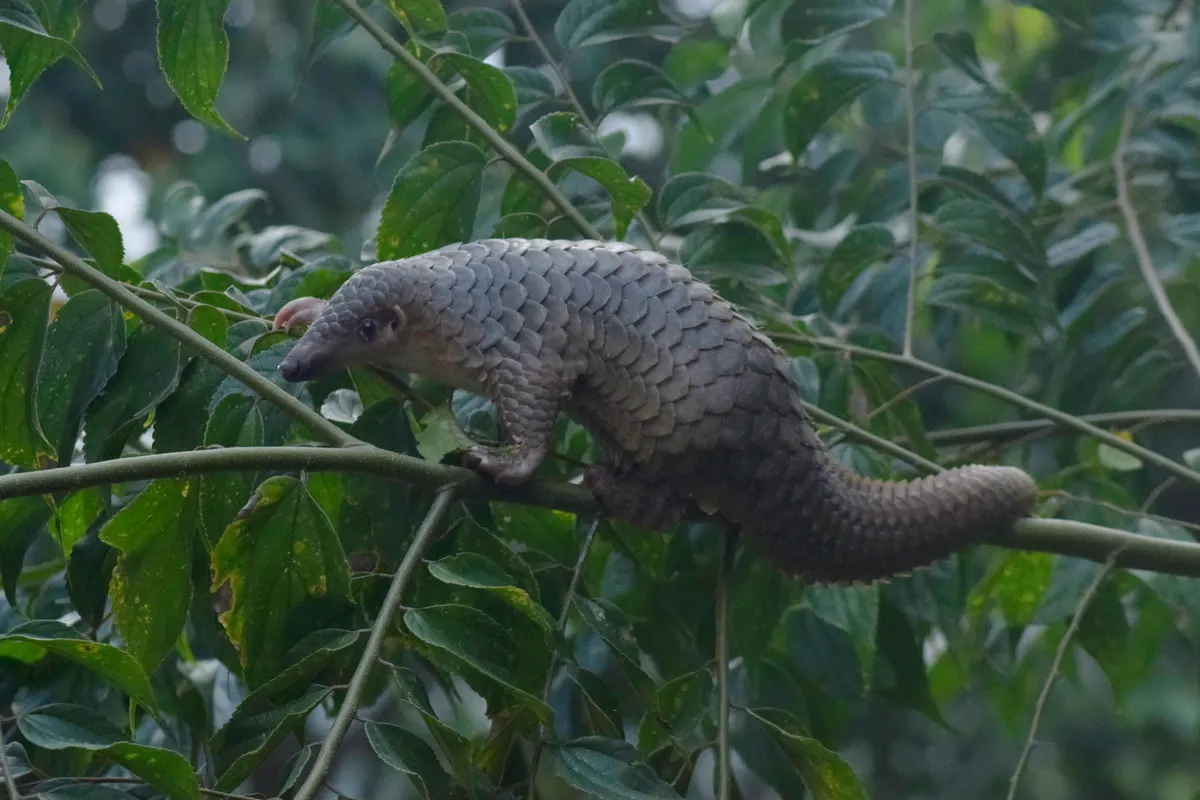
A pangolin's scales are made of keratin, the same protein as human fingernails, and cover the back, tail, and outer limbs; a newborn's soft scales harden within days. The defence they enable is simple and famous: threatened, a pangolin rolls into a tight ball so only the armoured surface is exposed, and some species also lash out with the sharp-scaled tail. Against a leopard or python this works well. Against a human it fails completely — a poacher simply picks up the balled animal — which is the tragedy at the centre of the pangolin's story. Genetically pangolins sit near the carnivores but form their own order, Pholidota, with no close living relatives, and their scaled, toothless, ant-eating body plan has changed little in tens of millions of years.