Breeding male mallard drake standing on a grassy bank showing his iridescent green head, white neck ring, chestnut breast, and orange webbed feet
A breeding male mallard (drake) shows the iridescent bottle-green head, white collar, chestnut breast, and yellow bill.
AvesLeast Concern

Mallard

Anas platyrhynchos

The mallard is the most abundant and wide-ranging dabbling duck in the Northern Hemisphere and the wild ancestor of nearly all domestic duck breeds. Breeding males display an iridescent bottle-green head and white neck ring, while both sexes tip forward in shallow wetlands to strain seeds, aquatic plants, and invertebrates through comb-like bill lamellae.

By · Updated

Top speed
88 km/h55 mph
5 of 17 birds
Weight, up to
1.6 kg3.5 lb
20 of 29 birds
Length, up to
65 cm25.6 in
19 of 29 birds
Lifespan, wild
27 yr
12 of 29 birds

Mallard at a glance

Habitat
Wetland
Found in
North America, Europe, Asia, Africa, Oceania
Diet
OmnivoreSeeds of sedges, bulrushes, smartweed, and pondweeds, Aquatic vegetation, duckweed, and tubers, Acorn mast and waste grain (corn, barley, wheat, rice) and 3 more
Young
Usually 8 to 13 eggs per clutchGestation or incubation: 26 to 30 days of incubation
Population
Increasing Or Stable Globally; Introduced Populations Hybridize With Native Ducks In New Zealand, Australia, And Hawaii
Lifespan in captivity
About 10 to 20 years

How the Mallard compares

Measured against the 183 species profiled on this site. Each figure is converted to one unit system from the published range on the page, so the ranks are computed, not quoted.

MeasureThis speciesRank hereExceeds
Body mass1.6 kg#135 of 183#20 of 29 Aves26%
Body length65 cm#122 of 183#19 of 29 Aves34%
Top speed88 km/h#7 of 77#5 of 17 Aves92%
Lifespan in the wild27 yr#47 of 176#12 of 29 Aves74%

Closest in body mass

Ranks use the upper end of each published adult range, so they compare typical large adults rather than records, and metrics with no published number are left out rather than estimated. The full table is downloadable from the species dataset, and any two species can be put side by side in the comparison tool.

Mallard: ecology and life history

Mallard

The mallard (Anas platyrhynchos) is the most abundant and widely distributed dabbling duck on Earth and the wild ancestor of nearly all domestic duck breeds. Native across North America, Europe, Asia, and northern Africa, it thrives in shallow freshwater wetlands, prairie potholes, river backwaters, estuaries, and city ponds because it is a flexible omnivore—straining marsh seeds, pondweeds, and agricultural grain through its comb-lined bill in autumn and winter, then switching heavily to aquatic insects, snails, and crustaceans during the spring breeding and duckling-rearing season.

Appearance, Size, and Breeding vs Eclipse Plumage

Female mallard swimming in profile, showing her scalloped buff-and-brown camouflage plumage and orange-and-black bill
The female's mottled buff-and-brown plumage conceals her when sitting motionless on a ground nest among marsh reeds.

According to the Cornell Lab of Ornithology, an adult mallard measures 50 to 65 cm (19.7 to 25.6 inches) in body length, spans 81 to 98 cm (32 to 38.6 inches) across the wings, and weighs between 720 and 1,580 grams (1.6 to 3.5 pounds), with males averaging slightly larger than females. As a classic member of the waterfowl family Anatidae, it has a stout, buoyant body, webbed orange feet set near the center of gravity for walking on land as well as paddling, and a broad, flattened bill—the source of the Greek species name platyrhynchos ("flat-billed" or "broad-billed").

For most of the year, males (drakes) and females (hens) look so different that early naturalists once described them as separate species:

  • Breeding male (drake): Unmistakable for its iridescent bottle-green head and neck (a structural color produced by microscopic melanin rods in the barbules rather than green pigment), separated from a warm chestnut-brown breast by a crisp white neck ring. The flanks and belly are finely vermiculated pale grey, the rump is velvety black with two to four tightly curled central tail feathers ("drake curls"), and the bill is uniform greenish-yellow.
  • Female (hen): Dressed from head to tail in scalloped buff, tan, and dark brown feathers that vanish against dead marsh reeds when she sits motionless on a ground nest. Her bill is orange blotched with dark brown or black along the saddle, and a dark stripe runs through the eye.
  • Shared field mark (the speculum): Both sexes display a rectangular patch of iridescent violet-blue secondary flight feathers on the trailing edge of each wing, framed front and back by bold black and white bars.

In early summer, after hens are incubating clutches, drakes shed all their flight feathers simultaneously and remain flightless for three to four weeks. During this vulnerable window, they molt out of their bright green-and-chestnut display feathers into drab, hen-like brown eclipse plumage. Even in eclipse dress, a male can still be identified by his unspotted yellow-green bill and darker crown before he molts back into breeding colors in early autumn.

Where Mallards Live Across Northern Hemisphere Wetlands

Male mallard standing on wet shoreline rocks beside a lake
Webbed feet set near the center of the body allow mallards to walk easily on banks and fields as well as paddle in water.

The mallard has the broadest natural breeding and wintering distribution of any duck in the Northern Hemisphere, breeding from Alaska, northern Canada, Greenland, Iceland, Scandinavia, and Siberia south to Mexico, North Africa, the Middle East, northern India, China, and Japan. Northern populations are strongly migratory—travelling along major flyways at cruising speeds of up to 88 km/h (55 mph) to winter south of the freeze line—while temperate populations in western Europe, the contiguous United States, and East Asia are often year-round residents wherever open water persists.

Calm, shallow water less than 30 to 40 cm (12 to 16 inches) deep is the defining habitat feature. Because mallards are surface dabblers rather than deep divers, they concentrate in marshes, beaver ponds (often engineered by the American beaver), flooded timber, wet meadows, river oxbows, coastal estuaries, and agricultural fields flooded after harvest. North America's Prairie Pothole Region—a belt of millions of glacial depressions across Alberta, Saskatchewan, Manitoba, Montana, and the Dakotas—serves as the single most productive breeding factory on the continent during wet springs.

What Mallards Eat: Seasonal Omnivory and the Dabbling Bill

Female mallard and three growing juveniles foraging together in shallow river water in Ontario, Canada
During spring and summer, breeding hens and growing young rely heavily on aquatic insect larvae, snails, and crustaceans.

A mallard's diet is neither purely vegetarian nor purely predatory; instead, it is a textbook example of seasonal omnivory governed by the nutritional demands of migration, egg production, and feather molt.

To feed in shallow water, a mallard tips its body vertically forward ("upending") with its head submerged and its tail pointing straight at the sky, reaching bottom mud and submerged plants without diving completely beneath the surface. Along the inner margins of the upper and lower mandibles sit rows of fine, comb-like horny plates called lamellae (or pecten). Working with a muscular, touch-sensitive tongue, the duck sucks in water and mud, forces the liquid out through the side lamellae, and traps seeds, shoots, and invertebrates inside—the same mechanical principle used at a much finer scale by filter-feeding flamingos.

Field analyses documented by the Cornell Lab of Ornithology and the U.S. Fish and Wildlife Service show a dramatic seasonal swing in food items:

  • Autumn and winter (85–90% plant matter): Migrating and wintering mallards load up on high-carbohydrate plant energy—seeds of sedges (Carex), bulrushes (Scirpus), smartweeds (Polygonum), wild millet, pondweeds (Potamogeton), duckweed, tubers, fallen oak acorns in flooded bottomland forests, and waste corn, rice, wheat, and barley gleaned from harvested farm fields.
  • Spring breeding and summer brood season (50–75% animal matter): Laying a clutch of 8 to 13 large eggs requires far more protein and calcium than seeds alone can supply. Breeding females and newly hatched ducklings switch heavily to animal prey—midge larvae (Chironomidae), caddisfly and dragonfly nymphs, water beetles, freshwater snails and fingernail clams (whose shells supply calcium), amphipod crustaceans, earthworms, and tadpoles.

Social Behavior: Autumn Pair Bonds and Calling Differences

Female mallard leading a tight brood of 11 downy ducklings across a pond in Germany
After the drake departs at the start of incubation, the female incubates the clutch and leads the brood of 8 to 13 ducklings alone.

Unlike songbirds that stake out territories and court in spring, mallards form their pair bonds in autumn and early winter while gathered on wintering marshes and lakes. Groups of unmated drakes swim around a hen performing ritualized courtship displays—including the "grunt-whistle" (arching the neck and flicking a spray of water droplets into the air with the bill), the "head-up-tail-up" posture that flashes the violet wing speculum and curly black tail feathers, and synchronized nod-swimming.

The female chooses her mate—often favoring drakes with bright yellow bills, which correlate with robust immune function and carotenoid levels—and seals the bond by swimming alongside him while pumping her head over her shoulder to incite him against rival males. When spring arrives, the male follows the female back to her natal wetland region rather than his own.

Vocalizations are strictly divided by sex due to differences in the syrinx (the vocal organ at the base of the windpipe). Only the female mallard produces the familiar, carrying "quack-quack-quack-quack" decrescendo call used to stay in contact with her mate or summon ducklings. The male has an asymmetrical, bulbous bony chamber (the bulla ossea) on his syrinx that produces a much softer, reedy "kwek-kwek" and a clear one-note whistle during courtship.

Life Cycle: Ground Nests and Precocial Ducklings

Newly hatched mallard ducklings and unhatched creamy-buff eggs inside a grass- and down-lined ground nest
Synchronized by peeps inside the shell, a clutch of mallard eggs hatches within hours in a down-lined ground nest.

Once on the breeding grounds in spring, the female selects a nest site on dry land—usually hidden in dense reeds, tall prairie grass, or brush within 100 meters of water, though sometimes in a tree cavity, basket, or urban planter box. She scrapes a shallow bowl in the soil, lines it with dry grass and twigs, and plucks soft insulating down feathers from her own breast to blanket the clutch whenever she leaves to feed.

She lays one creamy-white to greenish-buff egg per day until the clutch holds 8 to 13 eggs. At the start of the 26- to 30-day incubation period, the male's seasonal pair bond ends: he leaves the female to raise the brood entirely on her own and joins other males on large open marshes for the summer wing molt.

Mallard ducklings are highly precocial. All eggs in the clutch hatch within a few hours of one another, synchronized by peeps and clicks the embryos exchange through the shells before pipping. Covered in yellow-and-brown waterproof down (kept dry by oil rubbed from their mother's preen gland), the ducklings leave the nest for good within 12 to 24 hours of hatching. Following the hen in a tight line through visual and vocal imprinting, they swim and catch surface insects and midge larvae immediately without being fed bill-to-bill. Ducklings fledge and take their first flight at 50 to 60 days of age and reach sexual maturity at one year. While average wild survival is 5 to 10 years, USGS Bird Banding Laboratory records include a wild mallard drake that reached at least 27 years and 7 months.

Predators, Hybridization, and Conservation Status

Female mallard resting on calm blue water with her head tucked and reflection visible below
Waterproof plumage coated with preen oil and countercurrent blood flow in the legs let mallards rest on near-freezing water.

Ground-nesting hens, eggs, and flightless ducklings support a wide array of wetland and upland predators: red foxes, coyotes, raccoons, striped skunks, American mink, corvids, and gulls raid nests, while bald eagles, peregrine falcons, great horned owls, snapping turtles, and large predatory fish such as northern pike and largemouth bass take ducklings and adults on the water.

The IUCN Red List classifies Anas platyrhynchos as Least Concern, with a global population estimated in the tens of millions. In parts of its range, however, the mallard's very adaptability creates a conservation challenge for rarer, closely related dabbling ducks. Where humans have introduced mallards or altered habitats—most notably in New Zealand, Australia, Hawaii, Florida, and eastern North America—mallards readily interbreed with native species such as the New Zealand grey duck (Anas superciliosa), Hawaiian duck (Anas wyvilliana), mottled duck (Anas fulvigula), and American black duck (Anas rubripes), producing fertile hybrids that dilute native gene pools. Wetland drainage and lead poisoning from ingested spent shotgun pellets (now banned for waterfowl hunting in the United States and Canada) remain the primary anthropogenic pressures on wild waterfowl populations.

References

Mallard: classification and fun facts

Classification

Anas platyrhynchos, from kingdom to species.

  1. KingdomAnimalia
  2. PhylumChordata
  3. ClassAves
  4. OrderAnseriformes
  5. FamilyAnatidae
  6. GenusAnas
  7. SpeciesA. platyrhynchos

Fun facts

5 things worth knowing about the mallard.

  1. Only the female mallard makes the classic loud 'quack-quack-quack' call; the male drake gives a quieter, raspy 'kwek' or nasal whistle.

  2. In mid-summer, male mallards shed all their flight feathers at once—becoming flightless for about a month—and molt into drab brown 'eclipse plumage' that resembles the female.

  3. Nearly every breed of domestic duck on Earth (including Pekin, Rouen, and Indian Runner ducks) was domesticated from wild mallards, with Only the Muscovy duck coming from a different species.

  4. During breeding season, a female mallard's diet shifts from mostly seeds and plants to more than 70 percent animal protein (insects, snails, and crustaceans) to form eggshells and yolk.

  5. The oldest known wild mallard in North America, tracked by a U.S. Geological Survey leg band, lived at least 27 years and 7 months.

FAQ about Mallard

What do mallard ducks eat in the wild?

Mallards are wetland omnivores that eat both plant and animal foods: seeds of sedges, smartweed, and bulrushes, duckweed, pondweeds, acorns, and agricultural grain, alongside aquatic insect larvae, freshwater snails, amphipods, earthworms, and tadpoles.

How do you tell a male mallard from a female?

In breeding plumage, the male (drake) has an iridescent bottle-green head, a narrow white neck collar, a chestnut-brown breast, a pale grey body, a black rear with curled central tail feathers, and a bright yellow bill. The female (hen) is mottled buff-and-dark-brown all over with an orange-and-black bill for nesting camouflage. Both sexes share a glossy violet-blue wing patch (the speculum) bordered in white.

Why do male mallards lose their green heads in summer?

After the breeding season ends in early summer, drakes undergo a complete wing molt that leaves them unable to fly for 3 to 4 weeks. To stay hidden from predators while grounded, they molt into cryptically patterned brown 'eclipse plumage' that looks much like the female's feathers, regrowing their green heads in autumn.

What is a dabbling duck and how does it feed?

Unlike diving ducks that swim underwater to catch fish, dabbling ducks such as the mallard feed at the surface or tip headfirst ('upend') with their tails pointing into the air in water less than 40 cm deep. Comb-like ridges called lamellae along the edges of the flat bill pump water out while trapping seeds and small invertebrates.

Where do mallards live?

Mallards are native across the Northern Hemisphere—throughout North America, Europe, northern Africa, and Asia—inhabiting freshwater marshes, prairie potholes, ponds, lakes, slow rivers, estuaries, and urban park ponds. They have also been introduced to New Zealand, Australia, and South Africa.

Why shouldn't you feed bread to mallard ducks?

White bread offers empty carbohydrates with almost no protein, calcium, or vitamin E. In growing ducklings, high-calorie, nutrient-poor bread contributes to 'angel wing'—a permanent deformity in which the wrist joint twists outward so the bird can never fly—and uneaten bread rots in ponds, promoting toxic avian botulism and algal blooms.

Show 2 more questions
How many eggs does a mallard lay and how fast do ducklings swim?

A hen lays 8 to 13 creamy-greenish-buff eggs in a down-lined ground nest hidden in tall grass and incubates them alone for 26 to 30 days. Mallard ducklings are precocial: within 12 to 24 hours of hatching, their mother leads them to water, where they immediately swim and catch insects on their own.

How is a mallard related to a mute swan?

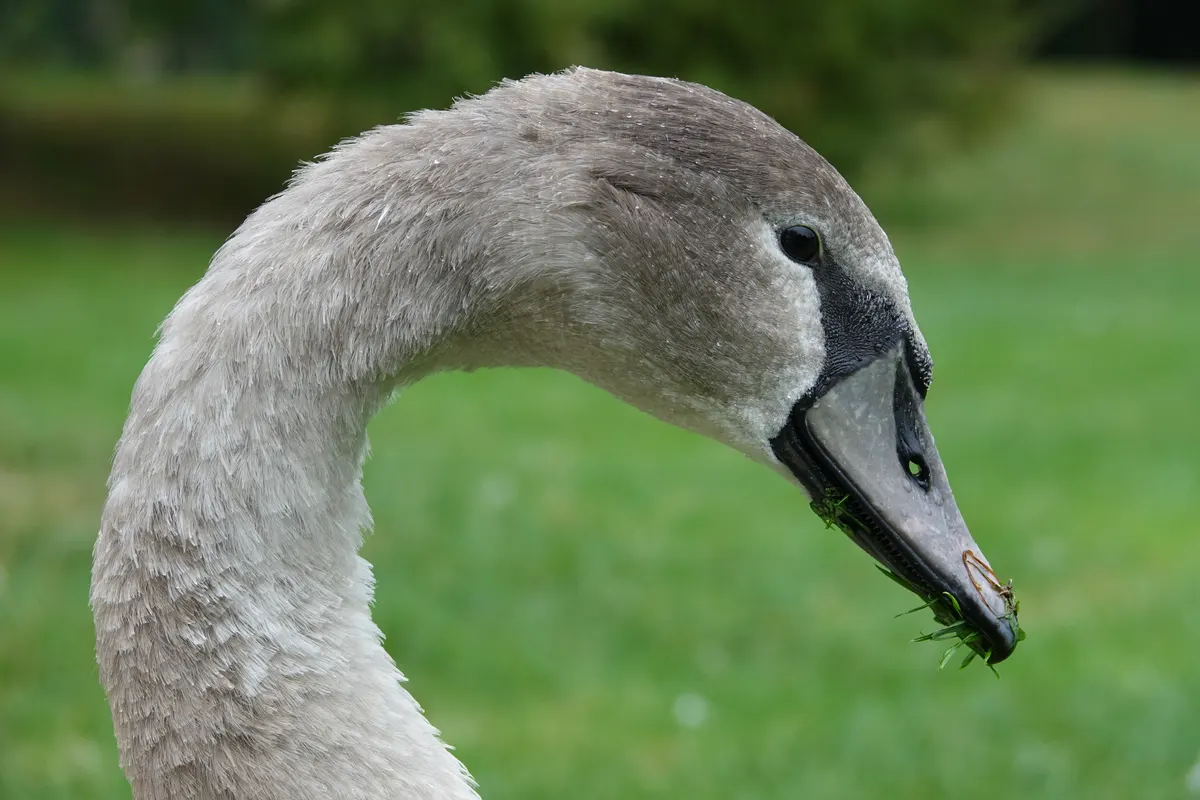
Both the mallard (*Anas platyrhynchos*) and the mute swan (*Cygnus olor*) belong to the waterfowl family Anatidae and feed by tipping or reaching underwater in shallow wetlands, though mute swans are much larger (9 to 14 kg vs 1 kg) and are almost strictly herbivorous.

Cite this page

APA
Nguyen, A. (2026, November 17). Mallard. Wildlife Encyclopedia. https://www.wildlifedb.com/animals/mallard
MLA
Nguyen, An. “Mallard.” Wildlife Encyclopedia, 17 Nov. 2026, www.wildlifedb.com/animals/mallard.