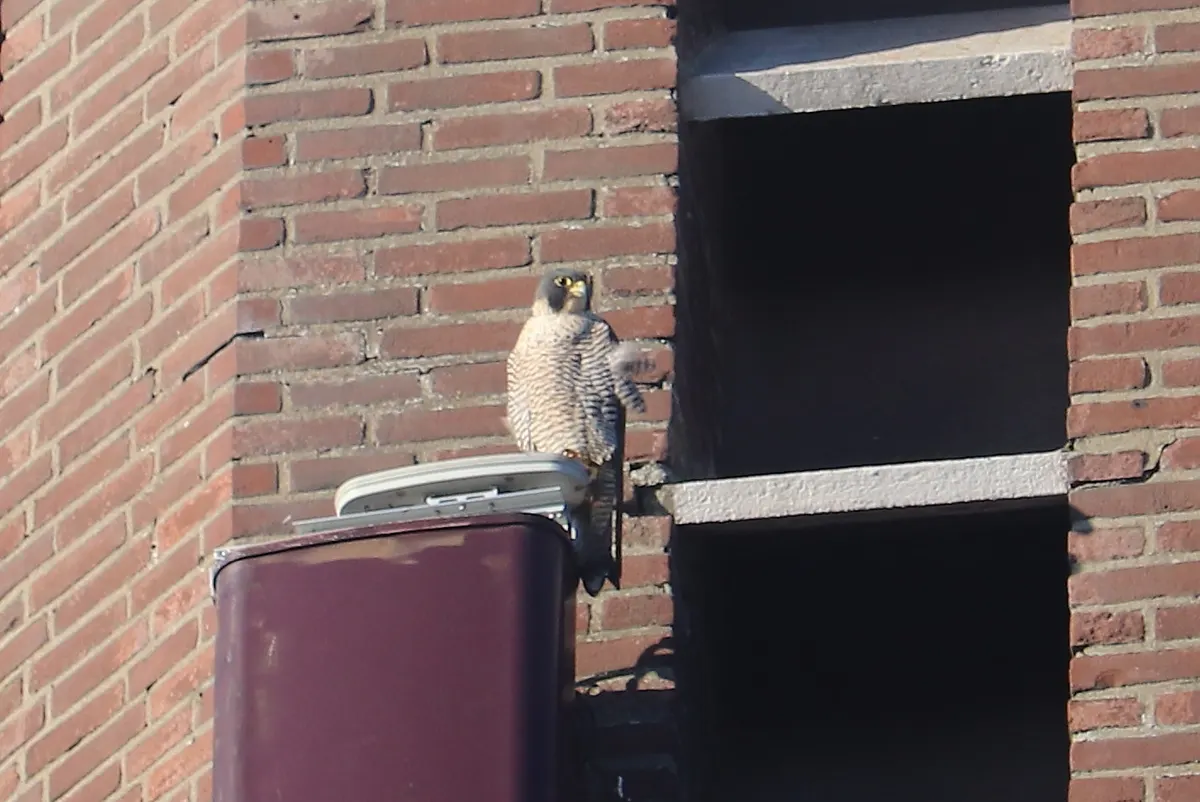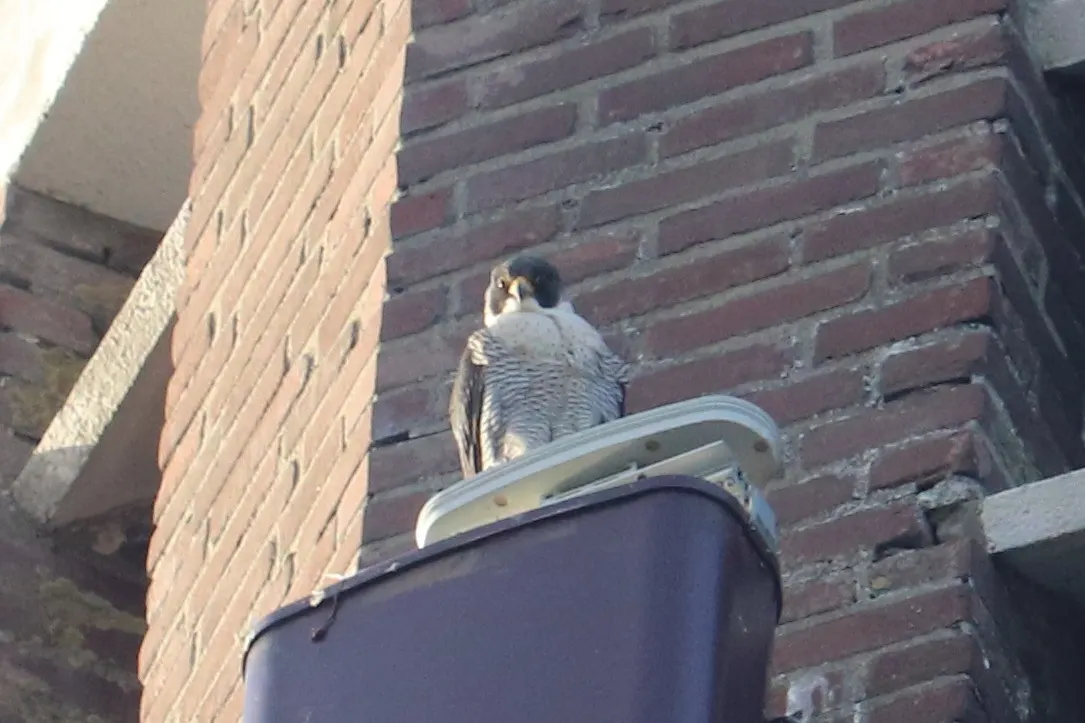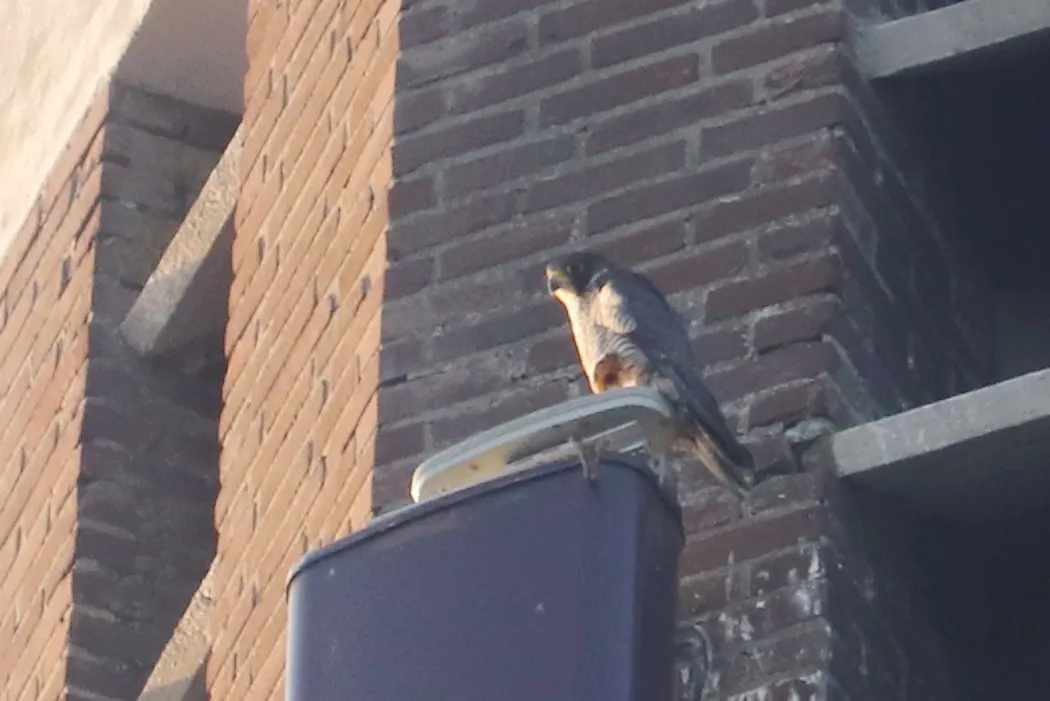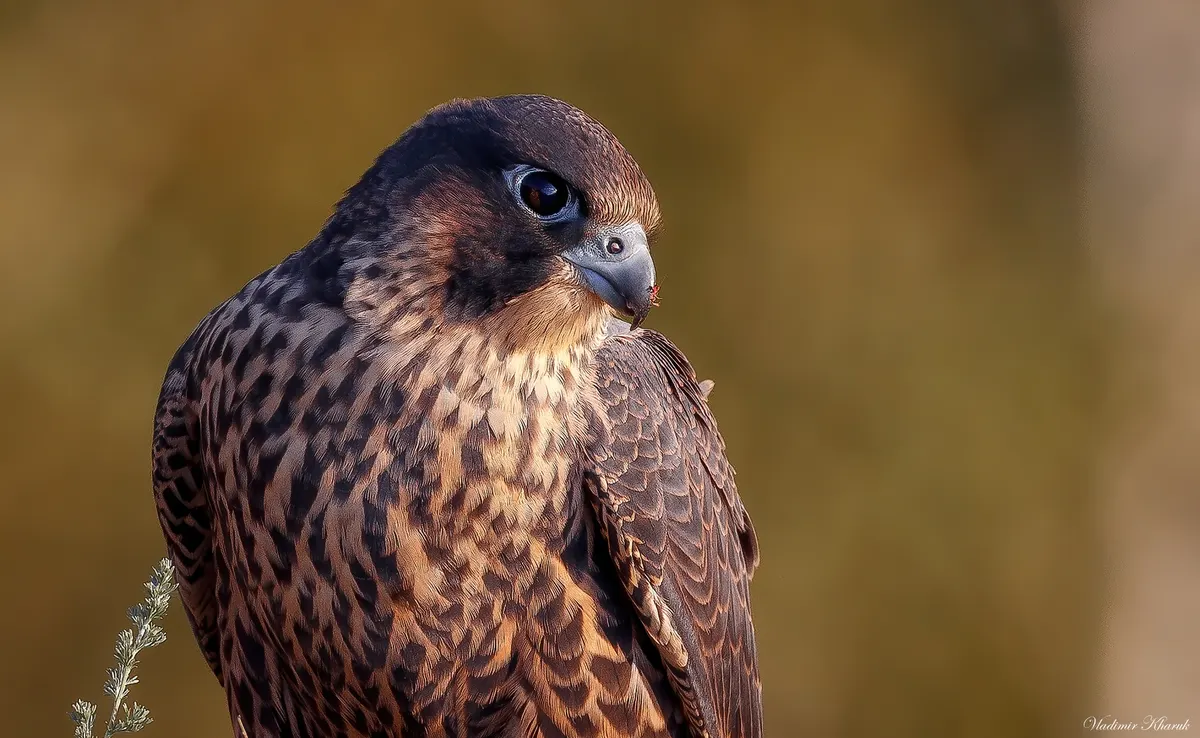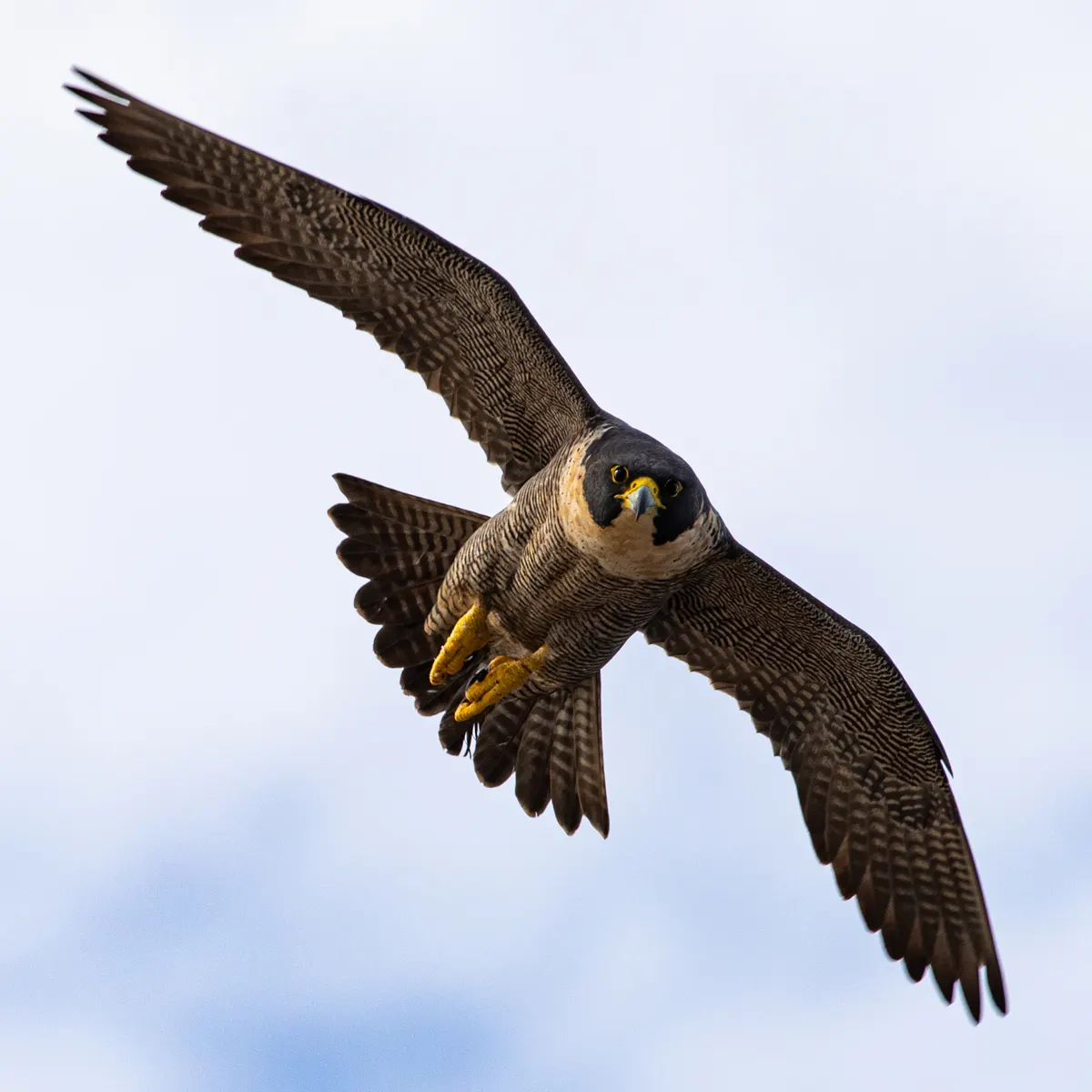
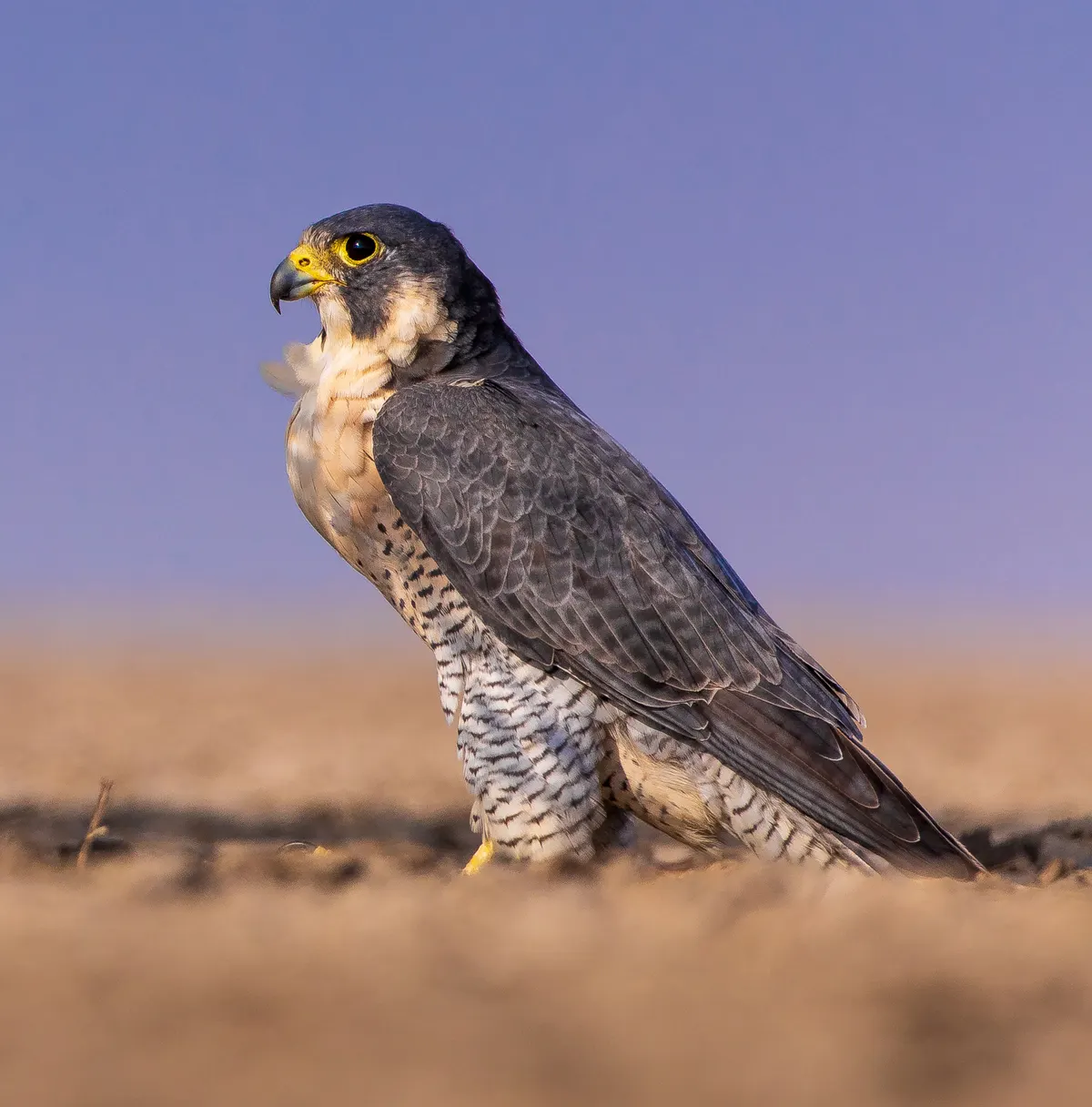
Peregrine falcons are strict, highly specialized carnivores that feed almost exclusively on other avian species. Their diet is incredibly varied, encompassing hundreds of different bird species globally, but they typically target medium-sized prey such as pigeons, doves, starlings, thrushes, ducks, and various songbirds. In certain environments, they are also known to opportunistically hunt bats.
The peregrine's hunting strategy is heavily reliant on altitude, surprise, and overwhelming kinetic energy. They are generally solitary hunters. A typical hunt begins with the falcon soaring at high altitudes or perched on a commanding vantage point, scanning the airspace below. Once prey is spotted, the falcon goes into an aerodynamic tuck, folding its wings tightly against its body to enter a devastatingly fast free-fall dive called a stoop.
Gravity accelerates the falcon to staggering speeds. The peregrine does not usually grasp its prey mid-dive; doing so at such high velocities could shatter the falcon's own legs. Instead, the falcon strikes the target with half-closed talons, delivering a massive, concussive blow. This high-speed impact is often enough to break the prey's neck or stun it instantly. The peregrine then swoops around to catch the falling bird mid-air or follows it to the ground. If the initial strike is not fatal, the falcon utilizes a specialized notch on its upper beak—the tomial tooth—to rapidly sever the prey's spinal cord, ensuring a swift kill.