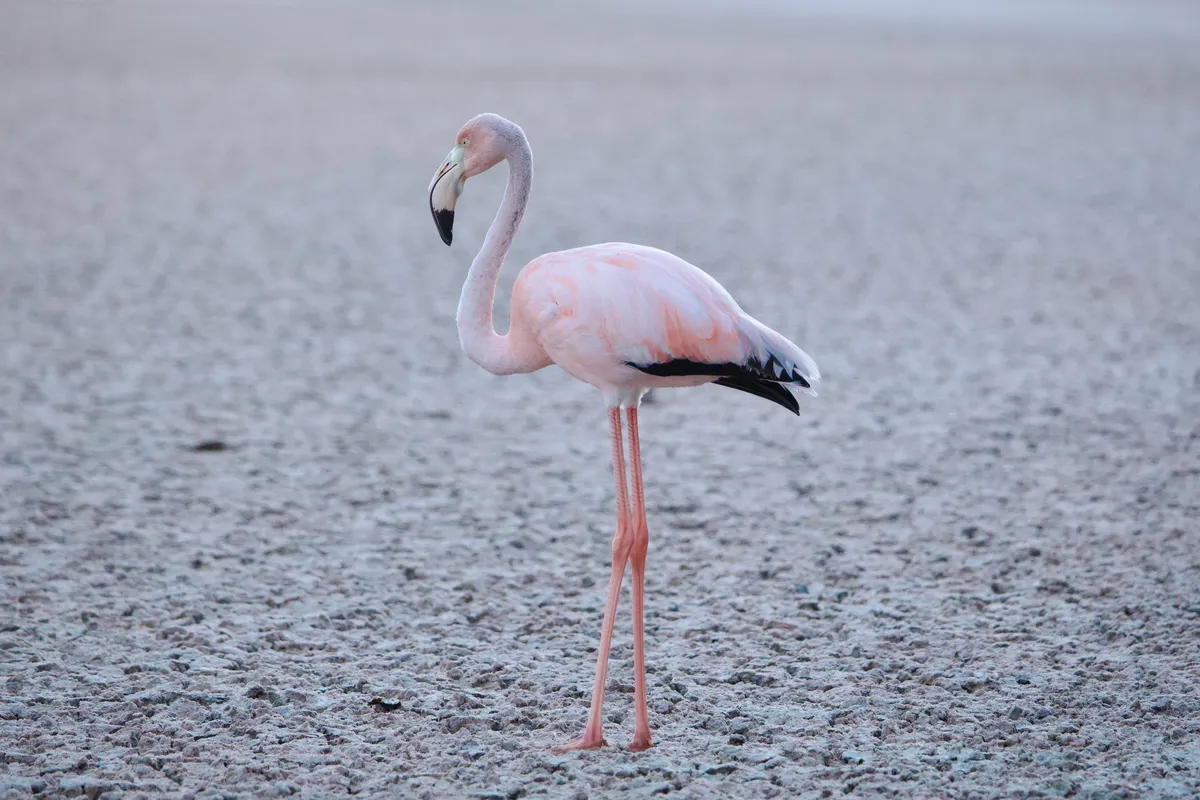
Flamingo Facts
"Flamingos are pink because of pigments in the shrimp and algae they eat."
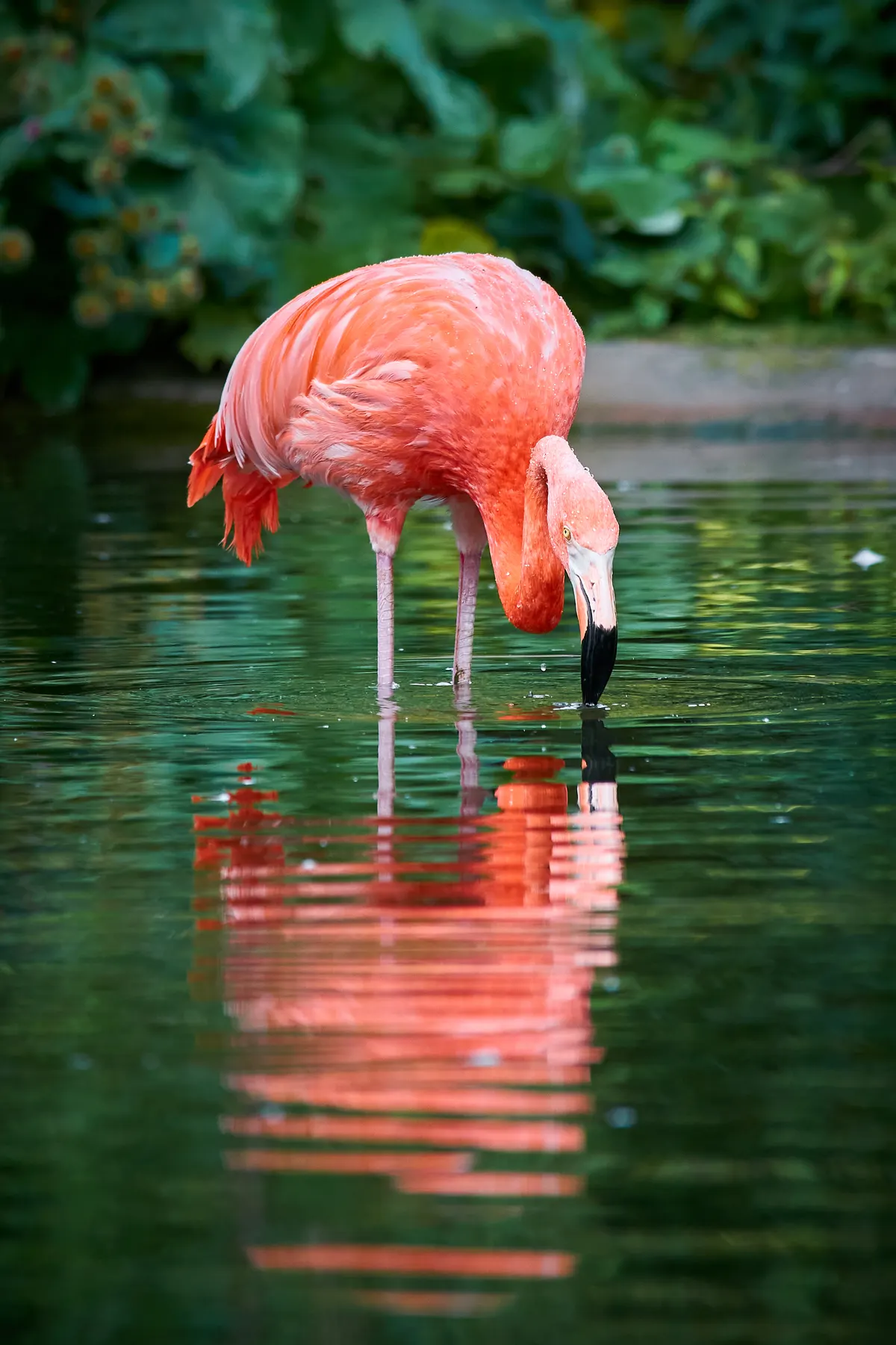
American flamingos are tall pink birds with long legs and curved beaks. They wade in shallow lagoons, filter tiny food from the water, and often stand...
Loading page content

"Flamingos are pink because of pigments in the shrimp and algae they eat."
American flamingos are tall pink birds with long legs and curved beaks. They wade in shallow lagoons, filter tiny food from the water, and often stand...
Phoenicopterus ruberPhoenicopteriformesPhoenicopteridae
Explore american flamingo photos organized for learning and classroom observation.
Click any photo to view it larger. 8 images available.
Core article
Habitat, diet, behavior, and more — everything on one page.
With their striking roseate plumage, highly specialized anatomical adaptations, and tendency to aggregate in massive, synchronized colonies, flamingos are among the most recognizable avian species on the planet. Wading through caustic coastal lagoons and hypersaline lakes, the American Flamingo (Phoenicopterus ruber) occupies a harsh ecological niche that few other vertebrates can tolerate. Far from being merely decorative birds, flamingos are rugged extremophiles whose unique biological machinery allows them to extract microscopic sustenance from toxic waters.
The American flamingo, also known as the Caribbean flamingo, is classified within the kingdom Animalia, phylum Chordata, and class Aves. It is a member of the order Phoenicopteriformes, a highly specialized and ancient lineage of wading birds, and belongs to the family Phoenicopteridae. The genus Phoenicopterus contains the largest flamingo species.
Evolutionary biology indicates that flamingos are an ancient group, with fossil records of similar filter-feeding birds dating back to the early Tertiary period, roughly 30 million years ago. Surprisingly, recent genomic analyses have revealed that their closest living phylogenetic relatives are not other long-legged wading birds like herons or storks, but rather grebes (order Podicipediformes), pointing to a complex evolutionary divergence in aquatic feeding strategies.
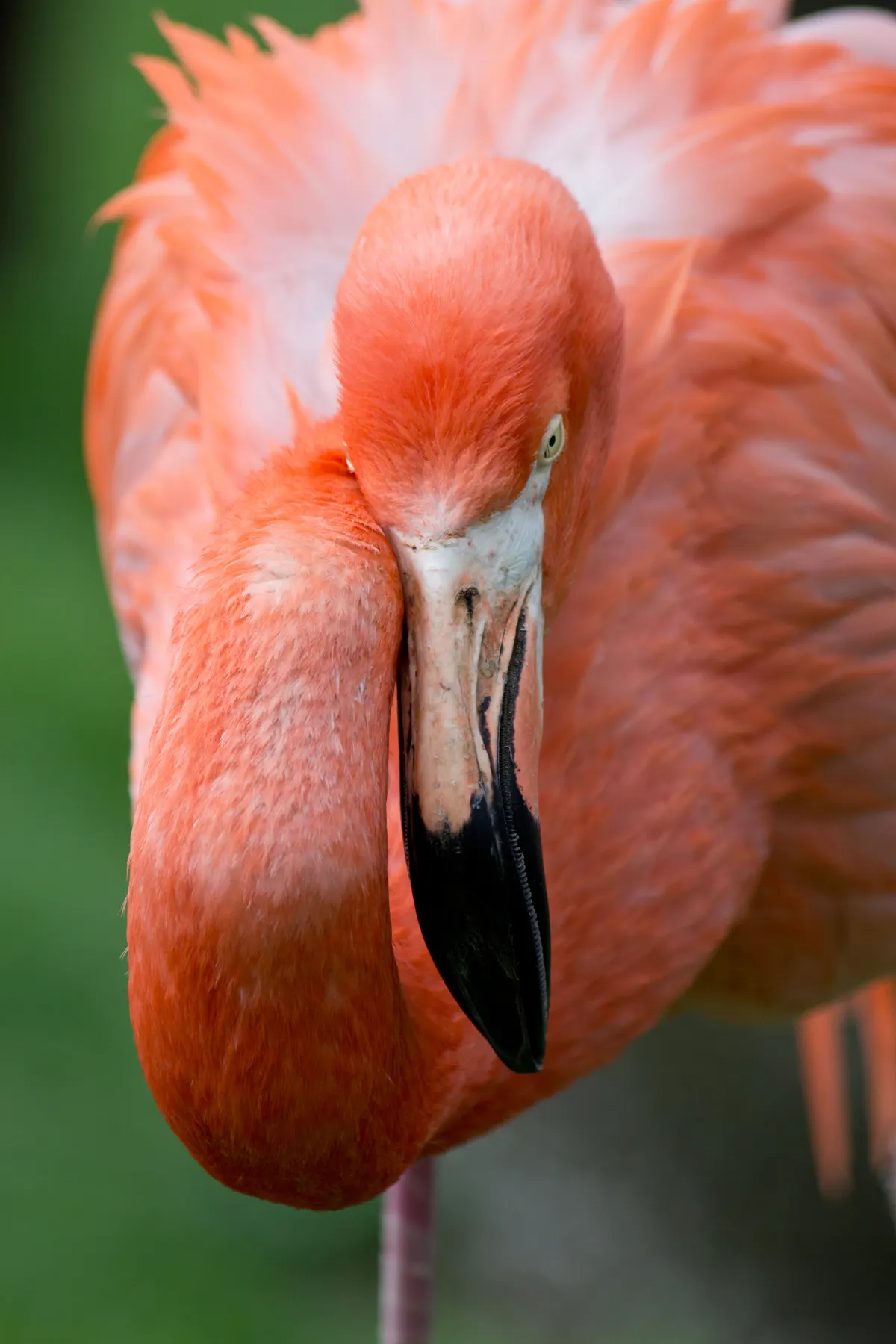
The American flamingo is a large bird, standing an impressive 47 to 57 inches in height and weighing between 4 and 8 pounds. The most immediately striking feature is, of course, their vivid pink coloration. This hue is not synthesized by the bird endogenously; rather, it is a classic example of diet-derived pigmentation. Their plumage color originates from the metabolism of aqueous bacteria and beta-carotene present in their crustacean diet, which is enzymatically converted in the liver into pink and red pigments (like canthaxanthin) and subsequently deposited into the feathers, skin, and egg yolks.
Their anatomical design is a masterclass in specialized foraging. They possess extraordinarily long, thin legs adapted for wading into deep water without wetting their plumage, featuring webbed feet that prevent them from sinking into soft mud. What appears to be a "backward-bending knee" is actually the bird's ankle joint; the true knee is hidden beneath the body feathers.
The bill is highly derived, bending sharply downwards in the middle. The upper and lower mandibles are lined with lamellae—tiny, hair-like filtering structures. The tongue acts as a muscular piston, rapidly drawing water into the beak and expelling it through the lamellae, trapping microscopic organisms.

American flamingos are native to the Neotropics, with a distribution spanning North and South America. They maintain populations in the Bahamas, Cuba, Mexico (specifically the Yucatán Peninsula), Colombia, Venezuela, Ecuador (including a distinct population in the Galápagos Islands), and sporadically in southern Florida in the United States.
They are obligate inhabitants of highly specific biomes: coastal lagoons, expansive mudflats, mangrove swamps, and shallow hypersaline salt flats. These environments are intensely alkaline and saline, often hostile to most forms of life. Flamingos thrive here because the extreme salinity supports massive blooms of specialized algae and brine shrimp, while simultaneously deterring terrestrial predators and interspecific avian competition.

As obligate carnivores functioning as biological filters, flamingos occupy a unique trophic position. Their diet consists overwhelmingly of microscopic aquatic organisms, including brine shrimp (Artemia species), blue-green algae (cyanobacteria), small crustaceans, mollusks, and aquatic insect larvae.
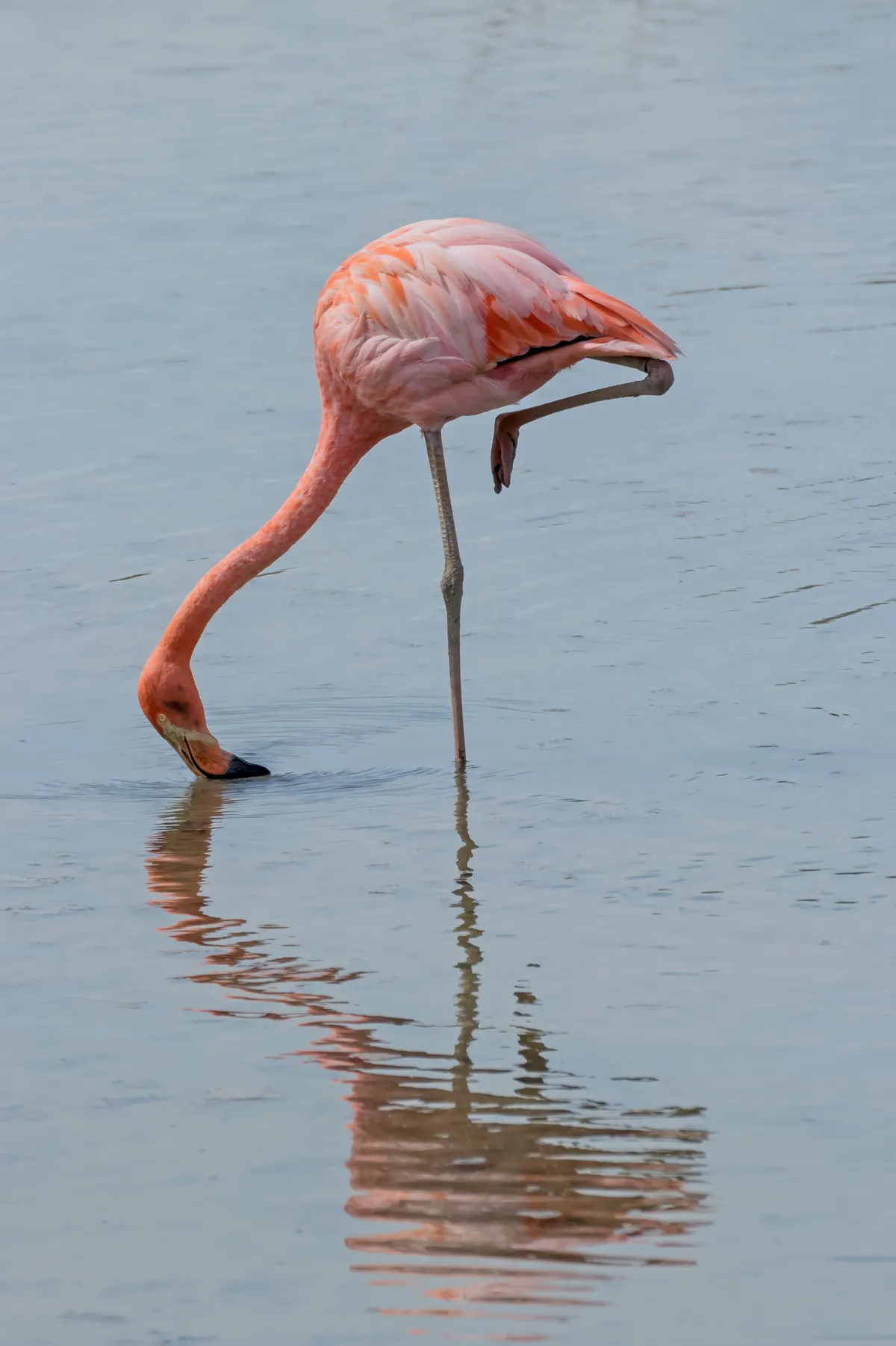
Their feeding mechanism is highly unorthodox. The flamingo lowers its long neck and inverts its head, pointing the crown toward the muddy substrate. It sweeps its head back and forth while the fleshy tongue pumps water continuously. This allows them to harvest thousands of tiny prey items per minute. To dislodge benthic invertebrates, they often engage in a "mud dance," rapidly stamping their webbed feet into the substrate to stir up organic detritus into the water column before filtering it.

Flamingos are exceptionally gregarious, forming massive colonies (flocks or "creches") that can number from a few dozen to tens of thousands of individuals. This hypersocial structure provides substantial benefits in predator detection (the "many eyes" hypothesis) and facilitates complex, synchronized breeding rituals.
Before nesting, flocks engage in highly ritualized, synchronized displays. Hundreds of birds will perform coordinated movements, including "head-flagging" (rhythmically stretching the neck and waving the head from side to side), "wing-saluting" (flashing their contrasting black flight feathers), and marching in tight formations.
A well-known behavioral quirk is their propensity to stand unipedally (on one leg) for extended periods, even while sleeping. While the exact biomechanical advantage is still debated, physiological evidence strongly supports thermoregulation; tucking one leg into the ventral plumage significantly reduces heat loss in cold water. Furthermore, their unique joint anatomy allows the standing leg to essentially lock into place, requiring almost zero muscular exertion to maintain balance.

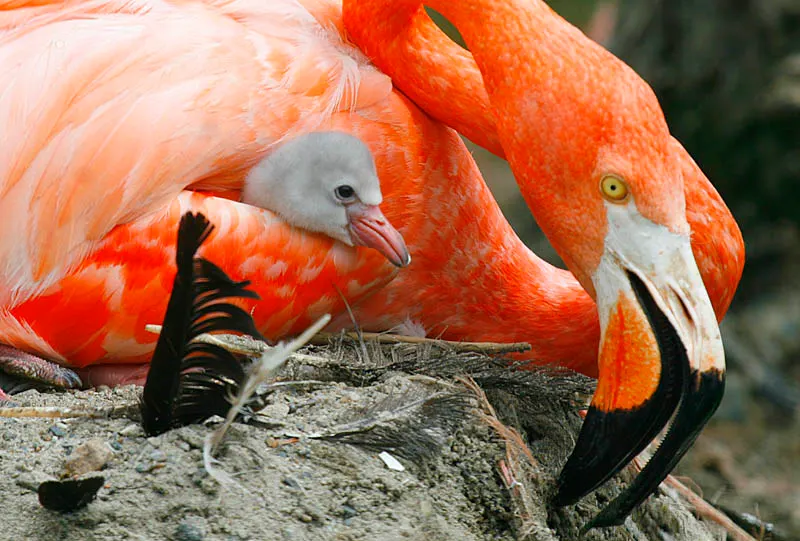
Reproduction is closely tied to environmental conditions, particularly water levels and rainfall, meaning they do not necessarily breed annually. Once a pair bond is formed via the group courtship displays, both sexes collaborate to construct a truncated cone of mud, reaching up to 12 inches high. This elevation protects the egg from flooding and the intense heat of the alkaline ground.
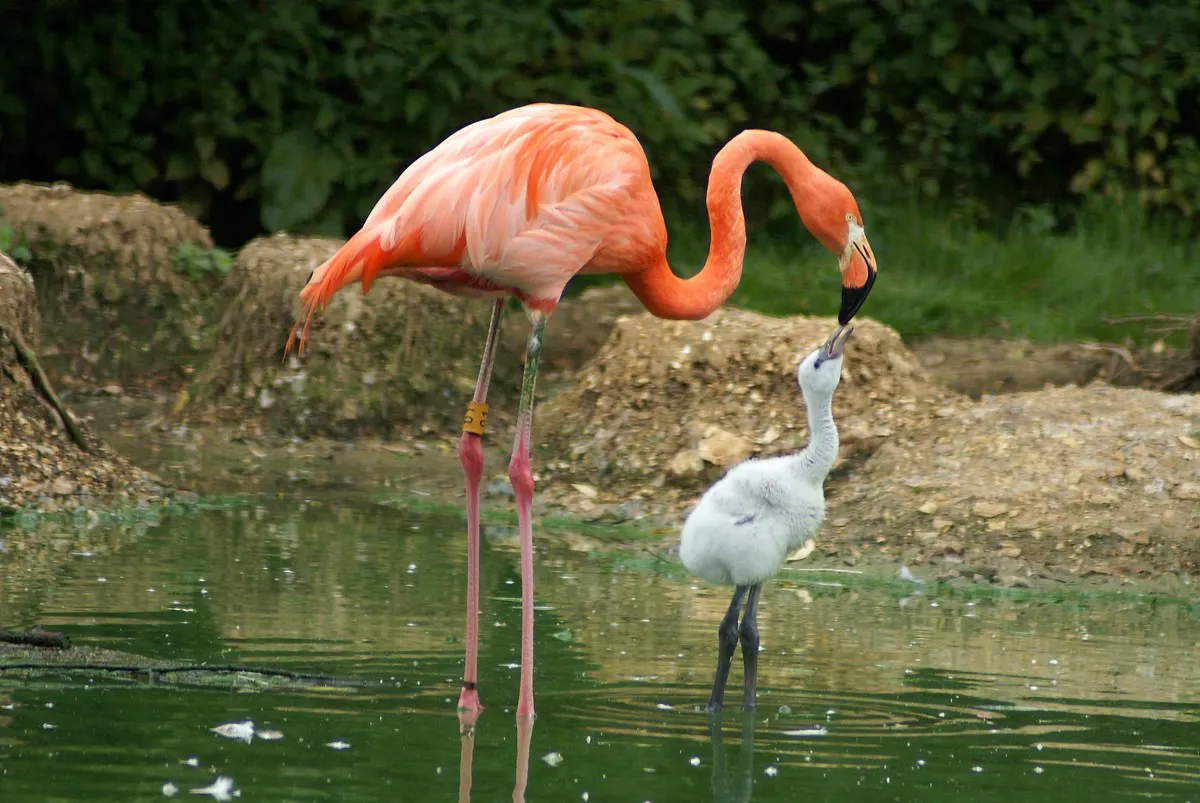
The female lays a single, chalky-white egg. Incubation is shared by both parents and lasts approximately 28 to 32 days. Upon hatching, the chick is covered in white or grey down and possesses a straight, uncurved bill. For the first few months, the parents feed the chick a specialized, highly nutritious secretion called "crop milk," produced in the upper digestive tract and stimulated by the hormone prolactin. This fluid is dark red due to high levels of canthaxanthin and is rich in fat and protein.
As the chick matures, its bill gradually curves downward, and it joins large communal crèches monitored by a few adult guardians, allowing the parents to forage further afield. They typically reach sexual maturity at 3 to 5 years of age. They are notably long-lived, surviving 20 to 30 years in the wild, and up to 50 years in captivity.
(Population and conservation trend data sourced from the IUCN Red List of Threatened Species)
The American flamingo is currently designated as "Least Concern" by the IUCN, with a generally stable global population trend. However, this overarching status masks significant localized vulnerabilities.
Their absolute reliance on highly specific wetland and lagoon ecosystems makes them exquisitely sensitive to habitat degradation. Coastal development, the expansion of commercial salt extraction operations, and chemical pollution from agricultural runoff severely disrupt the delicate ecological balance of their feeding grounds. Furthermore, their dense nesting colonies are highly susceptible to sudden disturbances; low-flying aircraft or feral predators (such as dogs and feral pigs) can cause mass panic, leading to the abandonment of thousands of eggs and chicks.
Flamingos are pink because of pigments in the shrimp and algae they eat.
They feed with their heads upside down in the water.
Flamingo chicks hatch gray and turn pink as they grow.
Flamingos often stand on one leg to save body heat.
They nest in huge colonies on mud mounds.
American flamingos live in the Caribbean and Galápagos Islands.
Select a question to reveal the answer.
A flamingo is a tall wading bird with pink feathers, long legs, and a curved beak. The American flamingo lives in the Caribbean and Galápagos.
American flamingos live in shallow lagoons and coastal wetlands in the Caribbean, Galápagos Islands, and northern South America.
Flamingos filter tiny brine shrimp, algae, and small animals from the water with their specialized beaks.
Natural pigments called carotenoids in their food build up in their feathers, turning them pink.
Standing on one leg may help flamingos keep warm by tucking one leg close to their body.
American flamingos stand about 4 to 5 feet tall, taller than most children.
American flamingos are listed as Least Concern, but habitat loss and pollution can threaten nesting colonies.