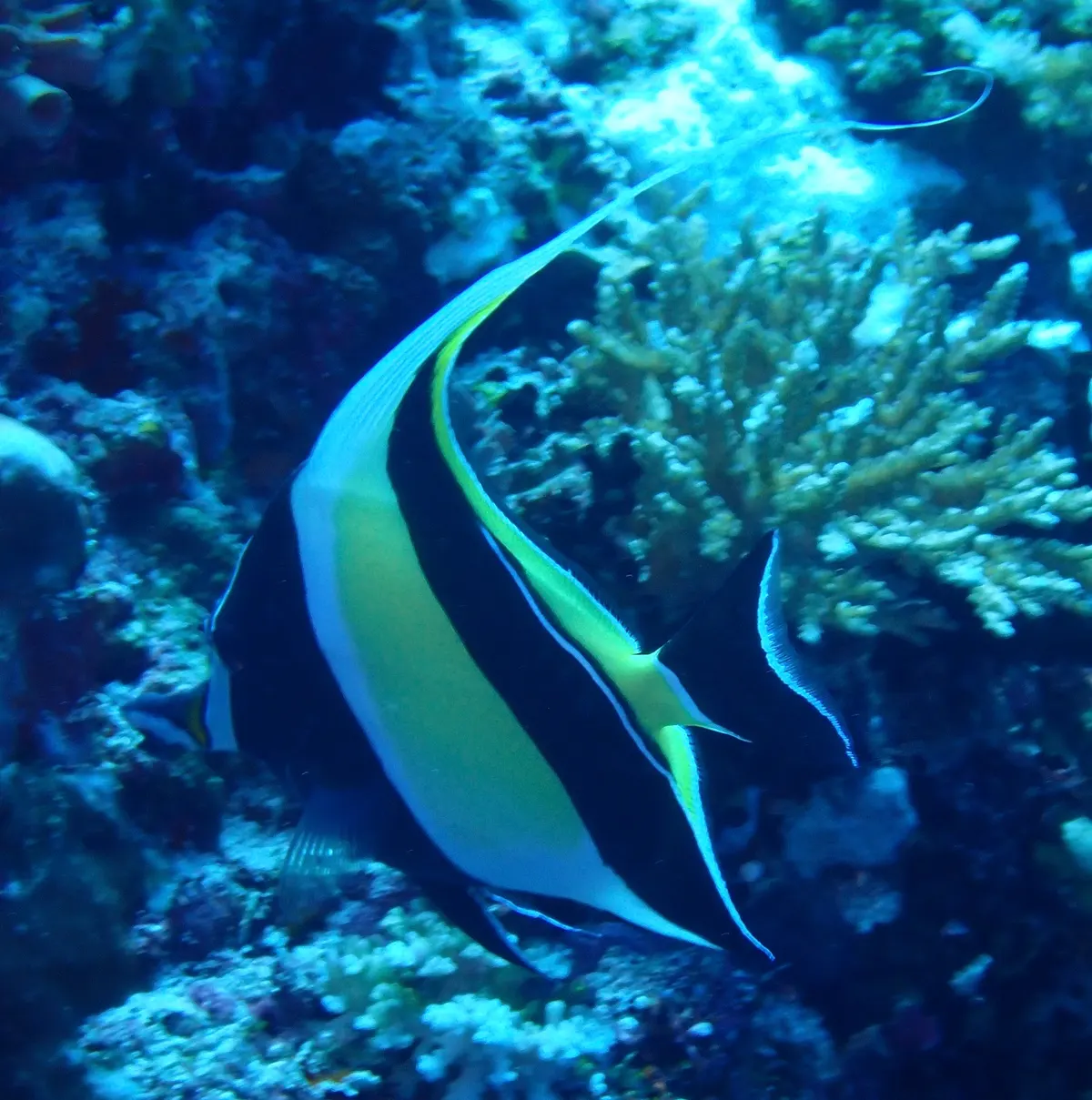
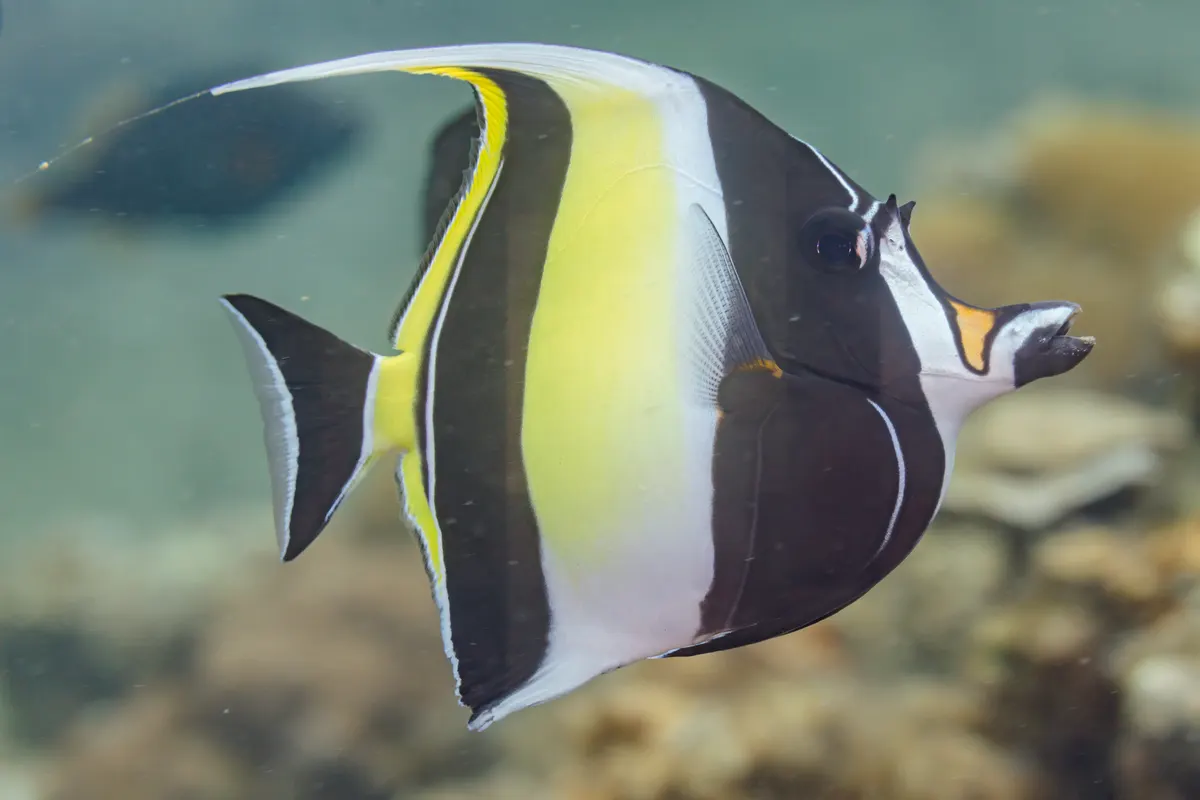
The reproductive strategy of the Moorish idol relies on broadcast spawning, a common strategy among pelagic reef fishes designed to maximize larval dispersal across vast ocean currents. Spawning typically occurs at dusk. A bonded pair, or sometimes a larger aggregation, will rapidly ascend into the open water column, high above the safety of the reef, to release thousands of microscopic, buoyant eggs and sperm simultaneously before darting back into the coral.
The fertilized eggs hatch within 24 to 48 hours into incredibly strange, specialized pelagic larvae known as acronurus larvae. These transparent, disc-shaped larvae possess exceptionally long, venomous dorsal and pelvic spines to deter planktivorous predators. The Moorish idol larva has an unusually long pelagic duration, drifting in the open ocean currents for several months. This extended larval stage is the evolutionary mechanism responsible for their massive, circumtropical distribution, allowing them to colonize extremely remote, isolated volcanic archipelagos like Hawaii. When the larva finally settles onto a suitable reef, it undergoes a rapid, drastic metamorphosis, dropping its larval spines, developing its tubular snout, and acquiring its iconic black, white, and yellow banding within a matter of days. In the wild, Moorish idols are estimated to live between 5 and 8 years.