The physical presence of a mute swan is imposing. They are among the largest flying birds on Earth, with adult males (cobs) occasionally reaching staggering weights of up to 14 kilograms (30 pounds), while females (pens) are typically slightly smaller, weighing around 9 kilograms (20 pounds). They measure between 140 and 160 centimeters (4.6 to 5.2 feet) in length, with expansive wingspans that can exceed 2.4 meters (8 feet).
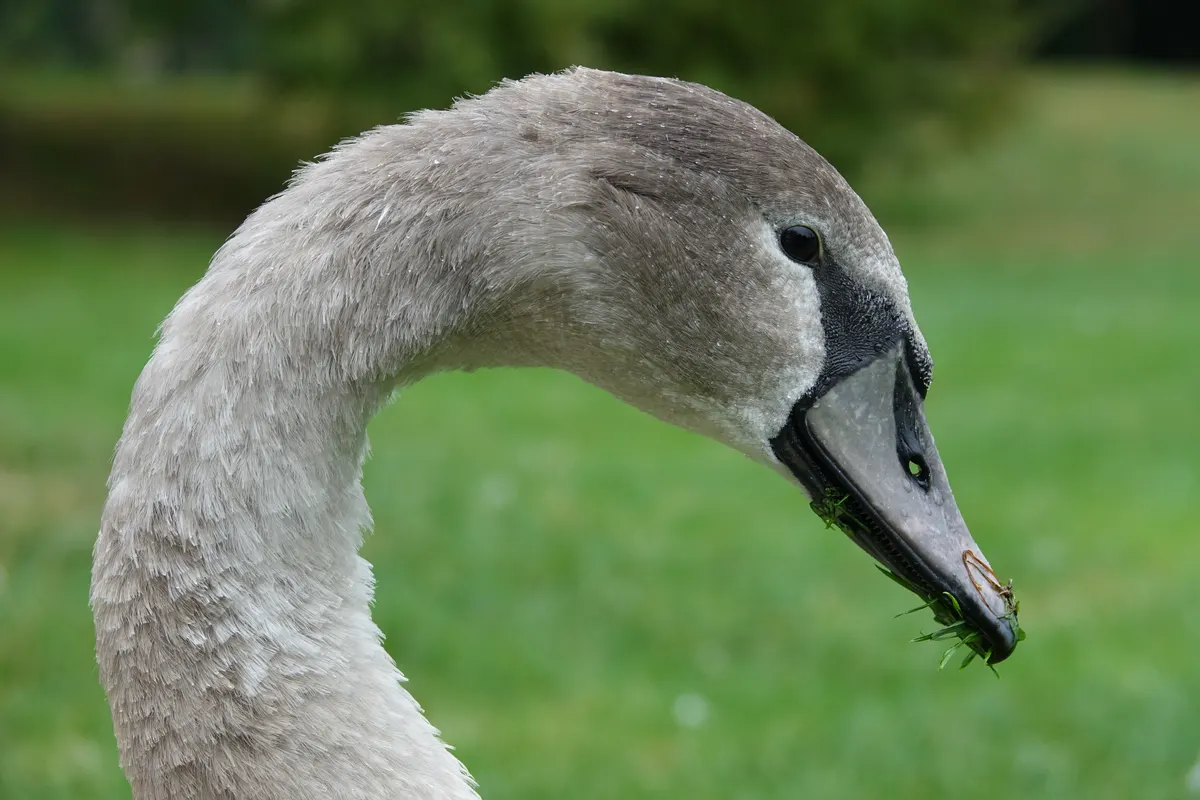
Their most iconic feature is their long, highly flexible S-shaped neck. This neck contains up to 25 vertebrae—more than almost any other vertebrate—allowing them exceptional maneuverability when reaching for submerged plants. Their bill is bright orange with a distinct black knob at the base, which swells in males during the breeding season. The edges of the bill are serrated (lamellae), functioning much like a sieve or a serrated knife to cut and grip slippery pondweed.
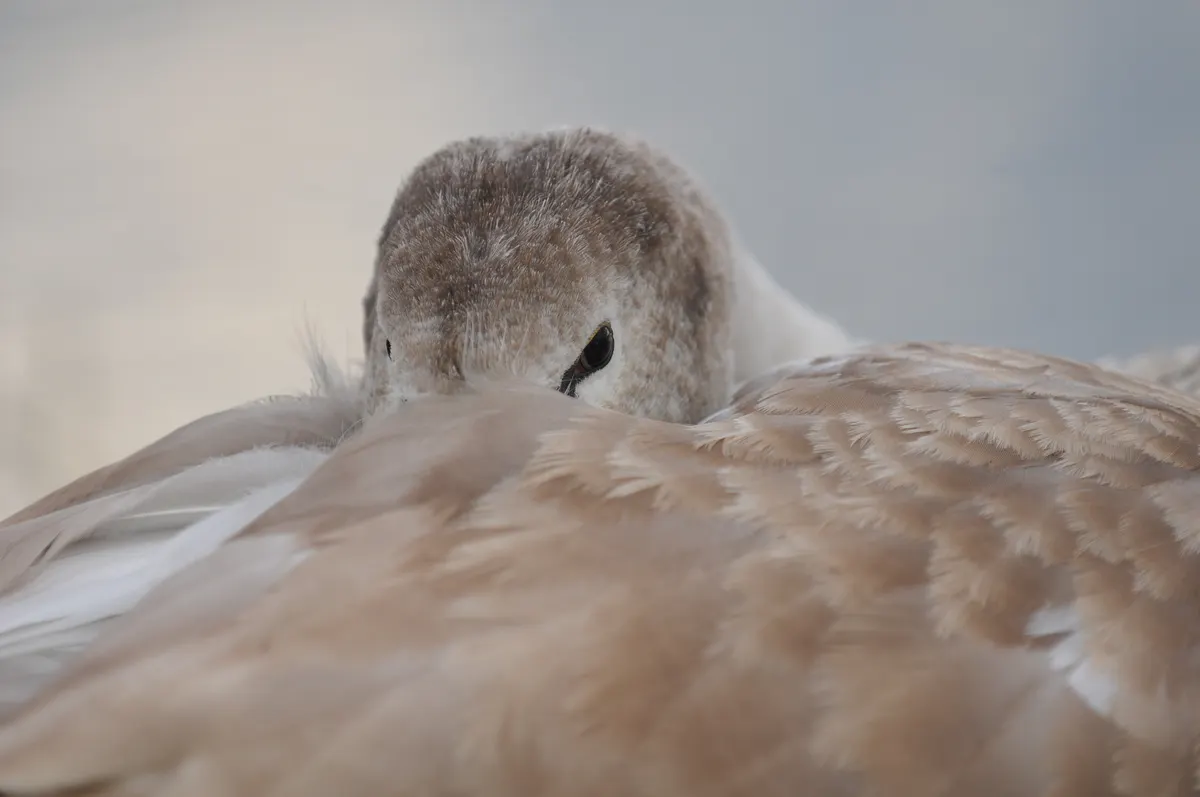
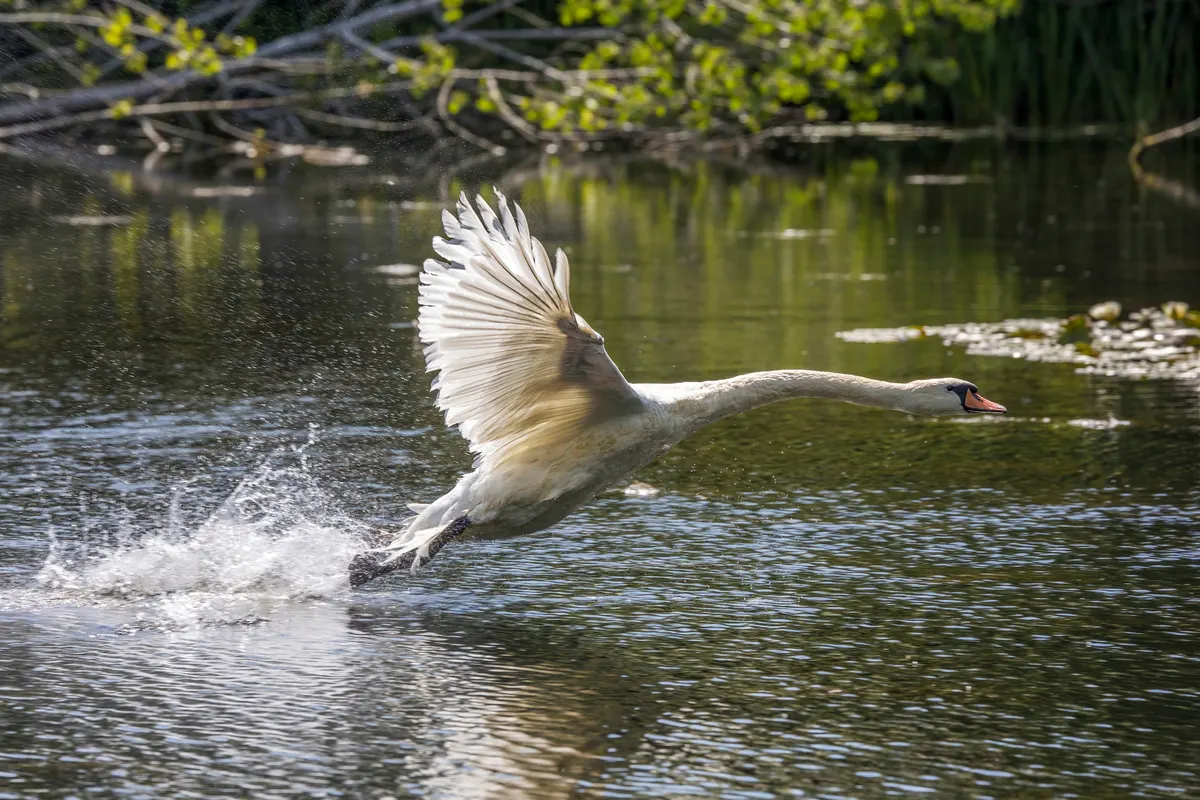
To support their massive bulk on the water, mute swans possess heavily webbed feet that provide powerful propulsion. Their pure white feathers are highly waterproof, a state maintained by constantly spreading oil from their uropygial (preen) gland over their plumage. This oil coating not only prevents waterlogging but also insulates the bird against freezing aquatic temperatures. Despite their heavy build, they are strong fliers, capable of reaching flight speeds of up to 50 mph (80 km/h) once they gain momentum, though they require a long "runway" across the water's surface to take off.