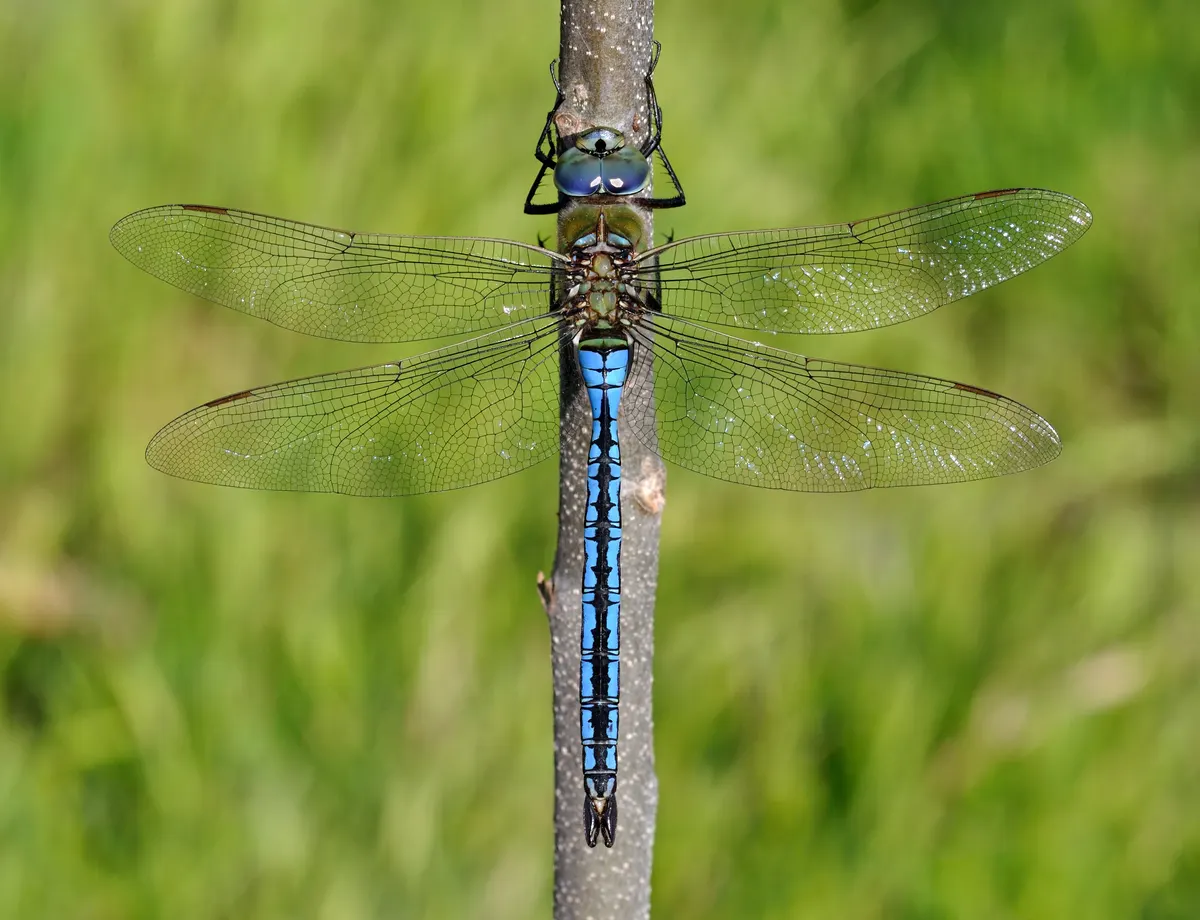
The anatomy of the Emperor dragonfly is a fascinating example of biomechanical engineering. Measuring between 7 and 8 cm in length and weighing a mere 1 to 2 grams, the adult features a long, slender abdomen—vibrantly blue in males and green in females—that acts as a counterbalance during high-speed maneuvers.
Their visual system is arguably the most advanced among insects. A dragonfly’s head is almost entirely consumed by two massive compound eyes, each containing up to 30,000 individual hexagonal lenses (ommatidia). This grants them uncompromised, 360-degree vision, allowing them to track the erratic flight paths of multiple prey items simultaneously.
The dragonfly's flight apparatus is unparalleled. They possess two pairs of transparent, heavily veined wings. Crucially, powerful thoracic muscles allow the dragonfly to operate each of its four wings entirely independently. This asymmetrical control enables rapid acceleration, hovering, and abrupt directional changes in a fraction of a second. Furthermore, their legs are set far forward and covered in stiff bristles, designed not for walking, but for forming a deadly "basket" to snatch prey out of the air.