Gila monster (Heloderma suspectum)
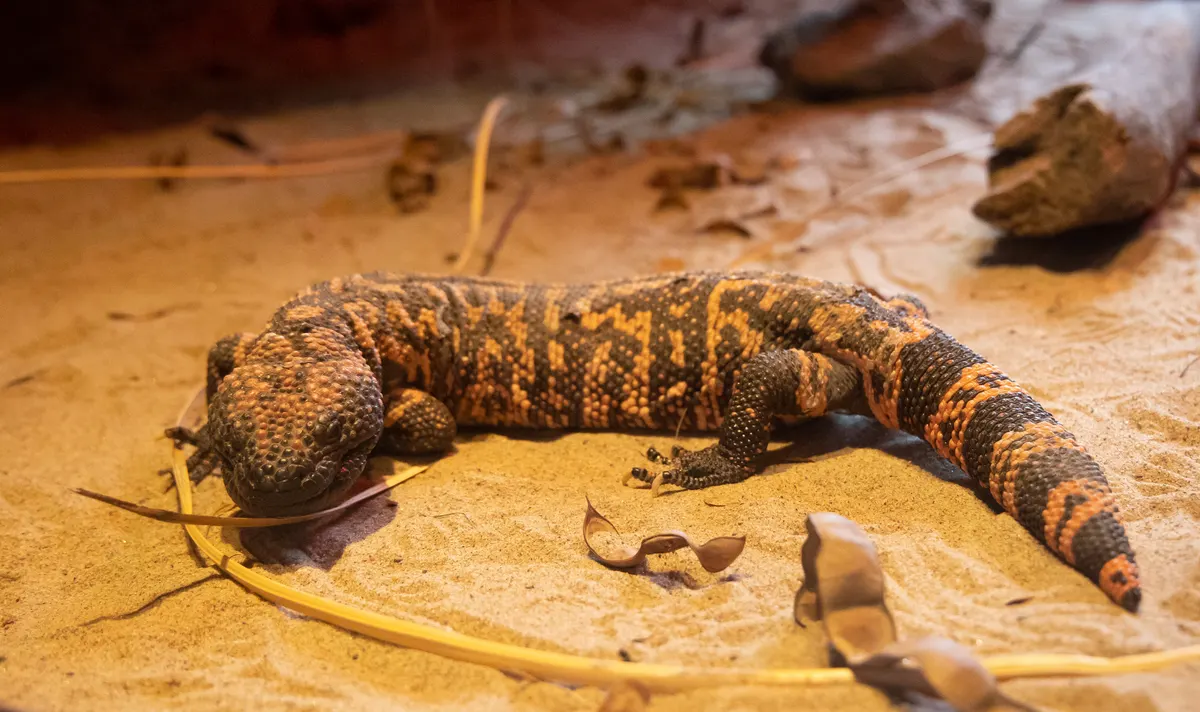
The Gila monster is a heavy-bodied venomous lizard of the southwestern United States and northwestern Mexico.
ReptiliaNear Threatened

Gila Monster Facts

The Gila monster is one of the only venomous lizards in North America! It doesn't inject venom through fangs like a snake; instead, it bites and chews to let venom flow into the wound from its lower jaw.

The Gila monster is a heavy-bodied venomous lizard of the southwestern United States and northwestern Mexico. It spends most of the year sheltered underground, emerging seasonally to search for nests, eggs, and young animals while storing energy in its thick tail.
By · Published · Updated

Quick Facts

Gila Monster at a glance

Heloderma suspectumSquamataHelodermatidae

About their home

Kind of animal

Reptilia

Where they live

What they eat

How safe?

Near Threatened

Size and speed

How heavy

0.7 kg – 1.4 kg

How long

35 cm – 56 cm

How fast

Up to 15 mph (24 km/h) top speed

Lifespan

20 to 30 years

Core article

Gila Monster: ecology and life history

A closer look at habitat, diet, behavior, reproduction, and conservation.

Start here

Gila Monster

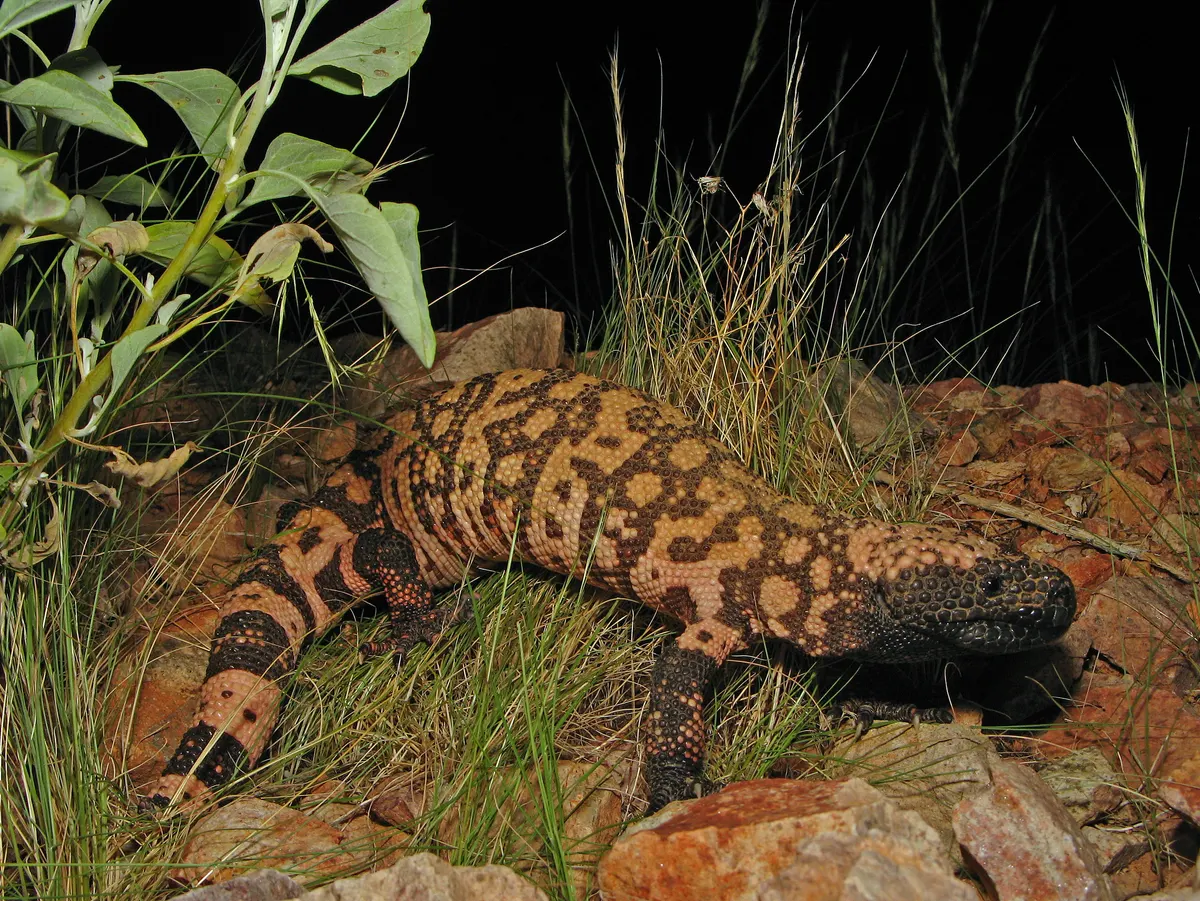
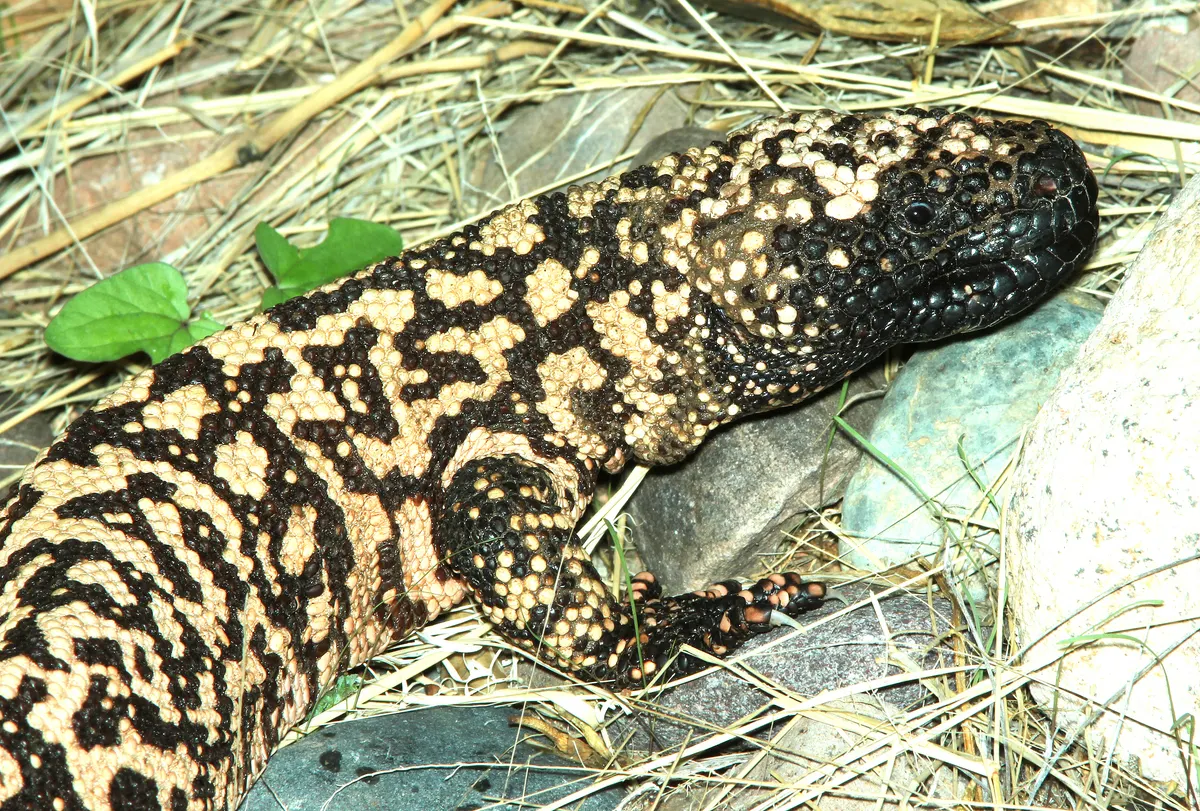
Moving slowly through the arid scrublands of the American Southwest, the Gila monster (Heloderma suspectum) is a heavy-bodied lizard studded with bead-like pink-and-black scales. It has a low metabolism, spends most of its life underground, and stands out for a trait almost no other lizard shares: it is venomous. Its bright colours are a warning, and its venom is built more for defence than for hunting.

One of the Few Venomous Lizards — and How Its Venom Works

The Gila monster is one of a small number of venomous lizards, and its venom system is unusual. Where a viper injects venom through hollow fangs in the upper jaw under muscular pressure, the Gila monster's venom glands sit in the lower jaw and drain along grooves in the teeth. To envenomate, it must clamp down with a bulldog grip and chew, working the venom up into the wound — a slow delivery that points to a defensive purpose against large mammalian predators rather than a tool for catching prey. Its skin is armour too: thousands of bead-like scales are underlaid by osteoderms, tiny bones embedded in the skin, and the vivid black-and-pink pattern is classic aposematism, advertising that the lizard is dangerous. Its thick, sausage-shaped tail is a fat store that carries it through months of fasting.

Where Gila Monsters Live

Heloderma suspectum head 2
Gila Monster is recorded in desert and shrubland habitats.

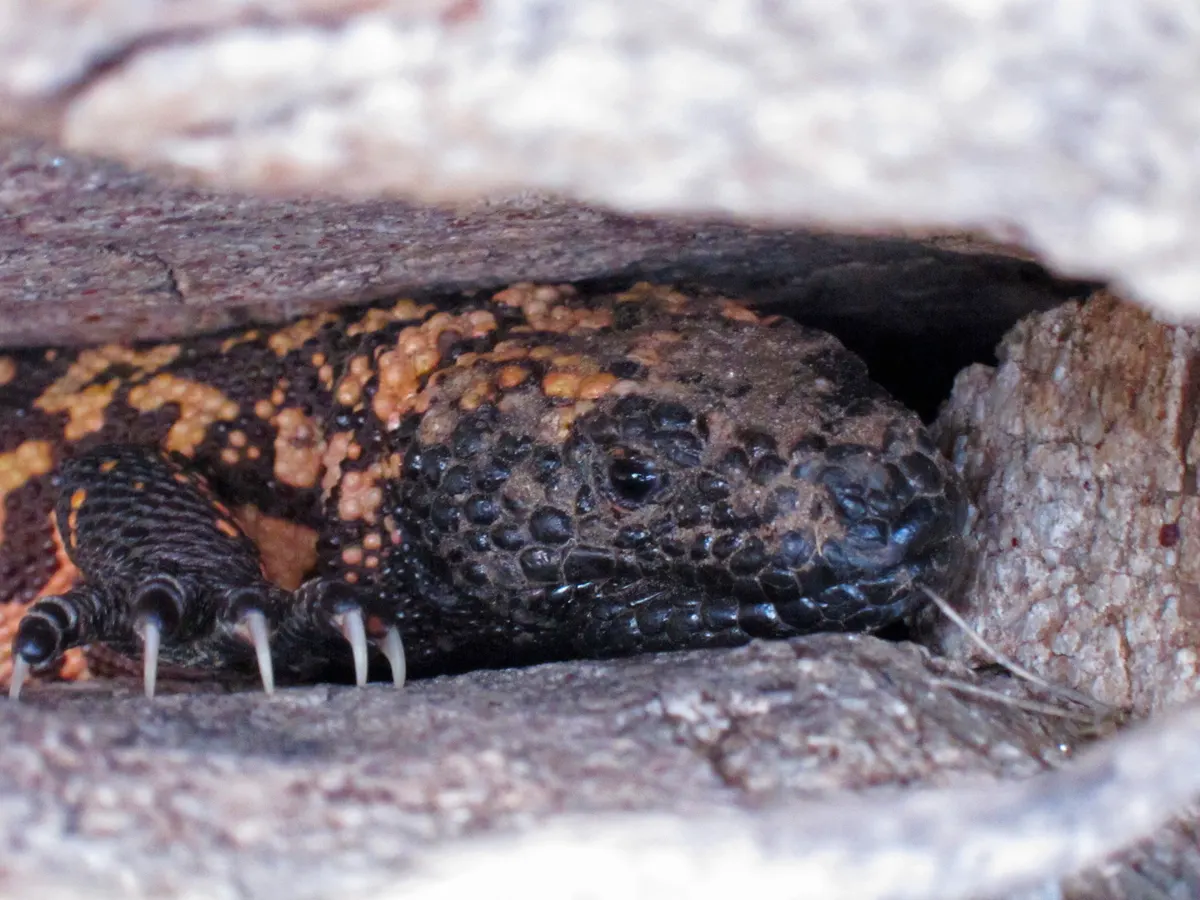
The Gila monster is restricted to the deserts of North America — the Sonoran, Mojave, and Chihuahuan — concentrated in Arizona and reaching into Utah, Nevada, California, New Mexico, and Sonora, Mexico. It favours desert scrub, saguaro country, oak woodland, and rocky foothills, and depends on deep underground shelters: rock crevices, dry washes, and the abandoned burrows of tortoises, badgers, and packrats, where it escapes the desert's temperature extremes.

What Gila Monsters Eat

Gila Monster feeding
Recorded foods for Gila Monster include bird eggs, reptile eggs, and baby rodents.

Too slow to chase prey, the Gila monster is a nest raider and scavenger that targets food which cannot run. Its diet is dominated by the eggs of ground-nesting birds and reptiles and by helpless newborn mammals — litters of baby rabbits, mice, and ground squirrels pulled from burrows. It tracks food by scent, flicking a dark, forked tongue to deliver particles to the Jacobson's organ in the roof of its mouth, an organ sharp enough to find eggs buried several inches down. Because eggs and newborns don't fight back, the venom is rarely needed for feeding; prey is simply crushed and swallowed whole.

Behavior: A Life Spent Mostly Underground

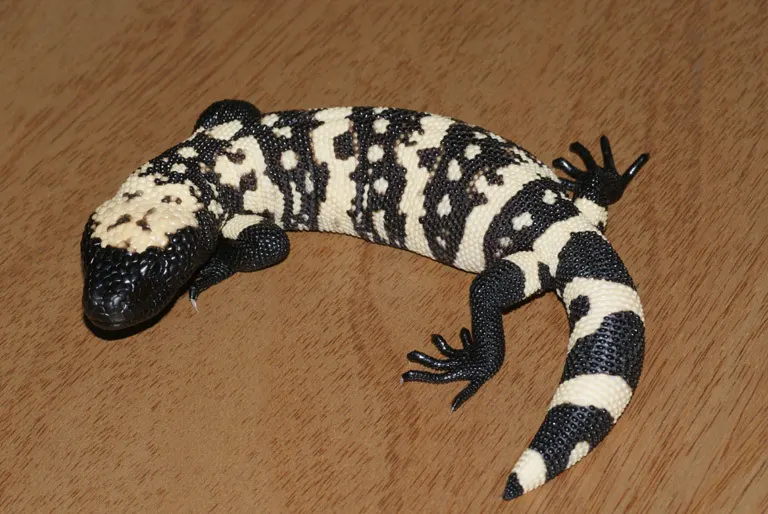
Reticulate Gila Monster
Documented Gila Monster behavior includes spending 90% of life underground, hunting by smelling with its tongue, and storing fat in its thick tail.

The Gila monster lives at the extreme low-energy edge of reptile life — biologists estimate it spends 90% or more of its life underground. Surface activity is squeezed into a brief window in spring (roughly April to June), when it basks, hunts hard to rebuild its tail fat, and looks for mates, then retreats into torpor through the summer heat and winter cold. Cornered on the surface, it retreats to a burrow if it can; if not, it arches up, hisses with its dark mouth open, and snaps — and once it bites, it hangs on with notorious tenacity.

Life Cycle: Wrestling Males and Leathery Eggs

In the short spring breeding window, males follow female scent trails, and rival males wrestle — entwining their heavy bodies and trying to pin each other until one gives way. The female then lays 2 to 12 leathery eggs in a humid burrow or under a boulder, where they incubate on soil warmth alone for a long 120 to 150 days. Hatchlings emerge as perfect miniatures of the adults, venom glands already working, sometimes overwintering in the nest before surfacing the next spring. Gila monsters are long-lived for lizards, often reaching 20 to 30 years in the wild.

Conservation: Near Threatened in a Shrinking Desert

Heloderma suspectum 'suspectum' 2
Gila Monster has a documented distribution that includes the United States and Mexico.

The Gila monster is Near Threatened with a declining trend. The main driver is habitat loss: the sprawl of Southwest cities like Phoenix and Tucson has paved over vast areas of scrubland, and irrigation projects lower the water table and alter the desert plants its prey depends on. Long persecuted and killed on sight because of an exaggerated reputation, it is now legally protected across its range but still suffers illegal collection for the exotic pet trade.

References and Authoritative Sources

Gila Monster: classification and fun facts

Classification

Scientific Taxonomy
  1. Kingdom

    Animalia

  2. Phylum

    Chordata

  3. Class

    Reptilia

  4. Order

    Squamata

  5. Family

    Helodermatidae

  6. Genus

    Heloderma

  7. Species

    H. suspectum

Did You Know?

Fun Facts

1

The Gila monster is one of the only venomous lizards in North America! It doesn't inject venom through fangs like a snake; instead, it bites and chews to let venom flow into the wound from its lower jaw.

2

They have beautiful, bumpy skin that looks like beads! These bumps are actually tiny beads of bone embedded in their skin, called osteoderms.

3

Gila monsters spend up to 90% of their lives hiding in underground burrows, only coming out to sunbathe or hunt for food in the spring.

4

They store fat in their thick, sausage-like tails, allowing them to go months without eating a single meal.

5

A drug used to treat human diabetes was developed from a chemical found in the Gila monster's saliva!

6

They use their purple, forked tongues to 'taste' the air and locate nests of eggs or baby rabbits, even if they are buried underground.

Common Questions

FAQ about Gila Monster

Select a question to reveal the answer.

What is a Gila monster?

A Gila monster is a large, heavy, slow-moving lizard known for its colorful black-and-pink bumpy skin and venomous bite.

Where do Gila monsters live?

They live in the dry deserts, shrublands, and rocky foothills of the southwestern United States (especially Arizona) and northwestern Mexico.

What do Gila monsters eat?

They are carnivores that eat mostly eggs of birds and reptiles, as well as baby rodents, small birds, and frogs, swallowing their food whole.

Are Gila monsters venomous?

Yes. Gila monsters are venomous lizards, but they are slow-moving and usually bite only when handled or threatened.

Are Gila monsters endangered?

Gila monsters are listed as Near Threatened, mainly because habitat loss and collection pressure can harm local populations.

Do Gila monsters live in burrows?

Yes, Gila monsters spend most of their lives underground. They shelter in rock crevices and abandoned animal burrows to avoid desert temperature extremes, emerging mainly in favorable spring conditions.

Show 1 more questionsExpand
How long do Gila monsters live?

Gila monsters can live about 20 to 30 years in the wild. Their fat-storing tail and long periods below ground help them survive seasons when surface activity and food are limited.