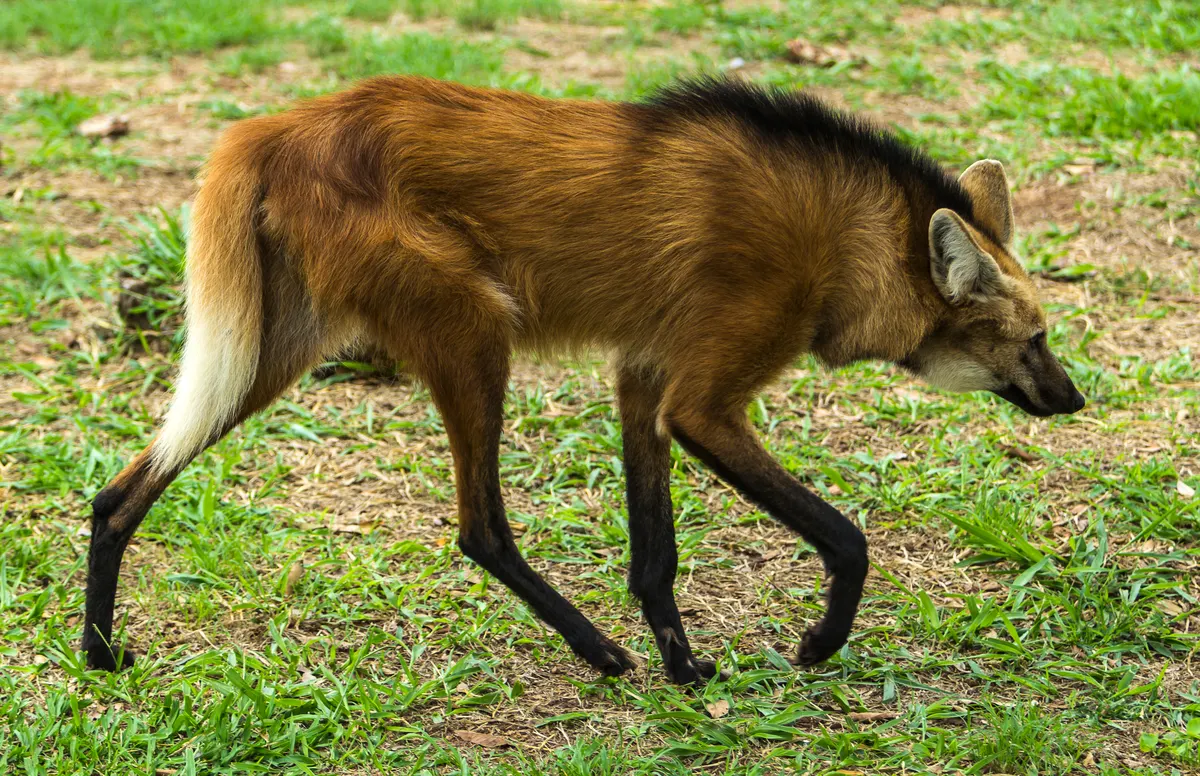
Maned wolf walking with long legs and reddish coat
The maned wolf looks like a fox on stilts but is neither fox nor gray wolf.
MammaliaNear Threatened

Maned Wolf Facts

Despite its name, the maned wolf is not a true wolf and is the only species in its genus.

The maned wolf is a tall, long-legged South American canid of open savannas. This omnivore eats fruit and small prey, raises pups in dens, and is listed as Near Threatened.
By · Updated

Quick Facts

Maned Wolf at a glance

Chrysocyon brachyurusCarnivoraCanidae

About their home

Kind of animal

Mammalia

Where they live

What they eat

How safe?

Near Threatened

Size and speed

How heavy

44 pounds – 66 pounds

How long

3.5 feet – 4.5 feet

How fast

Fast dashed pursuits over short distances in tall grass

Lifespan

About 10 to 12 years

Core article

Maned Wolf: ecology and life history

A closer look at habitat, diet, behavior, reproduction, and conservation.

Start here

Maned Wolf

Tall, slim, and colored like sunset grass, the maned wolf (Chrysocyon brachyurus) is South America's largest wild dog. This long-legged omnivore of the Canidae family strides through cerrado savanna and open grassland hunting rodents and birds and gathering fruit. Despite the name it is neither a gray wolf nor a true fox — it is the only living species in its genus.

A Red Fox on Stilts — but Neither Wolf nor Fox

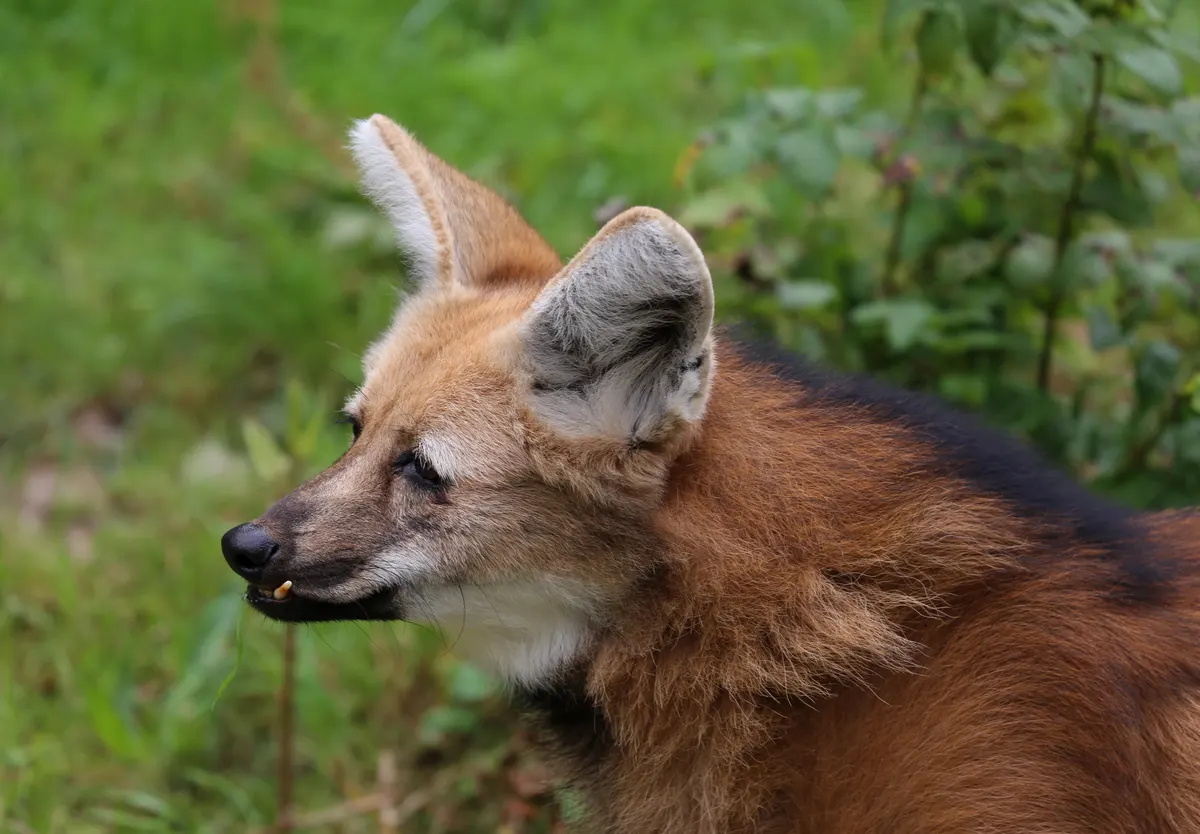
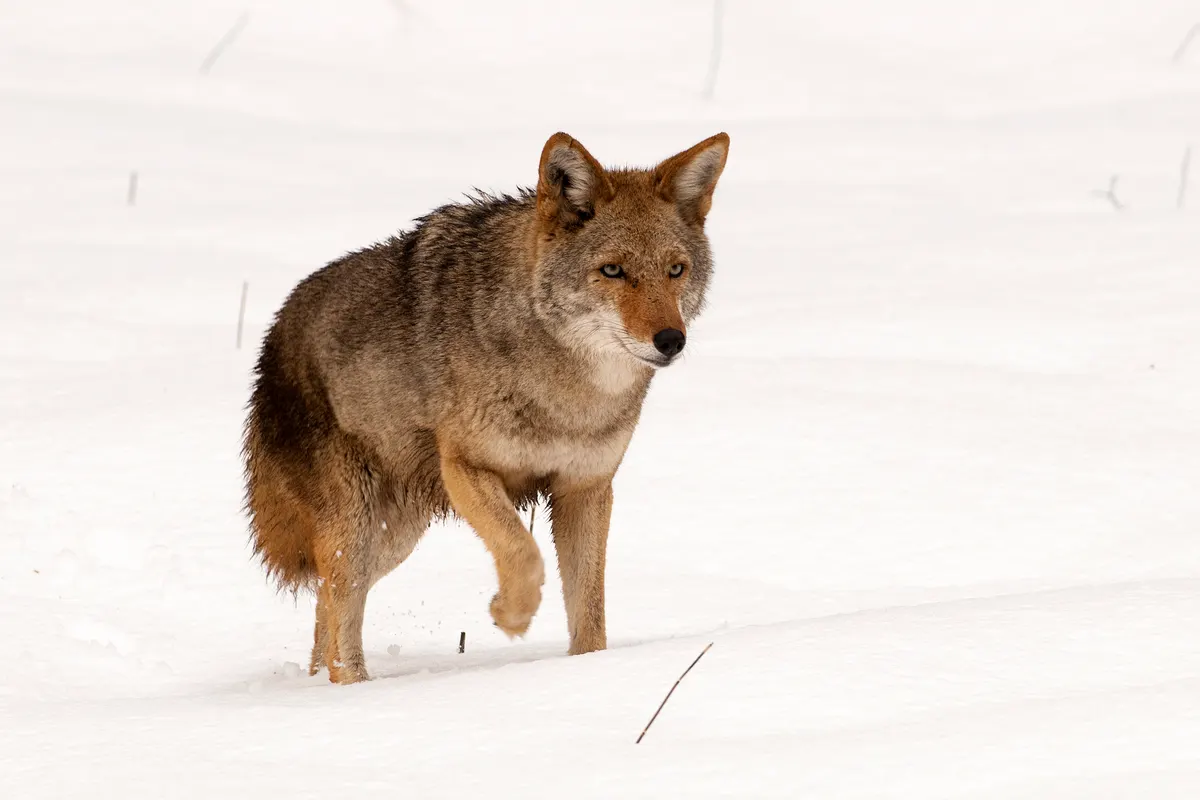
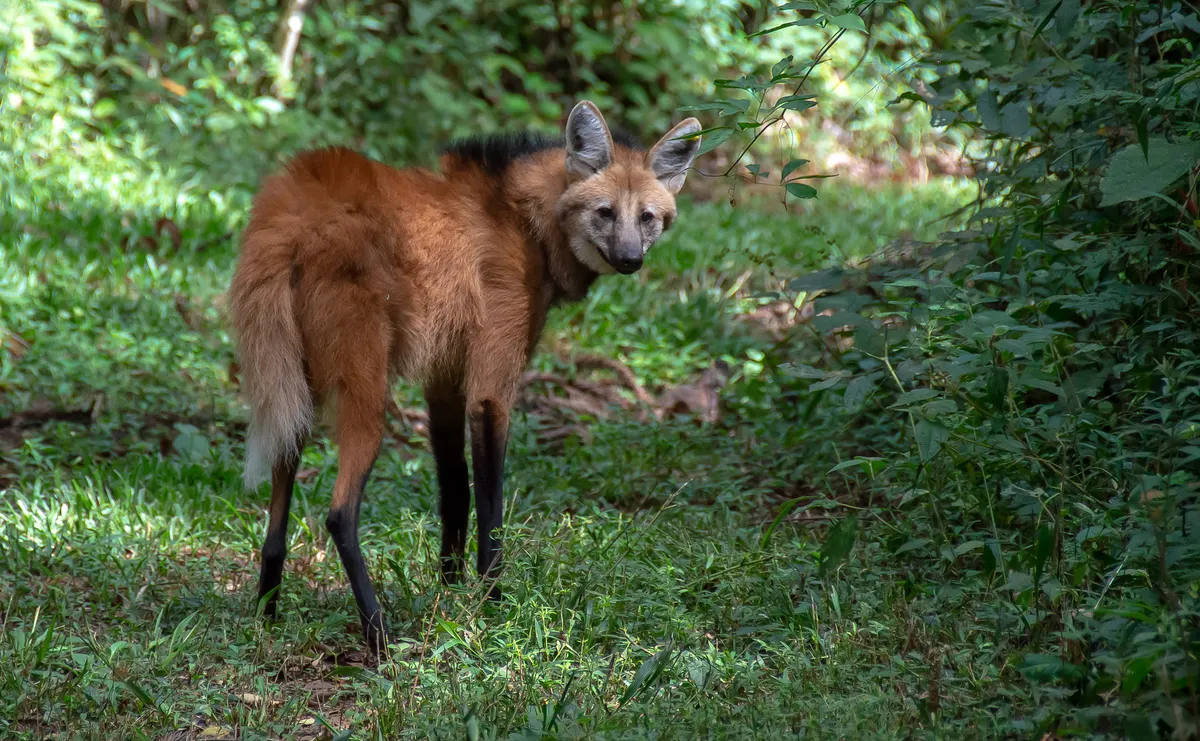
Adults run 3.5 to 4.5 feet in body length with a bushy black-tipped tail, but the striking figure is the height: 34 to 42 inches at the shoulder, taller than many people expect, on long black legs that lift the head above tall grass. Weight is a modest 44 to 66 pounds. The coat is golden-red to cinnamon with a white throat patch and a dark mane over neck and shoulders that rises when the animal is alarmed, and oversized swiveling ears pick up rodents rustling in the grass. Its scientific name means roughly "short-tailed golden dog," and genetics places it among South America's own canids rather than with the gray wolf's Canis lineage — the stilt legs and solitary habits set it apart from both pack-hunting wolves and small burrow-focused foxes like the coyote's relatives.

Where Maned Wolves Live

Maned wolf walking through open Brazilian highland habitat
Cerrado savanna and grassy scrub give maned wolves space to forage alone.

Maned wolves live mainly in Brazil's cerrado — a mosaic of savanna, scrub, and grassland — and similar open country in Argentina, Paraguay, Bolivia, Peru, and rarely Uruguay, avoiding dense rainforest and high mountains for landscapes where fruiting shrubs and small prey are scattered across wide territories. A single pair may share a home range of many square miles, denning in thickets, termite mounds, or abandoned burrows. Expanding farms, roads, and planted pasture have broken up much of the historic cerrado, pushing the wolves into smaller fragments.

What Maned Wolves Eat

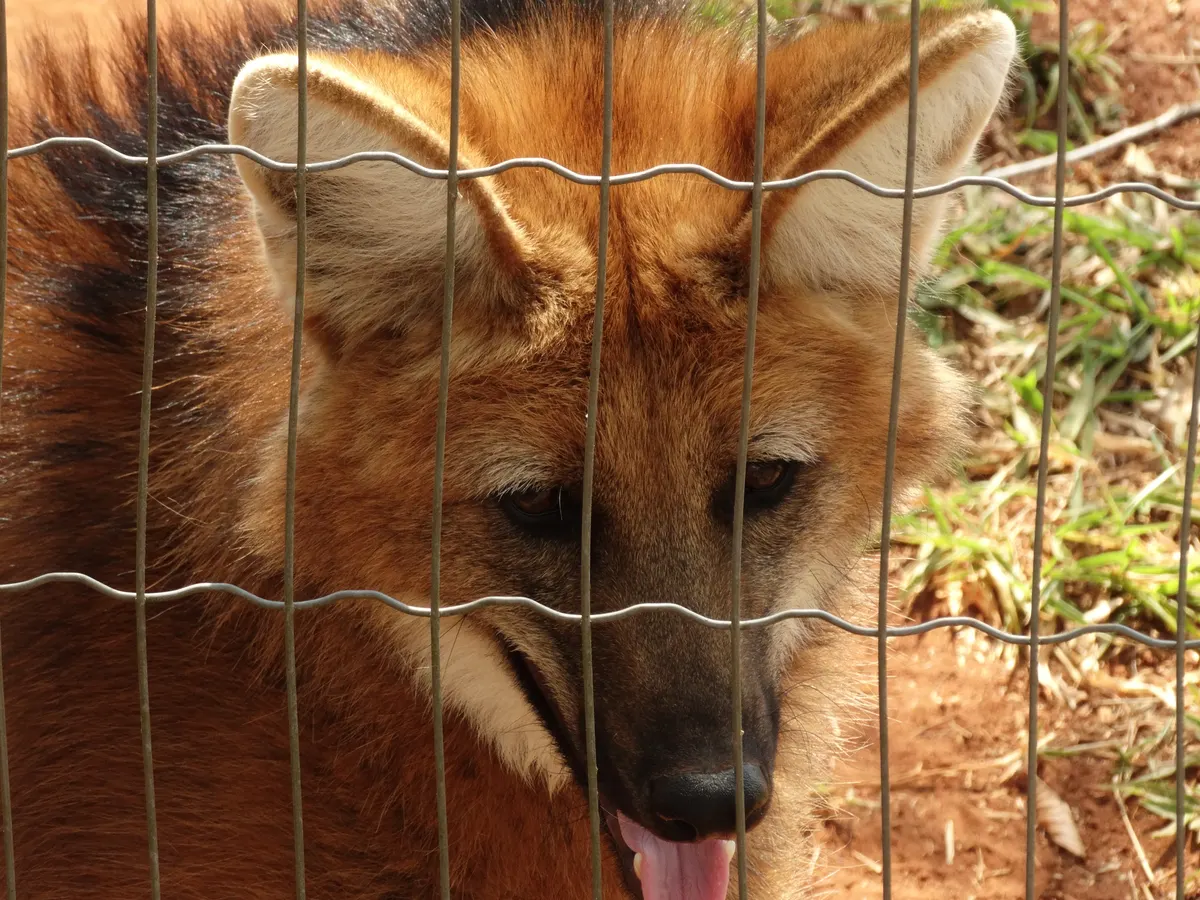
Maned wolf standing alert while searching for food
Wolfs fruit, a tomato-like plant, can make up a large share of meals.

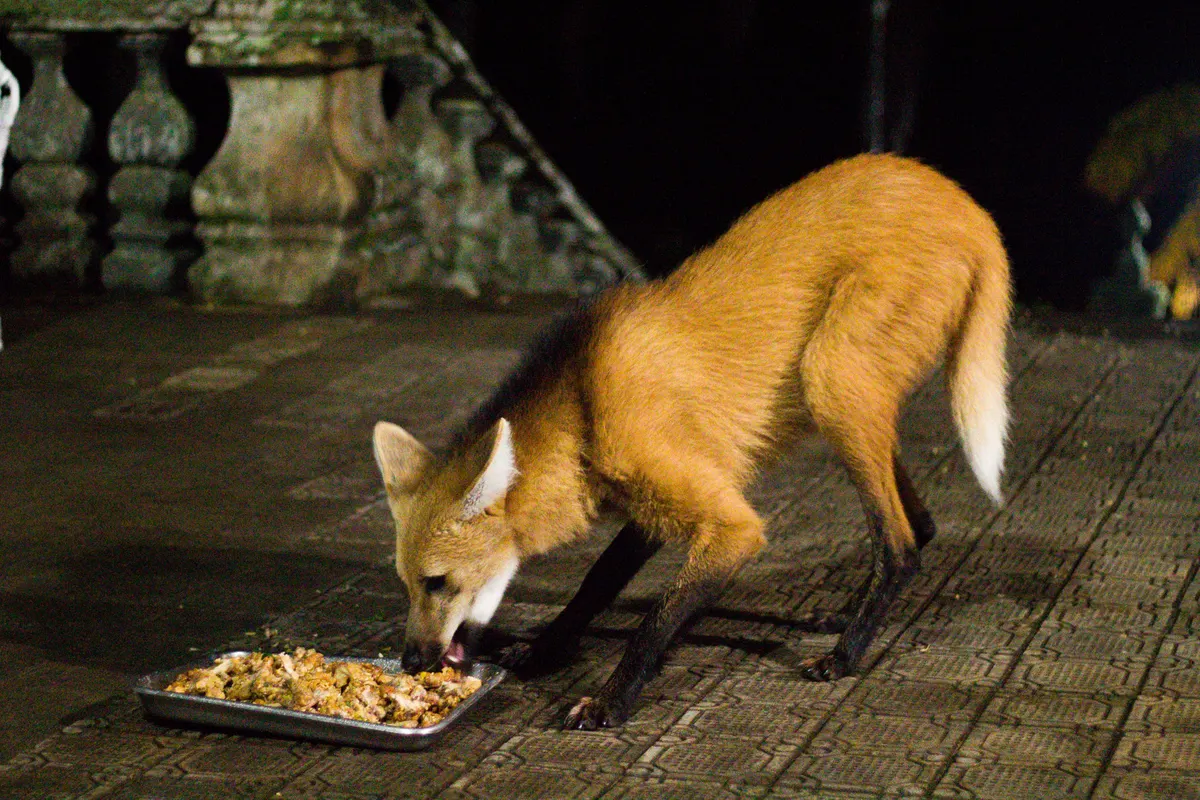
Though a carnivoran, the maned wolf is a true omnivore, and fruit can supply half or more of its calories in some seasons — above all the tomato-like wolf's fruit (Solanum lycocarpum, lobeira). The rest is rodents, birds, insects, reptiles, eggs, and the occasional armadillo. Foraging is mostly solitary and nocturnal or crepuscular: it listens, pounces on small prey, and plucks fruit from low plants. That mixed diet carries it through dry seasons when animal prey is scarce — a very different strategy from pack-hunting wolves.

Behavior: Solitary Wanderers of the Cerrado

Two maned wolves resting near each other
Pairs may stay bonded for years and defend an overlapping home range.

Maned wolves usually travel alone. A mated pair may share a large territory and meet to breed and raise young, but they rarely form packs, and they mark their ground with feces and a strongly scented urine sometimes likened to a skunk's — a chemical billboard for neighbours. Communication includes a loud "roar-bark" that carries across open country, soft whines between partners, and the raised-mane threat display. Compared with more social canids, daily life is quiet and spread out, each adult covering distance in search of scattered fruit and prey.

Life Cycle: Pups Raised by Both Parents

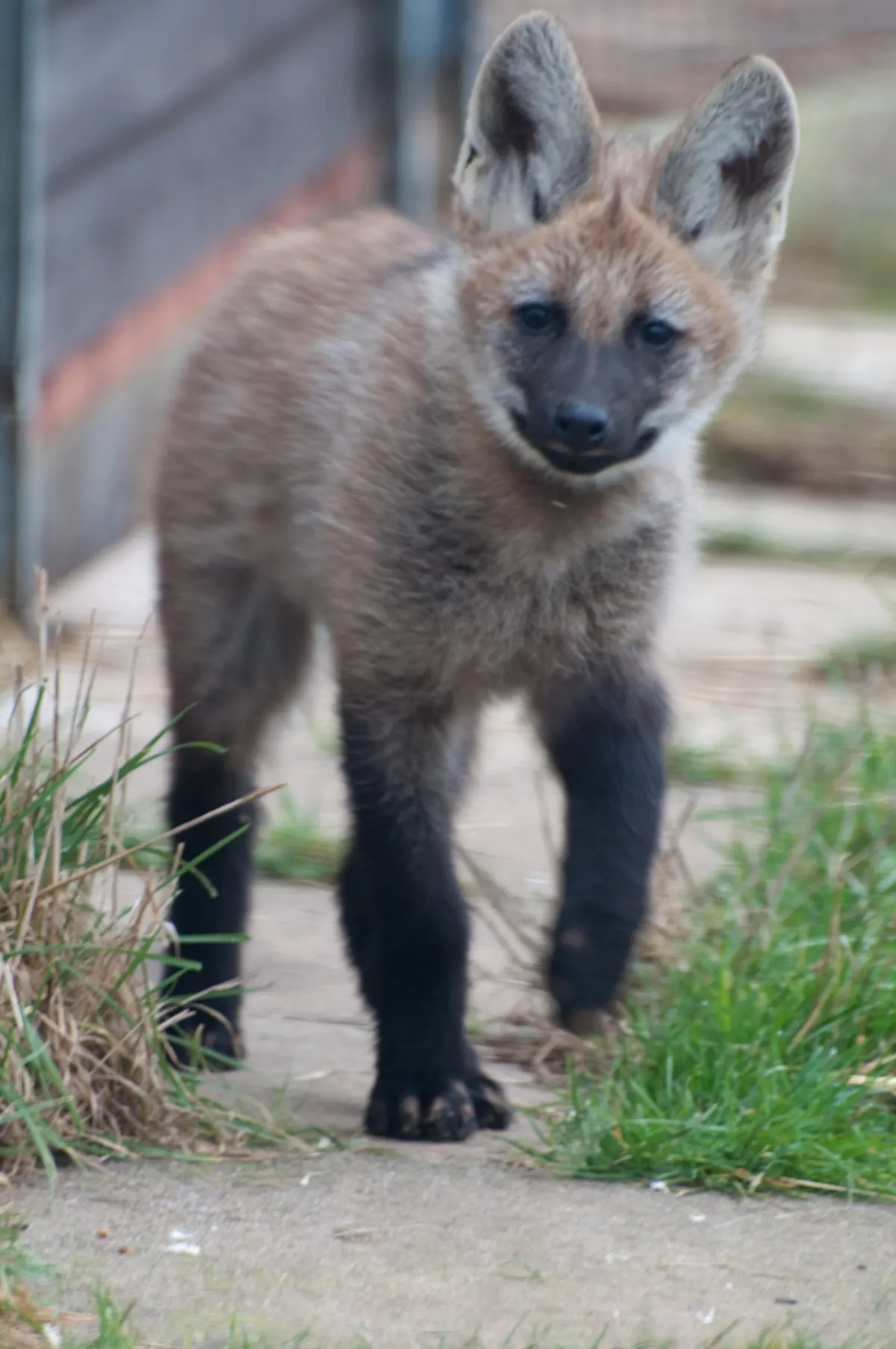
Maned wolf cub sitting upright with soft reddish fur
Pups grow quickly and begin exploring away from the den after about a month.

Breeding usually peaks in the cooler season. After about 60 to 65 days' gestation the female bears roughly 2 to 4 pups in a sheltered den, born dark and helpless with their eyes opening in a couple of weeks. Both parents provision, and by one to two months the pups explore near the den and shift from milk to regurgitated meals and solid food, staying near the natal range for months before dispersing. Wild maned wolves often reach 10 to 12 years when they escape disease and traffic.

Conservation: Near Threatened in a Shrinking Cerrado

Maned wolf walking through a park landscape in Brazil
Habitat loss and roads continue to shrink safe range across the cerrado.

The maned wolf is Near Threatened with a decreasing trend. Converting cerrado to cropland, cattle pasture, and roads shrinks and splits its habitat, vehicle collisions kill many dispersing animals, and domestic dogs spread canine distemper and parvovirus, with local hunting and persecution adding to the toll. Conservation focuses on protecting cerrado reserves, building wildlife crossings, reducing conflict with people, and managing disease from free-roaming dogs, backed by captive breeding and public education that keep the species an emblem of South America's grasslands.

References and Authoritative Sources

Maned Wolf: classification and fun facts

Classification

Scientific Taxonomy
  1. Kingdom

    Animalia

  2. Phylum

    Chordata

  3. Class

    Mammalia

  4. Order

    Carnivora

  5. Family

    Canidae

  6. Genus

    Chrysocyon

  7. Species

    C. brachyurus

Did You Know?

Fun Facts

1

Despite its name, the maned wolf is not a true wolf and is the only species in its genus.

2

People often describe it as a red fox on stilts because of its long legs.

3

Fruit can make up a large part of its diet, especially wolf’s fruit (lobeira).

4

Its urine has a strong skunk-like smell used to mark territory.

5

When threatened, it raises a dark mane of fur along its neck and shoulders.

6

Maned wolves usually hunt alone even when a mated pair shares a territory.

Common Questions

FAQ about Maned Wolf

Select a question to reveal the answer.

What is a maned wolf?

A maned wolf is a large South American member of the dog family (*Canidae*). It looks a little like a red fox on long legs, but it is neither a fox nor a gray wolf.

Where do maned wolves live?

Maned wolves live in open savanna, cerrado, and grassland habitats mainly in Brazil, with smaller populations in Argentina, Paraguay, Bolivia, Peru, and Uruguay.

What do maned wolves eat?

They are omnivores. Meals often mix fruit (especially wolf’s fruit), rodents, birds, insects, and other small animals.

Is a maned wolf a real wolf?

No. It belongs to the same family as wolves and coyotes, but it is the only species in the genus *Chrysocyon* and is not a close living relative of gray wolves.

Why does the maned wolf have long legs?

Long legs help it see over and walk through tall grass while searching for fruit and small prey in open landscapes.

What is a baby maned wolf called?

A baby maned wolf is called a pup. Pups are born dark-furred in dens and are cared for by both parents.

Show 2 more questionsExpand
Are maned wolves endangered?

Maned wolves are listed as Near Threatened. Habitat loss, roads, and disease from domestic dogs are major threats across the cerrado.
Do maned wolves live in packs?

Usually not. Adults often forage alone. A mated pair may share a large territory and raise pups together without forming a wolf-like pack.