Fennec Fox Facts
“Fennec foxes have the largest ears relative to body size of any canid.”
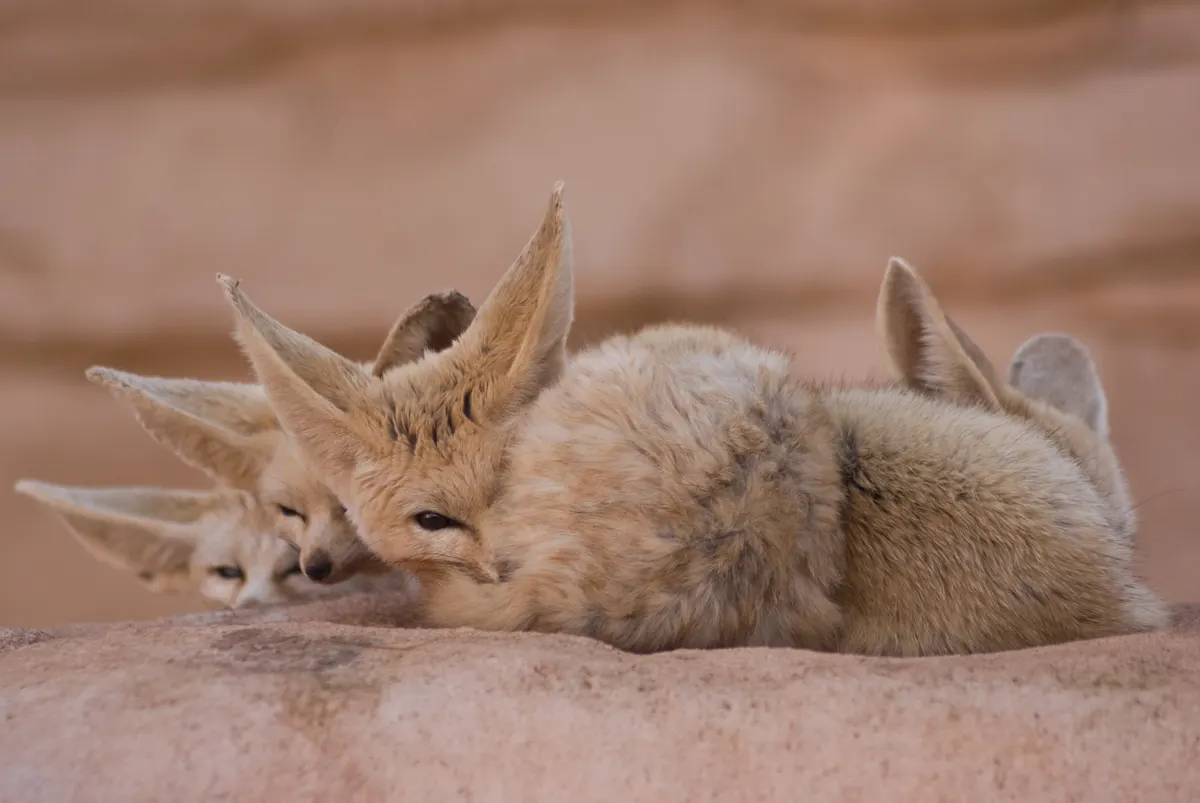
The fennec fox is the smallest wild fox, living in North African deserts. Its enormous ears help it hear prey underground and stay cool in extreme heat.
Loading page content
“Fennec foxes have the largest ears relative to body size of any canid.”
The fennec fox is the smallest wild fox, living in North African deserts. Its enormous ears help it hear prey underground and stay cool in extreme heat.
Vulpes zerdaCarnivoraCanidae
Explore fennec fox photos organized for learning and classroom observation.
Click any photo to view it larger. 8 images available.
Core article
Habitat, diet, behavior, and more — everything on one page.
With ears so large they look almost too heavy for its tiny frame, the fennec fox (Vulpes zerda) is built for life in some of the hottest deserts on Earth. This small carnivore from the Canidae family roams the Sahara and Arabian deserts at night, listening for insects and rodents beneath the sand. Every part of its body — from fur-lined paws to heat-radiating ears — helps it survive where few mammals can.
The fennec fox belongs to the genus Vulpes, the "true foxes," alongside the red fox and arctic fox. Its scientific name is Vulpes zerda. Within the order Carnivora and family Canidae, it represents an extreme desert adaptation: a fox that traded the forest edges preferred by its red fox cousins for open sand and scrub.
Fossil and genetic evidence suggest fennec foxes evolved in North Africa as deserts expanded after the last ice age. Selective pressure favored smaller bodies (less heat to lose at night), larger ears (better hearing and cooling), and nocturnal habits. Today the fennec fox is the smallest canid on Earth and the only fox species specialized for true desert life.
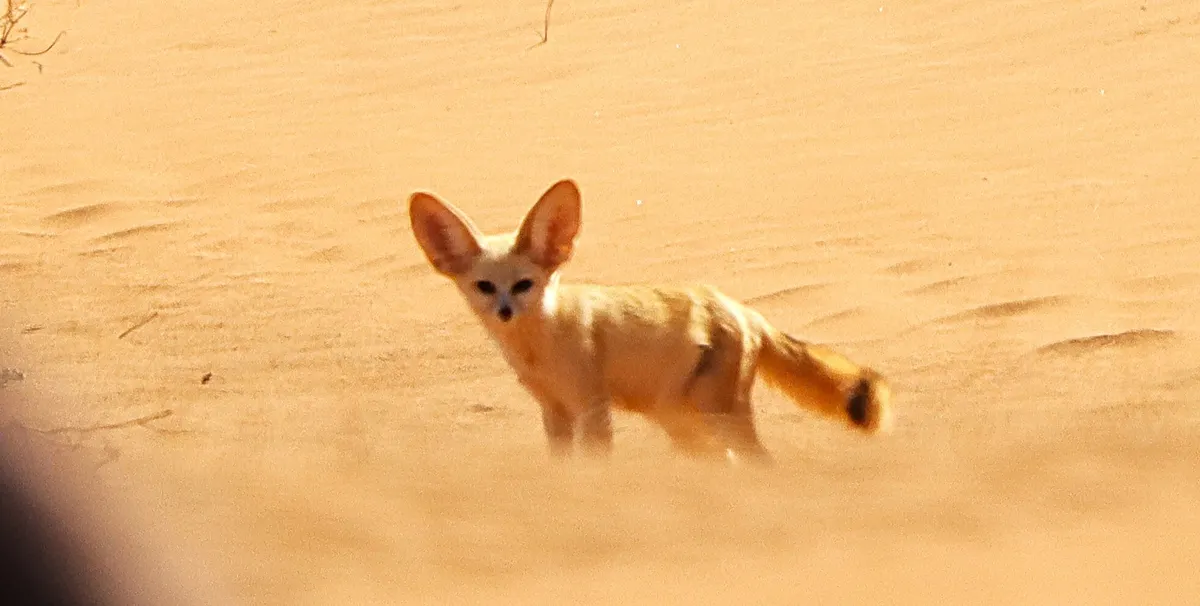
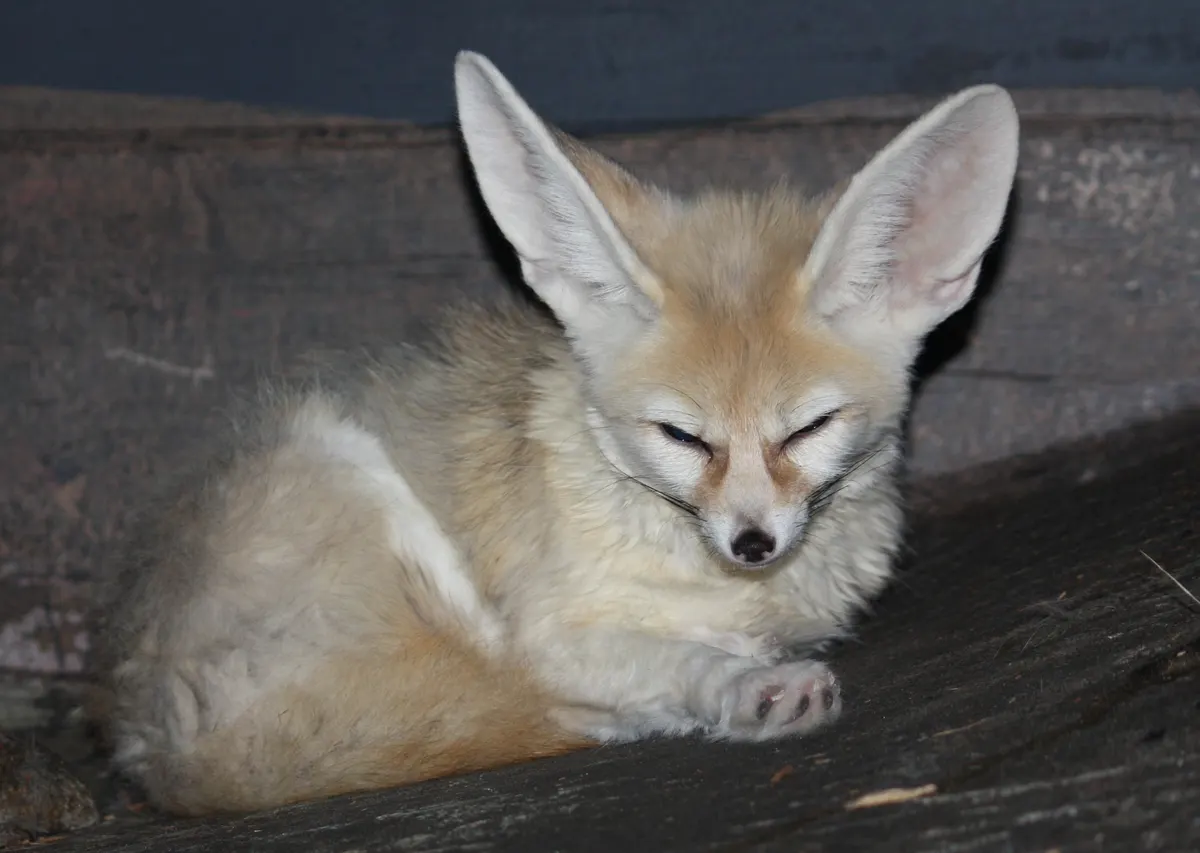
An adult fennec fox measures about 9 to 16 inches (24 to 41 cm) in body length, with a bushy tail adding another 7 to 12 inches. It weighs only 1.5 to 3.5 pounds (0.7 to 1.6 kg) — lighter than many pet cats. Its coat is thick and sandy cream, reflecting sunlight and insulating against cold desert nights.
The fennec's most famous feature is its ears, which can reach 6 inches (15 cm) long — nearly half the length of its body. Blood vessels close to the skin surface release excess body heat, acting like natural radiators. Those same ears detect the faint scratching of a gerbil tunneling underground from more than 3 feet away.
Thick fur covers the soles of its feet, creating a cushion against burning sand and improving traction on loose dunes. Dark eyes are ringed with dark fur that reduces glare, similar to eye black worn by athletes. A fennec's kidneys are highly efficient, producing concentrated urine so the animal loses minimal water.
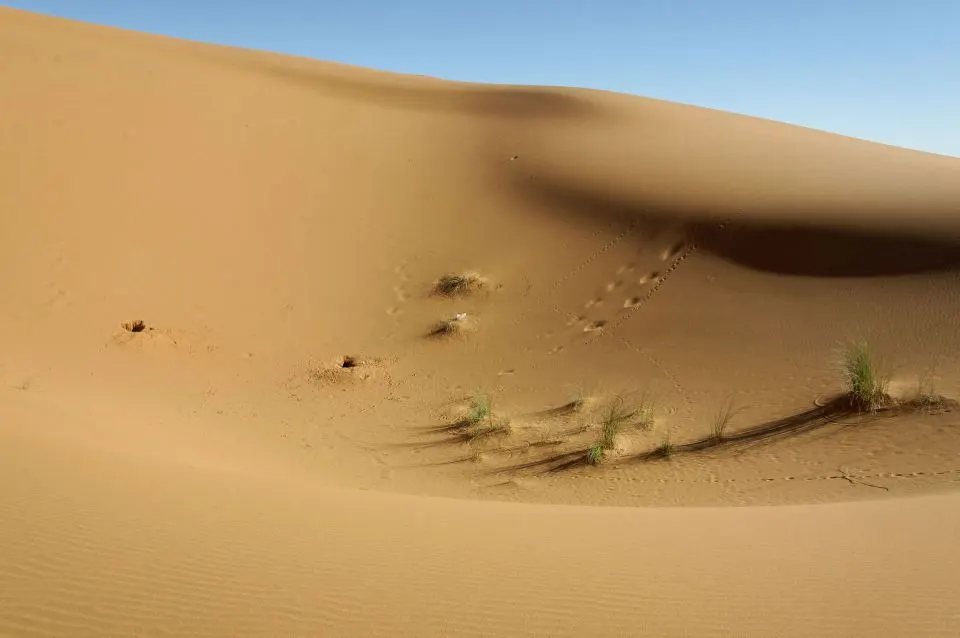
Fennec foxes live in desert and semi-desert habitats across North Africa and the Sinai Peninsula. Their range stretches from Morocco and Western Sahara through Algeria, Tunisia, Libya, Egypt, Mauritania, Niger, Chad, and Sudan, with small populations in Israel's Negev Desert.
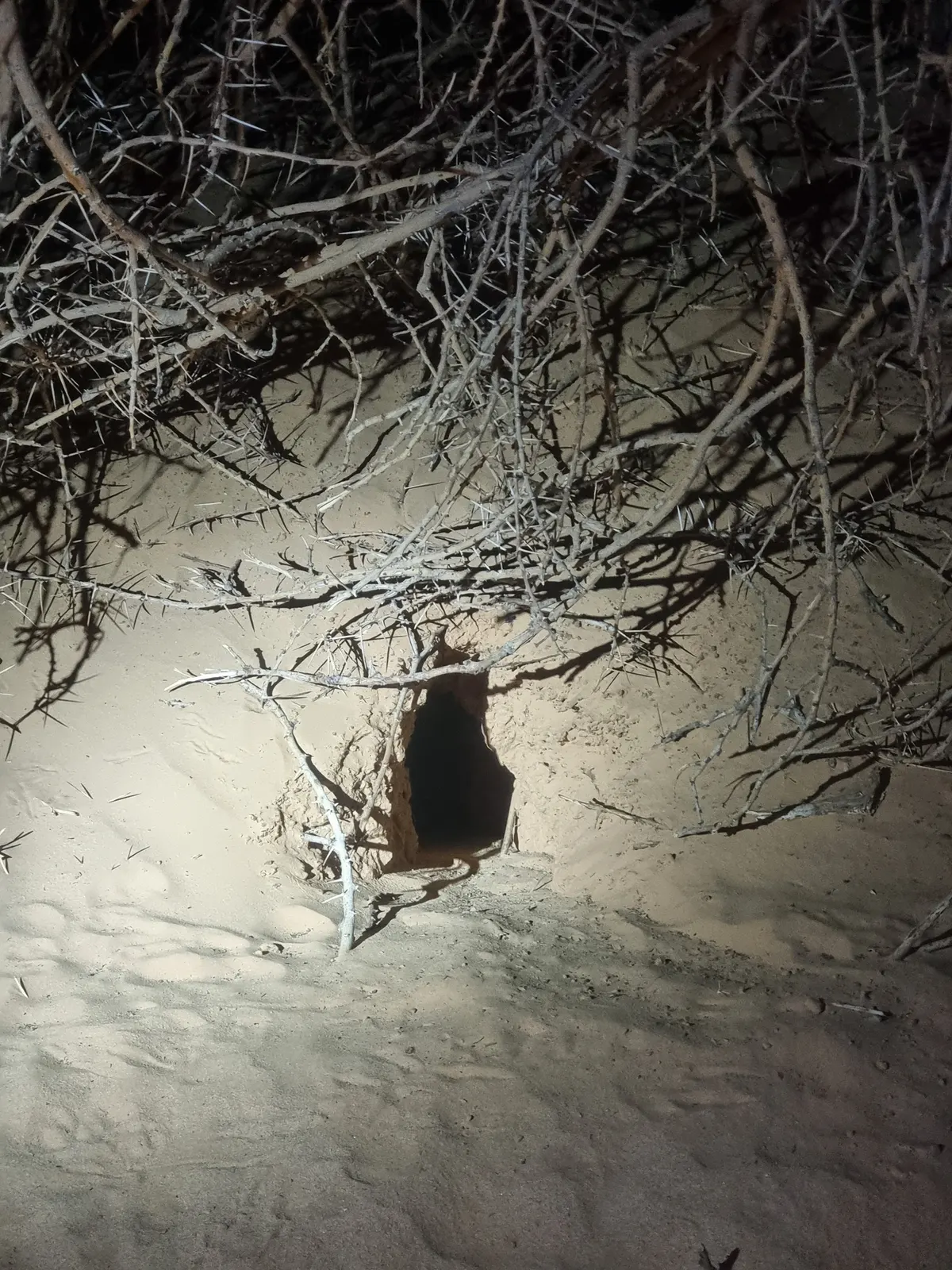
They prefer open sandy areas with sparse vegetation — not rocky mountains or dense forest. Stable sand allows them to dig extensive burrow systems. A single territory may contain multiple burrows connected by tunnels, some reaching 10 feet deep where temperatures stay far cooler than the scorching surface. Fennec foxes are highly territorial and mark boundaries with urine and scent from glands near the tail.

Fennec foxes are opportunistic carnivores. Their diet shifts with seasonal availability but centers on insects (especially grasshoppers and beetles), small rodents (gerbils and jerboas), birds, eggs, and lizards. They occasionally eat roots, tubers, and fruit, which provide both calories and moisture.
Hunting happens almost entirely at night. A fennec listens for prey underground, then digs rapidly with its forepaws or pounces on surface insects. Its acute hearing can pinpoint a mouse moving beneath several inches of sand. Because standing water is rare in the Sahara, fennec foxes obtain most of their water from the body fluids of prey — they can survive long periods without drinking.

Fennec foxes are more social than many fox species. Mated pairs often stay together for life and share a burrow territory. Family groups may include the current year's kits and sometimes offspring from the previous year that have not yet dispersed.
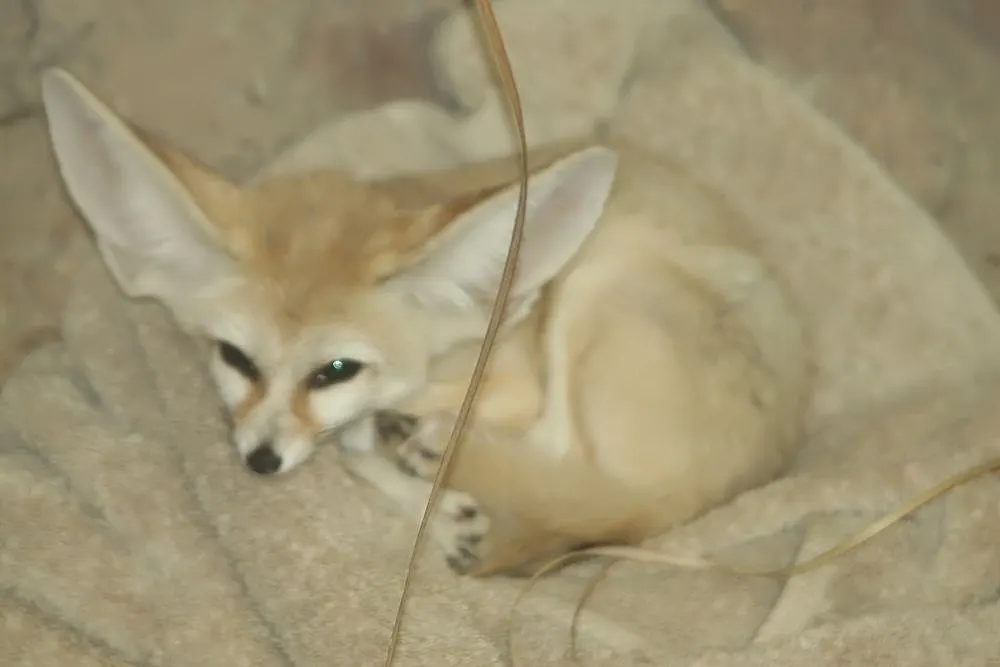
They communicate with a wide range of sounds: barks, whines, growls, and a high-pitched squeal used when alarmed. When threatened, a fennec may arch its back and raise its bristling tail to appear larger. During the day, family members sleep curled together underground, conserving energy and avoiding the desert heat.

Breeding typically occurs once a year, in January or February. After a gestation of about 50 days, the female gives birth to a litter of 2 to 5 kits in a deep nursery chamber within the burrow. Kits are born blind, helpless, and covered in soft fur.
Both parents care for the young. The male brings food to the nursing female and later helps feed the kits as they grow. Kits open their eyes at about 10 days and begin exploring the burrow entrance after four weeks. By three months they hunt with their parents; by six months most disperse to find their own territories. Wild fennec foxes live about 10 to 12 years.
(Population and conservation trend data sourced from the IUCN Red List of Threatened Species)
The fennec fox is classified as Least Concern with a stable population trend. It remains widespread across the Sahara, and its remote desert habitat limits direct conflict with humans.
Threats still exist. Fennec foxes are trapped for the exotic pet trade and for fur in some regions. Habitat disturbance from tourism, livestock grazing, and desert road construction can destroy burrows. Domestic dogs may compete for food or spread disease. Because they are difficult to study in the wild, population numbers are poorly known, and localized declines may go unnoticed.
Fennec foxes have the largest ears relative to body size of any canid.
They can hear prey moving underground in the desert sand.
Their furry foot pads protect them from scorching sand.
Fennec foxes rarely need to drink water — they get moisture from food.
They dig deep burrows that stay cooler than the surface during the day.
A fennec fox is smaller than most house cats but has ears up to 6 inches long.
Select a question to reveal the answer.
A fennec fox is the smallest wild fox species, native to the deserts of North Africa. It is famous for its huge ears and sandy-colored fur.
Fennec foxes live in sandy desert and semi-desert habitats across North Africa, from Morocco and the Western Sahara east to Egypt and the Sinai Peninsula.
Their large ears help release body heat in hot deserts and let them hear insects and rodents moving underground.
Fennec foxes are carnivores that eat insects, rodents, birds, eggs, lizards, and sometimes roots or fruit.
A baby fennec fox is called a kit. Kits are born blind in underground burrows and are cared for by both parents.
They stay cool with big ears, rest in burrows during the day, hunt at night, and get most of their water from prey instead of drinking.
Fennec foxes are listed as Least Concern, but trapping for the pet trade and habitat disturbance can harm local populations.