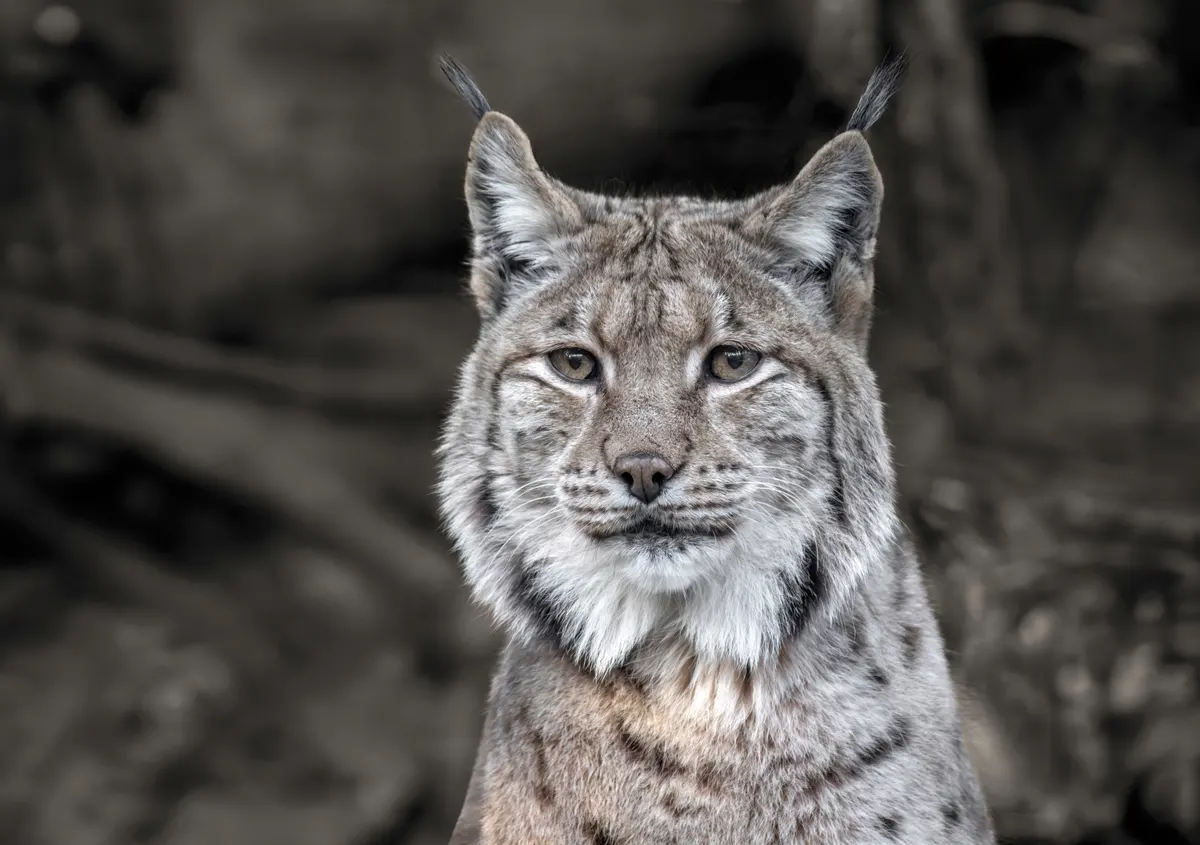
Eurasian lynx facing forward with long black ear tufts
The Eurasian lynx is the largest lynx species, known for long black ear tufts.
MammaliaLeast Concern

Eurasian Lynx Facts

Black ear tufts on a Eurasian lynx can reach nearly 2 inches (5 cm) long.

The Eurasian lynx is a medium-sized forest wild cat with long black ear tufts and a short black-tipped tail. It stalks deer and hares across Europe and Asia and is listed as Least Concern.

By · Updated

Quick Facts

Eurasian Lynx at a glance

Lynx lynxCarnivoraFelidae

About their home

Kind of animal

Mammalia

Where they live

What they eat

How safe?

Least Concern

Size and speed

How heavy

40 pounds – 80 pounds

How long

32 inches – 51 inches

How fast

Short ambush bursts when closing on prey

Lifespan

About 10 to 15 years

Core article

Eurasian Lynx: ecology and life history

A closer look at habitat, diet, behavior, reproduction, and conservation.

Start here

Eurasian Lynx

With long black ear tufts and a short black-tipped tail, the Eurasian lynx (Lynx lynx) is the largest of the world's lynxes and a stealthy carnivore of Eurasian forest. This mid-sized member of the Felidae family stalks deer and hares from Scandinavia and the Carpathians across Russia into parts of Central and East Asia.

The Largest of the Four Lynx Species

The Eurasian lynx is one of four species in the genus Lynx — alongside the Canada lynx, Iberian lynx, and North American bobcat — and sits between small cats like the sand cat and large ambushers like the leopard. Adults run 32 to 51 inches in body length with a short 4-to-10-inch black-tipped tail, stand 24 to 30 inches at the shoulder, and weigh 40 to 80 pounds, males larger. The grayish-to-reddish coat, lightly spotted, breaks up the cat's outline in dappled forest light, and long ear tufts, a facial ruff, and large padded paws are classic lynx traits; retractable claws and silent feet make it an ambush specialist. Compared with the bobcat it is heavier, longer-legged, and more tied to deep forest, with a fully black tail tip rather than a banded one — see Eurasian lynx vs bobcat for the full contrast. It is built for a short, explosive rush from cover, not a long chase.

Where Eurasian Lynx Live

Eurasian lynx in Bavarian Forest National Park woodland
Mountain and mixed forests give lynx cover for dens and ambush hunting.

Eurasian lynx favour forest with cover for stalking and denning — boreal and temperate woodland, mixed forest, and mountain forest edges — and avoid open plains. The range runs across much of northern and eastern Europe into Russia, Siberia, and parts of Central and East Asia, with some European populations reduced historically and later restored by reintroduction. Solitary adults patrol large territories, so connected forest corridors matter: roads, fenced development, and cleared valleys can split a big forest into ranges too isolated to support breeding, and snow depth shapes both travel and access to prey.

What Eurasian Lynx Eat

Eurasian lynx walking alert while searching for prey
Roe deer and hares are staple prey across much of the European forest range.

Eurasian lynx are strict carnivores. Roe deer and other medium ungulates are central in many regions, backed by hares, rabbits, rodents, birds, and opportunistic foxes or livestock near forest edges, with prey choice following local abundance — chamois, reindeer calves, or grouse elsewhere. Hunting is solitary ambush: stalk from downwind using trunks and terrain, then accelerate over the final bounds. If surprise is lost the cat usually breaks off rather than waste energy. Large kills are cached under snow or brush and fed on over several days, and oversized paws let lynx travel on deep snow where heavy prey flounders.

Behavior: Solitary and Secretive

Eurasian lynx pair resting together in a shaded enclosure
Adults meet mainly for mating; family life centers on the mother and kittens.

Adult Eurasian lynx are solitary and territorial outside the breeding season, advertising occupancy with scent marks, scrapes, and quiet calls on rocks, stumps, and trail junctions so they rarely meet face to face. They are most active at dusk and dawn but often hunt at night, following ridges, game trails, and frozen waterways to move cheaply through dense country. Faced with a threat they slip into cover rather than confront larger predators like wolves, which may kill lynx or steal their kills. Their secrecy is why tracks, camera images, and prey remains turn up far more often than the cats themselves.

Life Cycle: Kittens Raised in a Hidden Den

Eurasian lynx kitten climbing among tree branches
Kittens open their eyes within about two weeks and learn hunting skills with the mother.

Breeding peaks in late winter or early spring. After about 67 to 74 days' gestation the female bears usually 2 to 3 kittens in a den among rocks, roots, or dense fallen timber, and they are born blind, opening their eyes at about two weeks. She leaves to hunt but returns regularly, and may move the litter if the site becomes wet, disturbed, or easy to find. Kittens start solid food in their first months, follow their mother on longer trips and watch her hunt, and usually stay close to a year before dispersing — a risky phase across roads and settled valleys. Survivors may breed from two to three years old, and wild lynx often live 10 to 15 years.

Conservation: Least Concern but Regionally Fragmented

Map of Eurasian lynx historical and modern European range
European populations are patchy after historic declines, with some reintroduction success.

The Eurasian lynx is Least Concern with a broadly stable global population, but that hides sharp regional differences: large populations persist across Russia and northern Asia, while some reintroduced or remnant European groups hold few breeding adults and risk inbreeding. Threats include habitat fragmentation, vehicle collisions, illegal killing, and prey depletion. Restoration works when it goes beyond releasing cats — assessing prey, public acceptance, genetics, and links to neighbouring populations, and adding wildlife crossings so young lynx can disperse without repeatedly entering roads. Clear livestock support and enforcement against poaching improve tolerance where herders graze stock near cover.

References and Authoritative Sources

Eurasian Lynx: classification and fun facts

Classification

Scientific Taxonomy
  1. Kingdom

    Animalia

  2. Phylum

    Chordata

  3. Class

    Mammalia

  4. Order

    Carnivora

  5. Family

    Felidae

  6. Genus

    Lynx

  7. Species

    L. lynx

Did You Know?

Fun Facts

1

Black ear tufts on a Eurasian lynx can reach nearly 2 inches (5 cm) long.

2

Its short tail usually has a solid black tip, unlike the bobcat’s half-black tip.

3

Large paws act like snowshoes when the cat walks on soft winter snow.

4

A Eurasian lynx may take a deer every few days and cache leftovers under snow or leaves.

5

Adults are usually solitary except when mothers raise kittens.

6

Compared with Canada lynx, Eurasian lynx are larger and often hunt more deer.

Common Questions

FAQ about Eurasian Lynx

Select a question to reveal the answer.

What is a Eurasian lynx?

A Eurasian lynx is a medium-sized wild cat (*Lynx lynx*) in the Felidae family. It is known for long ear tufts, a short black-tipped tail, and a forest hunting lifestyle across Eurasia.

Where do Eurasian lynx live?

Eurasian lynx live in forests and woodlands from northern and central Europe through Russia, Siberia, and parts of Central and East Asia.

What do Eurasian lynx eat?

They are carnivores that hunt roe deer, hares, rabbits, rodents, birds, and sometimes foxes or young red deer.

How is a Eurasian lynx different from a bobcat?

Eurasian lynx are larger, live in Europe and Asia, and usually show longer ear tufts. Bobcats are smaller North American cats with a shorter “bobbed” tail pattern.

Why do Eurasian lynx have ear tufts?

The black ear tufts likely help funnel faint sounds and may also help lynx signal to one another in dense forest.

What is a baby Eurasian lynx called?

A baby Eurasian lynx is called a kitten. Litters usually have two or three kittens raised by the mother alone.

Show 2 more questionsExpand
Are Eurasian lynx endangered?

The species is listed as Least Concern overall, but some local populations were reduced by hunting and need reintroduction and forest connectivity to recover.

Are Eurasian lynx dangerous to people?

They are shy and usually avoid people. Sightings are uncommon because they prefer deep cover and hunt mostly at dawn, dusk, or night.