
Lynx lynx / Lynx rufus
Eurasian Lynx vs Bobcat
Both are short-tailed Lynx species, but they live on different continents and differ in size, ear tufts, and typical prey.
By An Nguyen · Updated
At a glance
Published species data from both WildlifeDB profiles, aligned trait by trait. Size metrics highlight the larger value with a relative bar.
- Scientific name
- Eurasian LynxLynx lynx
- BobcatLynx rufus
- Classification
- Eurasian LynxMammalia · Felidae
- BobcatMammalia · Felidae
- Native range
- Eurasian LynxEurope, Asia
- BobcatNorth America
- Primary habitat
- Eurasian LynxForest
- BobcatForest
- Diet
- Eurasian LynxCarnivore
- BobcatCarnivore
- Typical food
- Eurasian LynxRoe deer, Red deer, Hares, Rabbits, Rodents
- BobcatRabbits, Hares, Rodents, Birds, Reptiles
- Body length
- Eurasian Lynx32 inches – 51 inches
- Bobcat26 inches – 41 inches
- Shoulder height
- Eurasian Lynx24 inches – 30 inches
- Bobcat12 inches – 20 inches
- Weight
- Eurasian Lynx40 pounds – 80 pounds
- Bobcat15 pounds – 30 pounds
- Top speed
- Eurasian LynxShort ambush bursts when closing on prey
- BobcatQuick ambush sprints when catching prey
- Wild lifespan
- Eurasian LynxAbout 10 to 15 years
- BobcatAbout 7 to 10 years
- Social pattern
- Eurasian LynxSolitary hunting, Ambush stalking, Territorial scent marking
- BobcatSolitary hunting, Ambush stalking, Territorial scent marking
- Key adaptations
- Eurasian LynxLong black ear tufts, Camouflage spotted coat, Large padded paws
- BobcatCamouflage spotted coat, Short bobbed tail, Retractable claws
- Conservation
- Eurasian LynxLeast Concern · Stable
- BobcatLeast Concern · Stable
- Reproduction
- Eurasian LynxAbout 67 to 74 days; Usually 2 to 3 kittens per litter
- BobcatAbout 60 to 70 days; Usually 2 to 4 kittens per litter
Different continents, same genus
Both cats belong to the genus Lynx, and both have the short tail that makes the outline familiar. Geography is the clearest first distinction.
Eurasian lynx occur in Europe and Asia, from Scandinavian and central European forests across Russia into parts of Central and East Asia. Bobcats are North American, from southern Canada through most of the United States into Mexico. A free-ranging short-tailed cat in continental Europe is not a bobcat, and a wild bobcat does not occur naturally in Eurasia.
Twice the weight, taller at the shoulder
The Eurasian lynx is the larger cat. Adults measure about 32–51 inches in body length, stand 24–30 inches at the shoulder, and weigh roughly 40–80 pounds. Bobcats measure about 26–41 inches, stand 12–20 inches, and usually weigh 15–30 pounds.
Body length overlaps more than weight or shoulder height does. A large male bobcat in a thick winter coat can look substantial, but an adult Eurasian lynx is roughly twice the mass and visibly taller, with longer legs and broad padded paws that work like snowshoes on soft snow.
Tail tip: fully black or black on top only
This is the most useful close-range mark. A Eurasian lynx has a short tail with a solid black tip that wraps all the way around. A bobcat's tail is black on the upper surface with white beneath.
On a clear photograph of the rear of the animal, that single feature separates them without any need to estimate size.
Ear tufts are the least reliable clue
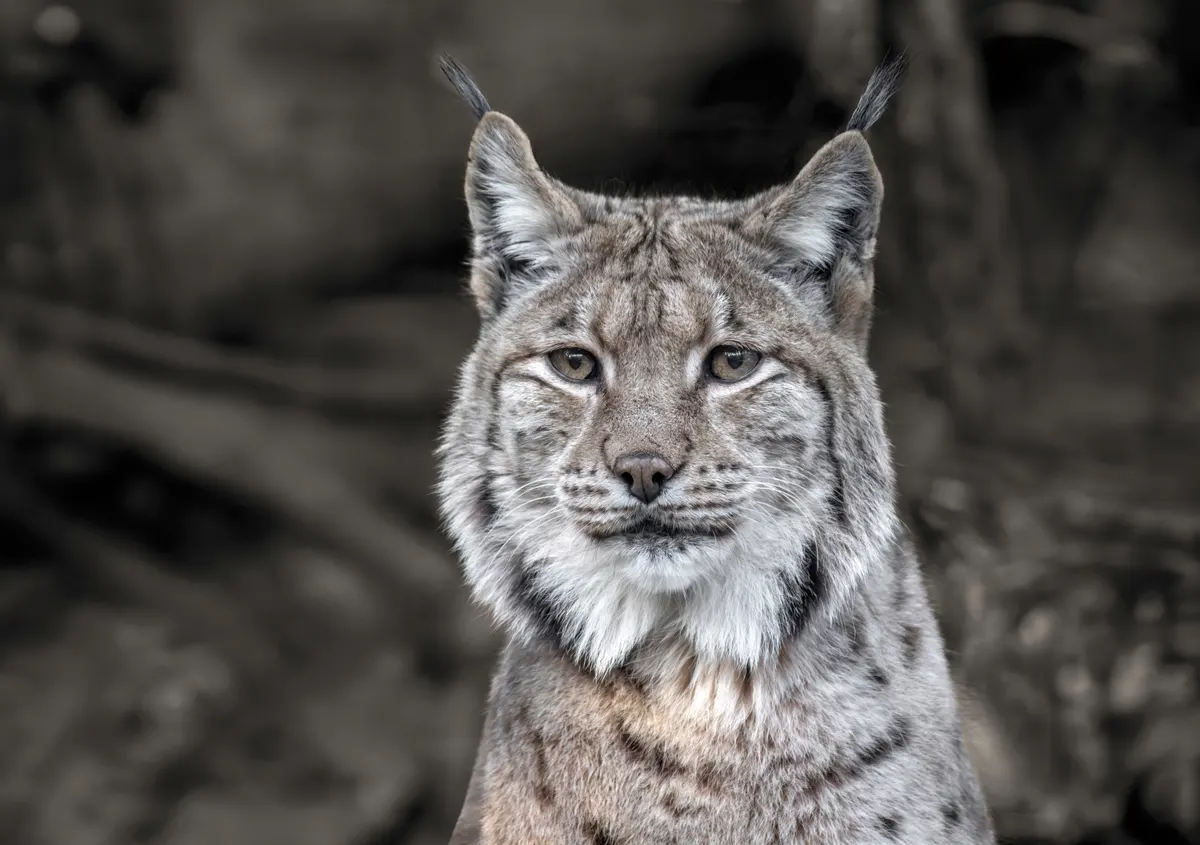
Ear tufts are the feature people reach for first and the one that misleads most often. A Eurasian lynx's tufts can approach 2 inches — nearly 5 cm — while a bobcat's are generally shorter.
But tuft length varies between individuals, changes with viewing angle, and moves in wind. Coat colour and spotting also vary widely in both species. Tail markings, proportions, tracks, and location are all stronger evidence than tufts.
Roe deer against rabbits
Prey size creates the real ecological difference. Eurasian lynx commonly hunt roe deer and red deer alongside hares, rabbits, rodents, birds, and sometimes foxes. At 40–80 pounds, a lynx can regularly kill prey larger than itself, may take a deer every few days, and caches leftovers under snow or leaves.
Bobcats concentrate on rabbits, hares, mice, squirrels, birds, and reptiles. They can take deer fawns, weakened deer, or occasionally an adult deer, but small mammals are the foundation. Both species may cover a carcass and return to feed.
Local availability still shifts the picture. A lynx in an area with few deer relies more on hares, while a bobcat's menu moves among cottontails, jackrabbits, rodents, birds, and reptiles across North America.
The same hunt, executed alone
Both normally hunt alone and hold territories marked with scent and scrapes. Lynx activity often peaks around dawn and dusk with night hunting common; bobcats are frequently crepuscular or nocturnal but shift schedule according to prey and human disturbance.
The hunting sequence is nearly identical: stay concealed, approach quietly, freeze when the prey becomes alert, finish with a short pounce or rush. Neither is built for a long open chase. A bobcat can leap more than 10 feet onto prey, and its tracks show four toes with no claw marks when the claws are retracted.
Mothers of both species raise kittens without help from a male and use secluded dens in the early weeks. Wolves can kill either cat or displace it from food, and both avoid confrontation with larger predators and with people.
Boreal forest against chaparral and swamp edge
Eurasian lynx are tied to boreal, temperate, mixed, and mountain forest that provides stalking cover and connected travel routes. They use forest-steppe and broken highland woodland too, but open treeless country offers little concealment.
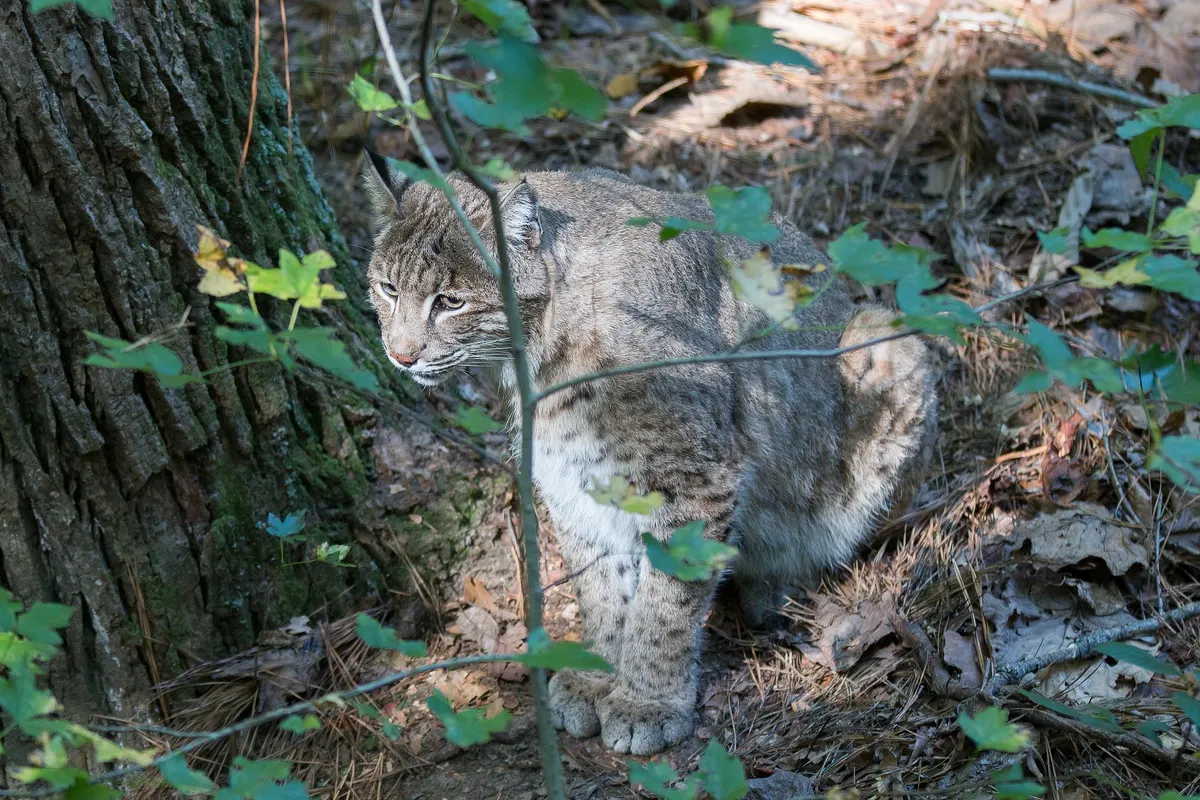
Bobcats use a wider range of warmer and more fragmented environments: temperate forest, woodland, chaparral, desert scrub, rocky slopes, and swamp edges. They often hunt along boundaries — a meadow beside a tree line, a wetland margin against dense cover.
The practical distinction is not forest against non-forest, since both use woodland. It is a larger, long-legged Eurasian species with prominent tufts and a fully black tail tip, against a smaller North American cat adapted to forest, scrub, wetland, and rocky country. Both are listed as Least Concern with stable trends.