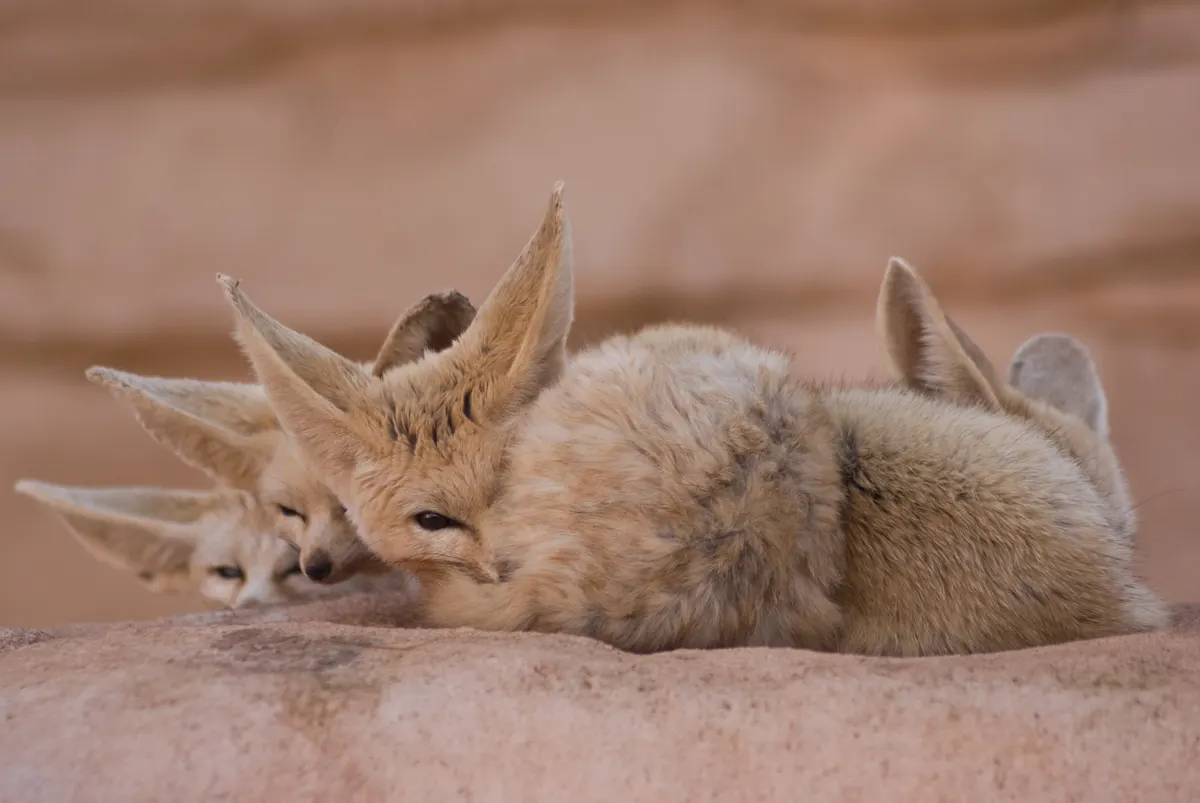
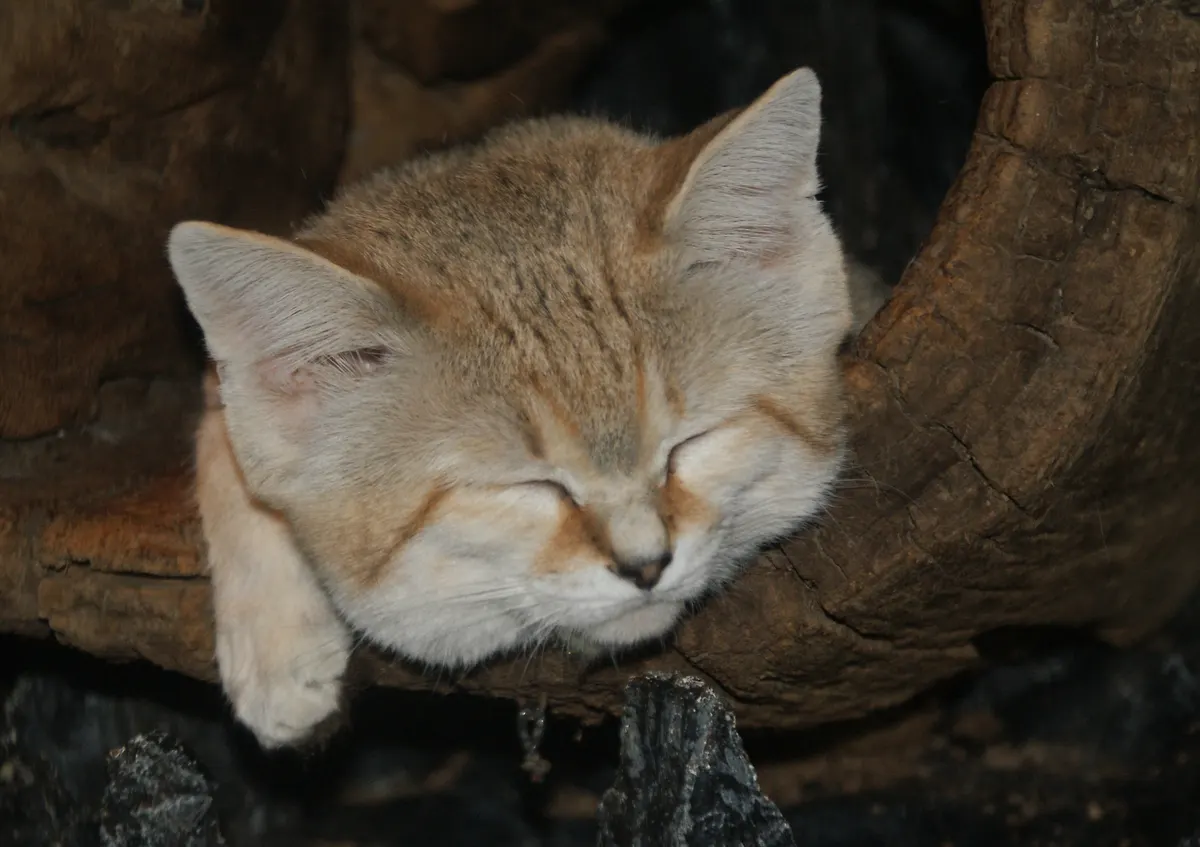
Sand cat with pale sandy fur and large ears
A sand cat (Felis margarita), a small pale desert cat with a broad head and large ears.
MammaliaLeast Concern

Sand Cat Facts

Sand cats leave almost no tracks in the desert because of their furry paws.

The sand cat is a small wild cat adapted to desert life. Its thick fur, furry paws, and nocturnal habits help it hunt rodents in some of the driest places on Earth.

By · Updated

Quick Facts

Sand Cat at a glance

Felis margaritaCarnivoraFelidae

About their home

Kind of animal

Mammalia

Where they live

What they eat

How safe?

Least Concern

Size and speed

How heavy

3 pounds – 7 pounds

How long

15 inches – 20 inches

How fast

Quick sprints when ambushing prey

Lifespan

About 13 years

Core article

Sand Cat: ecology and life history

A closer look at habitat, diet, behavior, reproduction, and conservation.

Start here

Sand Cat

Pale as the desert sand and silent as a shadow, the sand cat (Felis margarita) is one of the world's smallest wild cats — and one of the best adapted to extreme aridity. This nocturnal carnivore of the Felidae family hunts rodents beneath starlit dunes from the Sahara to the deserts of Central Asia.

One of the World's Smallest Wild Cats

Sand cats are just 15 to 20 inches in body length and 3 to 7 pounds — smaller than most pet cats — in a pale sandy or grayish coat with faint leg stripes and tail rings for camouflage. Their most distinctive feature is the thick fur covering the soles of the feet: these "snowshoes" insulate against burning sand, muffle footsteps, and grip loose dunes. A broad, flattened head with large, low-set, wide-spaced ears and an enlarged ear chamber sharpens hearing for rodents scratching underground, dense underfur handles both freezing nights and daytime heat, and efficient kidneys concentrate urine to save water. Despite belonging to the same genus as the domestic cat, it is a distinct wild species with the hunting, space, and environmental needs of a desert predator — not a potential pet, and though its furry soles leave faint tracks, it is not literally trackless. Its desert adaptations parallel the fennec fox's big ears through entirely different anatomy.

Where Sand Cats Live

Sand cat resting on pale sand in desert terrain
Sand cats inhabit sandy and stony deserts from the Sahara through Arabia to Central Asia.

Sand cats inhabit desert and semi-desert across North Africa and Asia, from Morocco and the Western Sahara east through Algeria, Libya, and Egypt into the Arabian Peninsula, and on to Iran, Pakistan, and the deserts of Turkmenistan, Uzbekistan, and Kazakhstan. Contrary to the name, they use dunes, gravel plains, dry valleys, and rocky margins wherever soils allow digging and rodents live, generally avoiding bare shifting dunes that hold little prey. Their range is patchy, broken up by mountains, farmland, and settlements, and by day a cat shelters underground in a self-dug burrow or one enlarged from a gerbil's or fox's, where temperatures swing far less than the surface — essential for saving both water and energy.

What Sand Cats Eat

Sand cat crouched low while stalking prey in desert sand
They hunt rodents, birds, reptiles, and insects under cover of darkness.

Sand cats are strict carnivores centered on small desert rodents — gerbils, jerboas, and jirds — but also taking birds, reptiles, insects, and hares. They hunt at night by acute hearing, traveling slowly with frequent listening stops, then either digging vigorously to extract a burrowing rodent or waiting beside the burrow, with a low pounce shortening the final rush. They can survive on the moisture in their prey and rarely need to drink in the wild, though they will drink when water is available, and they often cover uneaten remains with sand to hide them from scavengers and return later.

Behavior: Solitary, Nocturnal, and Elusive

Sand cat with thick sandy coat adapted for desert life
Sand cats are mostly solitary, though females raise kittens alone in burrows.

Sand cats are solitary and territorial, males and females meeting only to breed and advertising themselves with scent marks, urine spraying, and an unusual bark-like mating call that carries across open ground. Most movement is after sunset — an individual may cover several kilometers a night — extending toward dawn or daylight in cold winter weather. Threatened, a sand cat crouches flat or digs into the sand until only its eyes show; its pale coat and low posture make stillness a better defense than running across the open. Eagles, jackals, large snakes, and free-ranging dogs prey on them, and around roads and camps artificial light and traffic can strip away the concealment it depends on.

Life Cycle: Kittens Raised in a Burrow

Young sand cat kitten with pale fur in desert setting
Kittens are born in burrows and stay hidden from predators for their first weeks.

Breeding timing follows local climate — winter or early spring in the Sahara, later in Central Asia — and after a gestation of 59 to 67 days the female bears two to four kittens in a burrow, born blind and helpless with eyes opening at about two weeks. She raises them alone, moving them between burrows if disturbed and bringing prey until they can hunt; kittens start solid food at six to eight weeks and disperse after several months. Sand cats live about 13 years in the wild, though survival and age at independence are poorly known because wild litters are so hard to observe.

Conservation: Least Concern but Hard to Count

Sand cat in arid habitat within its desert range in Israel
Populations persist in scattered desert regions, though they are rarely seen in the wild.

The sand cat is Least Concern globally, but its secretive, nocturnal habits make it very hard to census. Threats include habitat degradation from livestock grazing and desert road building, prey loss from rodent-poisoning campaigns (which can also poison the cats), capture for the illegal pet trade, and disease or pursuit from domestic and feral dogs and cats near settlements. The biggest conservation obstacle is simply incomplete information — faint tracks, wide nightly movements, and low densities defeat ordinary counts, so camera traps, scat genetics, and GPS collars now do the work, and protecting connected desert habitat and managing pest control help even where no exact population figure exists.

References and Authoritative Sources

Sand Cat: classification and fun facts

Classification

Scientific Taxonomy
  1. Kingdom

    Animalia

  2. Phylum

    Chordata

  3. Class

    Mammalia

  4. Order

    Carnivora

  5. Family

    Felidae

  6. Genus

    Felis

  7. Species

    F. margarita

Did You Know?

Fun Facts

1

Sand cats leave almost no tracks in the desert because of their furry paws.

2

They can dig rapidly to hide in sand when threatened.

3

Sand cats bark like small dogs when communicating.

4

They tolerate extreme desert temperatures from freezing nights to scorching days.

5

Unlike most cats, sand cats may close their eyes outdoors in daylight to reduce glare.

6

They get most of their water from prey and rarely need to drink.

Common Questions

FAQ about Sand Cat

Select a question to reveal the answer.

What is a sand cat?

A sand cat is a small wild cat with pale fur and furry paws, specialized for living in sandy deserts from the Sahara to Central Asia.

Where do sand cats live?

Sand cats live in desert habitats across North Africa, the Middle East, and Central Asia, including the Sahara and Arabian Desert.

What do sand cats eat?

Sand cats are carnivores that hunt rodents, birds, reptiles, and insects at night in the desert.

How do sand cats survive in the desert?

Thick fur insulates them from heat and cold, furry paws protect against hot sand, and they get moisture from prey instead of drinking often.

Are sand cats the same as house cats?

Sand cats belong to the same genus *Felis* as the domestic cat but are wild desert specialists with different adaptations.

Are sand cats endangered?

Sand cats are listed as Least Concern, but habitat loss and reduced prey can threaten local populations.