Jaguar Facts
"A jaguar's jaw is so strong it can bite through a turtle's shell."
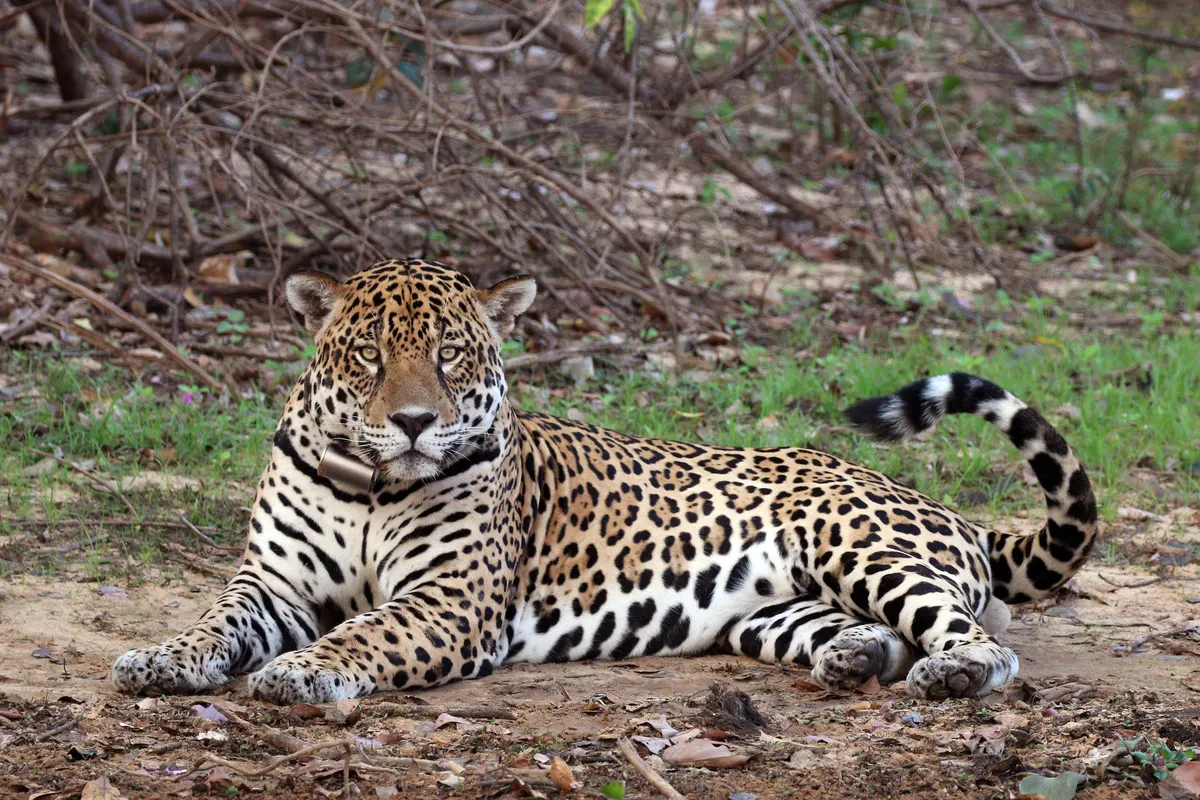
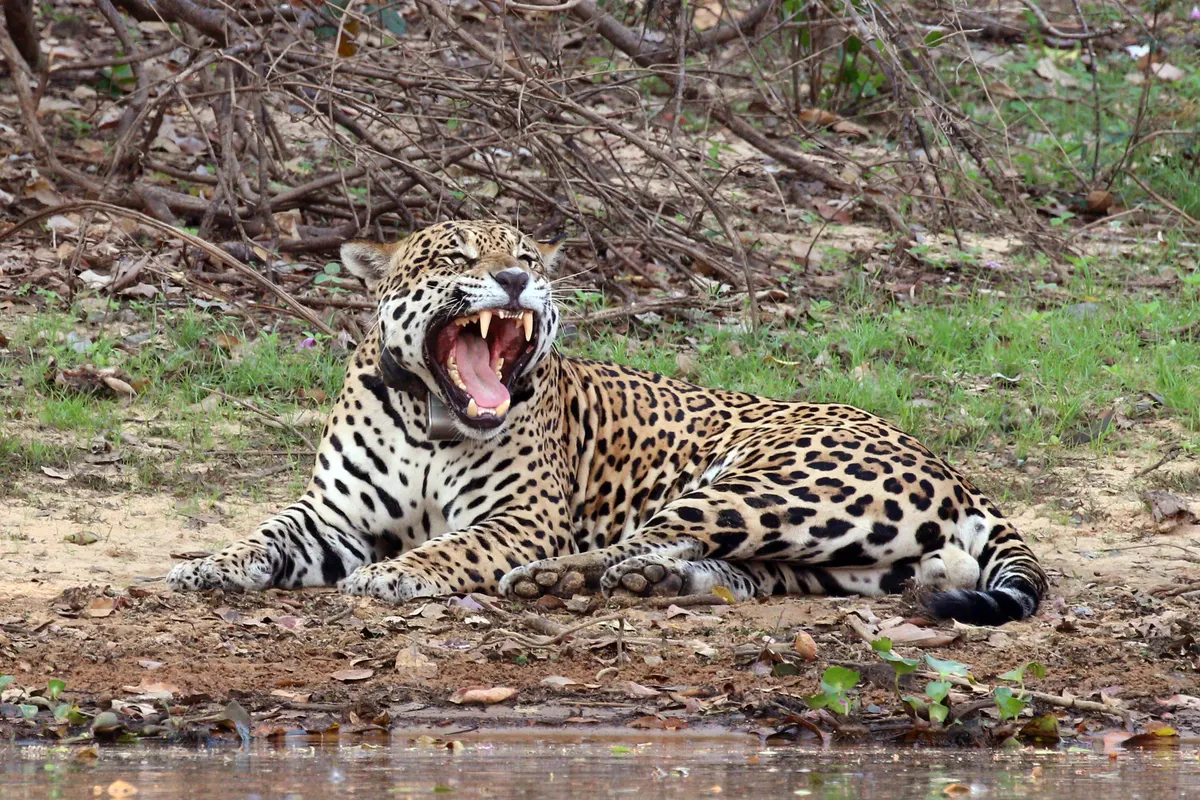
Jaguars are the largest wild cats in the Americas and powerful hunters that use stealth, strong jaws, and spotted coats to ambush prey in tropical forests...
Loading page content

"A jaguar's jaw is so strong it can bite through a turtle's shell."
Jaguars are the largest wild cats in the Americas and powerful hunters that use stealth, strong jaws, and spotted coats to ambush prey in tropical forests...
Explore jaguars through photos organized for learning, image search, and classroom observation—from cubs and rosette patterns to hunting in South American wetlands.
Click any photo to view it larger. 8 images available.
Core article
Habitat, diet, behavior, and more — everything on one page.
The jaguar (Panthera onca) is a formidable force of nature. As the largest wild cat in the Americas and the third largest in the world, this muscular, broad-headed feline dominates the dense canopies and winding rivers of the Neotropics. Unlike most large cats that avoid water, the jaguar actively seeks out aquatic environments, possessing a unique set of evolutionary adaptations that make it an unparalleled ambush predator. With jaws capable of piercing the skulls of its prey and a beautifully camouflaged rosette coat, the jaguar is a master of stealth and strength.
The scientific classification of the jaguar places it firmly within the lineage of the world's most iconic big cats.
The genus Panthera includes the lion, tiger, leopard, and snow leopard. The jaguar shares a common ancestor with these formidable carnivores, having crossed the Bering Land Bridge into the Americas during the Pleistocene epoch. Over millions of years, the jaguar evolved specifically to thrive in the dense rainforests and wetlands of the Western Hemisphere, developing a robust, stocky build rather than the slender, cursorial frame seen in cheetahs or African leopards.
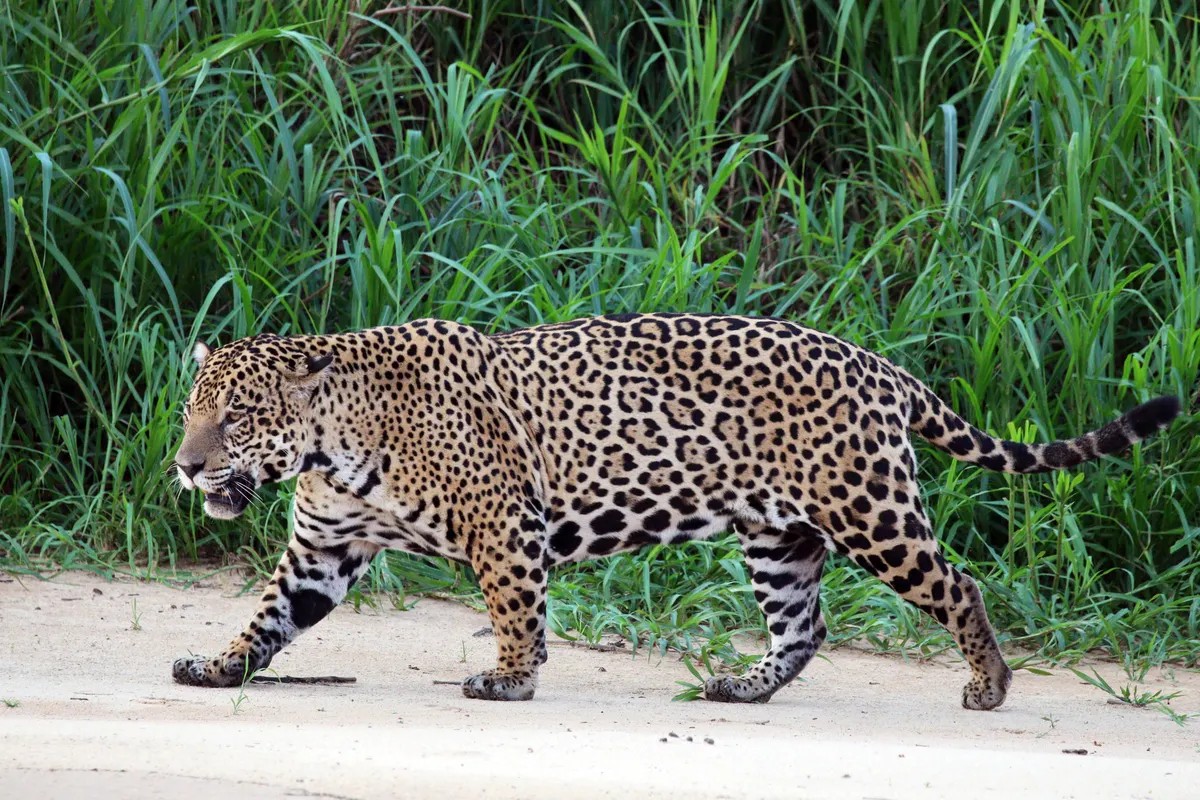
Jaguars are built for raw power rather than sustained speed. They exhibit significant sexual dimorphism, with males generally being 10 to 20 percent larger than females. A mature jaguar ranges from 3.8 to 6 feet in length (excluding the tail) and stands between 2 and 2.5 feet at the shoulder. Their weight varies dramatically depending on the region, spanning from 100 to 250 pounds, with the largest individuals found in the vast floodplains of the Pantanal.
Their physical adaptations are specifically tailored to their environment and hunting style:

Historically, the jaguar's range extended from the southern United States all the way to the southern tip of Argentina. Today, their distribution has been dramatically reduced. The largest contiguous population resides within the Amazon Basin, particularly in Brazil, Bolivia, and Peru.
Jaguars are highly adaptable but exhibit a strong preference for dense cover and proximity to water. Their primary biomes include:

As an obligate carnivore and an apex predator, the jaguar's diet is incredibly diverse, encompassing over 80 different species. Their primary prey includes:
The jaguar's hunting strategy relies heavily on stealth and ambush rather than prolonged chases. While they can reach speeds up to 50 mph in short bursts, their endurance is relatively low. They utilize the dense undergrowth to stalk within striking distance before launching a sudden, lethal attack.
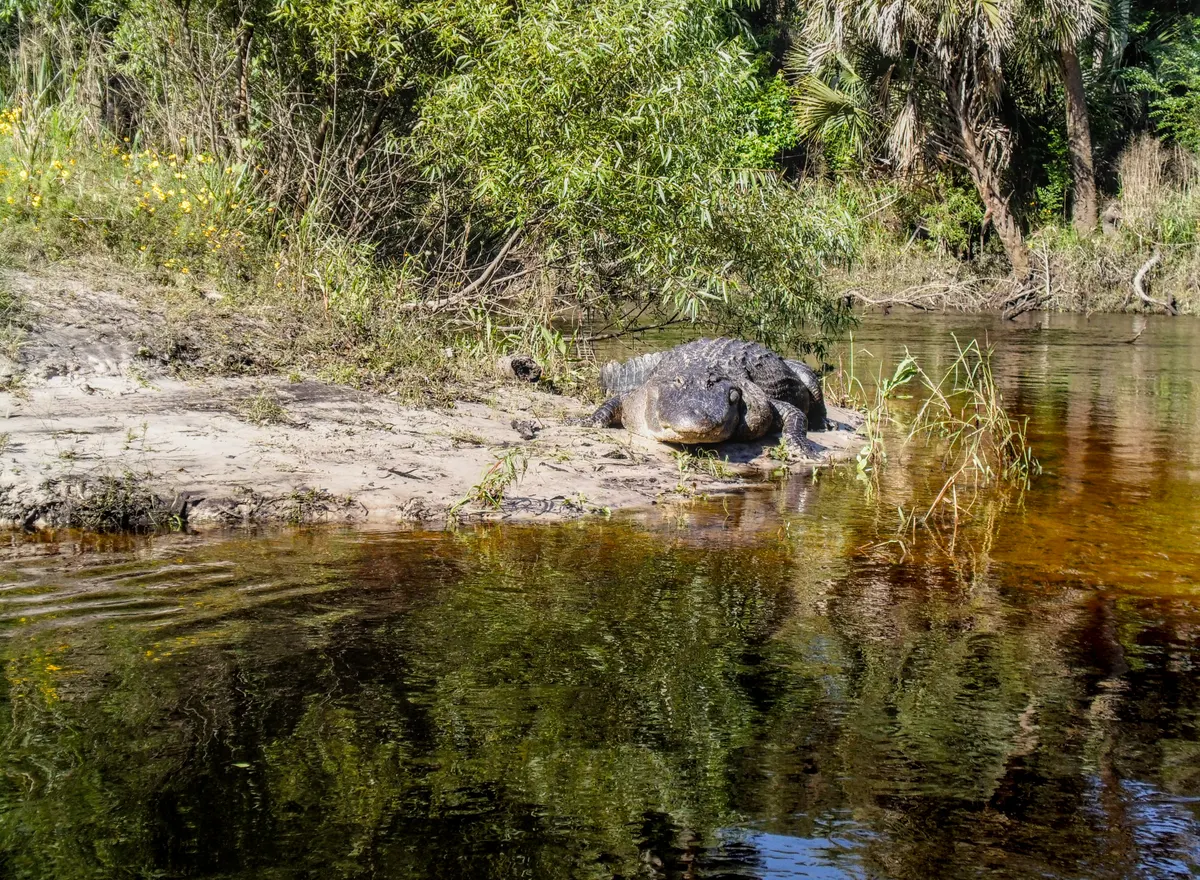
Their killing technique is unique among big cats. While lions and tigers typically dispatch prey via a suffocating throat bite, the jaguar often employs a fatal bite directly through the temporal bones of the skull, piercing the brain. When hunting reptiles like caimans, they often bite through the cervical vertebrae, instantly paralyzing their heavily armored prey.

Jaguars are solitary, territorial animals. They define massive home ranges that can span up to 50 square miles, depending on prey density. Males maintain territories that overlap with the ranges of several females but aggressively defend their land against competing males.
Communication and territorial defense involve extensive scent marking, scraping the ground, and vocalizations. The jaguar does not purr; instead, it issues a series of deep, guttural grunts and roars—often described as sounding like a wood saw—to warn rivals and attract mates.
Aggressive encounters between males can be brutal and sometimes fatal, typically resulting from territorial disputes or competition over a receptive female. However, direct physical confrontation is often a last resort, mitigated by avoidance behaviors mediated through scent marks.

The mating system of the jaguar is polygynous. There is no set breeding season; reproduction can occur year-round, though it often peaks during periods of high prey availability.
(Population and conservation trend data sourced from the IUCN Red List of Threatened Species)
The International Union for Conservation of Nature (IUCN) classifies the jaguar as Near Threatened, with a steadily decreasing population trend.
The primary threats facing jaguars include:
A jaguar's jaw is so strong it can bite through a turtle's shell.
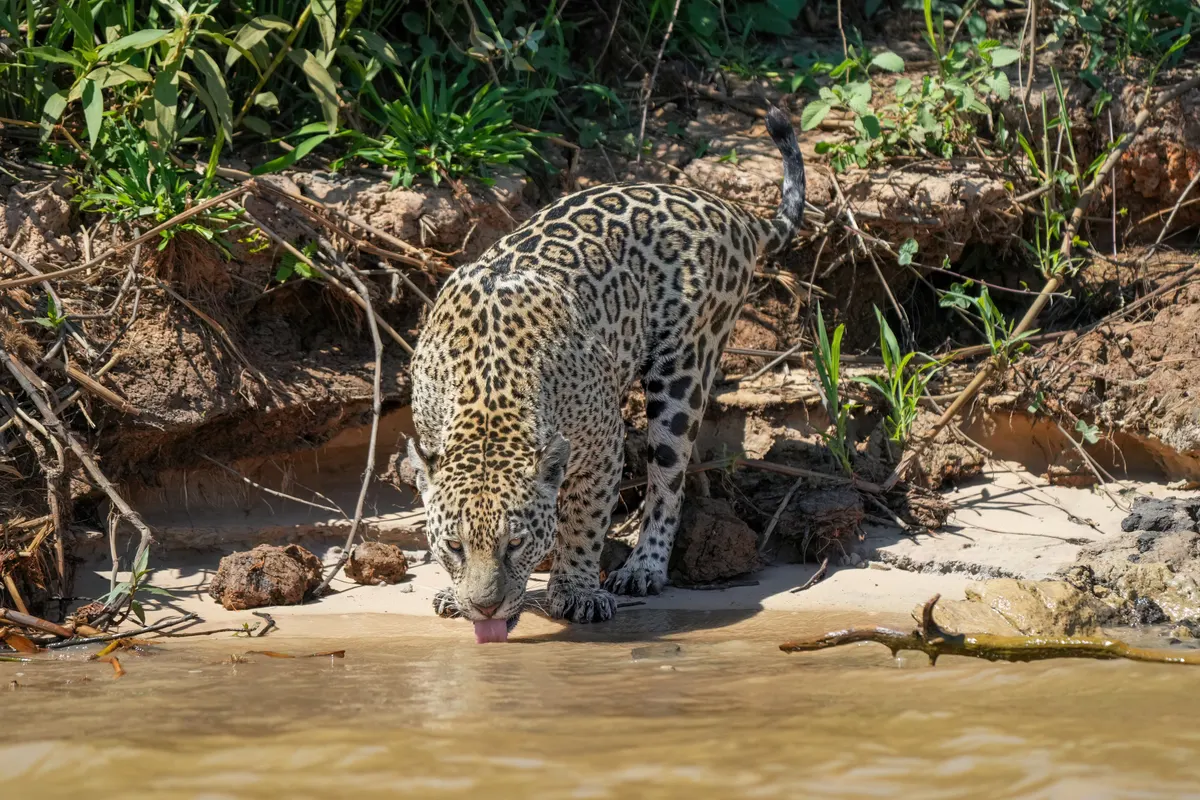
Jaguars are excellent swimmers and often hunt fish and caiman in rivers.
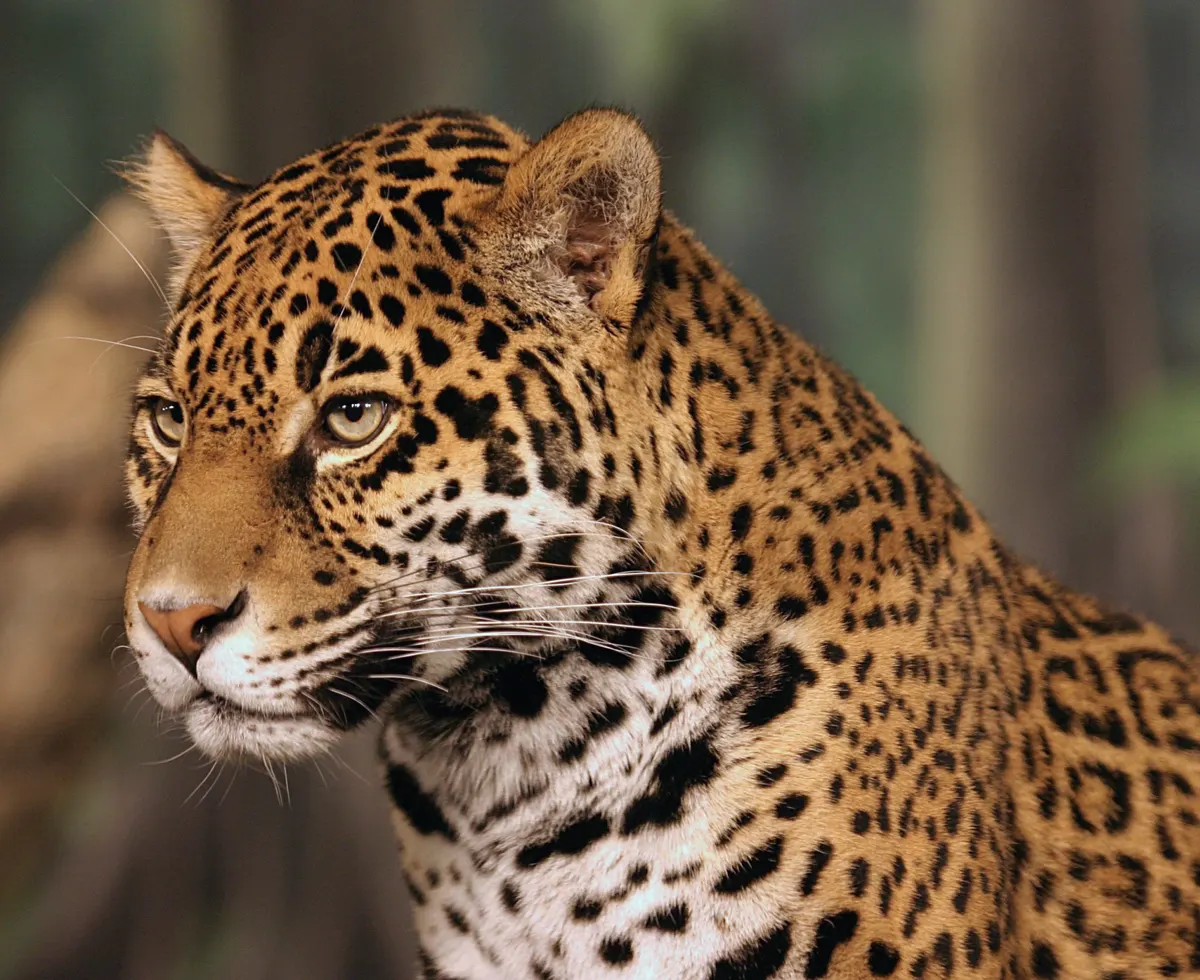
Each jaguar has a unique rosette pattern, like a fingerprint.
The word jaguar comes from a native word meaning 'one who kills with one leap'.
Black jaguars are not a different species—they are the same animal with darker pigment.
Jaguars can roar, unlike most other spotted cats.
Select a question to reveal the answer.
A jaguar is the largest wild cat in the Americas and the third largest cat in the world. It has a spotted coat, powerful jaws, and lives mainly in tropical forests and wetlands.
Jaguars are found mostly in South and Central America. The Amazon Basin in Brazil holds the largest jaguar population. Small numbers also survive in Mexico and the southwestern United States.
Jaguars eat a wide range of prey including capybara, deer, peccary, caiman, fish, and turtles. Their powerful jaws allow them to bite through hard shells and thick hides.
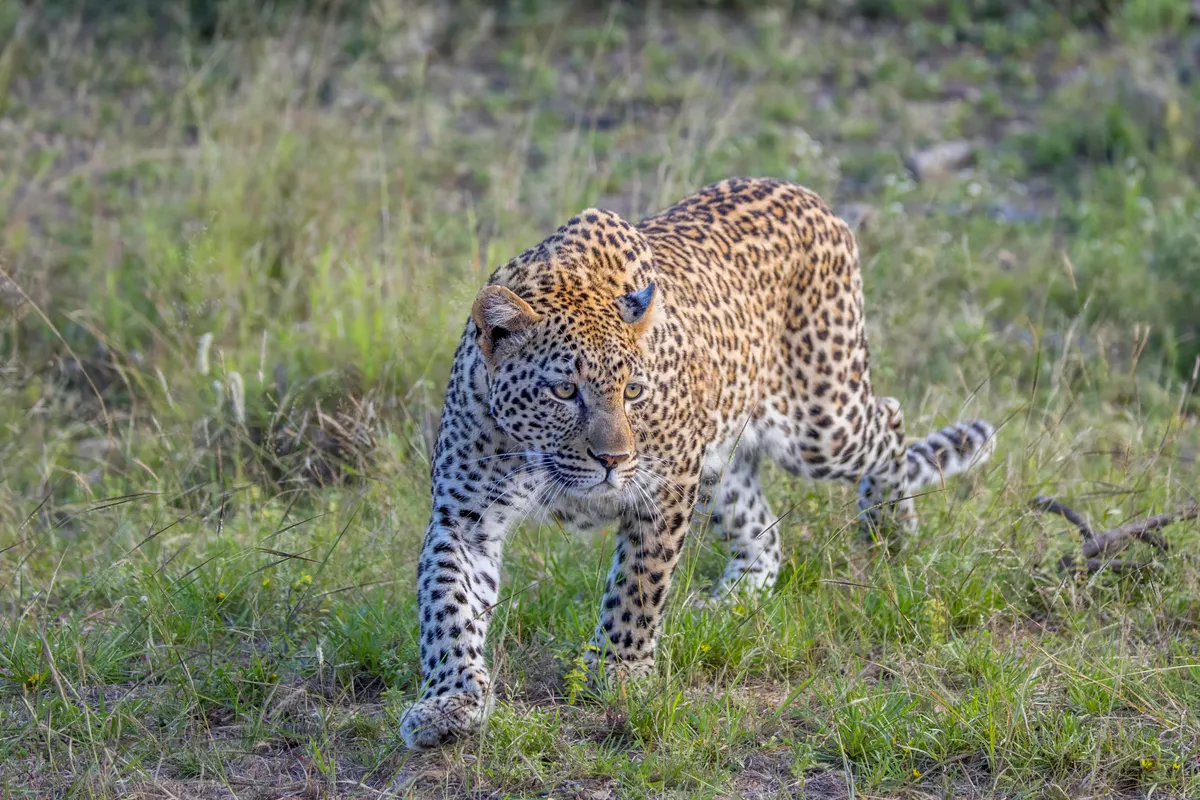
Jaguars are bigger and stockier than leopards. A jaguar's rosette spots have small dots inside them, while a leopard's rosettes are usually plain. Jaguars also live in the Americas while leopards live in Africa and Asia.
Yes. Jaguars love water and are strong swimmers. They often wade into rivers and lakes to hunt fish, caiman, and turtles—something most other large cats avoid.
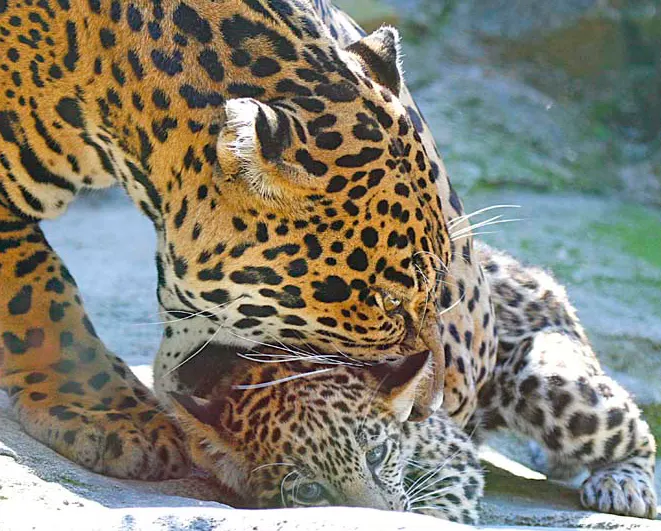
A baby jaguar is called a cub. Cubs are born with their eyes closed and stay with their mother for up to two years while learning to hunt.
Jaguars are listed as Near Threatened. Deforestation, illegal hunting, and conflict with cattle ranchers have reduced their range significantly over the past century.
Yes, jaguars can roar. This separates them from smaller spotted cats like cheetahs and ocelots. A jaguar's roar sounds like a deep, repetitive cough.
The spotted coat helps jaguars blend into dappled forest light. Each jaguar has a unique rosette pattern that helps researchers identify individual animals in the wild.
A black jaguar is not a different species. It is the same jaguar with a gene that causes very dark pigmentation, called melanism. The spots are still visible in bright light.