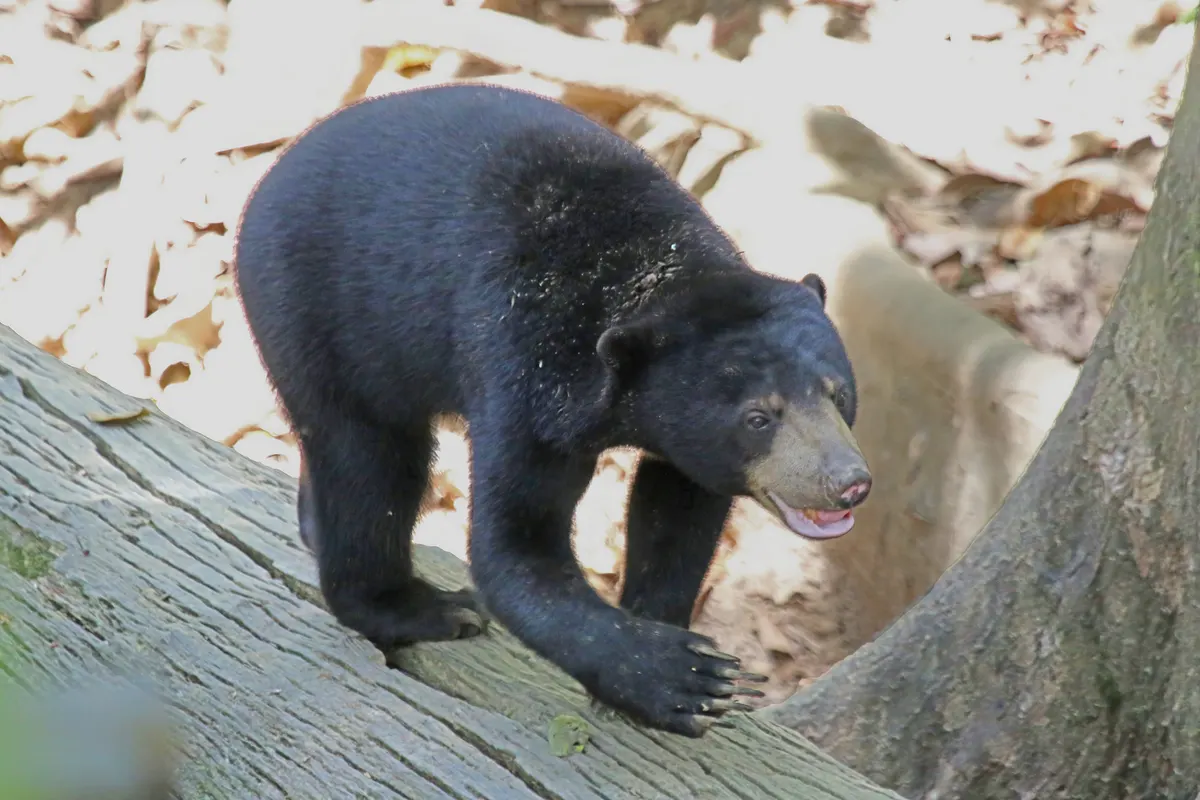
Sun bears are small by ursine standards. Adults stand about 70 cm at the shoulder, measure roughly 100 to 140 cm from head to body, and weigh between about 25 and 65 kg. Males are typically 10 to 20 percent larger than females, but the difference is modest compared with some other bears. The coat is short and sleek, usually jet black, an adaptation to a hot, humid climate where a heavy pelt would be a liability.
The most recognizable feature is the chest patch: a pale orange, ochre, or cream marking, often U-shaped but sometimes broken or nearly circular. The pattern varies between individuals and is the origin of the common name, as it is frequently likened to a rising or setting sun.
Two features stand out as foraging tools. The claws are long, heavy, and strongly curved, giving the bear a firm grip on bark and the leverage to tear open rotting logs and tree trunks. The tongue is exceptionally long, reported at up to roughly 20 to 25 cm, the longest of any bear, and is used to reach into crevices and bee nests to draw out honey, larvae, and insects. Loose skin around the neck is often cited as a further defense, allowing a bear that is grabbed from behind to turn within its own hide.