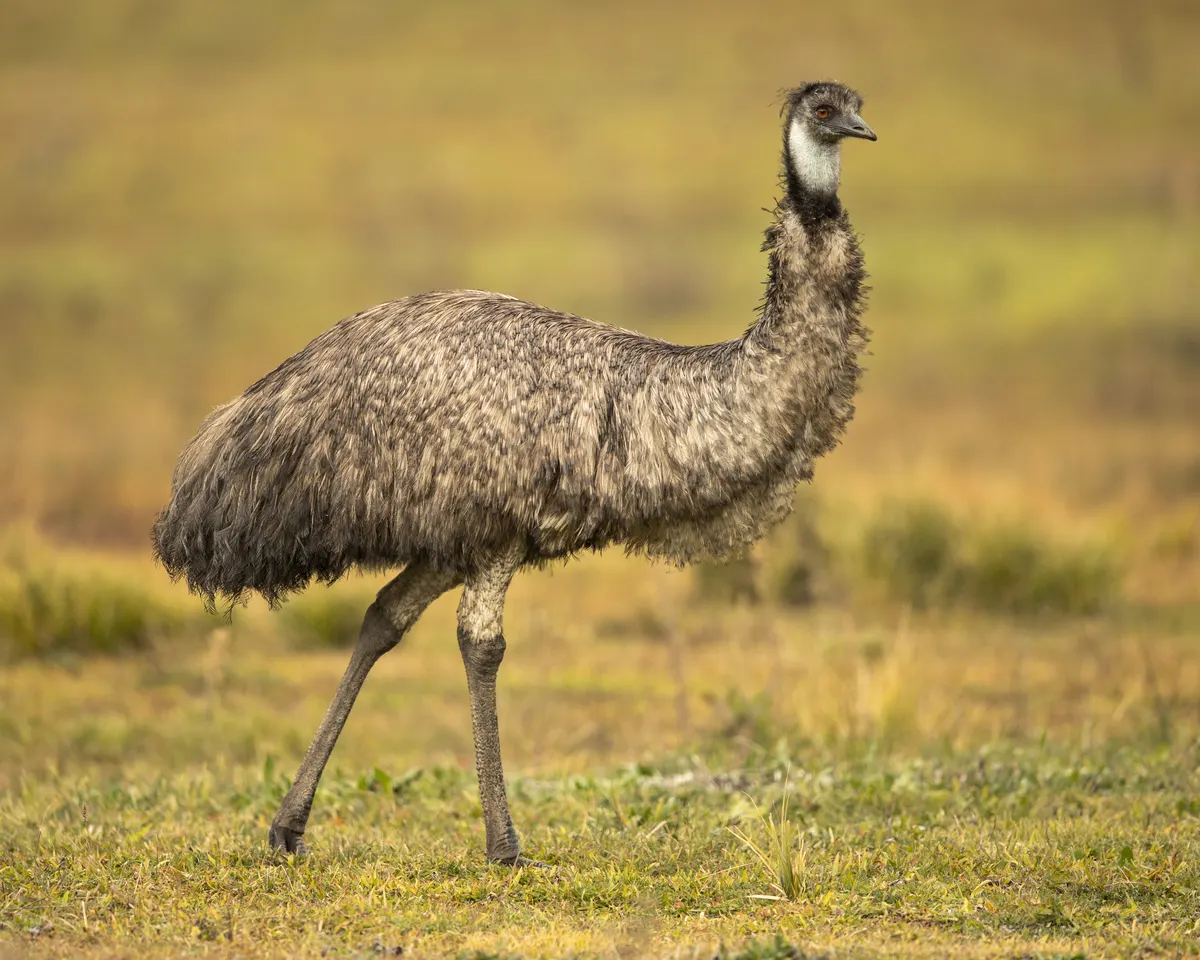
The IUCN Red List classifies the emu as Least Concern, with a population trend assessed as stable. The species has a very large range across Australia and remains common in many areas, and the mainland population is thought to be at least as large now as before European settlement.
That broad status does not mean every population is secure. Some local and island populations have declined or disappeared, and pressures such as habitat clearing, fencing that blocks movement, vehicle collisions, and introduced predators can affect emus in particular districts. Foxes, feral pigs, dingoes, and monitor lizards take eggs and chicks, while dingoes and wedge-tailed eagles are the main predators of larger birds.
The emu's history with people includes conflict as well as symbolism. During the 1932 event known as the "Emu War" in Western Australia, soldiers were sent with machine guns to reduce emus that were damaging crops and fences, with limited effect. Today the emu is protected in Australia and is also farmed for meat, oil, and leather in several countries.