Grizzly Bear Facts
"Grizzly bears are a North American form of brown bear."
Grizzly bears are huge North American brown bears that live in forests and mountains. They eat plants, fish, and small animals, and spend winters in dens.
Loading page content

"Grizzly bears are a North American form of brown bear."
Grizzly bears are huge North American brown bears that live in forests and mountains. They eat plants, fish, and small animals, and spend winters in dens.
Explore brown bear photos organized for learning and classroom observation.
Click any photo to view it larger. 8 images available.
Core article
Habitat, diet, behavior, and more — everything on one page.
Commanding the rugged, untamed landscapes of North America's forests and mountainous terrains, the grizzly bear (Ursus arctos horribilis) stands as an enduring symbol of wilderness and raw biological power. Revered by indigenous cultures and feared by early settlers, this massive omnivore is a masterpiece of evolutionary adaptability, capable of thriving in diverse, harsh environments from dense temperate forests to exposed alpine tundras. Unlike the purely carnivorous predators of the wild, the grizzly bear represents a complex ecological duality. It possesses the sheer strength and predatory adaptations to take down large ungulates, yet the vast majority of its time is spent delicately foraging for tiny berries, digging for roots, and excavating insect mounds. Understanding the grizzly bear is to understand a keystone species whose behaviors—from soil aeration during foraging to the massive transfer of marine nutrients to terrestrial forests during the salmon run—fundamentally shape the ecosystems it inhabits.
The scientific classification of the grizzly bear places it firmly within the expansive evolutionary lineage of terrestrial carnivorans. It belongs to the kingdom Animalia, phylum Chordata, class Mammalia, and the order Carnivora. Within this order, it is categorized in the family Ursidae (the bears). The grizzly bear is not a distinct species itself, but rather a North American subspecies of the widely distributed brown bear (Ursus arctos). Its full taxonomic designation is Ursus arctos horribilis, a slightly dramatic nomenclature bestowed by early naturalists that translates to "terrifying bear."
Evolutionary evidence suggests that the ancestral brown bears migrated from Eurasia to North America across the Bering Land Bridge (Beringia) during the Pleistocene epoch, approximately 100,000 to 50,000 years ago. As the continental ice sheets retreated, these highly adaptable bears dispersed southward, adapting to the diverse ecological niches of the North American continent. The grizzly bear evolved distinct morphological characteristics compared to its coastal cousins, prioritizing adaptations suited for digging and foraging in hardened inland soils over the massive aquatic specialization seen in strictly coastal populations.
The physical structure of a grizzly bear is a testament to immense strength and rugged endurance. They are massive creatures, with significant sexual dimorphism; adult males (boars) are substantially larger than females (sows). A mature male typically stands 3 to 4 feet at the shoulder and can measure between 5 to 8 feet in total body length. While their weight fluctuates dramatically depending on the season, males generally range from 400 to over 800 pounds, whereas females usually weigh between 300 and 600 pounds.
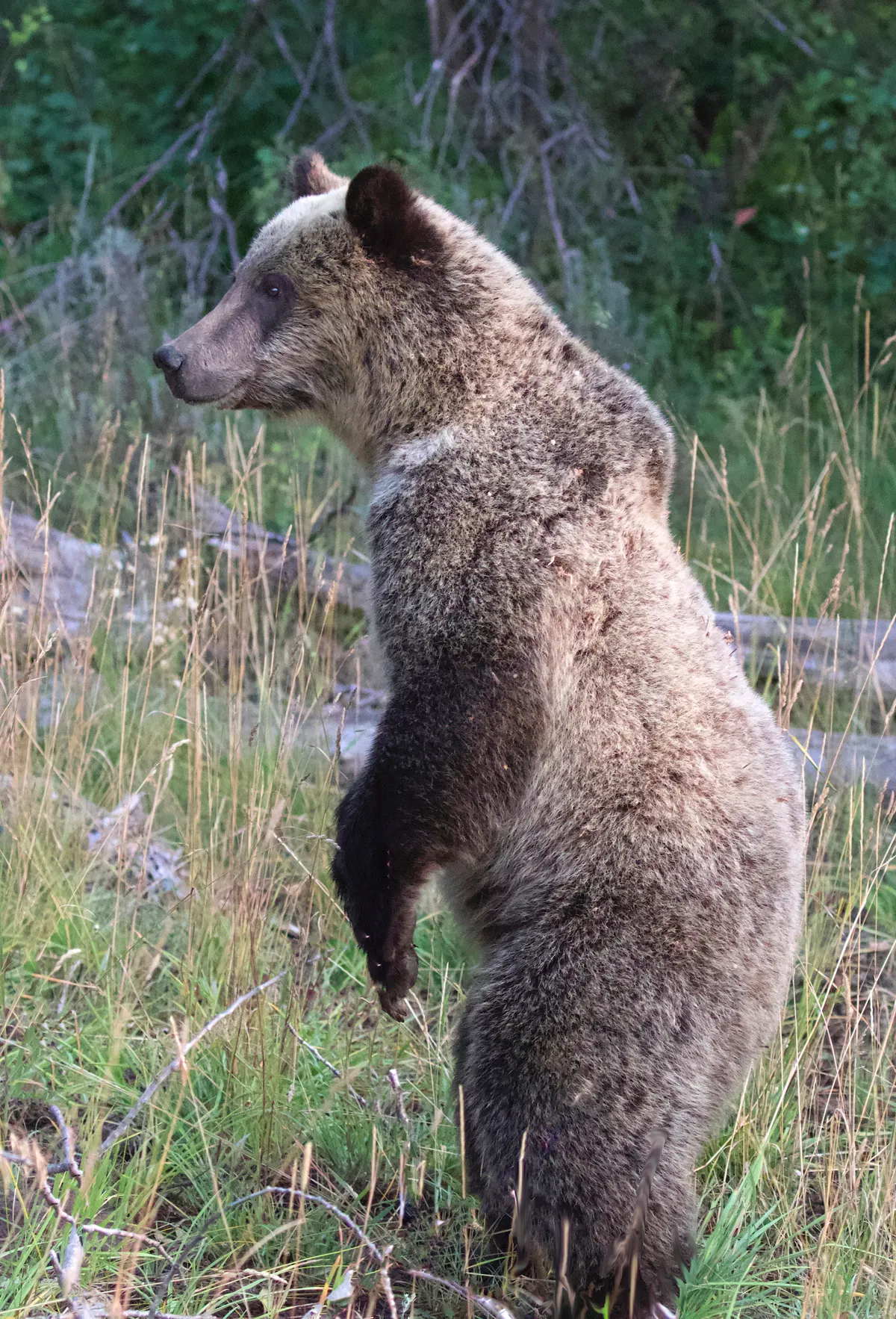
One of the most defining anatomical features of the grizzly bear is the pronounced, muscular hump located on its shoulders. This massive protuberance is not composed of fat, but rather highly developed deltoid muscles. These muscles power the bear's forelimbs, granting them the immense digging strength required to excavate roots, unearth burrowing mammals, and tear apart rotting logs in search of insects. Extending from their front paws are formidable, non-retractable claws that can reach up to 4 inches in length, perfectly designed for soil excavation rather than climbing.
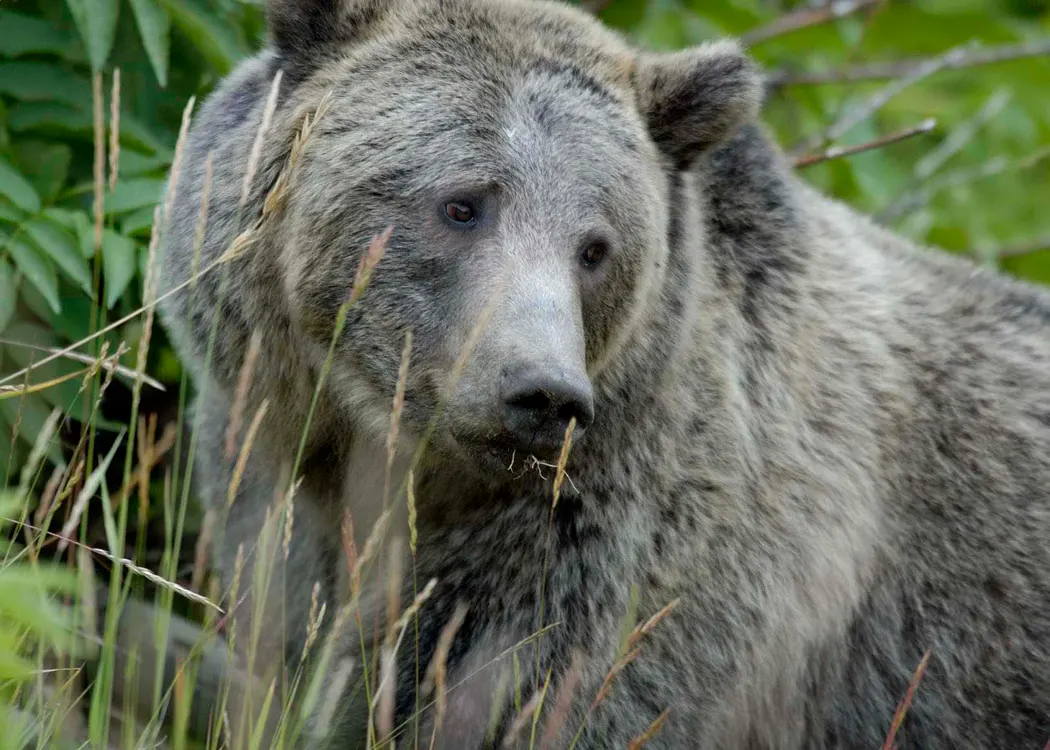
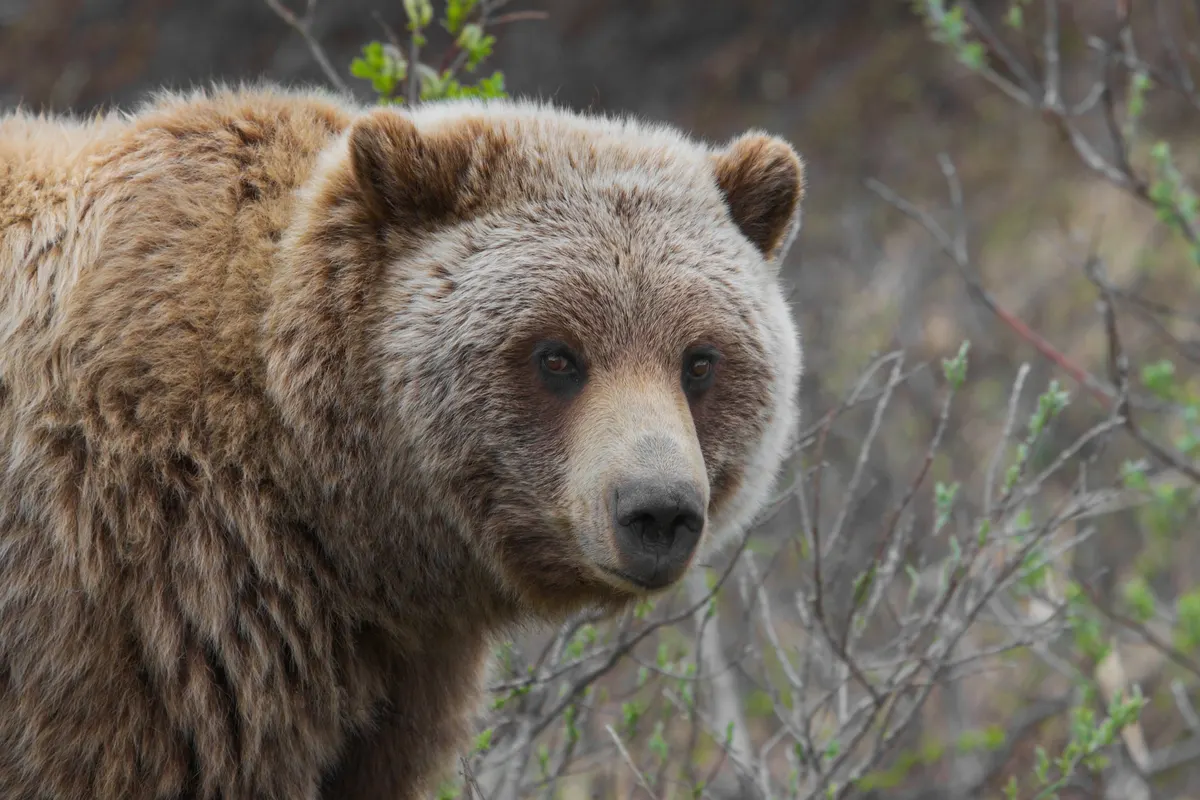
The coat of a grizzly bear is famously thick and variable in color, ranging from blond and reddish-brown to dark brown and nearly black. The tips of the guard hairs on their back and shoulders often have a lighter, silvery or grizzled appearance, which gives the animal its common name. Beneath this coarse outer layer lies a dense, insulating undercoat that protects them against the biting cold of their alpine and tundra habitats. Despite their massive bulk, grizzlies are incredibly athletic, capable of reaching speeds up to 35 mph in short, explosive bursts when pursuing prey or neutralizing a threat.

Historically, the grizzly bear boasted a vast geographic range that encompassed much of western North America, extending from the Arctic Ocean in Alaska down into central Mexico, and eastward onto the Great Plains. However, relentless human expansion and eradication campaigns over the past two centuries have drastically reduced their historical territory by nearly 98% in the contiguous United States.
Today, stable and robust populations of grizzly bears are primarily confined to Alaska and the expansive wilderness areas of western Canada (British Columbia, Alberta, the Yukon, and the Northwest Territories). In the lower 48 states, fragmented remnant populations persist in highly protected strongholds, notably the Greater Yellowstone Ecosystem, the Northern Continental Divide Ecosystem in Montana, and small pockets in Idaho and Washington.
Grizzly bears are remarkably versatile in their habitat requirements, navigating an array of complex biomes. They heavily utilize temperate and boreal forests for cover and foraging, but they also venture into high-elevation alpine meadows during the summer months to graze on nutrient-dense grasses. The open tundra is also a critical habitat in northern latitudes. They require vast, contiguous tracts of unfragmented wilderness to fulfill their expansive home range requirements, which they relentlessly patrol in search of highly dispersed seasonal food sources.

Despite their classification within the order Carnivora and their fearsome predatory reputation, grizzly bears are opportunistic omnivores, with vegetation comprising the vast majority—often 70% to 90%—of their diet. Their immense size necessitates the consumption of staggering caloric loads, driving them to spend the majority of their waking hours foraging.
Their diet is highly dynamic and deeply seasonal. Upon emerging from their winter dens in the spring, when other food sources are scarce, grizzlies rely heavily on scavenging winter-kill carrion and grazing on early-emerging grasses and sedges. They also utilize their massive shoulder hump and claws to aggressively dig for starchy roots and corms, such as the biscuitroot. During the summer, their focus shifts to foraging for massive quantities of insects, particularly army cutworm moths, which aggregate by the millions in alpine talus slopes, providing a critical, fat-rich food source.
The late summer and autumn mark the critical period of hyperphagia, a state of insatiable biological hunger where the bear must rapidly accumulate massive fat reserves for the upcoming winter. During this time, they gorge on berries (huckleberries, buffalo berries) and pine nuts. In coastal and riverine ecosystems, the annual salmon run represents a caloric bonanza. Grizzlies aggregate in significant numbers along shallow rivers, utilizing various specialized fishing techniques—such as pinning fish to the riverbed or catching leaping salmon in mid-air—to consume massive quantities of lipid-rich fish, discarding the less nutritious parts when the catch is abundant.

Grizzly bears are predominantly solitary animals, traversing vast home ranges independently. However, their social dynamics are not strictly antisocial; rather, they are structured around a rigid dominance hierarchy that fluidly activates when bears are forced to aggregate around concentrated food sources, such as salmon streams, rich berry patches, or large whale carcasses.
In these aggregations, large, mature males (boars) universally dominate, securing the most prime feeding locations. Adult females with cubs rank highly due to their intense, defensive aggression, while subadults and juveniles occupy the lowest rungs of the social ladder, forced to scavenge on the periphery. Communication to maintain this hierarchy is subtle but clear, relying heavily on chemical signaling via scent-marking trees with urine and bodily friction, as well as complex vocalizations and posturing, including jaw-popping, huffing, and aggressive bluff charging.
The gritty reality of their biological existence includes the grim phenomenon of infanticide. Large males will often kill the cubs of a female they encounter. This brutal biological strategy eliminates the offspring of rival males and forces the female to stop lactating, rapidly bringing her back into estrus so the dominant male can breed with her and propagate his own genetic line. Consequently, mother bears are hyper-vigilant and fiercely aggressive, actively avoiding areas frequented by large boars to protect their vulnerable young.

The reproductive cycle of the grizzly bear is characterized by an exceptionally slow rate, high maternal investment, and a fascinating biological mechanism known as delayed implantation. Mating occurs during the spring and early summer. However, the fertilized embryo does not immediately attach to the uterine wall. Instead, it enters a state of dormancy until late autumn. If the female has not acquired sufficient fat reserves during hyperphagia to sustain herself and a pregnancy through the winter, her body will reabsorb the embryo, ensuring her own survival.
If successful implantation occurs, gestation technically lasts only about 6 to 8 weeks. In the depths of winter, while sequestered in a hibernaculum (den), the mother gives birth to a remarkably tiny, altricial litter, usually consisting of 1 to 3 cubs. Newborn cubs are blind, nearly hairless, and weigh less than a pound—a stark contrast to their massive mother. They rely entirely on her rich, high-fat milk, growing rapidly in the safety of the den.
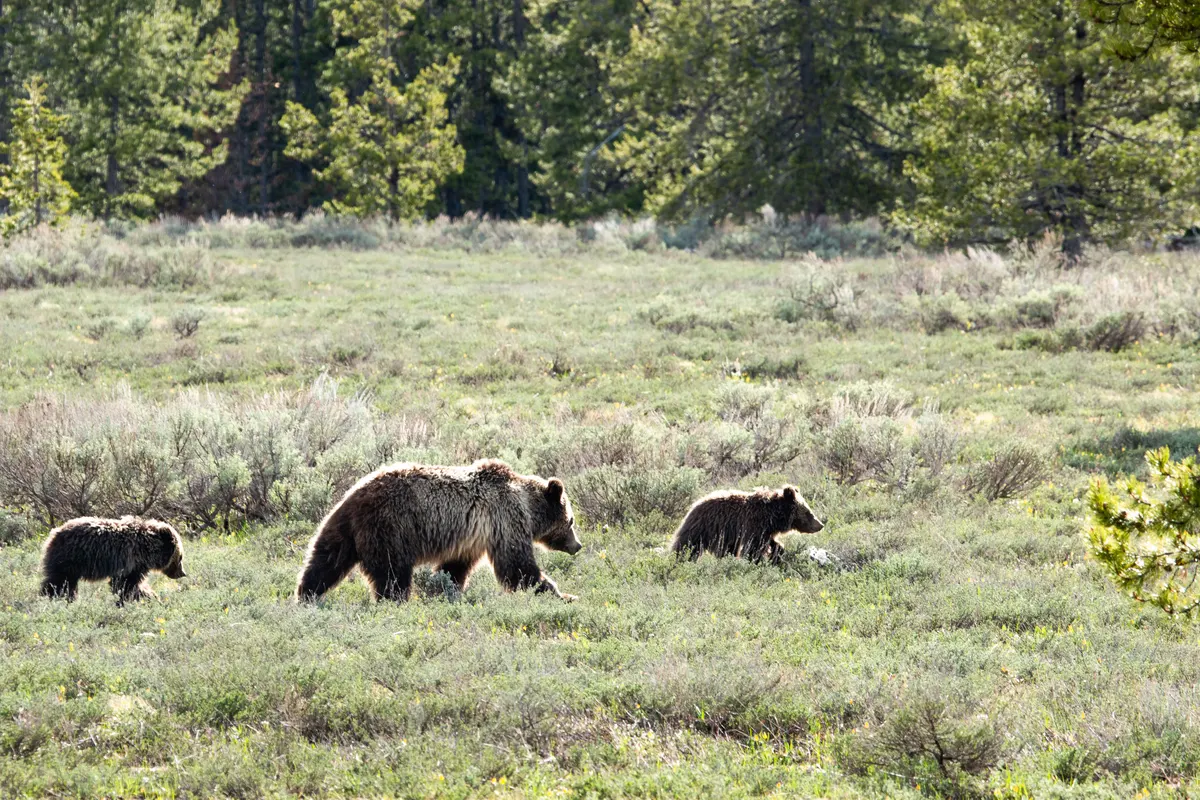
Upon emerging in the spring, the cubs are highly dependent on their mother for protection and education. They remain with her for an extensive period, typically 2.5 to 3.5 years, learning critical foraging techniques, migratory routes, and how to navigate the complex social hierarchy. Because of this extensive rearing period, female grizzlies only reproduce every 3 to 4 years. In the wild, grizzly bears typically live 20 to 25 years, though some individuals in highly protected environments or captivity can reach 30 years of age.
(Population and conservation trend data sourced from the IUCN Red List of Threatened Species)
Globally, the brown bear species is listed as Least Concern by the IUCN, owing to robust populations in Russia and parts of North America. However, when evaluating the specific North American grizzly bear populations, particularly in the contiguous United States, the conservation narrative is one of critical concern and intense management. They are currently listed as Threatened under the U.S. Endangered Species Act in the lower 48 states.
The primary threat to grizzly bear populations is the insidious encroachment of human development, which leads to habitat fragmentation and devastating human-bear conflicts. As roads, housing developments, and agricultural operations push deeper into wild spaces, bears lose access to crucial foraging corridors. Furthermore, bears that become habituated to human food sources—such as unsecured garbage, livestock, or agricultural attractants—inevitably come into conflict with humans. In these tragic scenarios, the bear is almost universally lethally removed by wildlife management agencies.
Climate change presents another looming existential threat, particularly through the degradation of critical food sources. The decimation of whitebark pine forests by the mountain pine beetle (exacerbated by warmer winters) severely impacts a major autumnal food source for inland grizzlies. Conservation efforts must focus fiercely on securing massive, interconnected habitat corridors, enforcing strict attractant management in bear country, and fostering human-bear coexistence to ensure this apex omnivore continues to roam the wild landscapes of North America.
Grizzly bears are a North American form of brown bear.
A grizzly's shoulder hump is muscle, not fat.
Grizzlies can smell food from miles away.
Cubs are born tiny during the mother's winter den sleep.
Grizzlies eat huge amounts of food before hibernation.
Despite their size, grizzlies can run faster than many horses in short bursts.
Select a question to reveal the answer.
A grizzly bear is a large North American brown bear known for its shoulder hump, long claws, and powerful build.
Grizzly bears live in forests, mountains, and open valleys in Alaska, western Canada, and parts of the northwestern United States.
Grizzlies are omnivores. They eat berries, roots, grasses, insects, fish, and sometimes small mammals.
Yes. In cold regions, grizzlies spend winter in dens and live off stored fat until spring.
Grizzlies usually avoid people, but mothers with cubs or surprised bears may defend themselves. Wild grizzlies should never be approached.
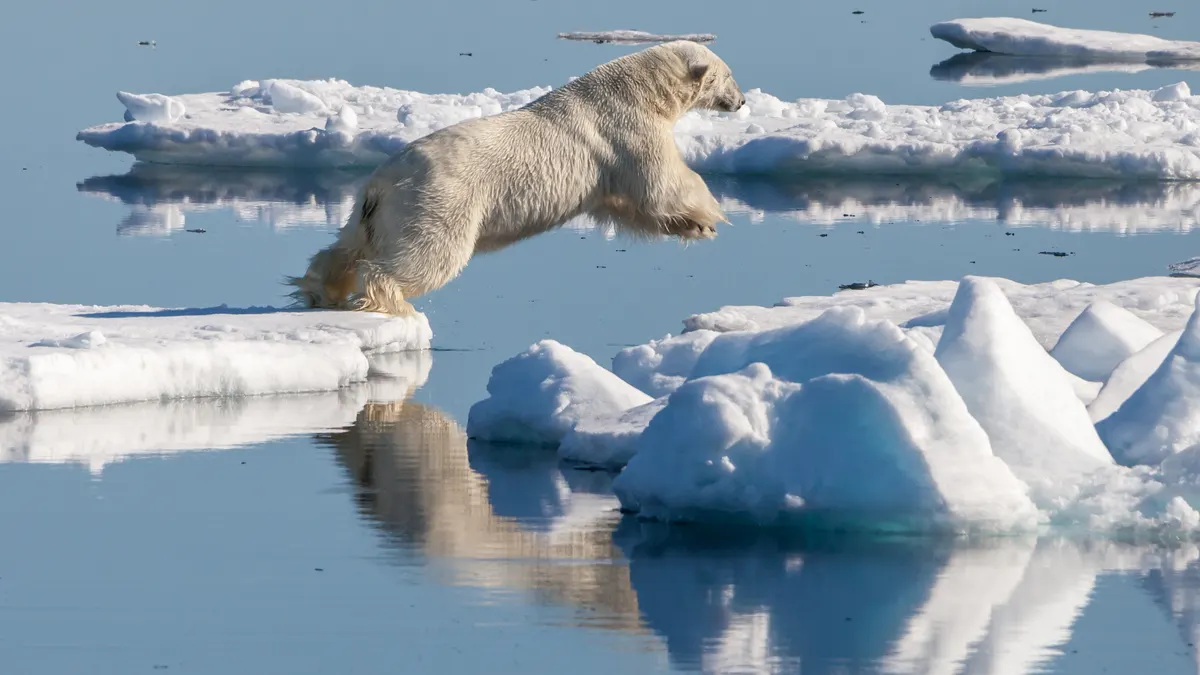
Grizzly bears and polar bears are closely related species in the bear genus Ursus.
A baby grizzly bear is called a cub. Cubs stay with their mother for two to three years.