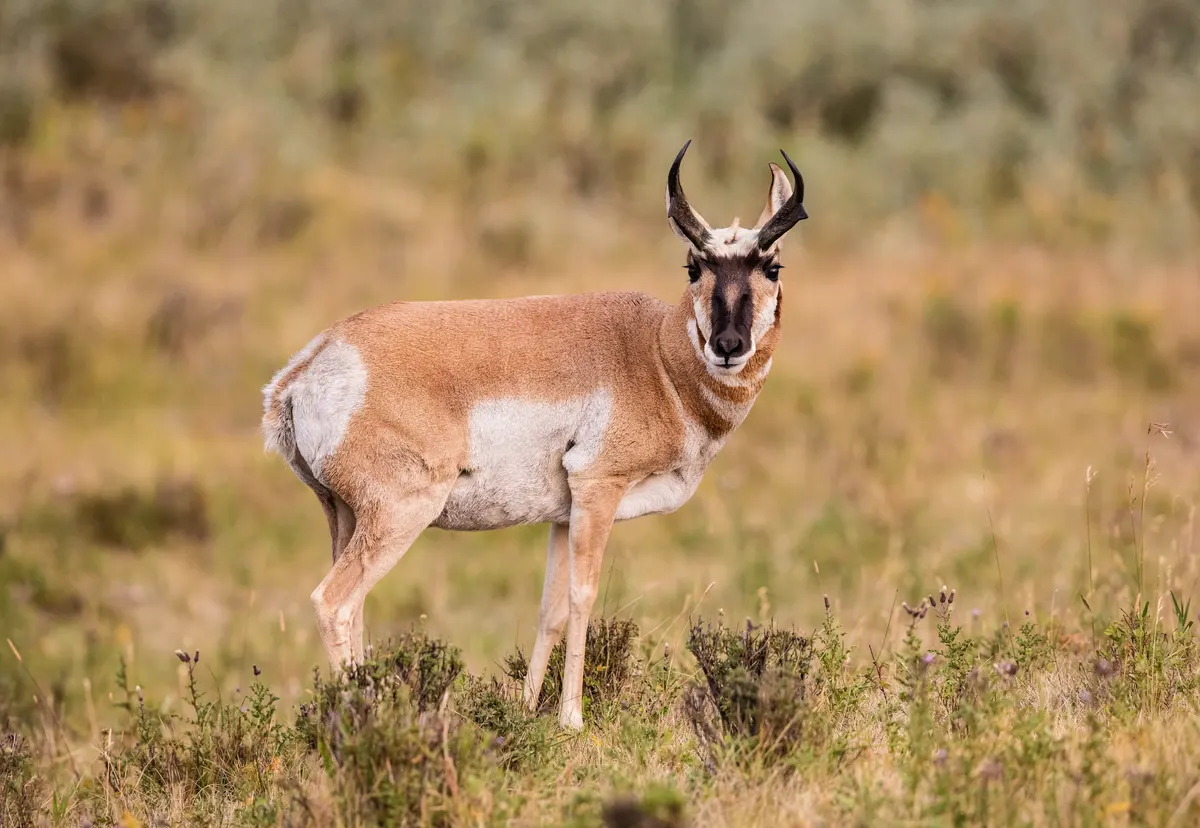
Adults run 4 to 5 feet long, stand 32 to 41 inches at the shoulder, and weigh 90 to 150 pounds, bucks heavier than does. The coat is tawny with a white belly, rump patch, and throat bands that flash in flight, and bucks grow branched horns with a forward-pointing "prong" — uniquely among horned mammals, pronghorns shed the outer keratin sheath each year and regrow it over a permanent bony core. The body is a running machine: huge eyes give nearly panoramic vision, and oversized lungs, a large trachea, a strong heart, and light limbs support bursts near 55 mph and, more importantly, sustained high cruising speeds few predators can match — an endurance biologists link (plausibly, if not provably) to now-extinct American cheetahs that once hunted them. It is the only living antilocaprid; its nearest relatives are other giraffoid ruminants, not the Old World antelopes it resembles by convergence. Tellingly, faced with a fence a pronghorn looks to crawl under rather than leap.