Giant Panda Facts
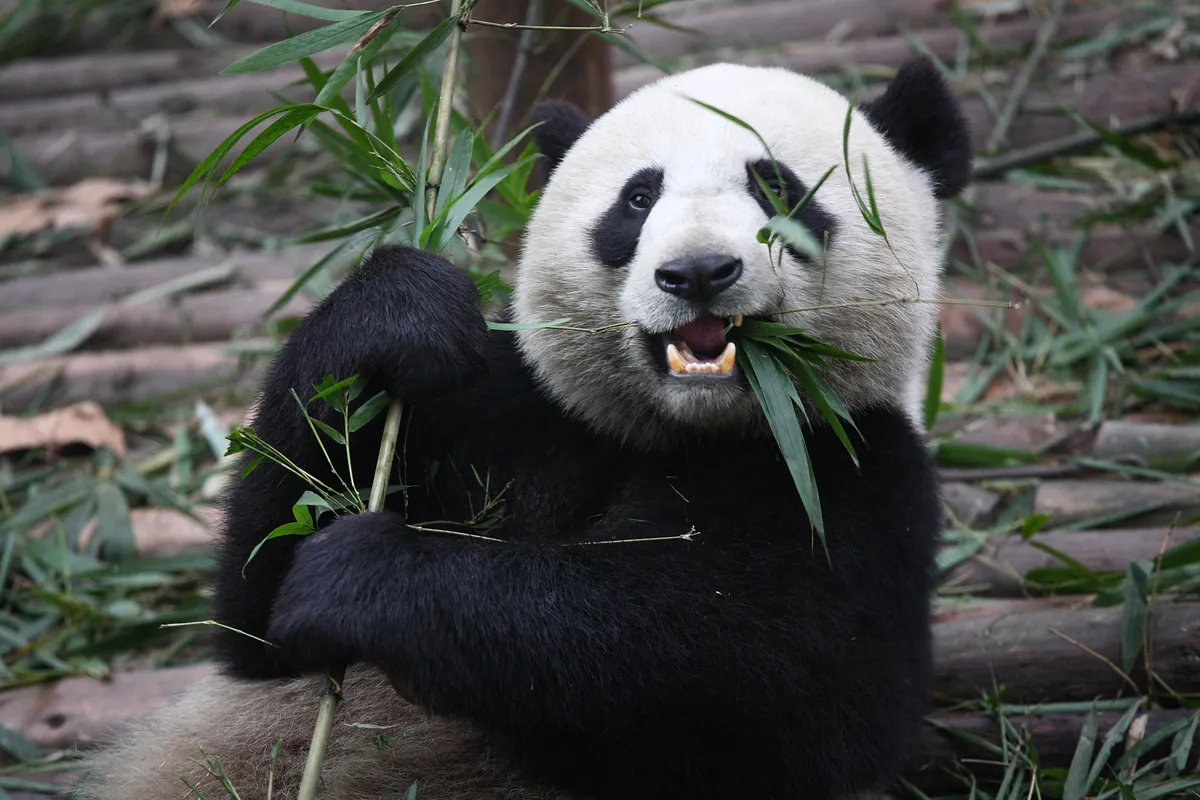
"Giant pandas eat bamboo for up to 14 hours a day."
Giant pandas are black-and-white bears from China that eat almost nothing but bamboo. They live in cool mountain forests, spend most of the day feeding, and...
Loading page content

"Giant pandas eat bamboo for up to 14 hours a day."
Giant pandas are black-and-white bears from China that eat almost nothing but bamboo. They live in cool mountain forests, spend most of the day feeding, and...
Ailuropoda melanoleucaCarnivoraUrsidae
Explore giant panda photos organized for learning and classroom observation.
Click any photo to view it larger. 8 images available.
Core article
Habitat, diet, behavior, and more — everything on one page.
Deep within the misty, high-altitude broadleaf forests of central China, a large, solitary bear sits quietly among dense thickets, methodically stripping tough stalks of bamboo. Strikingly patterned in bold black and white, the giant panda is recognized globally as an icon of wildlife conservation. Yet, beyond its undeniable charisma, the giant panda is a bizarre evolutionary contradiction: it is an animal possessing the internal digestive tract of a strict carnivore, but which has stubbornly adapted its behavior, anatomy, and lifestyle to survive almost exclusively on a nutrient-poor vegetarian diet.
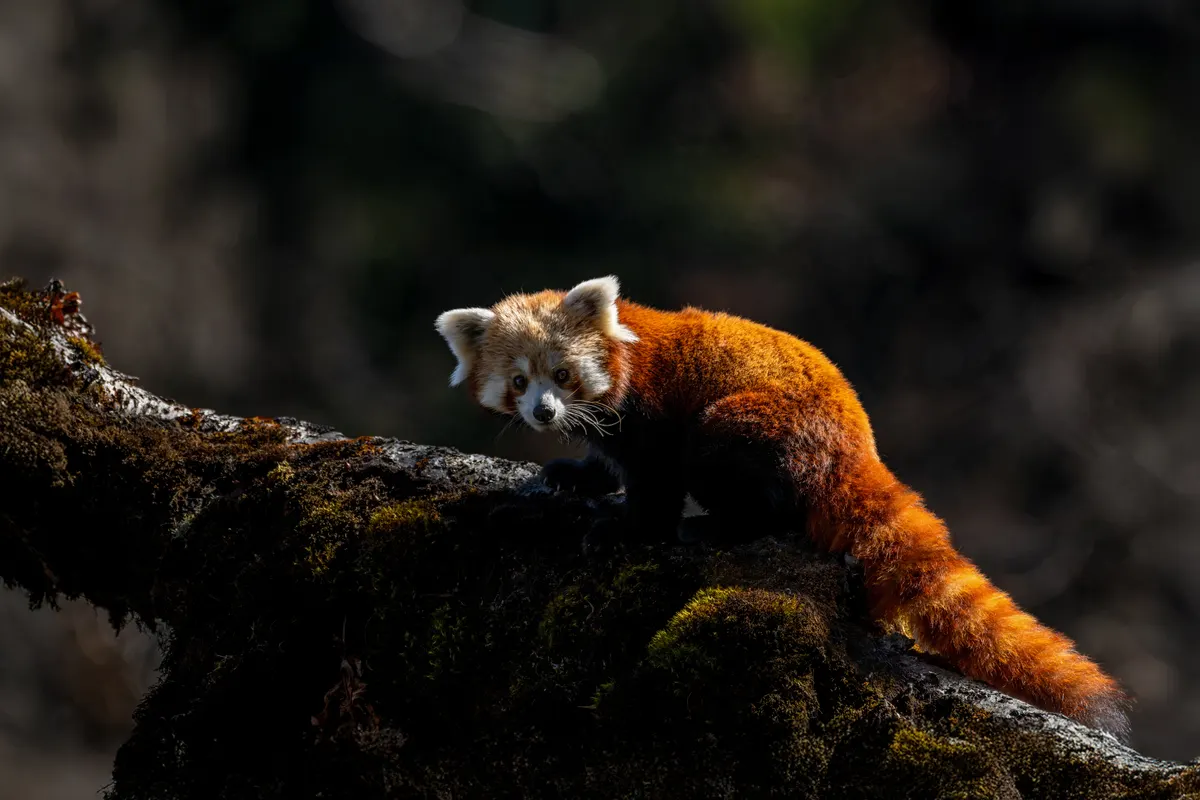
The giant panda, Ailuropoda melanoleuca, is formally classified within the kingdom Animalia, phylum Chordata, class Mammalia, and the order Carnivora. Despite decades of intense scientific debate regarding its phylogeny (with some early scientists grouping it with raccoons alongside the red panda), molecular genetics have conclusively proven that it belongs to the family Ursidae; it is a true bear.
Evolutionarily, the giant panda represents an ancient, basal lineage of the bear family, diverging from the main ursid evolutionary tree approximately 19 million years ago. Its ancestors were likely omnivorous or carnivorous. The radical evolutionary pivot toward obligate herbivory (bamboo specialization) is believed to have occurred as a survival strategy to avoid competition with other large carnivores in Pleistocene Asia, exploiting an incredibly abundant, yet chemically unappealing, food source that no other large mammal wanted.
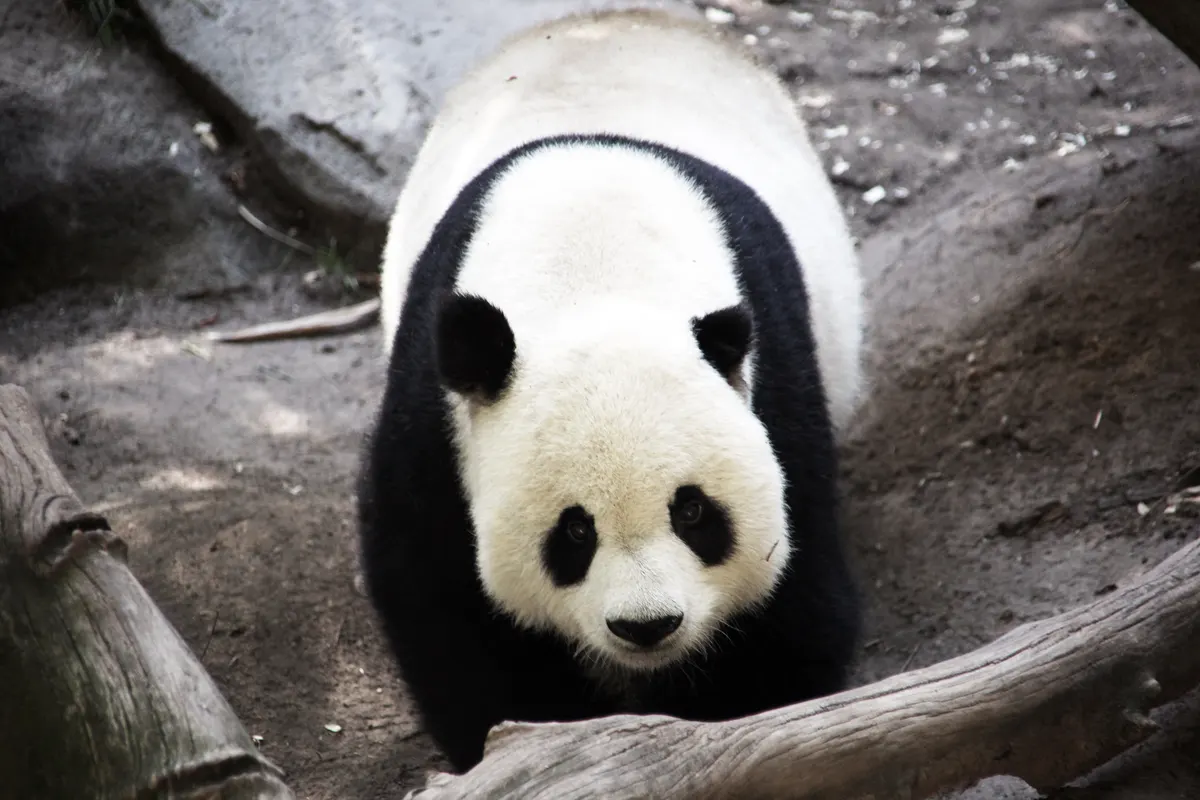
A robust and heavily built animal, an adult giant panda measures between 4 and 6 feet in length, stands 2 to 3 feet high at the shoulder, and typically weighs between 200 and 300 pounds. Their pelage is dense, woolly, and heavily impregnated with natural oils, providing vital thermal insulation and waterproofing against the freezing rain and snow of their montane habitat.
The anatomical adaptations required for processing massive volumes of fibrous bamboo are profound. The panda possesses a massive, widened skull anchoring enormous, highly developed jaw muscles (the masseter and temporalis). Their dentition is highly modified; their molars and premolars are flattened and expanded, featuring complex ridges designed to crush and grind tough, woody bamboo stems.
Most famously, the giant panda has evolved a unique musculoskeletal modification on its forepaws: the "pseudo-thumb." This structure is not a true digit, but rather a radically enlarged and elongated radial sesamoid bone in the wrist. This false thumb allows the panda to dexterously grip and manipulate cylindrical bamboo stalks with astonishing precision, functioning almost exactly like an opposable thumb.

Historically, giant pandas ranged across vast swathes of southern and eastern China, extending into northern Myanmar and Vietnam. Today, human expansion has shattered this distribution, restricting the wild population to isolated, highly fragmented patches of mountainous terrain in central China, primarily within the Sichuan, Shaanxi, and Gansu provinces.
They are obligate inhabitants of temperate broadleaf and mixed montane forests at high elevations (typically between 5,000 and 10,000 feet). These rugged ecosystems are characterized by heavy mist, dense canopies, and, critically, a highly developed understory completely dominated by various species of bamboo.

Despite its classification in the order Carnivora, the giant panda is functionally a highly specialized herbivore. Bamboo leaves, shoots, and stems comprise a staggering 99% of its diet. They occasionally supplement this with trace amounts of wild tubers, small rodents, or carrion, but bamboo is the absolute cornerstone of their existence.
Because their gastrointestinal tract retains the short, simple architecture of a carnivore, they lack the specialized multi-chambered stomachs or elongated ceca found in ruminants and other advanced herbivores. Consequently, their digestive efficiency is shockingly low; they metabolize a mere 17% of the dry matter they ingest.
To survive on such a poor nutritional yield, the giant panda must employ a strategy of sheer volume. An adult must consume between 25 and 80 pounds of bamboo every single day. This necessitates a relentless, low-energy lifestyle. Giant pandas spend up to 14 hours a day simply sitting and eating, heavily restricting their movement to conserve vital calories. They do not hibernate, as their nutrient-poor diet prevents them from accumulating the massive fat reserves required for a prolonged winter sleep; instead, they migrate vertically down the mountainsides during winter to find warmer temperatures and accessible forage.

Driven by their marginal energy budgets, giant pandas are highly solitary and reclusive animals. Social interactions are incredibly brief, occurring almost exclusively during the short, intense spring mating season.
They are highly territorial, maintaining vast, overlapping home ranges that they navigate with a slow, rolling, plantigrade gait. Because they inhabit dense, visually restrictive bamboo forests, communication is achieved primarily through advanced chemical signaling and acoustics. Both sexes possess a specialized anogenital gland. They frequently back up against prominent trees and rub this gland against the bark, depositing a dark, pungent, waxy secretion that communicates their identity, sex, and reproductive receptivity. During the brief breeding window, females vocalize heavily, utilizing complex bleats, honks, and barks to attract males, often resulting in fierce physical competition among rival suitors.

The reproductive biology of the giant panda is notoriously delicate and inefficient, a significant factor in their historical population struggles. Females experience estrus (receptivity to mating) for merely 24 to 72 hours once a year.
Following successful copulation, the panda exhibits delayed implantation; the fertilized embryo remains dormant in the uterus for months before attaching to the uterine wall. The actual active gestation period is brief, leading to total pregnancies spanning 95 to 160 days.
Pandas give birth in hollow trees or rock crevices. The resulting neonate is astonishingly altricial (undeveloped). A newborn cub weighs a mere 3 to 5 ounces—roughly the size of a stick of butter, making it one of the smallest newborn mammals relative to its mother's size (about 1/900th of her weight). Born blind, hairless, and entirely helpless, the cub demands intense, uninterrupted maternal care. While females occasionally birth twins, the mother lacks the energy reserves and milk production to sustain two cubs, and almost invariably abandons the weaker infant to die. The surviving cub nurses extensively, slowly gaining independence, and typically remains with its mother for 18 months to 2 years.
(Population and conservation trend data sourced from the IUCN Red List of Threatened Species)
In a rare and monumental conservation victory, the global status of the giant panda was recently downgraded by the IUCN from "Endangered" to "Vulnerable," reflecting a slow but steady population increase in the wild, currently estimated at over 1,800 individuals.
This success is the direct result of massive, sustained intervention by the Chinese government, including the establishment of extensive protected nature reserves, aggressive anti-poaching enforcement, and highly successful ex-situ captive breeding programs. However, their future remains precarious. Habitat fragmentation is the overwhelming primary threat; human infrastructure (roads, railways, and agriculture) isolates small subpopulations, destroying gene flow and creating dangerous genetic bottlenecks. Furthermore, the specialized reliance on bamboo makes them highly vulnerable to natural bamboo die-offs (which occur in massive synchronous cycles) and the accelerating impacts of climate change on montane ecosystems.
Giant pandas eat bamboo for up to 14 hours a day.
A newborn panda cub is about the size of a stick of butter.
Giant pandas have an extra wrist bone that works like a thumb for holding bamboo.
Despite belonging to the bear family, giant pandas eat almost no meat.
Giant pandas were once found across much of southern and eastern China.
Adult giant pandas mark their home range with scent from glands near their tail.
Select a question to reveal the answer.
A giant panda is a large black-and-white bear from China. It eats mostly bamboo and lives in cool mountain forests.
Wild giant pandas live only in mountain forests in central China, mainly in Sichuan, Shaanxi, and Gansu provinces.
Giant pandas eat almost nothing but bamboo—leaves, shoots, and stems. Bamboo makes up about 99 percent of their diet.
Giant pandas are listed as Vulnerable. Their numbers are slowly rising thanks to protected forests and breeding programs.
Adult giant pandas usually live alone. Mothers raise cubs until the young pandas can feed and survive on their own.
Bamboo is available year-round in panda forests. Over time, giant pandas evolved to depend on it as their main food.