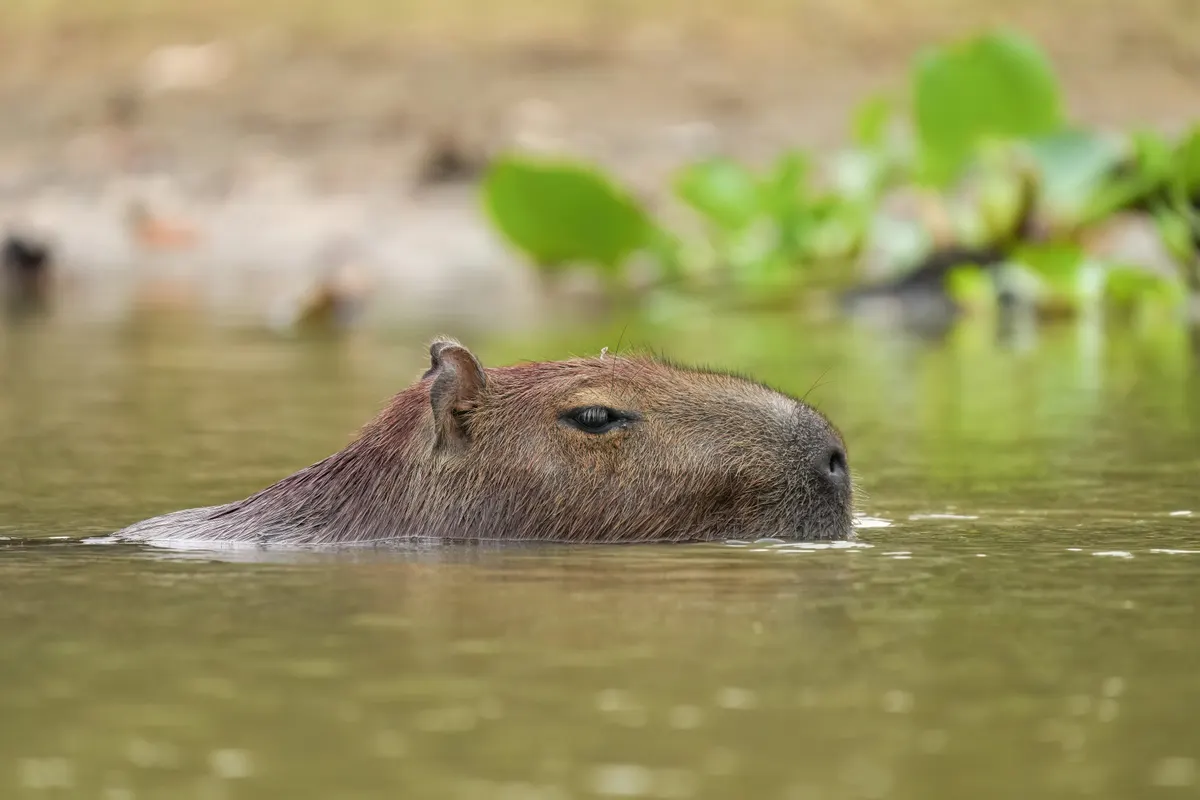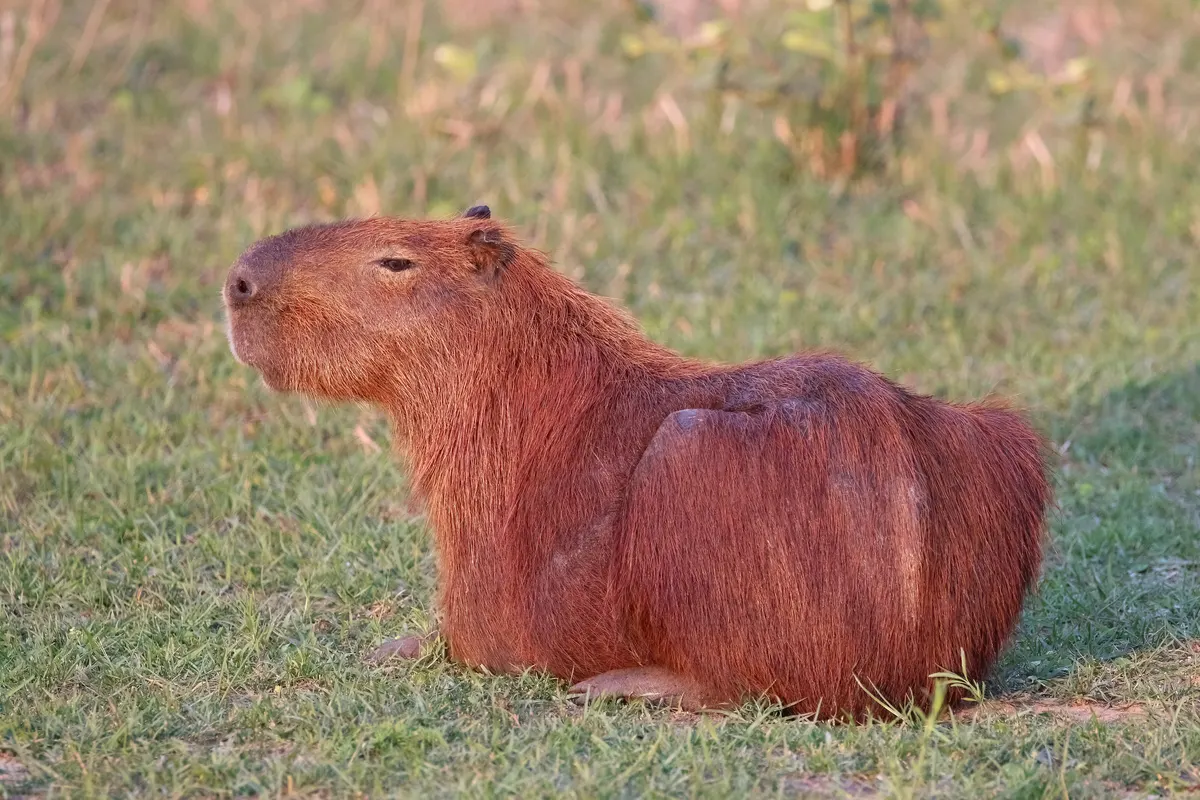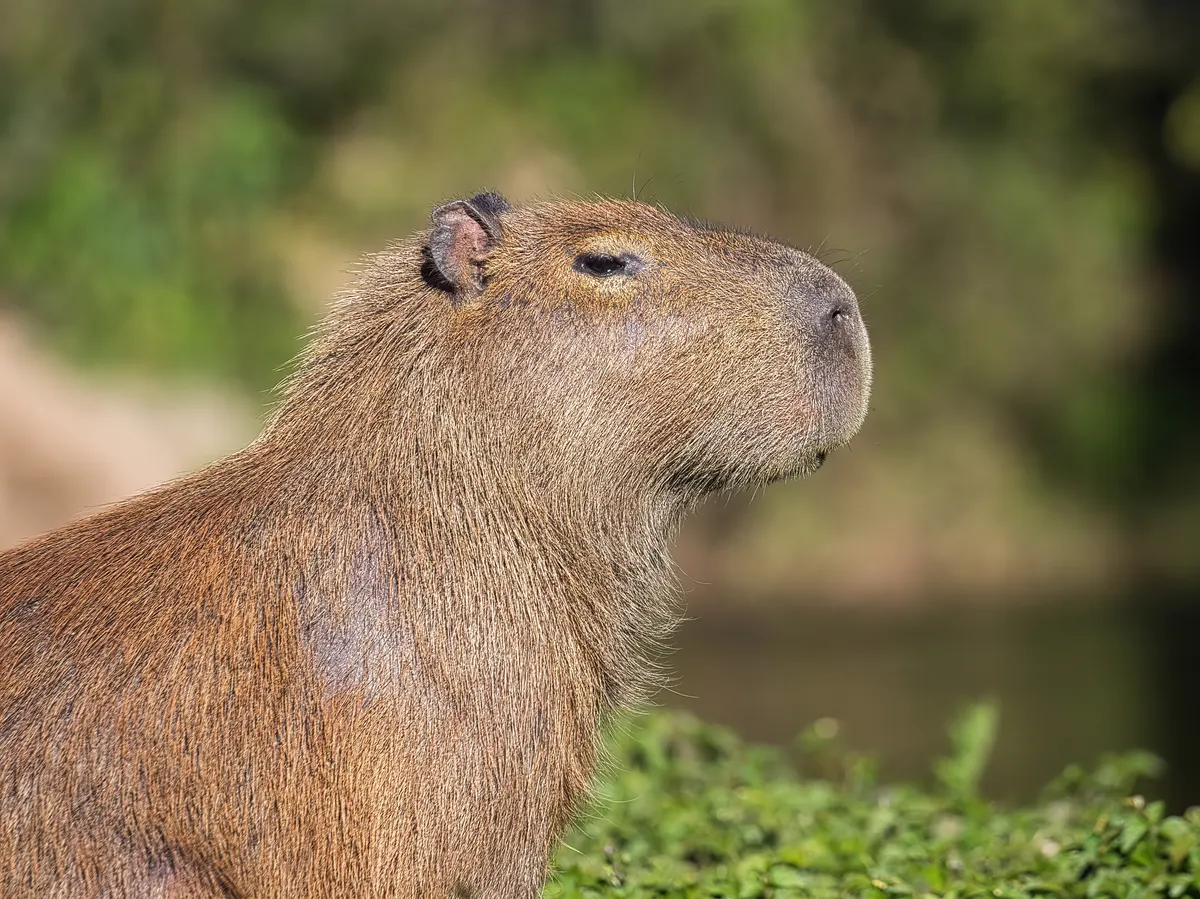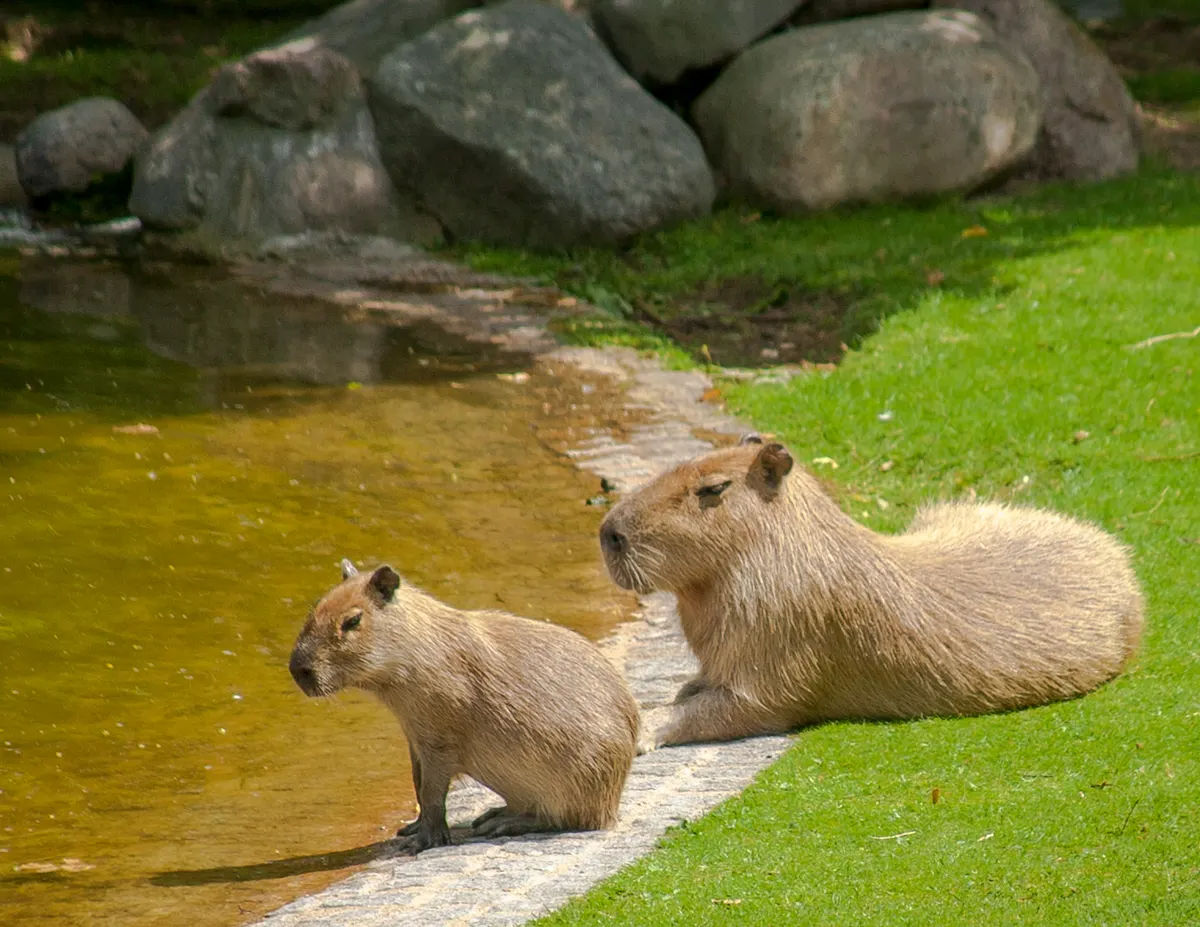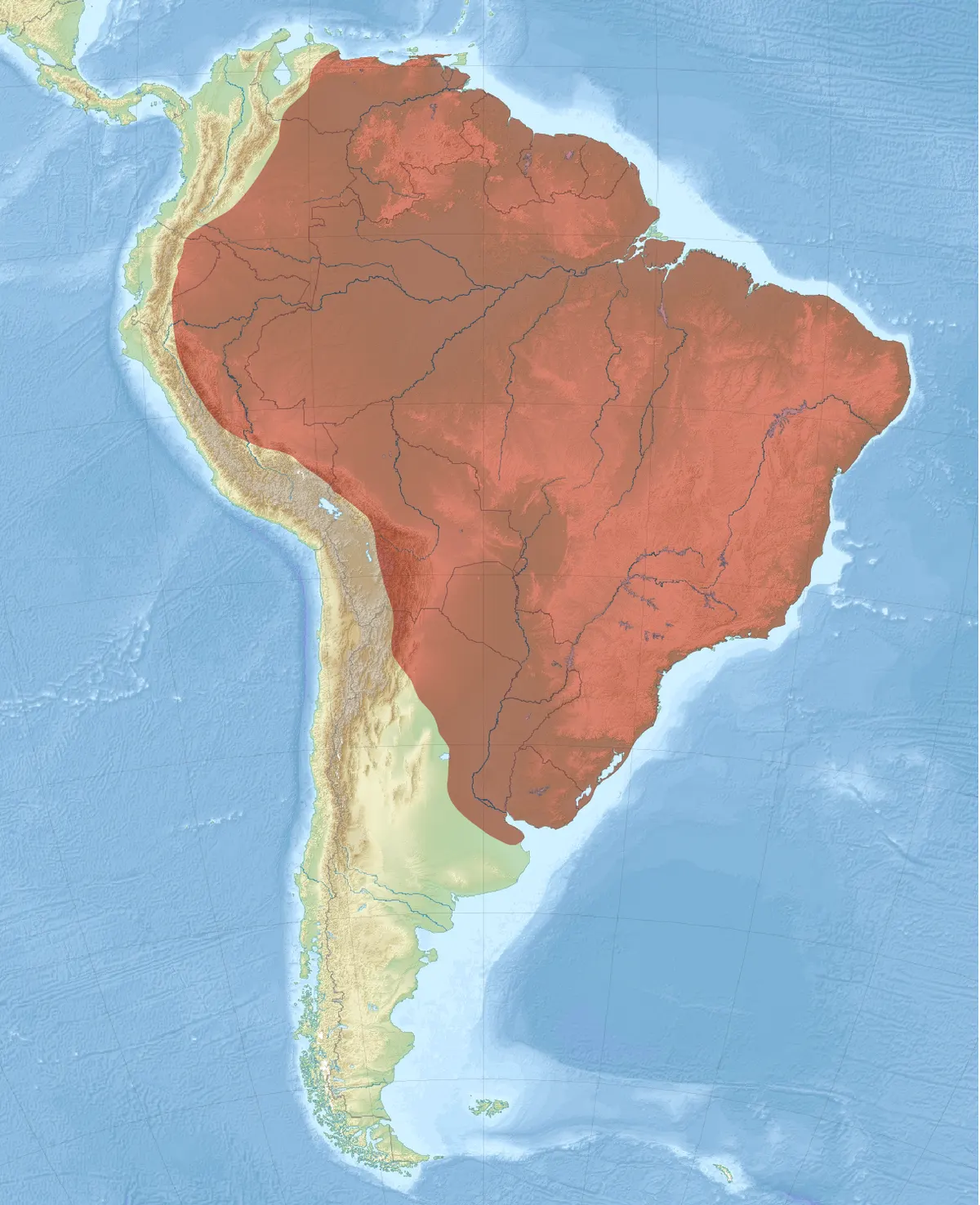
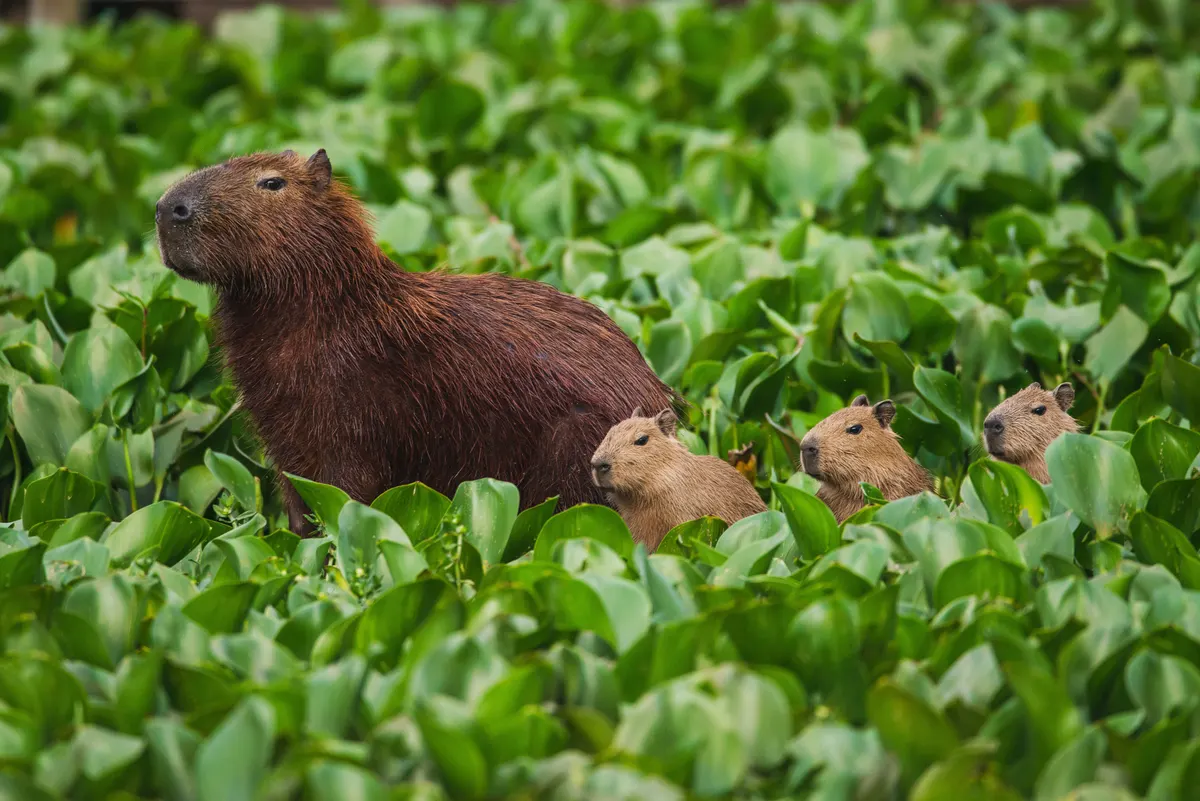
The social structure of the capybara is highly complex, dynamic, and strictly hierarchical. They are gregarious creatures, fundamentally reliant on the herd for survival. A typical family group consists of 10 to 20 individuals, composed of a dominant male, several subordinate males, a harem of related adult females, and their collective offspring. During the severe dry season, these small family units frequently aggregate around shrinking water sources, forming massive, temporary super-herds that can exceed 100 individuals.
The dominant male secures his position through sheer size and aggressive displays, frequently engaging in violent, biting combat with challengers. His primary role is to secure prime grazing territory and exclusive mating rights with the females. He maintains his dominance chemically, utilizing a highly developed sebaceous scent gland located on top of his snout, known as the morrillo. He rubs this dark, oval gland against reeds and branches, secreting a sticky, musky fluid that explicitly communicates his physical fitness and dominant status to the entire herd.
The famously calm demeanor of the capybara—often captured in photographs with birds, turtles, or monkeys resting on them—is an evolutionary byproduct of their intense sociality. In the dense, dangerous environment of the wetland, maintaining a low-stress, highly tolerant disposition minimizes fatal intra-species conflict and fosters the tight herd cohesion necessary to detect and evade predators.