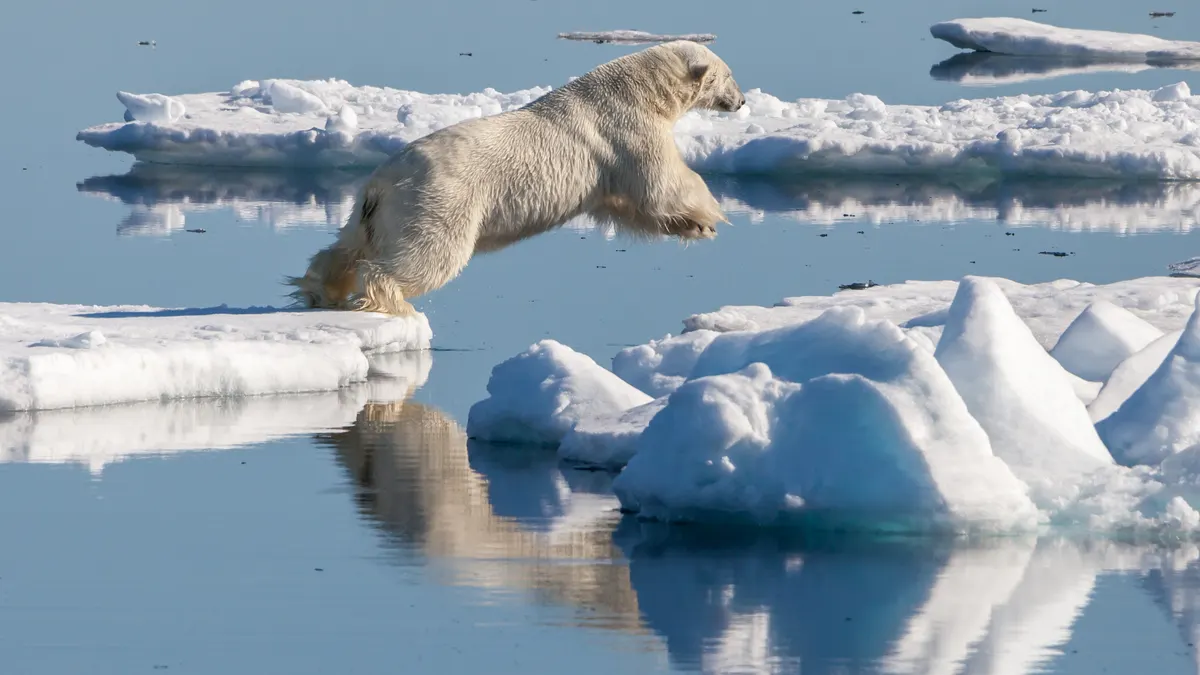
The anatomy of the polar bear is explicitly designed for thermoregulation in freezing temperatures, efficient movement across snow and ice, and taking down massive marine prey. They exhibit profound sexual dimorphism. Adult males, called boars, are massive, measuring between 6 to 9 feet in length and weighing anywhere from 550 to an astonishing 1,700 pounds. Females, or sows, are significantly smaller, typically weighing between 330 and 650 pounds.
Despite their appearance, a polar bear’s fur is not actually white; the guard hairs are pigment-free and hollow. These hollow hairs scatter and reflect visible light, creating a white appearance that provides essential camouflage against the snow and ice, allowing them to ambush prey. Underneath this dense double coat of fur, their skin is entirely black, evolved to absorb and retain heat from the sun. Beneath the skin lies a massive, continuous layer of blubber, up to 4.5 inches thick, which acts as the primary thermal insulator against the frigid Arctic water and air, as well as a critical energy reserve during fasting periods.
Polar bears are built for immense power and aquatic mobility. They possess an elongated neck and a relatively narrow skull compared to other bears, providing an aerodynamic profile for swimming and allowing them to plunge their heads deep into seal breathing holes. Their paws are exceptionally large—up to 12 inches across—acting like snowshoes to distribute their massive weight on thin ice, and functioning as powerful, webbed paddles when swimming. The soles of their feet are covered in small dermal bumps (papillae) and dense fur, providing vital traction on slippery, wet ice.