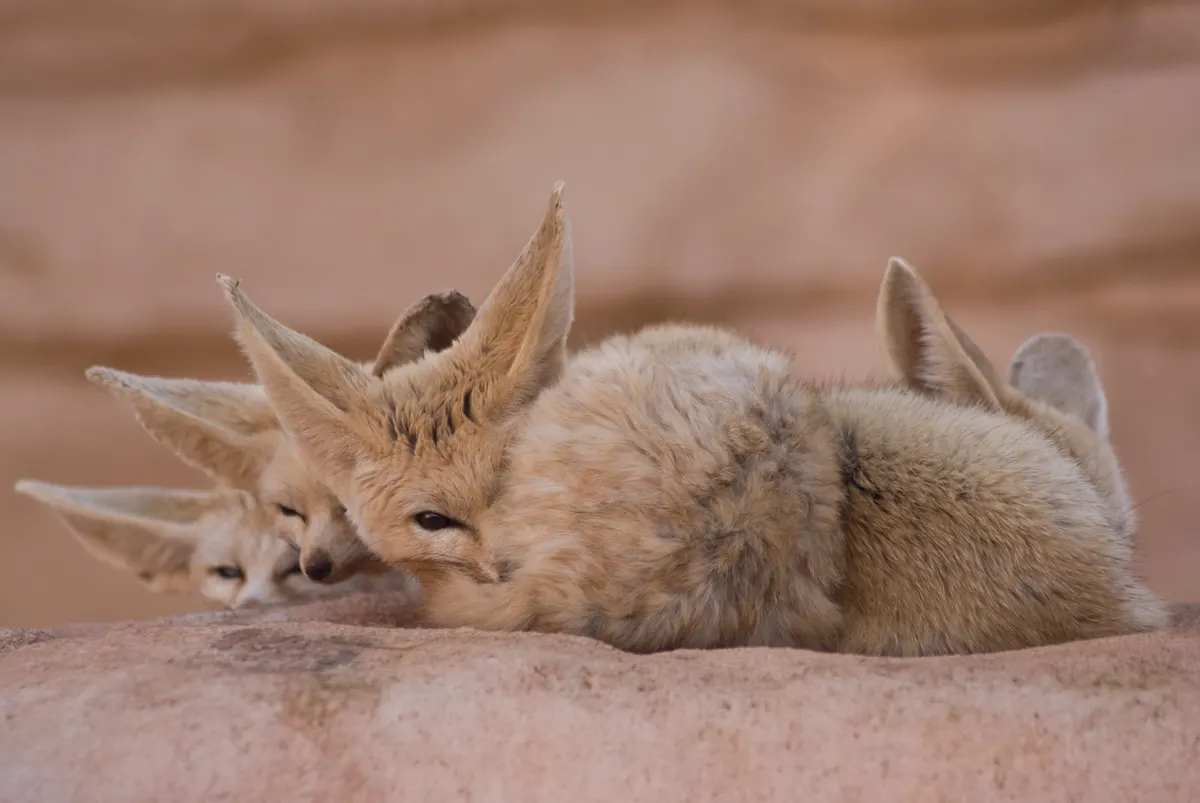
Vulpes macrotis is endemic to the arid and semi-arid interior of western North America. Its range reaches from southeastern Oregon, southern Idaho, and southwestern Wyoming south through Nevada, Utah, California's Mojave Desert and Central Valley, Arizona, New Mexico, and west Texas into Baja California and the northern Mexican plateau (Sonora, Chihuahua, Coahuila, Nuevo León, Durango, and Zacatecas), at elevations from near sea level to about 1,900 meters.
Within those desert basins, kit foxes strongly prefer flat or gently rolling terrain with loose, friable alluvial, silty, or sandy-loam soils where digging is easy and visibility across the ground is open. Characteristic plant communities include creosote bush (Larrea tridentata), saltbush (Atriplex), bursage, greasewood, and desert grassland with sparse shrub cover under 20 percent.
Unlike most North American canids that excavate a den only for a few weeks in spring to whelp pups, a kit fox uses underground burrows every single day of the year. A mated pair's 3- to 11-square-kilometer territory typically contains 11 to more than 60 different dens—some dug from scratch by the foxes, others enlarged from kangaroo rat mounds or abandoned American badger and ground squirrel burrows. Natal dens often have 2 to 7 narrow, keyhole-shaped entrances just wide enough for a 2-kilogram fox to dive into while blocking a pursuing coyote or badger.