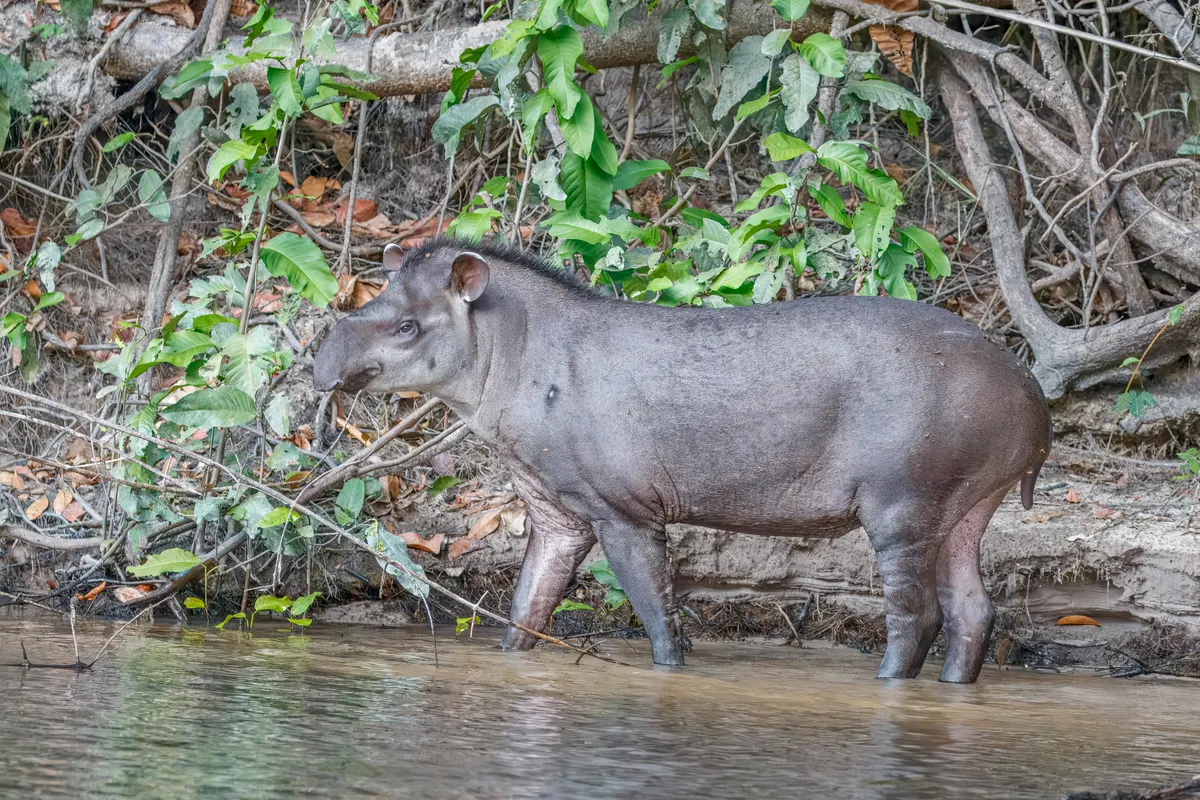
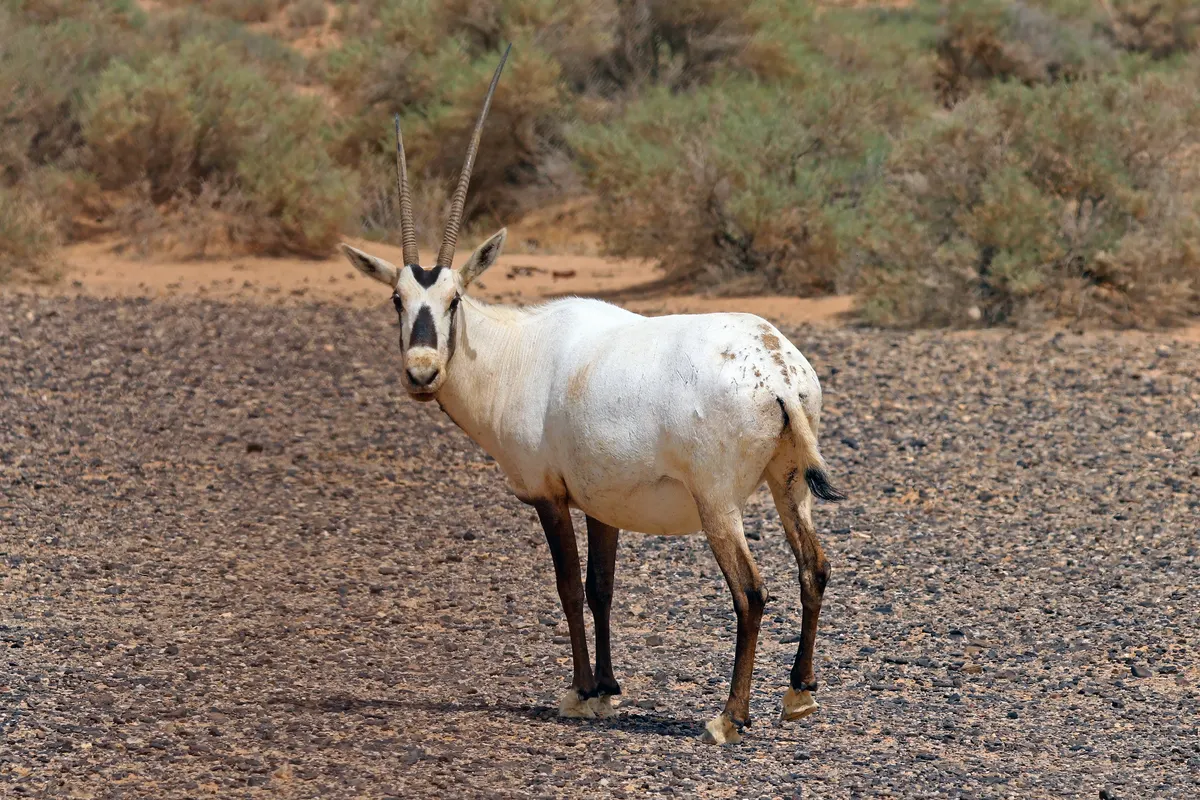
White Arabian oryx with long straight ringed horns in the desert
The Arabian oryx is a white desert antelope with long, nearly straight ringed horns.
MammaliaVulnerable

Arabian Oryx

The Arabian oryx was declared Extinct in the Wild after the last wild animal was killed around 1972, then rebuilt from captive stock.

The Arabian oryx is a white desert antelope of the Arabian Peninsula with long, straight, ringed horns. Hunted to extinction in the wild by 1972, it was rebuilt through captive breeding and reintroduction and became the first animal downlisted from Extinct in the Wild to Vulnerable.

By · Updated

Quick Facts

Arabian Oryx at a glance

Oryx leucoryxArtiodactylaBovidae

About their home

Kind of animal

Mammalia

Where they live

What they eat

How safe?

Vulnerable

Size and speed

How heavy

100 kg – 210 kg

How long

153 cm – 235 cm

How fast

Steady trot over long distances

Lifespan

Often shorter, reduced by drought

Core article

Arabian Oryx: ecology and life history

A closer look at habitat, diet, behavior, reproduction, and conservation.

Start here

Arabian Oryx

The Arabian oryx is a white desert antelope built for one of the harshest environments any large mammal occupies: the open deserts and gravel plains of the Arabian Peninsula. Its pale coat, long straight horns, and quiet, roaming habits make it well suited to a landscape of extreme heat, scarce water, and unpredictable rain. It is also the subject of one of the best-documented recoveries in conservation history, having been driven out of the wild entirely before being returned to it.

Anatomy and Horns

The Arabian oryx is the smallest member of the genus Oryx. Adults measure roughly 153 to 235 cm in head-and-body length, stand about 0.9 to 1.4 m at the shoulder, and weigh between 100 and 210 kg. The coat is an almost luminous white over most of the body, broken by darker markings on the legs and face and by brown tones on the underside. This coloring is functional as well as distinctive: a pale surface reflects sunlight, while the darker leg and facial patches may help reduce glare.

Both sexes carry long, ringed horns that are nearly straight or only slightly curved, commonly around 0.6 to 1.5 m long. The horns are used in defense and in disputes over rank within a herd. A shoulder hump, a tufted tail, and broad, splayed hooves complete the profile. The wide hooves spread the animal's weight across loose sand and firm gravel alike, which matters for an animal that may walk long distances between feeding grounds.

Habitat and Distribution

Arabian oryx on desert sand
Wide splayed hooves spread the animal's weight on soft sand as it crosses open desert.

The Arabian oryx is a specialist of arid country. It occupies true desert, gravel plains, and sand dunes across the Arabian Peninsula, favoring flat, open terrain where scattered grasses and shrubs grow after rain. Historically its range extended across much of the peninsula and into parts of the Middle East, but hunting erased the wild population during the twentieth century.

Today's oryx live in reintroduced and managed herds. Populations occur in countries including Saudi Arabia, Oman, the United Arab Emirates, Jordan, Israel, Qatar, and Kuwait, established through decades of coordinated release programs. Many of these herds are found in protected reserves and fenced areas, though some range freely across large tracts of desert.

Diet and Foraging

Arabian oryx feeding
Oryx feed mainly at dawn and dusk and can detect distant rainfall to find new plant growth.

The Arabian oryx is a herbivore whose diet tracks the boom-and-bust rhythm of desert plants. It feeds mainly on grasses and herbs, supplemented by buds and fruit, and will dig for roots, tubers, and bulbs when surface forage is thin. Much of its water is obtained from this plant material, along with dew and moisture-rich bulbs, which allows it to go for long periods without drinking free water.

Feeding is concentrated in the cooler parts of the day, particularly dawn and dusk, when plants hold more moisture and the animal loses less water to the heat. This foraging schedule is one of several behaviors that let the oryx balance its energy and water budgets in a place where both are limited.

Behavior and Herds

Arabian oryx standing together
A dominant male often leads a herd, and members follow one another across the desert in single file.

Arabian oryx are social and largely nomadic. They move in small herds, commonly a handful to around a dozen or so animals, though larger aggregations have been reported where conditions allow. Groups are typically mixed-sex, and members establish a hierarchy that orders access to food, water, and shade. Rather than defending fixed territories, herds wander widely in search of recent plant growth.

That wandering is guided by a striking ability: oryx appear able to detect rainfall at a distance and will travel long distances, sometimes hundreds of kilometers, toward areas where new vegetation is likely to sprout. During the heat of the day they often rest, and they dig shallow scrapes beneath shrubs to reach cooler ground and shade. Activity rises again as temperatures fall.

Reproduction and Young

Breeding can occur through much of the year when conditions are favorable. After a gestation of roughly eight to nine months, about 240 days, a female usually gives birth to a single calf. Newborns are hidden and closely tended in their first weeks before joining the movements of the herd. Weaning takes place at around four to five months, and females may reach breeding age at roughly two years.

Single births and a long gestation mean that populations grow slowly, which made the species' collapse easy and its recovery correspondingly patient work. The relatively high survival of calves in protected, well-managed herds has been central to rebuilding numbers.

Taxonomy and Relatives

The Arabian oryx belongs to the family Bovidae, the group of cloven-hoofed ruminants that includes antelopes, cattle, goats, and sheep. Within that family it sits in the genus Oryx, alongside larger relatives such as the scimitar-horned and gemsbok oryx. As a bovid, it shares a common ancestry with a wide range of horned grazers and browsers.

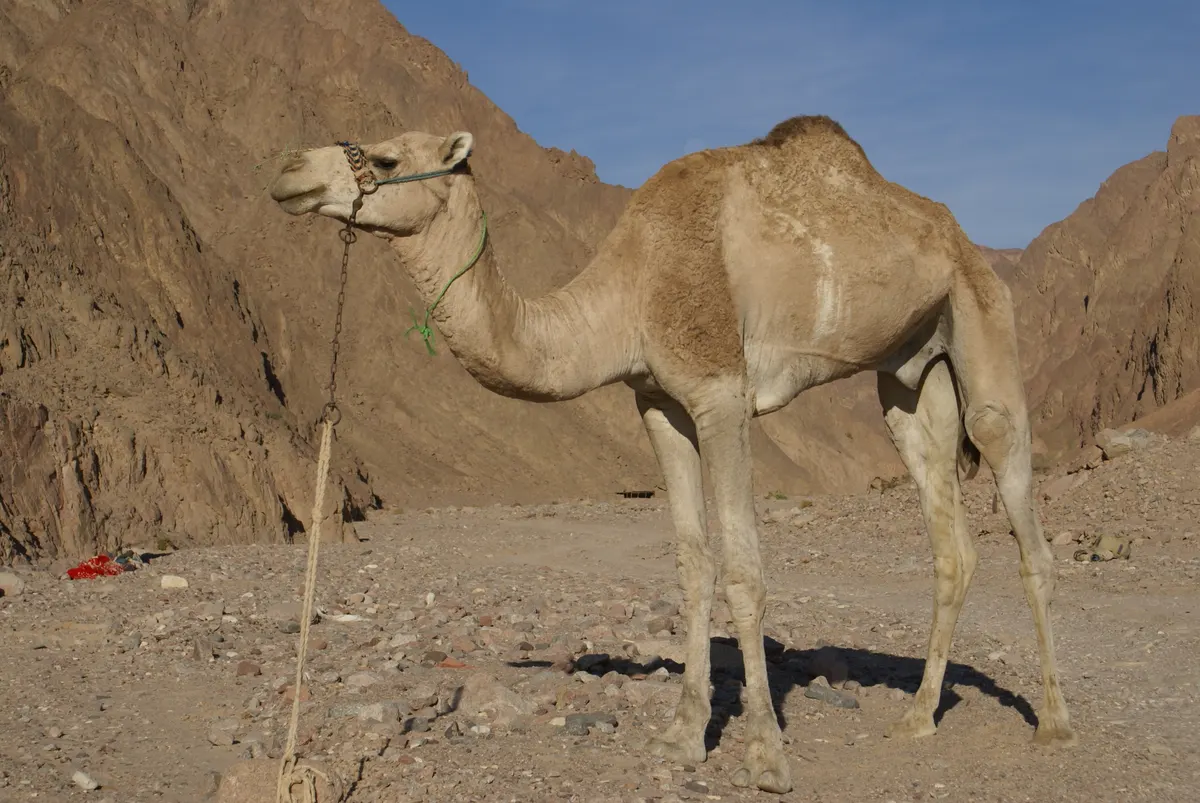
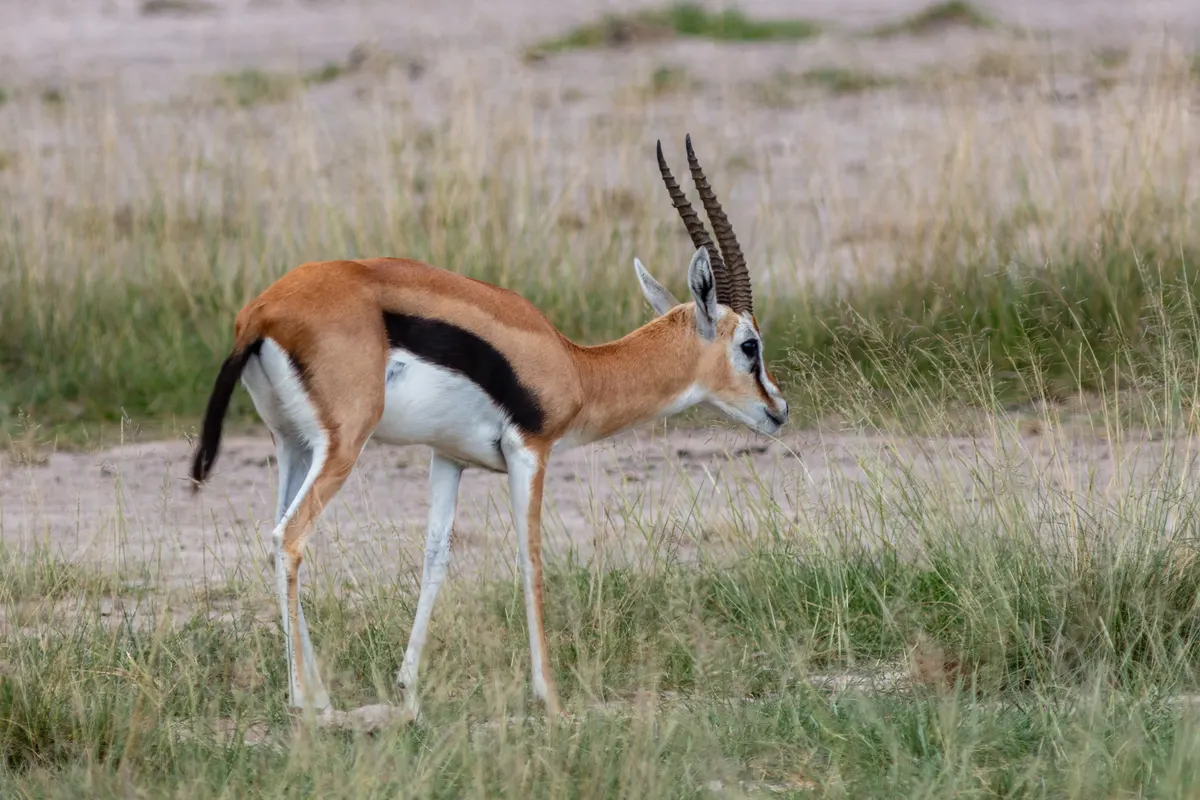
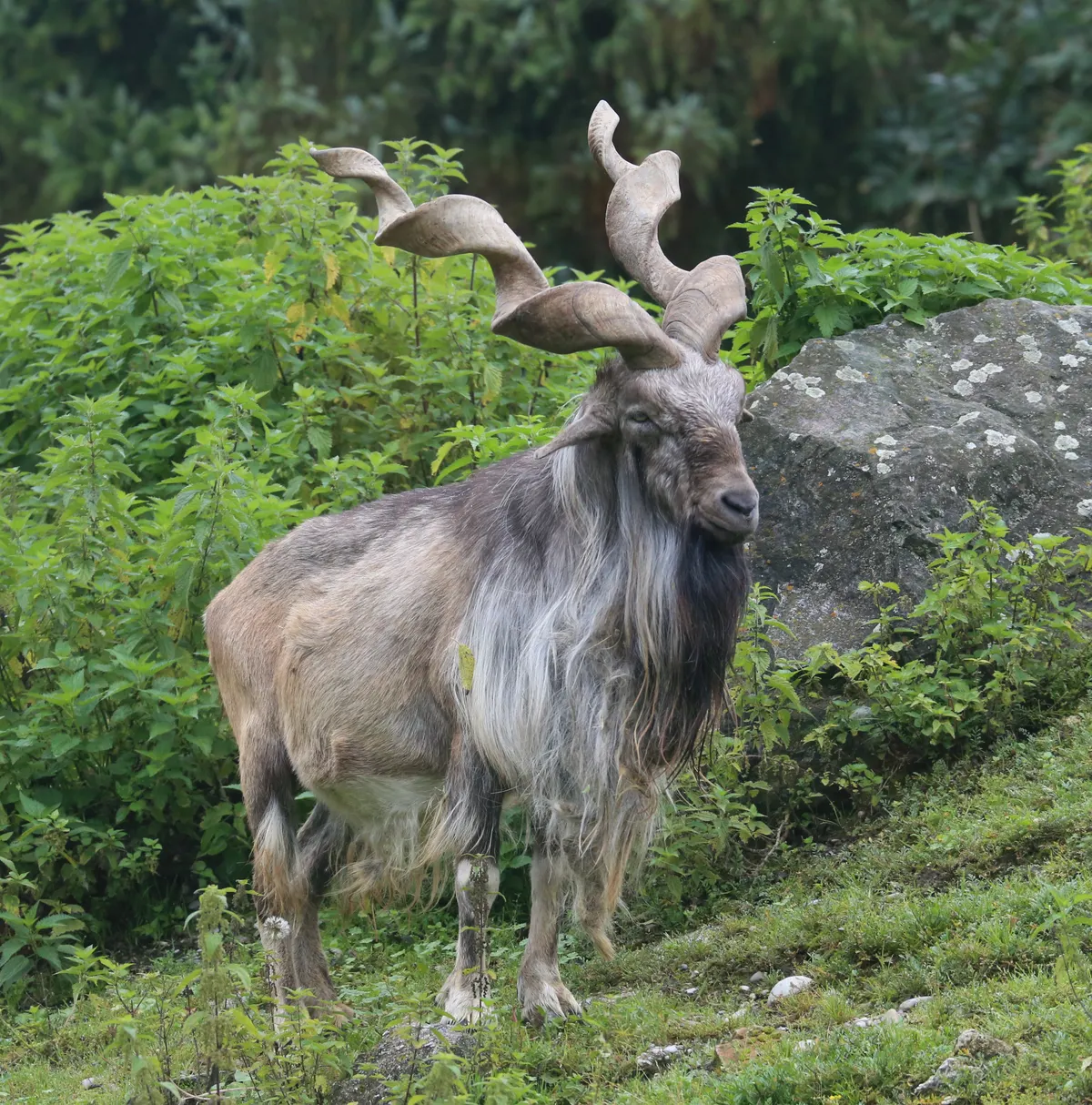
Among the animals featured here, the Arabian oryx can be compared with other desert and mountain-adapted mammals. The gazelle is a fellow arid-land antelope, the markhor is a wild goat of rugged Central Asian highlands, the musk ox is a cold-climate bovid whose insulation solves the opposite environmental problem, and the camel is a non-bovid desert specialist that meets many of the same water and heat challenges with a different set of tools.

Conservation and Threats

Arabian oryx in a desert conservation reserve
Extinct in the wild by 1972, the Arabian oryx was bred in captivity and later downlisted to Vulnerable.

The Arabian oryx is listed as Vulnerable on the IUCN Red List, with a population trend described as stable. That status is the end point of a dramatic decline and recovery. Unregulated hunting, aided in the twentieth century by motor vehicles and firearms, drove the species toward collapse. The last confirmed wild individual is reported to have been killed around 1972, at which point the Arabian oryx was considered Extinct in the Wild.

The species survived only because a small captive population had been assembled. A breeding effort commonly known as Operation Oryx, begun in the early 1960s, gathered animals into managed herds and produced a growing captive stock. Reintroductions to the wild started in Oman in 1980 and later expanded to other countries across the peninsula. The effort worked: in 2011 the Arabian oryx became the first animal ever to be downlisted from Extinct in the Wild to Vulnerable, an improvement of several Red List categories. Recent estimates place the wild population at roughly a thousand or more animals, with several thousand more held in captivity worldwide.

The recovery is not complete. Wild herds remain small and depend on continued protection. Poaching, illegal live capture for private collections, habitat degradation, and the effects of drought all pose ongoing risks, and the concentration of animals in a limited number of sites leaves the species exposed to localized threats. Its history stands as evidence that Extinct in the Wild need not be a final verdict, provided captive stock and sustained management are available.

References and Authoritative Sources

Arabian Oryx: classification and fun facts

Classification

Scientific Taxonomy
  1. Kingdom

    Animalia

  2. Phylum

    Chordata

  3. Class

    Mammalia

  4. Order

    Artiodactyla

  5. Family

    Bovidae

  6. Genus

    Oryx

  7. Species

    O. leucoryx

Did You Know?

Fun Facts

1

The Arabian oryx was declared Extinct in the Wild after the last wild animal was killed around 1972, then rebuilt from captive stock.

2

In 2011 it became the first animal ever downlisted from Extinct in the Wild to Vulnerable on the IUCN Red List.

3

Its long, straight horns and its habit of sometimes appearing single-horned in profile are thought to have helped inspire the unicorn myth.

4

Oryx can detect rain from great distances and walk hundreds of kilometers to reach fresh vegetation.

5

The near-white coat reflects the desert sun, while dark leg and face markings may reduce glare.

6

The captive-breeding effort known as Operation Oryx began in the early 1960s and seeded reintroductions across the Arabian Peninsula.

Common Questions

FAQ about Arabian Oryx

Select a question to reveal the answer.

What is an Arabian oryx?

The Arabian oryx (*Oryx leucoryx*) is a white desert antelope of the family Bovidae and the smallest member of the genus *Oryx*. It is native to the deserts and gravel plains of the Arabian Peninsula and carries long, nearly straight, ringed horns.

Where do Arabian oryx live?

They live in arid desert, gravel plain, and dune habitats of the Arabian Peninsula. Reintroduced and managed populations occur in countries including Saudi Arabia, Oman, the United Arab Emirates, Jordan, Israel, Qatar, and Kuwait.

What do Arabian oryx eat?

They are herbivores that feed mainly on grasses, herbs, buds, and fruit, and dig for roots and tubers. Much of their water comes from these plants, along with bulbs and dew, so they can go for long periods without drinking.

How do Arabian oryx survive in the desert?

Their pale coat reflects heat, wide hooves spread their weight on sand, and they rest in shade during the hottest hours. They extract water from plants, tolerate a raised body temperature to limit sweating, and use a carotid heat-exchange network that helps protect the brain from overheating.

Why is the Arabian oryx a famous conservation success?

It was hunted to extinction in the wild by about 1972 and survived only in captivity. Coordinated captive breeding and reintroduction restored wild herds, and in 2011 it became the first animal downlisted from Extinct in the Wild to Vulnerable.

Is the Arabian oryx really the source of the unicorn myth?

It is one plausible inspiration. Seen from the side, an oryx can look as if it has a single long horn, and animals that lose one horn appear one-horned. Historical accounts of a fierce single-horned desert animal may draw on such sightings, though the link cannot be proven.