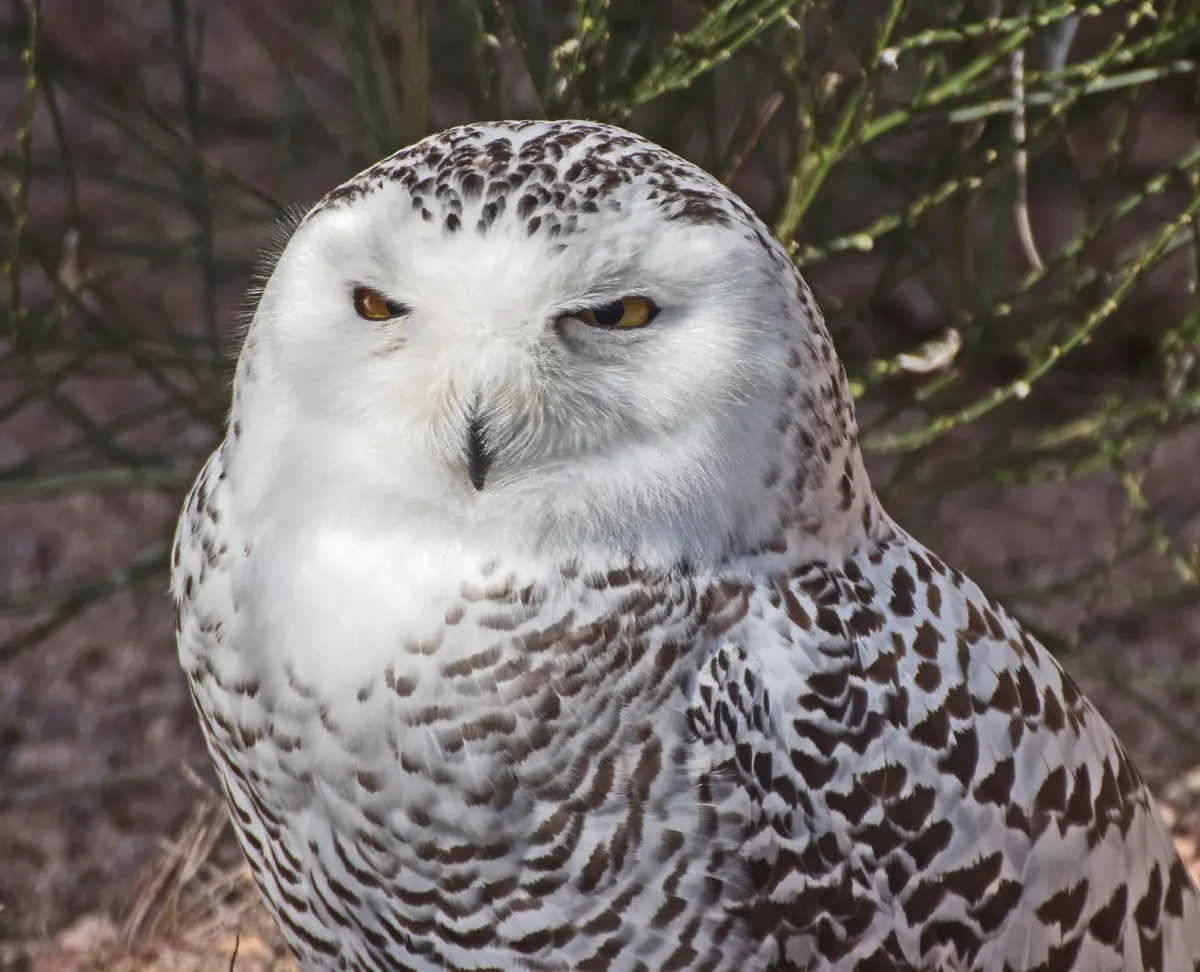
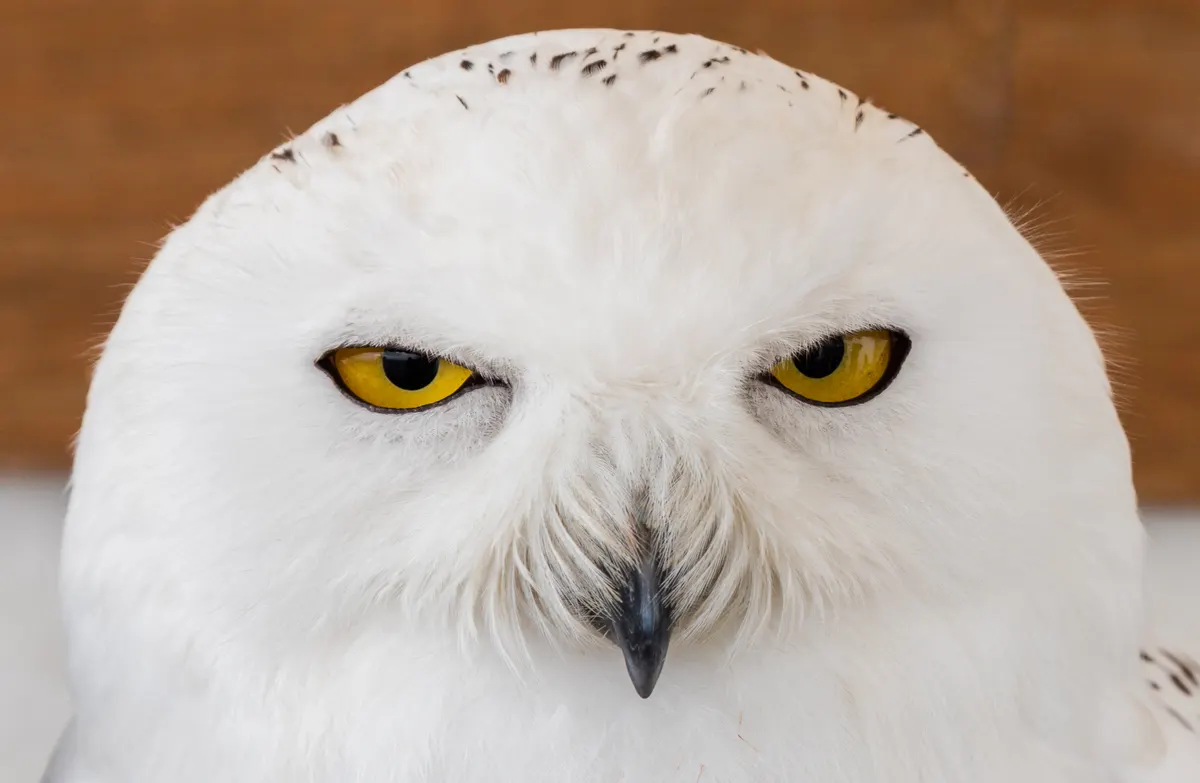
Female snowy owl portrait showing white plumage with dark barring
Females and young birds carry more dark barring than nearly pure-white adult males.
AvesVulnerable

Snowy Owl Facts

Adult males can look almost pure white, while females keep more dark barring.

The snowy owl is a large white Arctic owl that nests on polar tundra, hunts lemmings and birds, and sometimes irrupts south in winter when northern prey is scarce.
By · Updated

Quick Facts

Snowy Owl at a glance

Bubo scandiacusStrigiformesStrigidae

About their home

Kind of animal

Aves

Where they live

What they eat

How safe?

Vulnerable

Size and speed

How heavy

3 pounds – 6.5 pounds

How long

20 inches – 28 inches

How fast

Powerful low flight over open ground; can make sudden stoops on prey

Lifespan

About 10 years on average; some live longer

Core article

Snowy Owl: ecology and life history

A closer look at habitat, diet, behavior, reproduction, and conservation.

Start here

Snowy Owl

Bright against summer lichen or winter snow, the snowy owl (Bubo scandiacus) is the great white hunter of the polar tundra. This large carnivore of the typical-owl family Strigidae nests on open ground, tracks lemming cycles across the high Arctic, and in restless winters turns up on coasts and fields far to the south, drawing crowds of birdwatchers whenever an "irruption" arrives.

The Great White Hunter of the Tundra

Snowy owl standing alert in a snowy open field while hunting
Sharp hearing and sudden pounces help them catch rodents under thin snow cover.

Adults are 20 to 28 inches long with a wingspan approaching five feet and weigh 3 to 6.5 pounds, females averaging heavier. The body is thickly feathered for insulation, right down to feathered toes that grip ice and cold soil, and plumage reveals age and sex: mature males look nearly pure white, while females and young keep dark barring and spotting that camouflages them on mottled summer tundra. Yellow eyes face forward under a rounded facial disk, ear tufts are essentially absent, and soft fringed wing feathers quiet the approach flight over open ground. It belongs to the genus Bubo alongside the eagle-owls and great horned owl; older books call it Nyctea scandiaca, a synonym still seen on some maps.

Where Snowy Owls Live

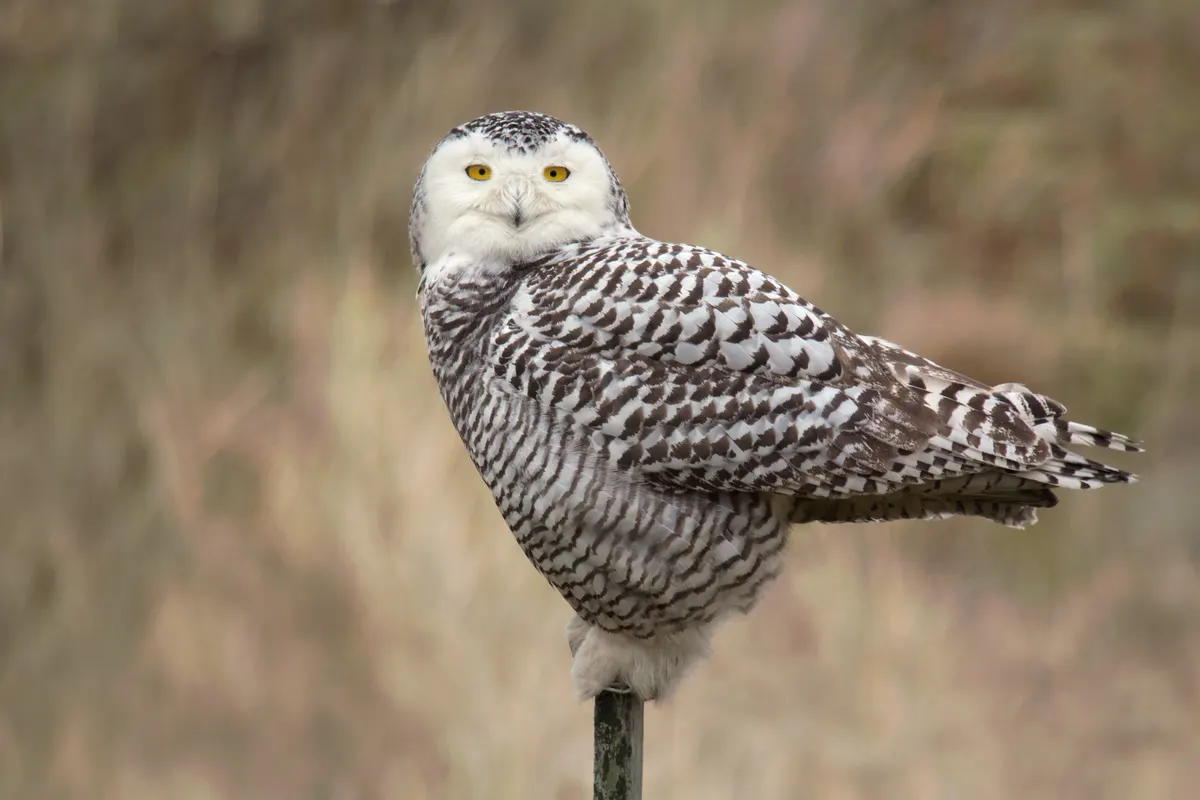
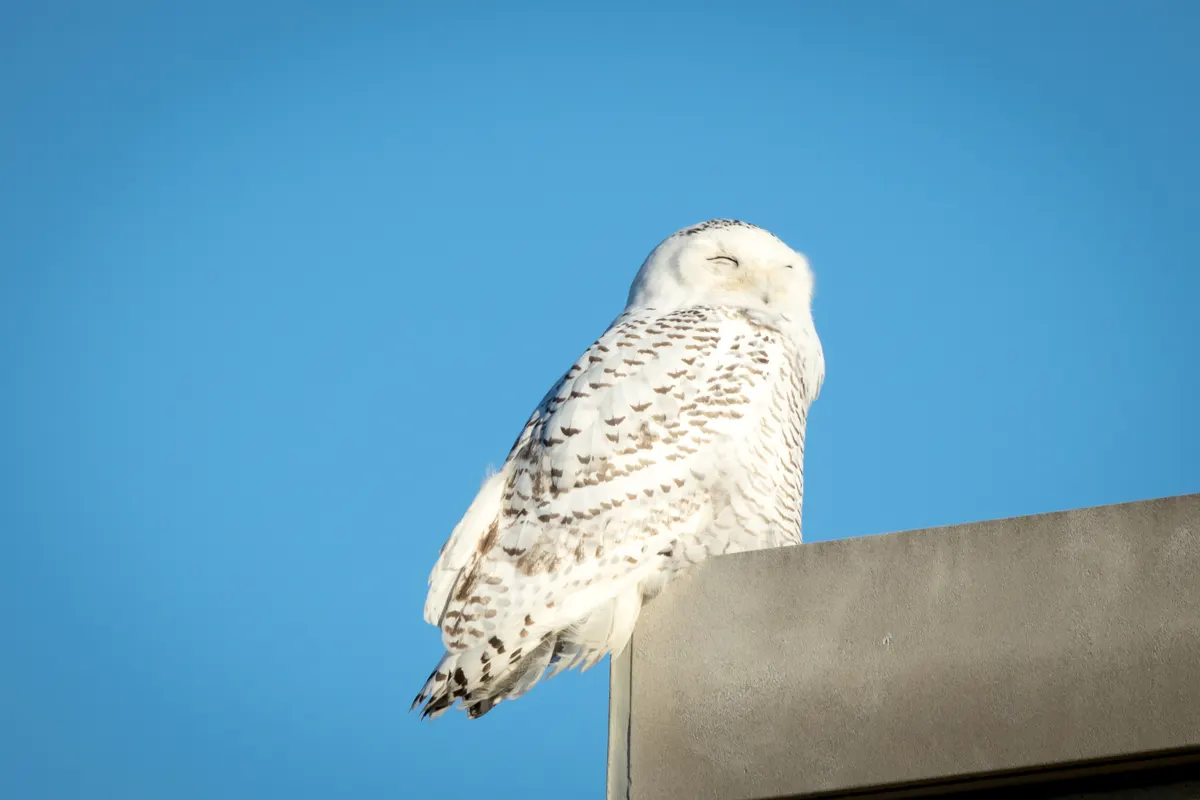
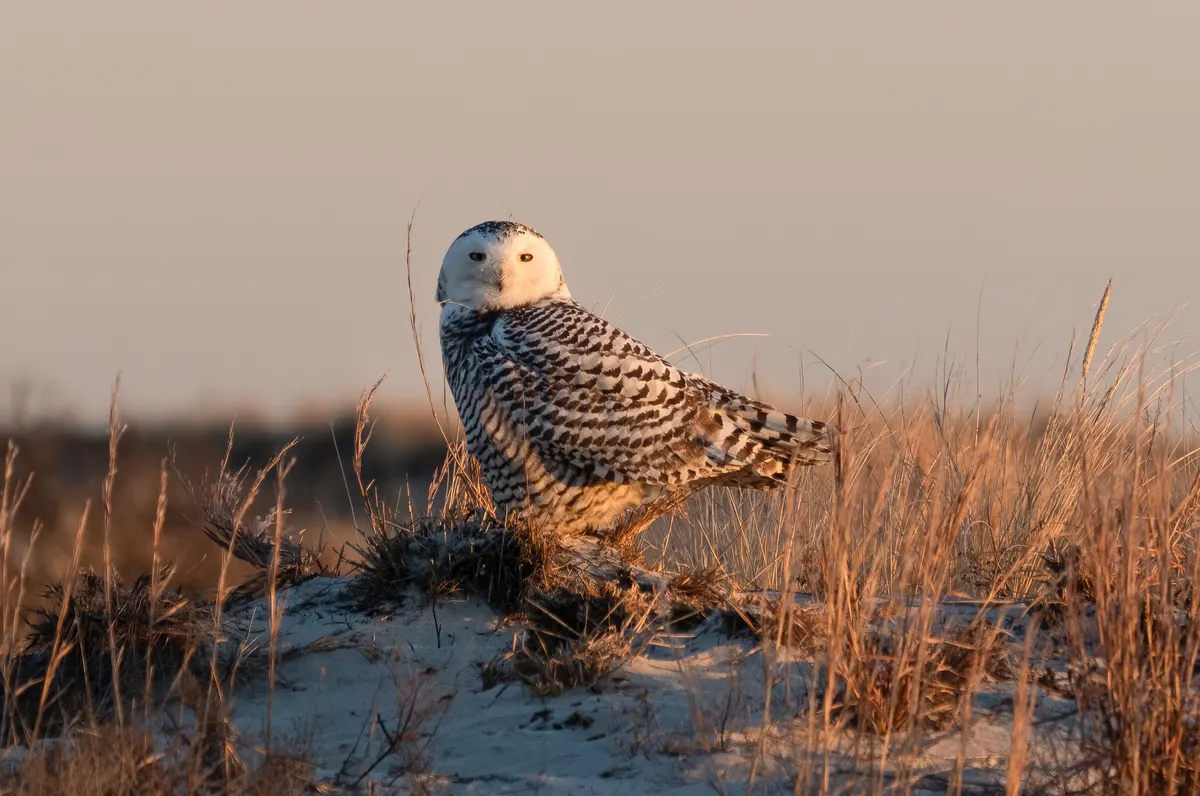
Wild snowy owl perched among coastal dunes and winter sky
Wintering birds favor windswept coasts, airports, and grasslands that mimic tundra.

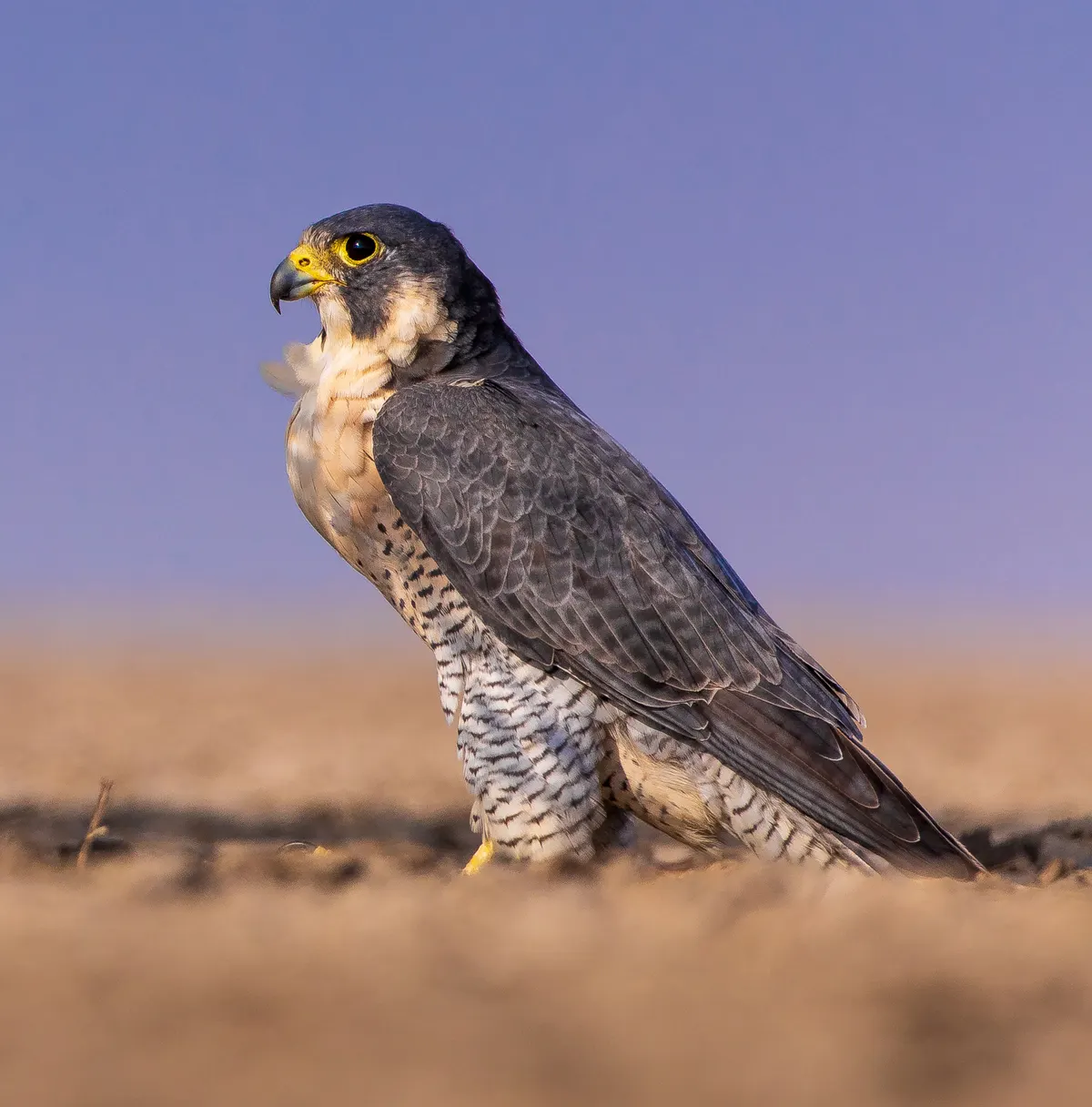
Breeding snowy owls need open Arctic tundra — coastal plains, rolling uplands, and rocky knolls with wide views for hunting and defending the nest — around the high north through Canada, Alaska, Greenland, northern Scandinavia, and Russia, favouring slightly raised ground where snow melts early and predators can be seen coming. Outside the breeding season they are nomadic: some stay in the Arctic while others push south onto prairies, beaches, airports, and farmland that resemble tundra. They share polar landscapes with arctic foxes, which may raid nests, and polar bears on some coasts, and in open winter habitat overlap with falcons like the peregrine falcon.

What Snowy Owls Eat

Snowy owls are opportunistic sit-and-wait and low-flight hunters. Lemmings and other small rodents dominate the breeding-season diet when those prey boom, and when rodents crash the owls switch to birds — ducks, shorebirds, and other open-country species — plus hares and whatever vertebrates they can seize. Because high-latitude summers have little darkness, they often hunt in daylight, using keen vision and hearing to find prey under thin snow, killing with the talons and later coughing up fur and bone as pellets. High-prey years fuel large clutches; low-prey years can mean skipping breeding entirely.

Behavior: Solitary Hunters of Open Ground

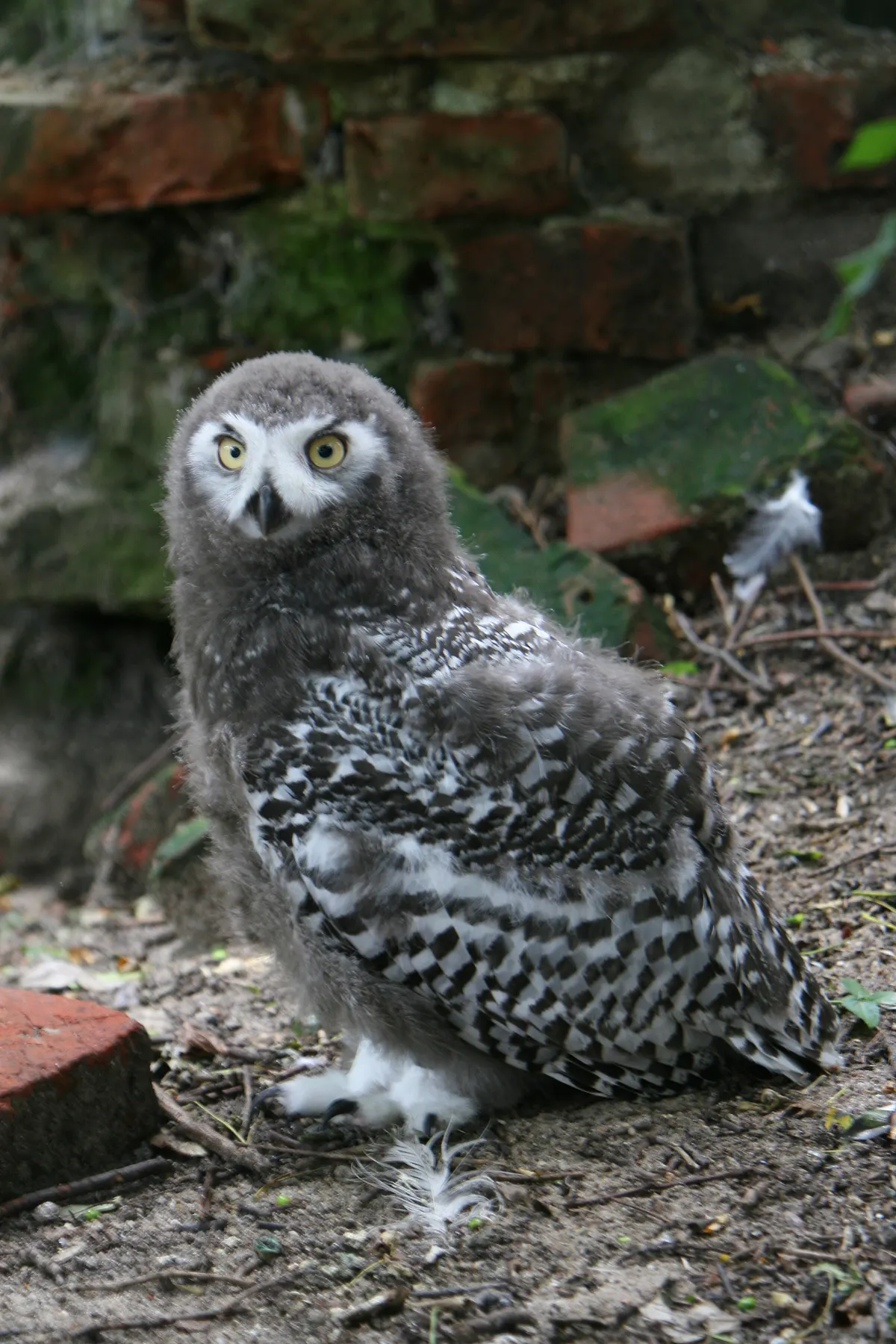
Young snowy owl chick with dense down looking toward the camera
Breeding pairs raise large broods in peak lemming years on Arctic nesting grounds.

Adults are largely solitary outside nesting, when breeding pairs defend tundra territories with aerial displays, calls, and aggressive strikes against foxes, jaegers, and human intruders near the nest scrape, the male delivering food while the female incubates and guards chicks. Wintering birds space themselves across productive fields or dunes, perching on posts, dunes, or drifts — low lookouts rather than forest canopies — and flying strongly and buoyantly over open country, showing aggression toward other raptors where hunting grounds or carcasses overlap.

Life Cycle: Ground Nests Tied to Lemming Cycles

Young female snowy owl with heavily barred white and gray plumage
Immature plumage stays barred longer in females than in adult males.

Snowy owls nest on the ground in a scraped hollow lined with scant plant material and feathers, and clutch size tracks lemming abundance — from a few eggs to more than ten in exceptional years. Incubation lasts about a month, and chicks hatch in darkish down that gives way to barred juvenile feathers. Both parents feed the brood, and the young leave the nest area before they can fly well, begging nearby while practicing short hops and hunts. The first winter is hard — collisions, starvation, and inexperience claim many — but survivors may live a decade or more in the wild.

Conservation: A Vulnerable Arctic Owl

Snowy owl resting on open dunes during a winter irruption in the Netherlands
Iruptive winters push hungry birds far south of their usual polar breeding grounds.

The snowy owl is classified as Vulnerable, reflecting evidence of a smaller global population and decline over recent generations. Arctic warming can disrupt both prey cycles and nesting habitat, while on southern wintering grounds vehicles, wires, aircraft, and secondary poisoning add mortality. Conserving intact tundra, reducing winter hazards, and supporting circumpolar monitoring are central — and because the species wanders across borders, protection works best when Arctic breeding grounds and temperate winter habitats are treated as one linked system.

References and Authoritative Sources

Snowy Owl: classification and fun facts

Classification

Scientific Taxonomy
  1. Kingdom

    Animalia

  2. Phylum

    Chordata

  3. Class

    Aves

  4. Order

    Strigiformes

  5. Family

    Strigidae

  6. Genus

    Bubo

  7. Species

    B. scandiacus

Did You Know?

Fun Facts

1

Adult males can look almost pure white, while females keep more dark barring.

2

Snowy owls often hunt in daylight because Arctic summers have little night.

3

They nest on the ground on open tundra instead of in tree holes.

4

Lemming booms can trigger unusually large owl broods.

5

Some winters bring irruptions of hungry birds far south of the Arctic.

6

The older scientific synonym *Nyctea scandiaca* still appears on many range maps.

Common Questions

FAQ about Snowy Owl

Select a question to reveal the answer.

What is a snowy owl?

The snowy owl (*Bubo scandiacus*) is a large white owl in the typical-owl family Strigidae. It is adapted to polar tundra and is one of the most northerly breeding owls on Earth.

Where do snowy owls live?

They breed on Arctic tundra across Canada, Alaska, Greenland, northern Europe, and Russia. In winter some stay north while others move into open fields, coasts, and prairies farther south.

What do snowy owls eat?

Snowy owls are carnivores. Lemmings and other small rodents are staple prey, but they also take birds, hares, and other animals when rodents are scarce.

Why are snowy owls white?

White plumage camouflages them against snow and pale Arctic ground. Heavy feathering also insulates against extreme cold, including feathers on their feet.

How are snowy owls different from great horned owls?

Snowy owls are Arctic ground-nesters that often hunt by day. The great horned owl is a more widespread forest hunter with ear tufts and darker plumage.

Are snowy owls endangered?

They are listed as Vulnerable. Recent estimates suggest a smaller global population and ongoing declines linked to Arctic change, prey shifts, and human hazards on winter grounds.

Show 2 more questionsExpand
Do snowy owls hunt during the day?

Yes. Continuous Arctic summer daylight forces daytime hunting, and many wintering birds remain active in light while scanning fields for rodents.

What is a baby snowy owl called?

A baby snowy owl is called a chick (or owlet). Chicks hatch in open-ground nests and are fed by both parents until they can fly and hunt.