Thorny Devil Facts
“Thorny devils can eat thousands of ants in a single day.”
The thorny devil is a spiny Australian lizard that lives in hot deserts. It eats ants, collects dew on its skin, and uses camouflage to hide from predators.
Loading page content
“Thorny devils can eat thousands of ants in a single day.”
The thorny devil is a spiny Australian lizard that lives in hot deserts. It eats ants, collects dew on its skin, and uses camouflage to hide from predators.
Moloch horridusSquamataAgamidae
Explore thorny devil photos organized for learning and classroom observation.
Click any photo to view it larger. 8 images available.
Core article
Habitat, diet, behavior, and more — everything on one page.
Covered in cone-shaped spines and painted in desert camouflage, the thorny devil (Moloch horridus) looks like a tiny dragon crawling across the Australian outback. This remarkable reptile survives one of the driest continents on Earth by eating ants, collecting dew on its skin, and tricking predators with a false head.
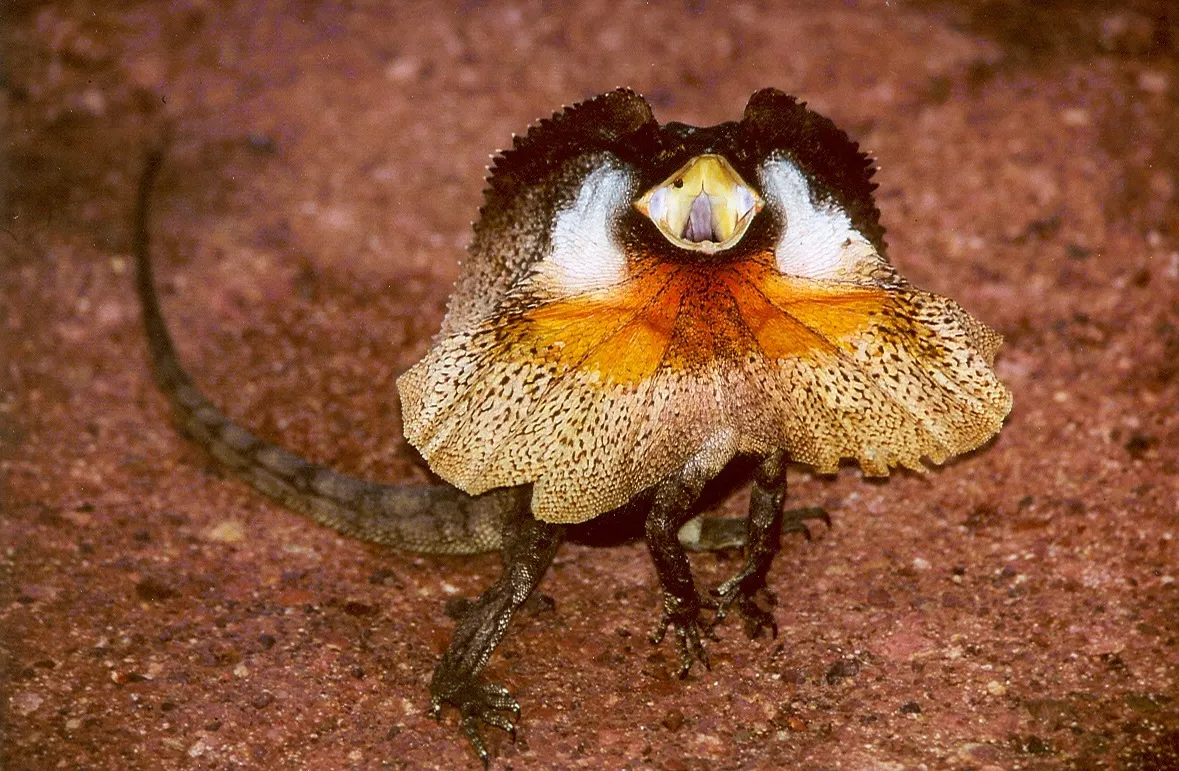
The thorny devil is the only species in the genus Moloch, named after a Canaanite deity often depicted with horns. It belongs to the family Agamidae — the dragon lizards — alongside frilled lizards and bearded dragons. Its scientific name is Moloch horridus.
Australian agamids diversified as the continent dried during the Miocene and Pliocene epochs. The thorny devil's extreme specialization on ants and its water-harvesting skin channels represent some of the most specialized desert reptile adaptations known.
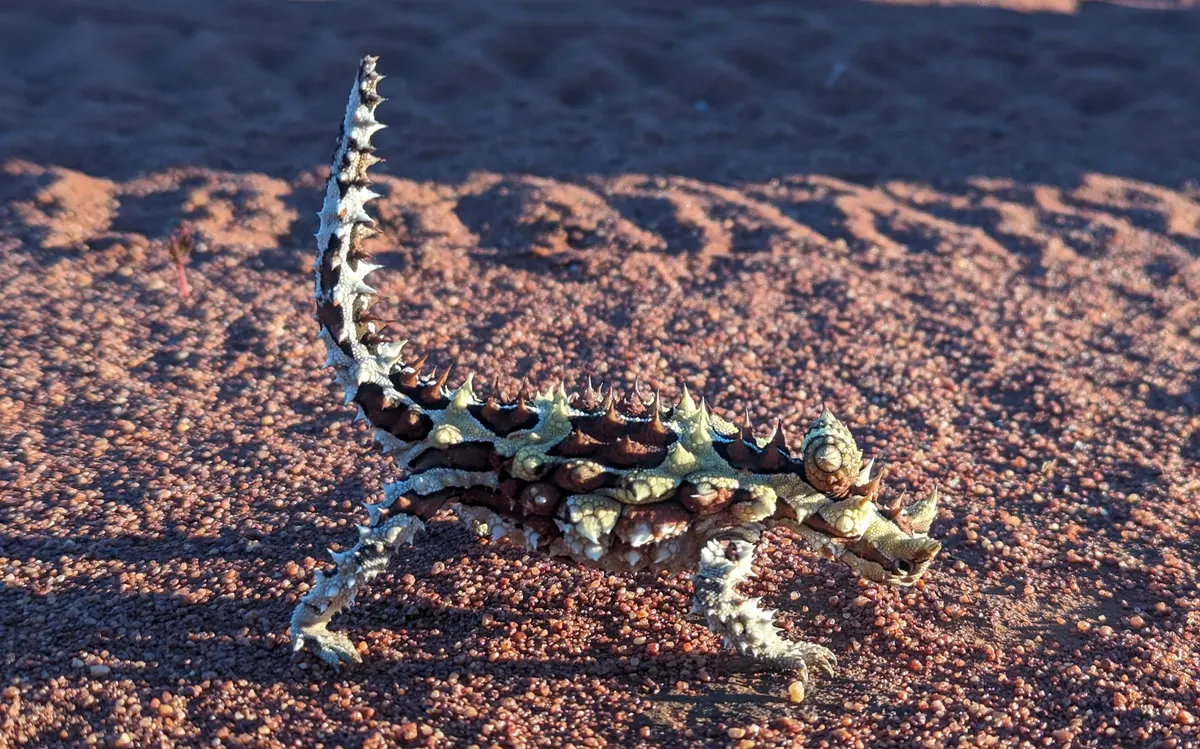
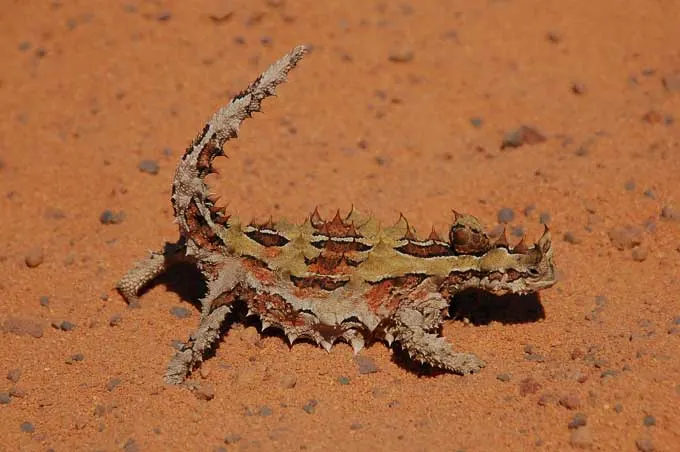
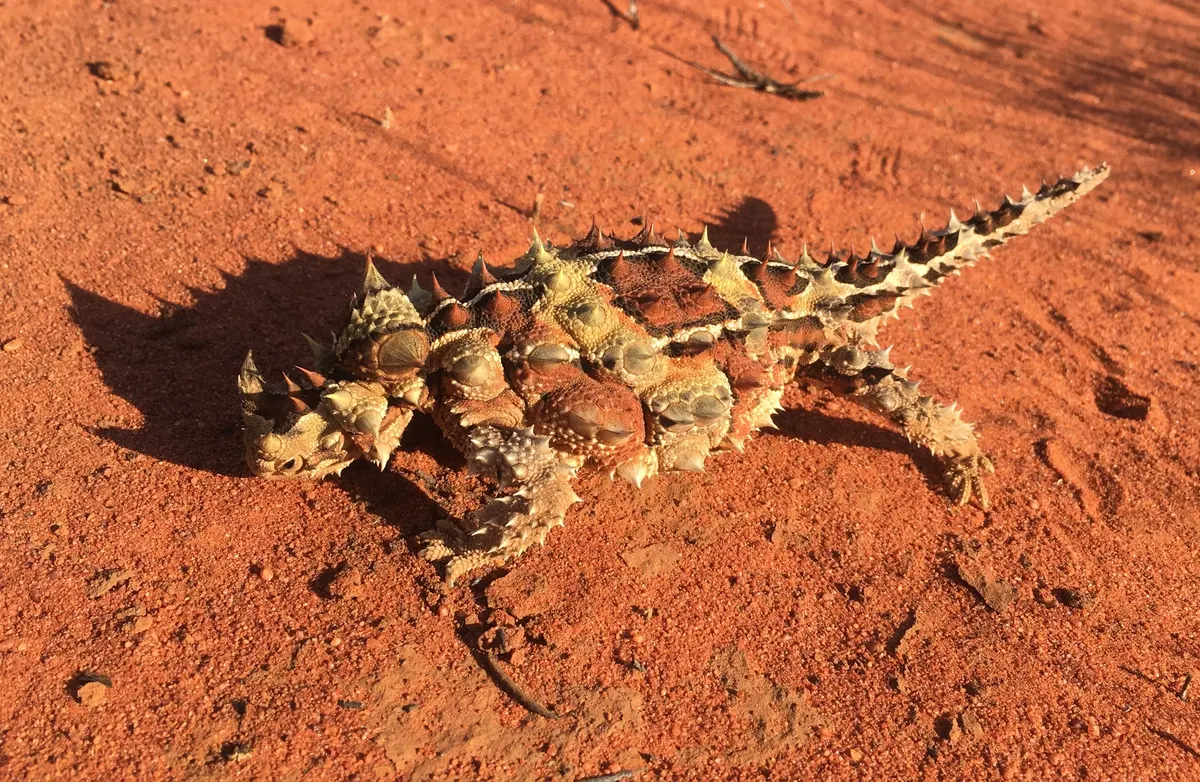
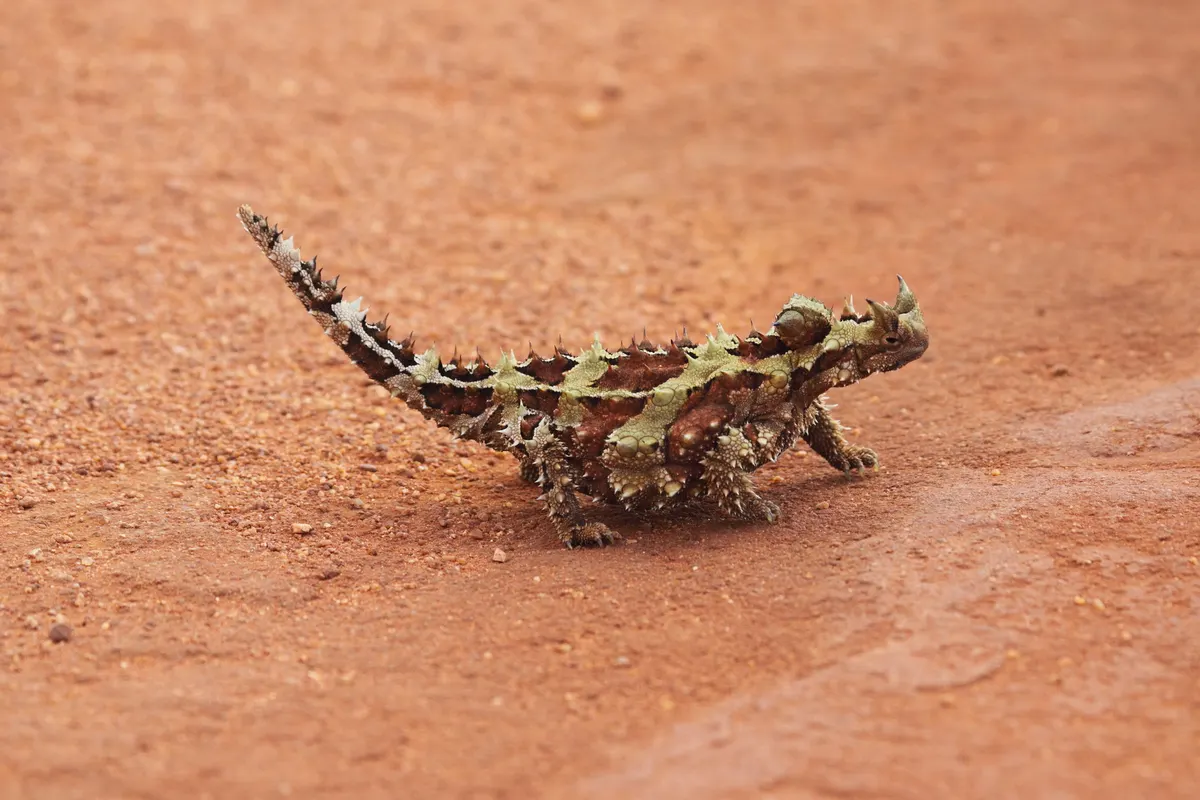
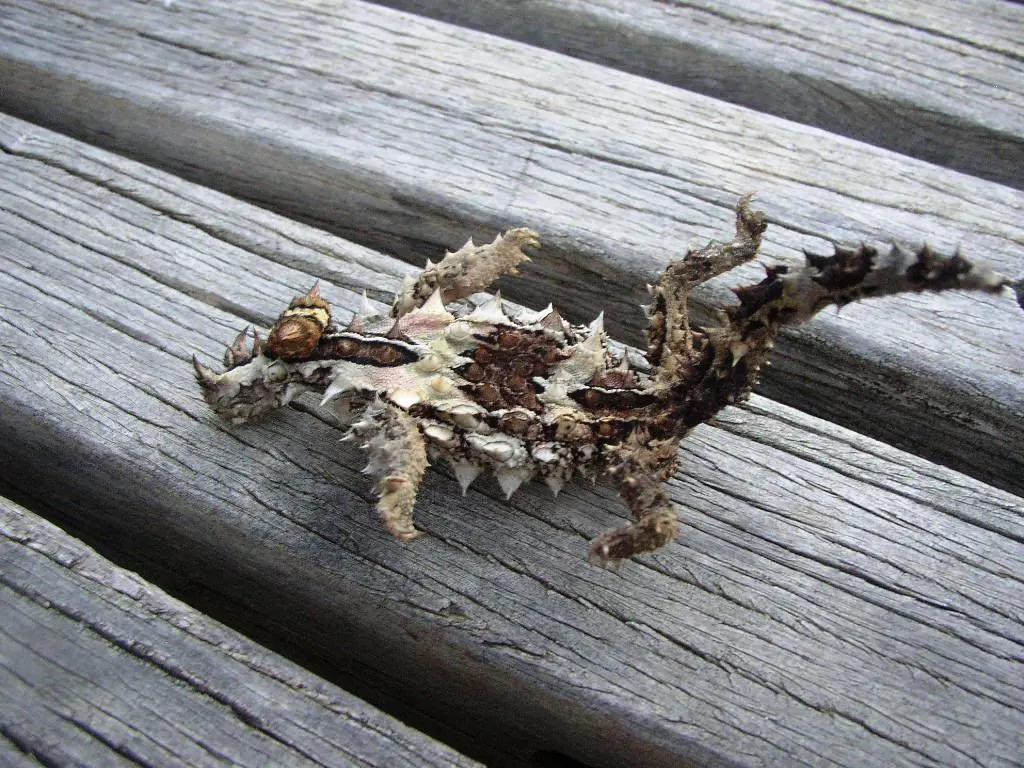
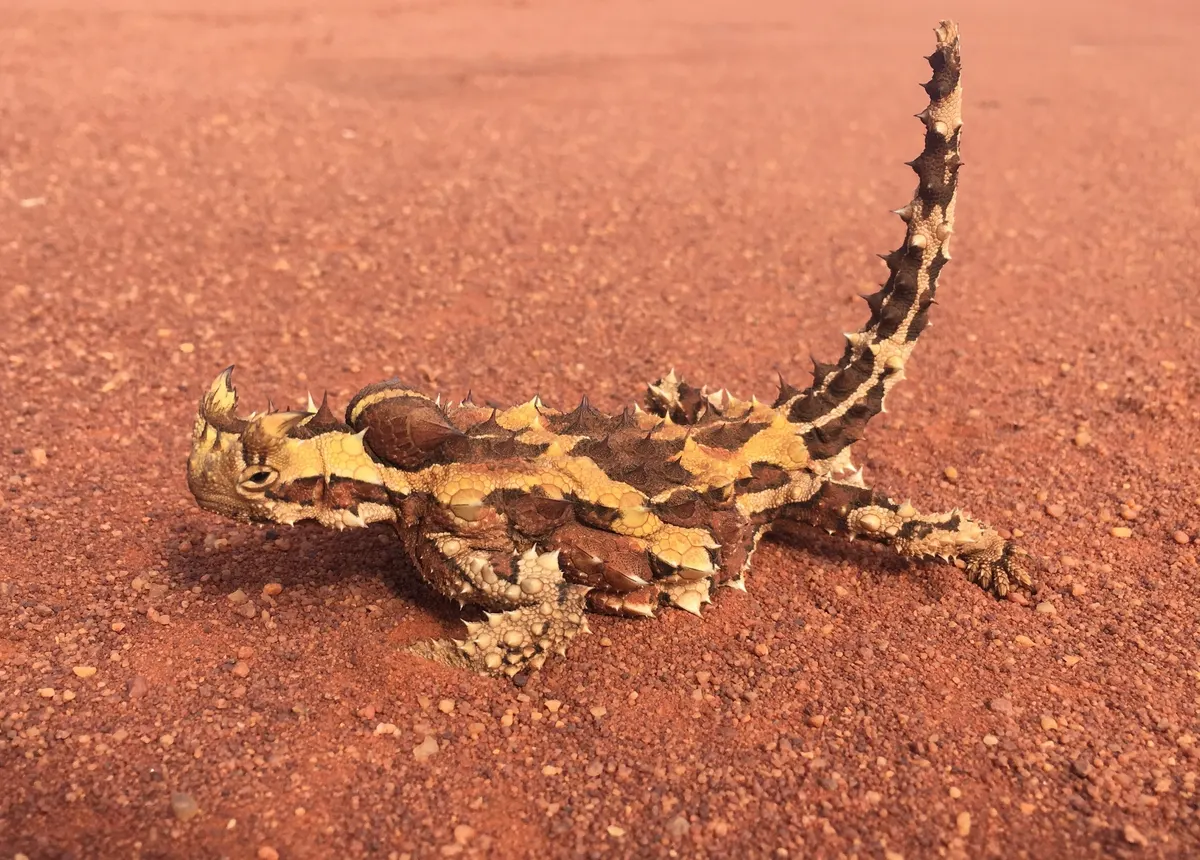
Adult thorny devils reach 6 to 8 inches (15 to 20 cm) in length and weigh only 2.5 to 3.5 ounces (70 to 100 grams). Their body is flattened and covered in hard, cone-shaped spines that deter predators. Coloration shifts between pale desert yellow, orange, and brown depending on temperature and soil type.
A prominent knob on the back of the neck acts as a "false head." When threatened, the lizard tucks its real head between its forelegs, presenting the armored knob to the attacker instead.
The most extraordinary adaptation is the network of grooves between spines that collect moisture. Dew and rain running across the lizard's body are drawn by capillary action toward its mouth, allowing it to drink without finding standing water.

Thorny devils live exclusively in desert and arid scrubland regions of Australia. Their range covers the Great Sandy, Gibson, and Great Victoria deserts, plus spinifex grasslands of Western Australia, the Northern Territory, and South Australia.
They require sandy soils with abundant ant colonies and sparse spinifex grass for shelter. Thorny devils are diurnal, active during the day when ants are most available, and retreat to shallow burrows or under vegetation during the hottest hours.

Thorny devils are specialist ant predators. They eat almost exclusively ants — particularly species of Iridomyrmex and Crematogaster — consuming thousands per day. A sticky tongue flicks out to capture ants one at a time.
Their stomach is large relative to body size, processing a steady stream of small prey throughout the day. Because ants provide some moisture, thorny devils rarely drink from standing water, relying instead on skin-collected dew.

Thorny devils are solitary. They move slowly across the desert floor with a distinctive rocking walk — some scientists think this motion confuses predators by making it hard to tell which end is the head.
When alarmed, they freeze in place, relying on camouflage. If a predator persists, they present their false head and may inflate their chest with air to appear larger.

Breeding occurs in spring. Females lay a clutch of three to ten eggs in a burrow about 12 inches (30 cm) deep. The eggs incubate for three to four months before hatching.
Hatchlings are independent immediately — there is no parental care. Young thorny devils are paler than adults and darken with age. They can live 15 to 20 years in the wild.

(Population and conservation trend data sourced from the IUCN Red List of Threatened Species)
The thorny devil is classified as Least Concern with a stable population across much of arid Australia.
Threats include habitat alteration from mining, cattle grazing, and invasive species that reduce ant populations. Road mortality is a local concern in some areas. The species is protected by law in parts of Australia and is popular in ecotourism, which supports conservation awareness.
Thorny devils can eat thousands of ants in a single day.
Grooves in their skin channel dew and rain toward their mouth.
A fake head on the back of the neck may trick predators.
They walk with a slow rocking motion that may confuse birds of prey.
Thorny devils are found only in Australia.
Their spines are cone-shaped and soft to touch despite looking sharp.
Select a question to reveal the answer.
A thorny devil is a small spiny lizard from Australian deserts. It is also called the thorny dragon and eats almost nothing but ants.
Thorny devils live in arid desert and scrubland regions of central and western Australia.
Thorny devils are carnivores that eat ants — sometimes thousands per day — using a sticky tongue.
Capillary grooves between their spines collect dew and channel water to their mouth, so they can drink from moisture on their own skin.
Thorny devils are not venomous. Their spines and camouflage protect them from predators.
Thorny devils are listed as Least Concern, but habitat change in Australia's interior can affect local populations.