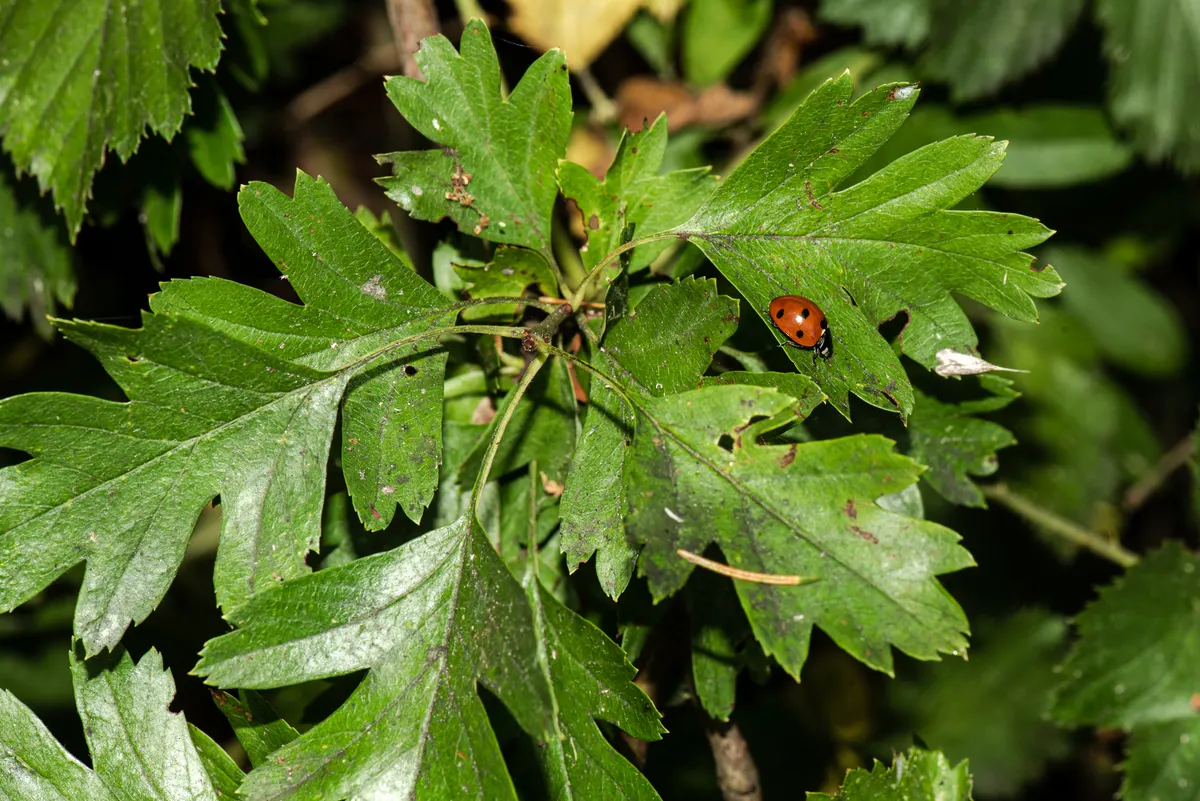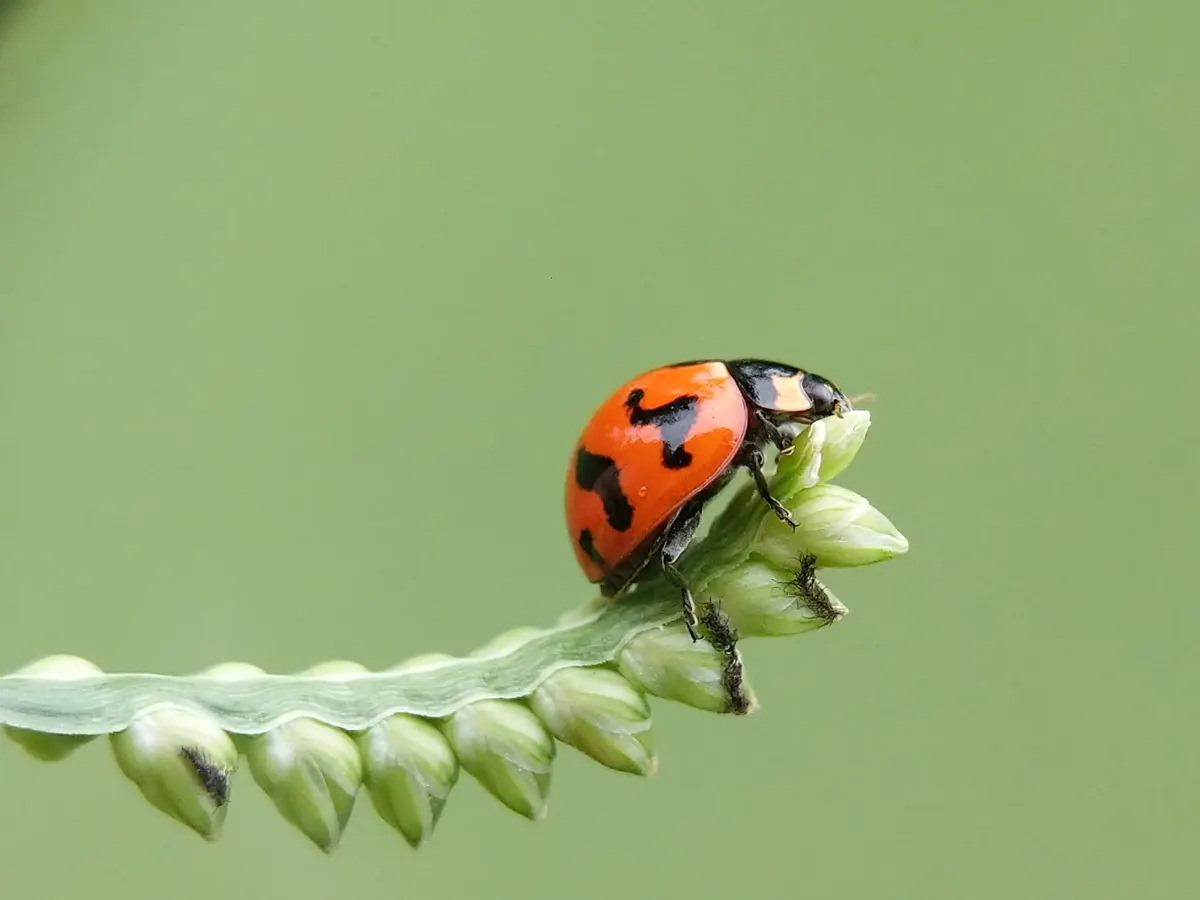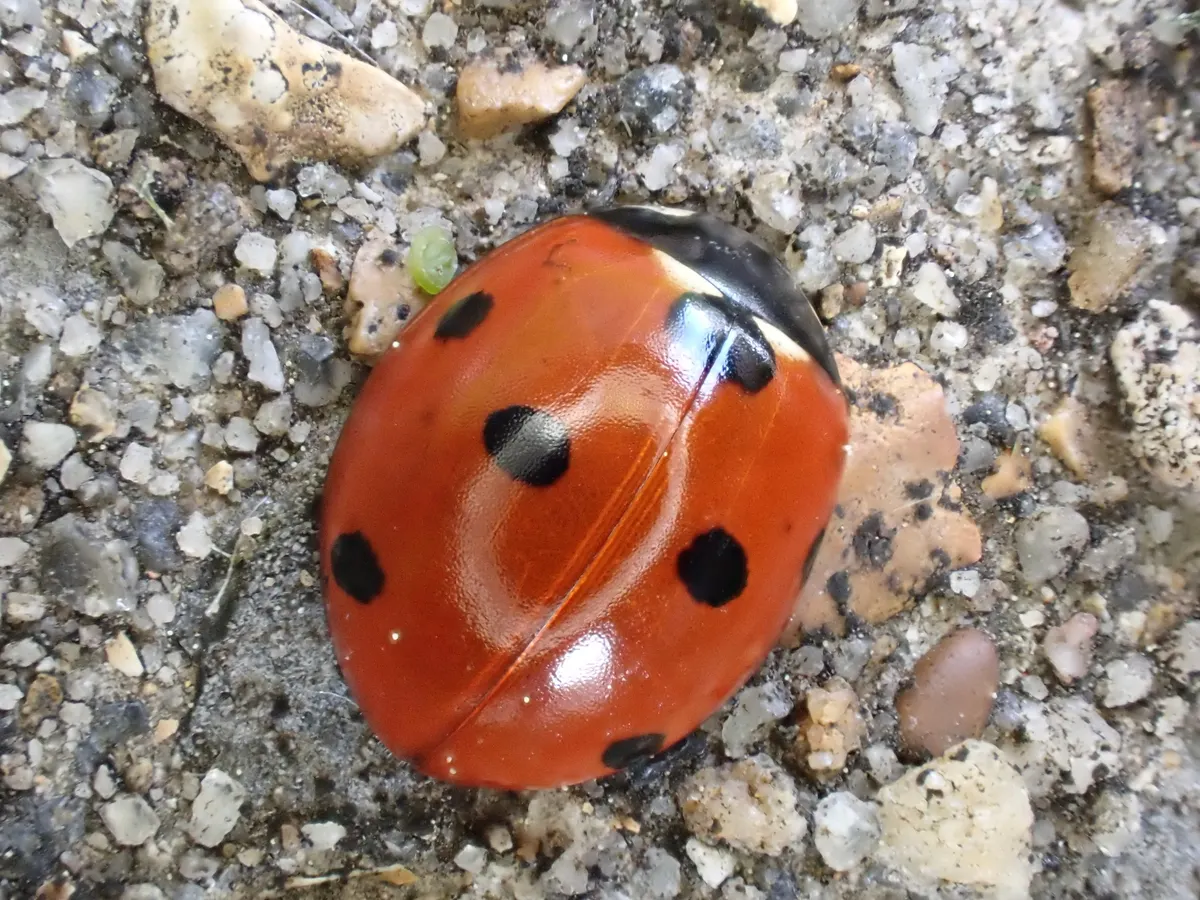
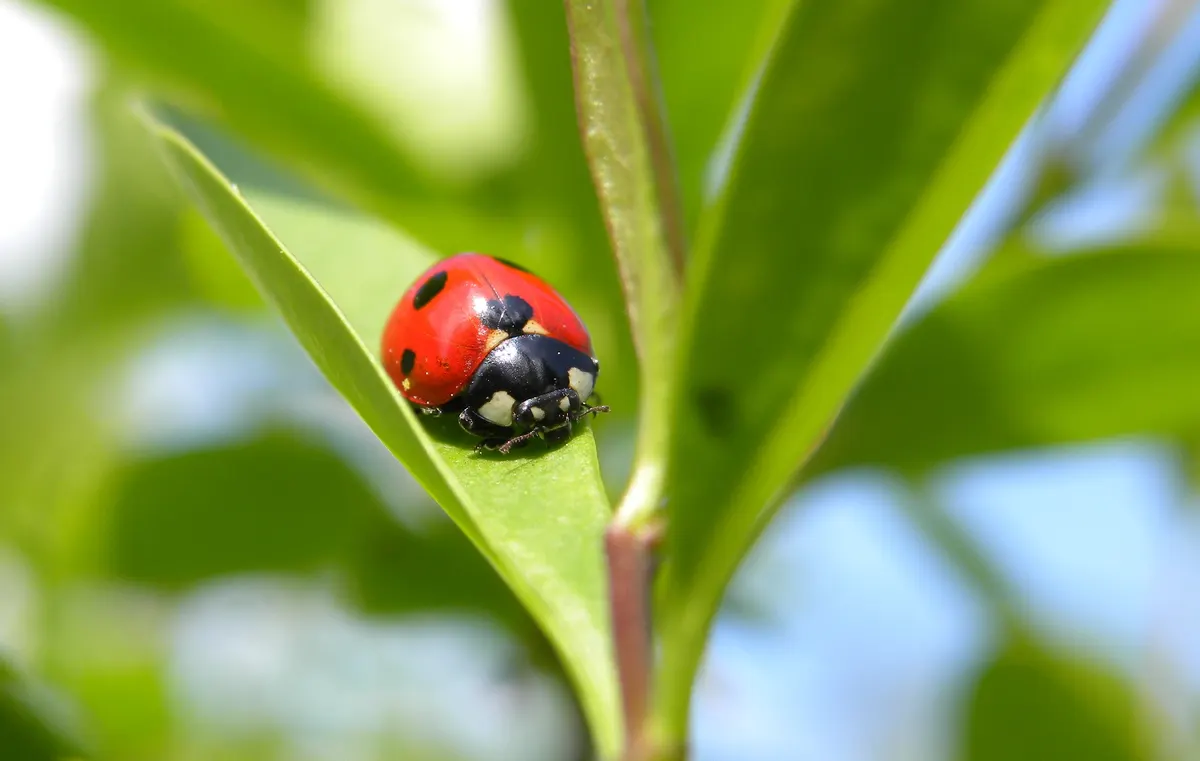
Ladybugs are beetles known for their shiny red dome-shaped bodies and black spots.
InsectaLeast Concern
Ladybug Facts
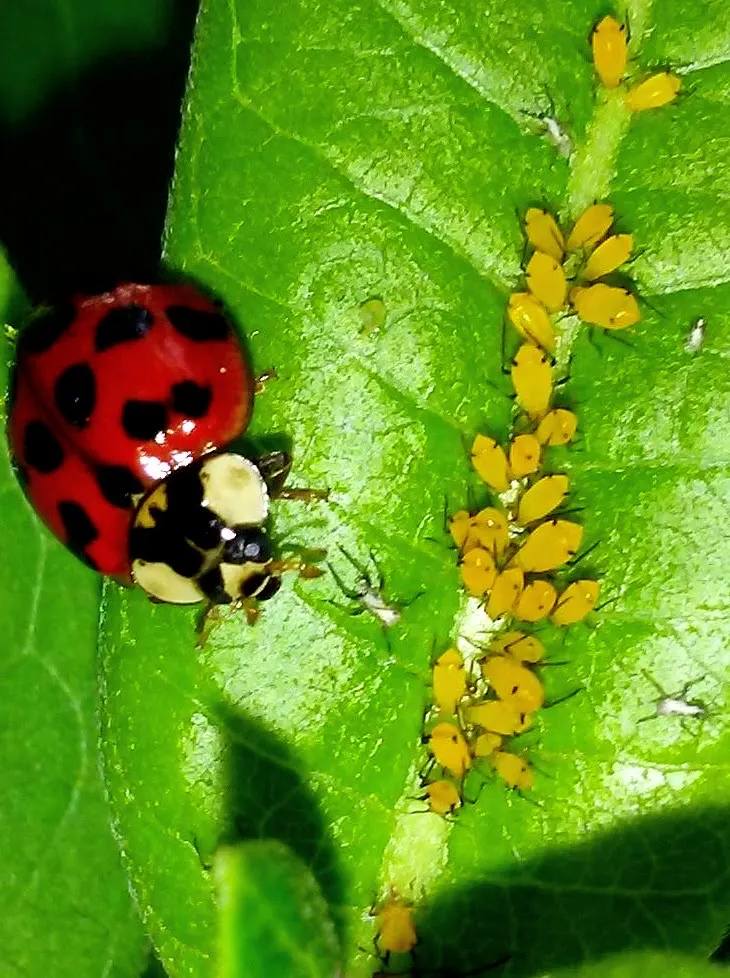
“A single ladybug can devour up to 50 to 100 aphids in a single day, and up to 5,000 during its lifetime!”
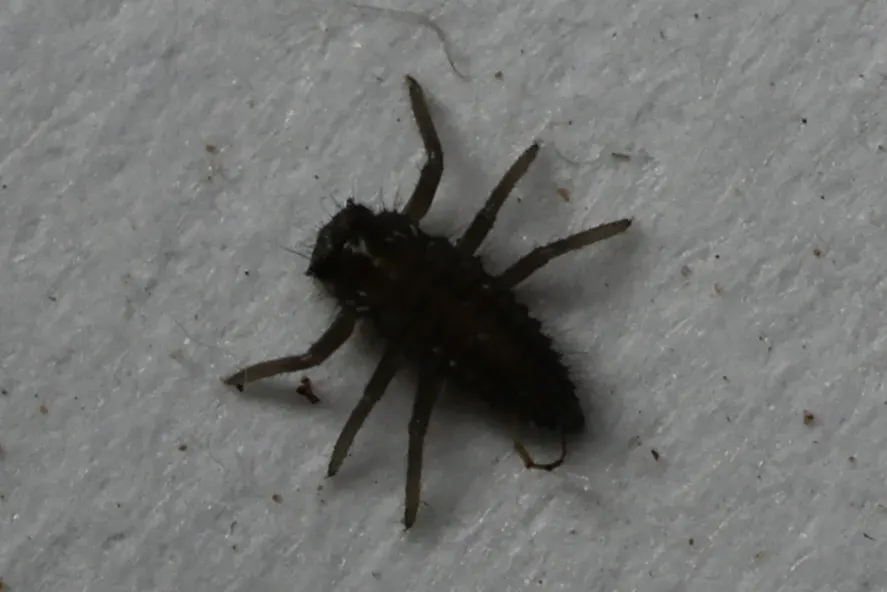
Seven-spotted ladybugs are small predatory beetles common in fields, gardens, and crop edges. Both adults and larvae consume aphids and other plant-feeding insects; when threatened, an adult can release bitter yellow fluid from its leg joints.