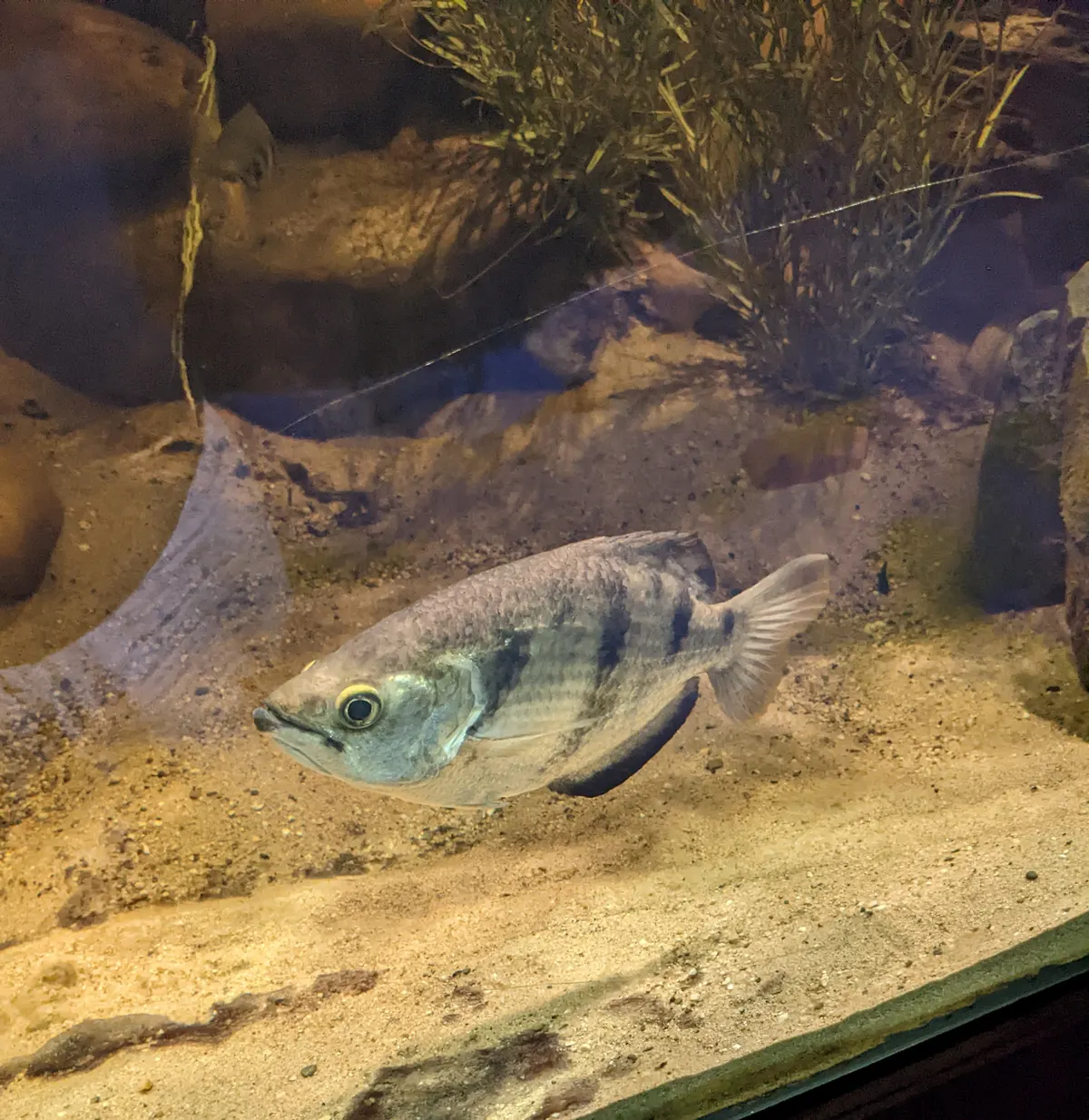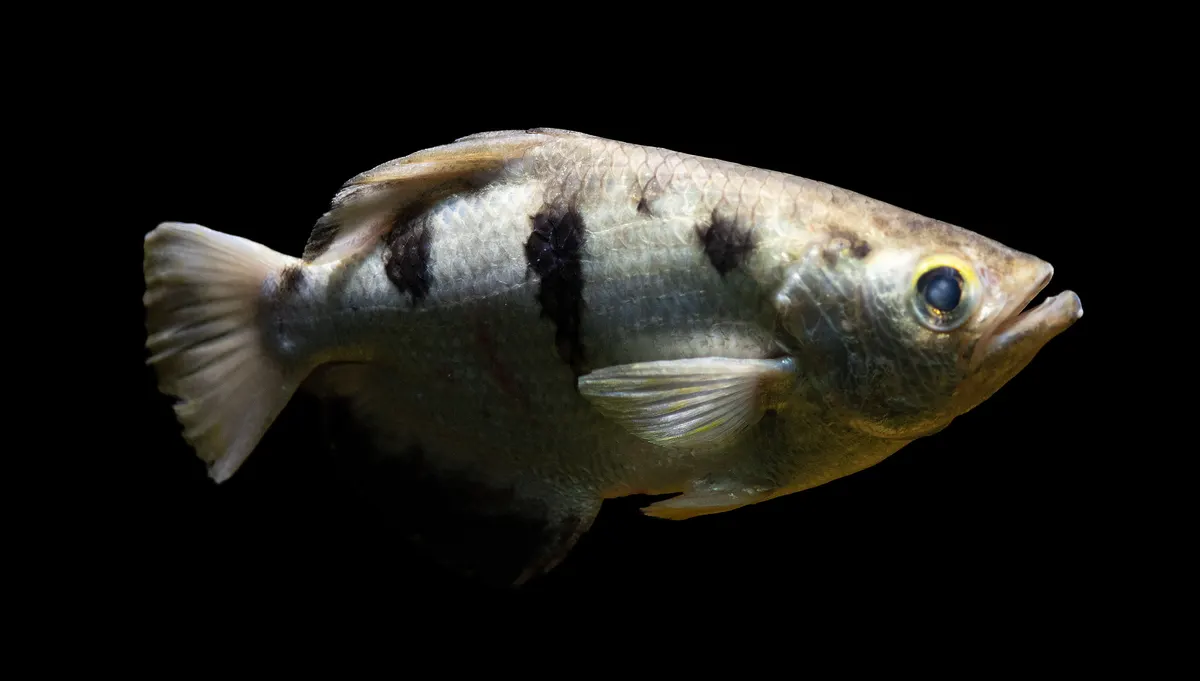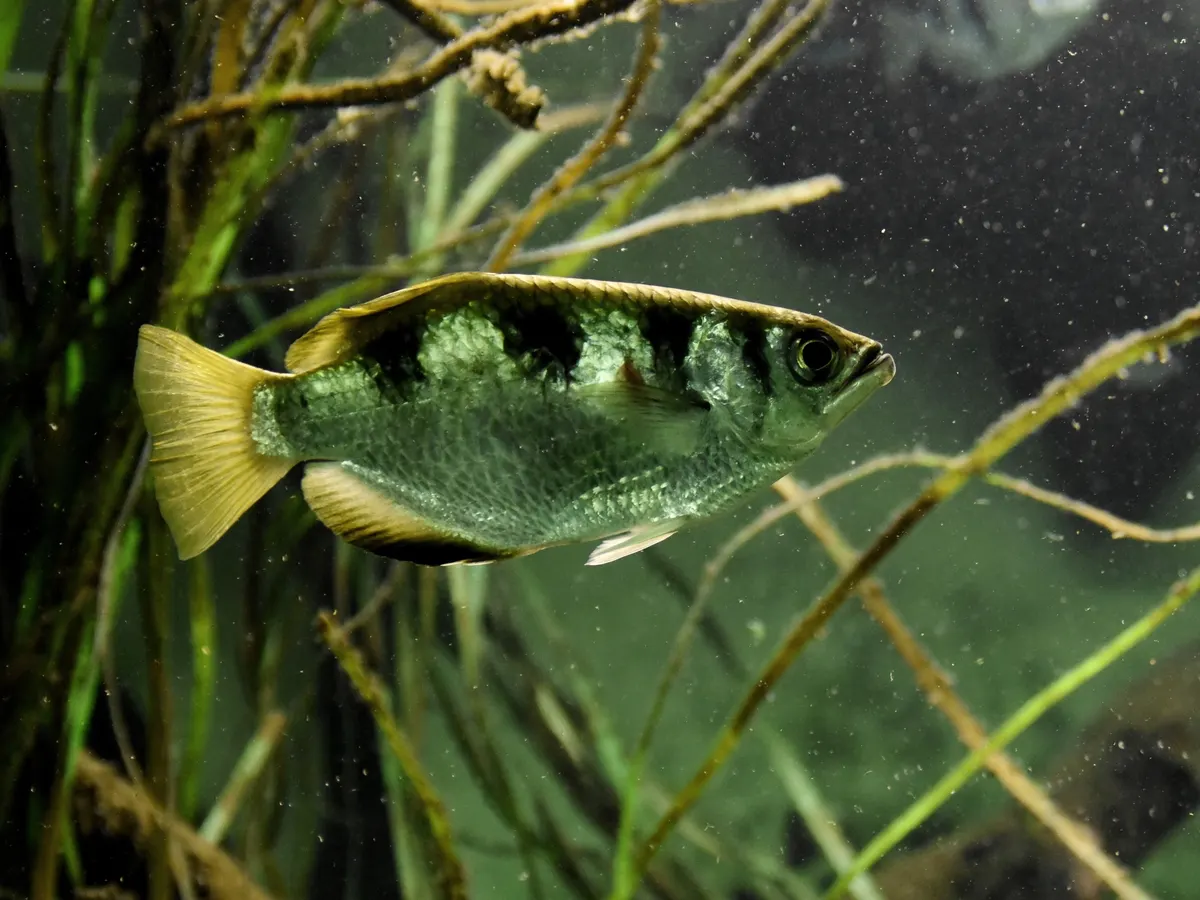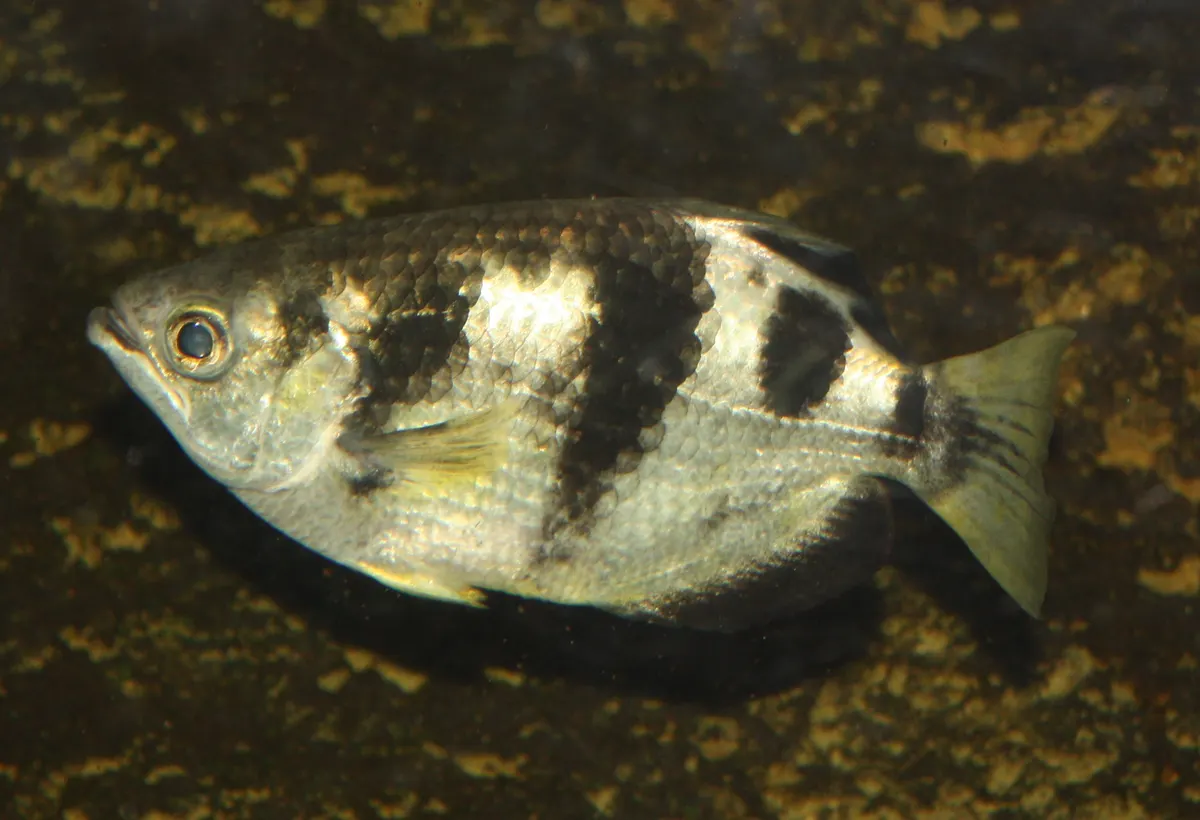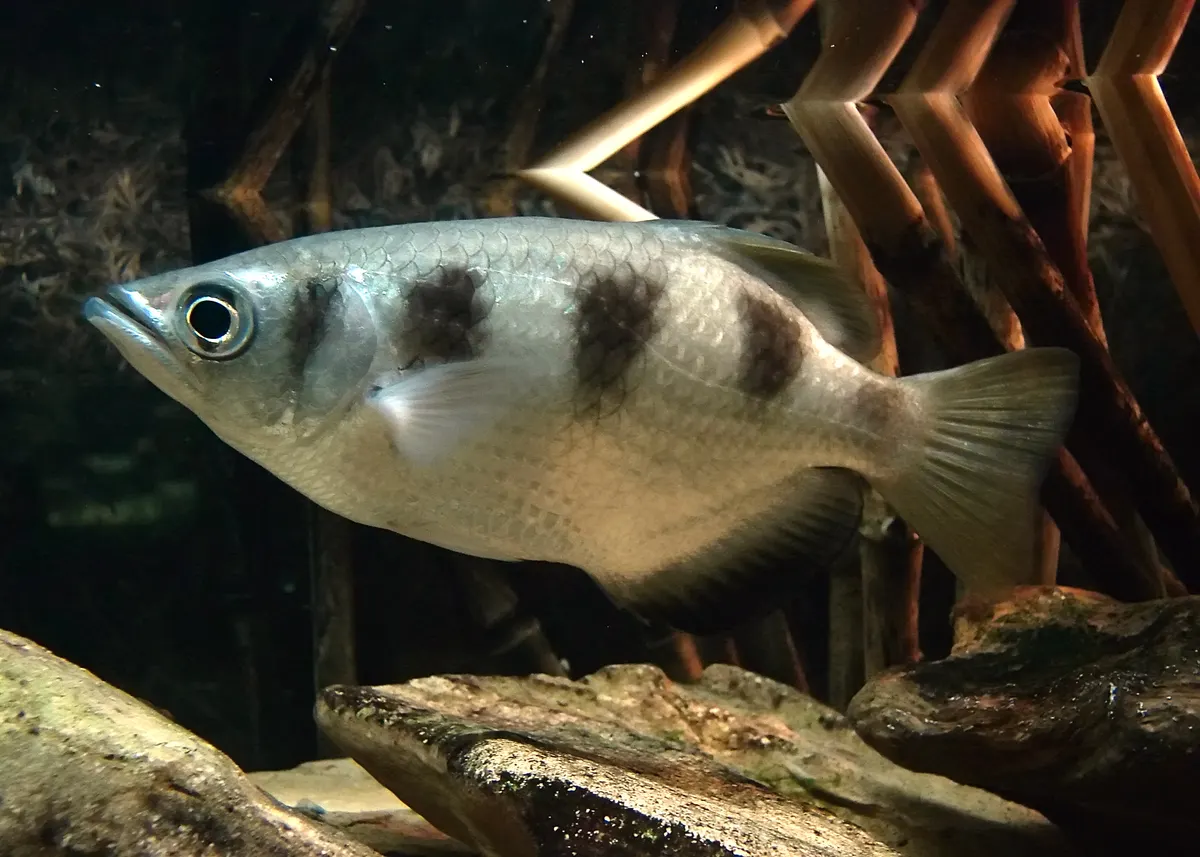
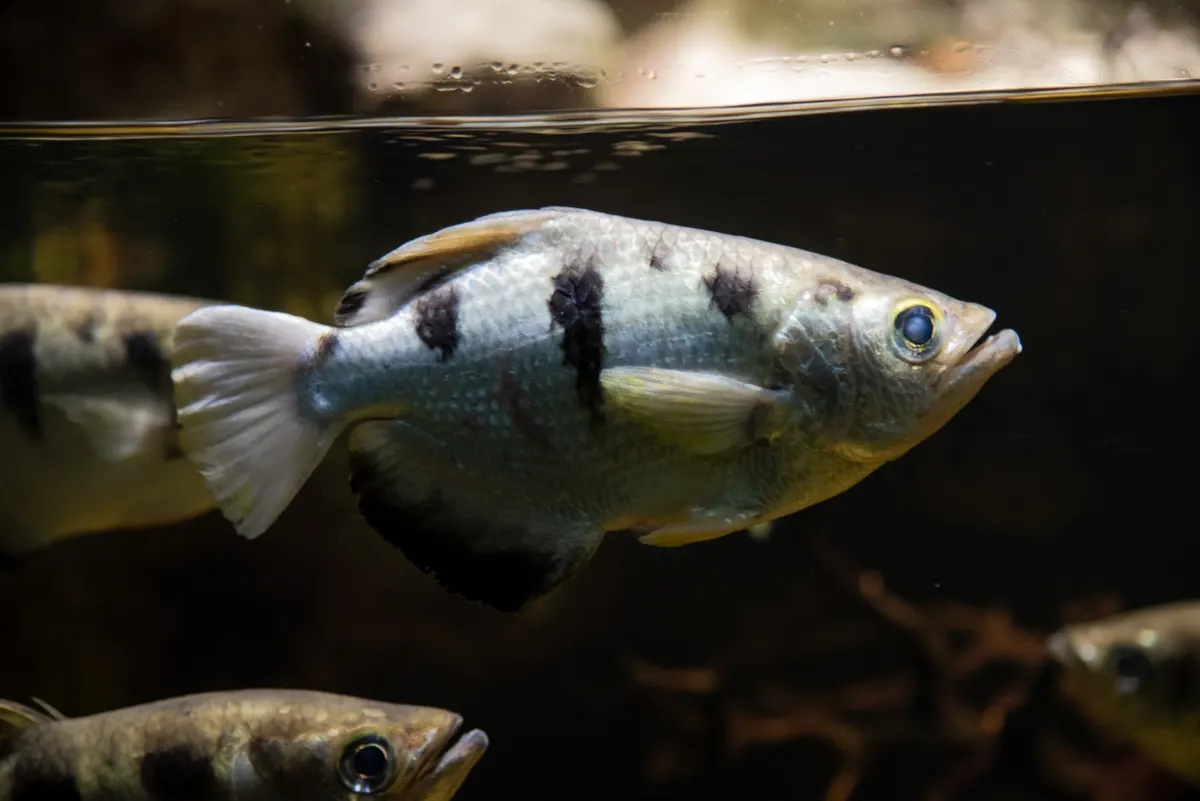
Toxotes jaculatrix is a strict, highly specialized carnivore. While they will consume aquatic prey if necessary, their primary diet consists of terrestrial invertebrates. Spiders, beetles, crickets, grasshoppers, moths, and even small juvenile lizards basking on low-hanging branches constitute the bulk of their caloric intake.
The water-shooting mechanism is a fascinating example of applied physics. When an archerfish spots an insect, it aligns its body almost vertically beneath the target. The fish must then compensate for optical refraction—the severe bending of light as it passes from air into water. A target viewed from underwater appears in a different physical location than it actually is. The archerfish's brain automatically calculates this refractive angle, allowing the fish to aim at the true, absolute position of the insect rather than the optical illusion.
When firing, the archerfish demonstrates dynamic flow modulation. It shapes the stream of water so that the trailing end of the jet moves faster than the leading edge. As a result, the water aggregates in mid-air, morphing into a heavy, concentrated spherical droplet just as it impacts the target, delivering maximum kinetic force to knock the insect loose. Adult archerfish can shoot water jets up to 5 feet (1.5 meters) into the air with 100% accuracy.
If a spider or moth hangs low enough (within a foot of the surface), the archerfish will bypass the water jet entirely, utilizing its powerful caudal fin to propel its entire body out of the water in a rapid, ballistic leap, snatching the prey directly in its protrusible jaws.