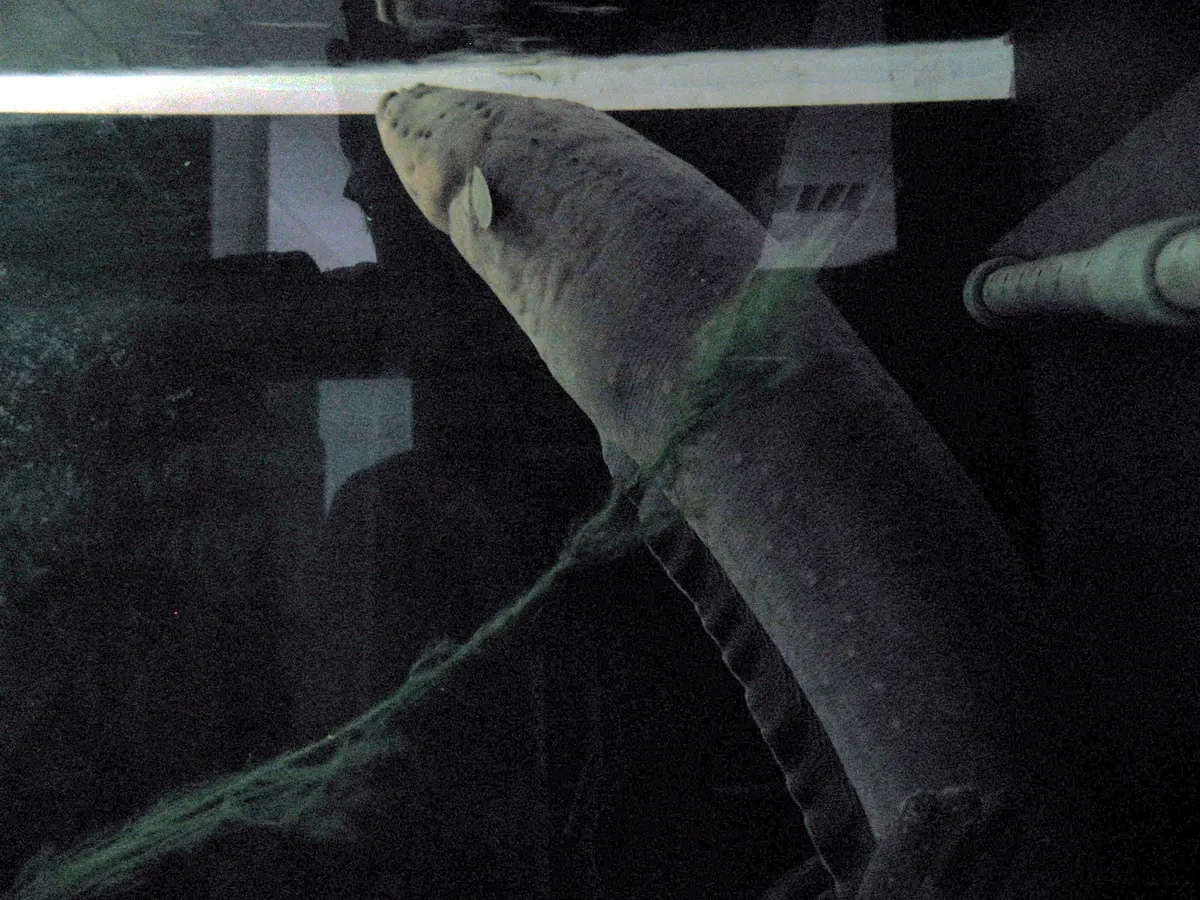
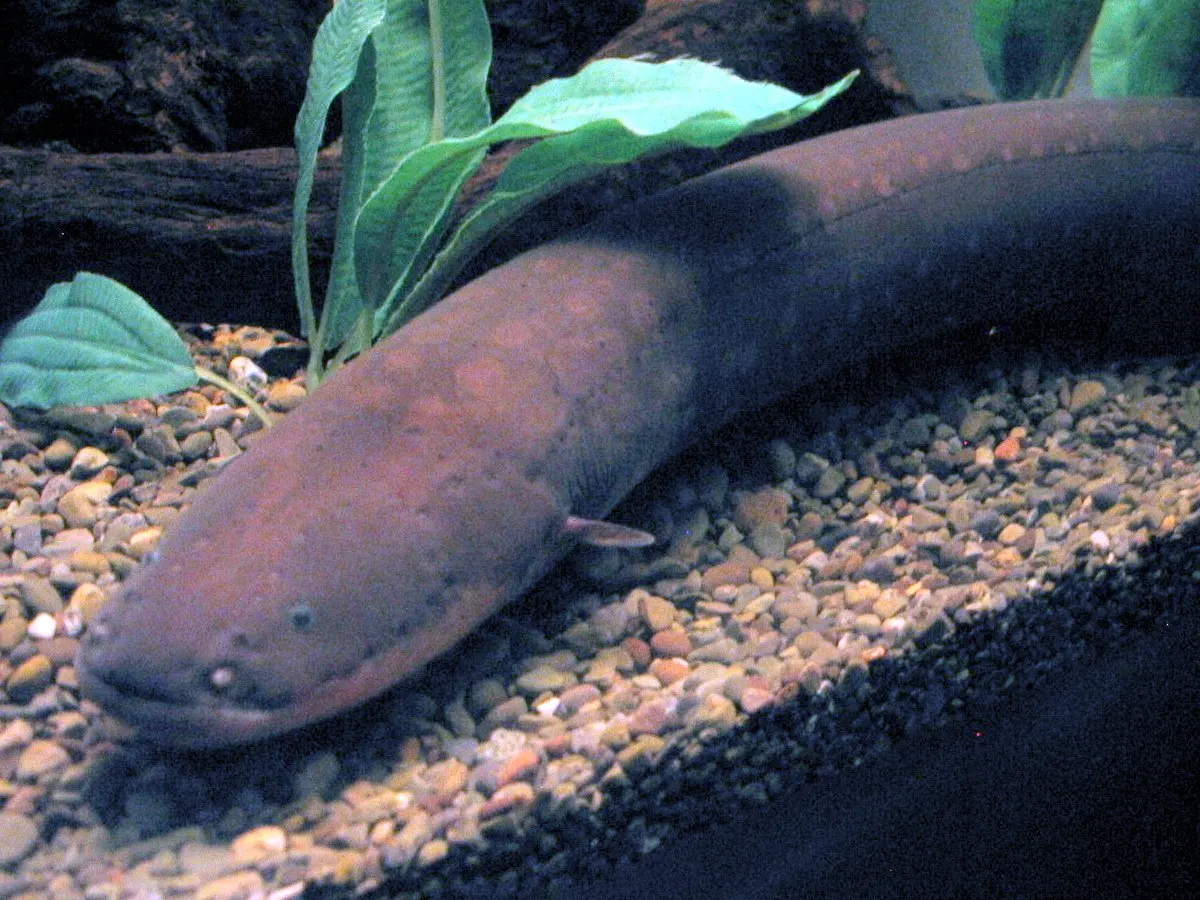
The anatomy of the electric eel is almost entirely subservient to its electrical capabilities. Over 80 percent of the eel's elongated body is dedicated to housing three specialized, electricity-generating organs: the Main organ, Hunter’s organ, and Sachs’ organ.
These organs are composed of thousands of stacked, disc-like cells called electrocytes, which function much like the individual cells of a high-voltage battery. When the eel’s brain triggers an attack, ion channels in the electrocytes open, allowing a sudden influx of sodium ions that rapidly flips the electrical charge of the cells. Because the cells are stacked in series, the combined voltage output can reach a staggering 860 volts and 1 ampere of current, discharged in milliseconds.
Their remaining anatomy is clustered tightly in the front 20 percent of their body. Due to the murky, highly turbid nature of their habitat, their eyesight is extremely poor, effectively useless for hunting. They lack scales, possessing instead a thick, slimy, mucus-coated skin that serves as an essential layer of insulation, preventing the eel from shocking itself when it discharges.