
Animal guides
Why Do Binturongs Smell Like Popcorn?
The popcorn-like smell is a chemical calling card left on branches, not evidence that the animal has eaten popcorn.
By An Nguyen · Updated
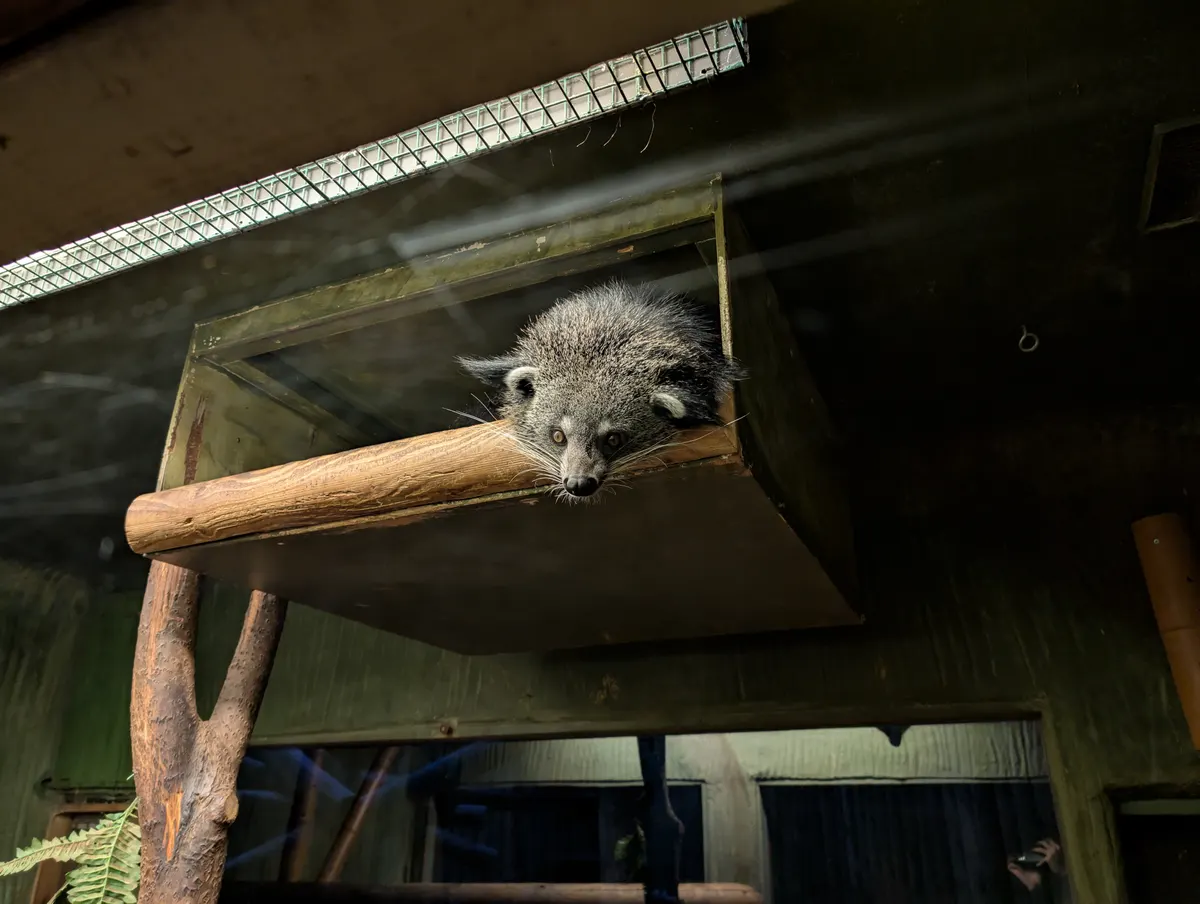
Binturongs smell like hot popcorn because their urine contains 2-acetyl-1-pyrroline, usually shortened to 2-AP. The same volatile compound is a major part of the aroma people associate with freshly popped corn and cooked fragrant rice.
The smell is not evidence that a binturong has eaten popcorn. It is a chemical signal that remains on branches after the animal passes, helping other binturongs detect its presence.
Where does the smell come from?
Researchers analyzed scent samples from binturongs and repeatedly found 2-AP in urine. A binturong urinates while moving or squats with its tail raised, allowing fluid and nearby glandular secretions to mark the surface below. Its large prehensile tail can then contact and spread scent along branches.
Earlier popular explanations often attributed the popcorn odor only to scent glands. The chemical study makes the narrower finding: 2-AP was identified in urine. Perineal glands also contribute to the animal's scent profile, so a natural mark is a mixture rather than a bottle of one isolated compound.
The smell fits an arboreal animal in dense forest habitat. A mark can remain after the sender has moved away, working around vegetation and darkness where a visual signal would have a short range.
Why does 2-AP smell so familiar?
2-AP has a roasted, nutty odor that the human nose can detect at low concentrations. In cooking, heat-driven reactions produce it in popcorn, toasted bread, and rice. Finding the same molecule in an animal does not mean the biochemical route is identical.
The binturong study suggested that microorganisms may help produce 2-AP in the urinary system or scent environment, because the compound is difficult to generate under ordinary body conditions. That mechanism remains a hypothesis rather than a fully traced pathway. The evidence supports the identity of the odor molecule more strongly than it supports one exact account of how the animal makes it.
What information does the scent carry?
Binturongs are often solitary, and individuals occupy overlapping areas. Long-lasting scent marks can announce identity, sex, reproductive condition, or recent presence without requiring a face-to-face encounter.
In the chemical study, males generally produced stronger concentrations of 2-AP than females. Researchers also detected differences associated with reproductive status. That pattern is consistent with a social signal, but it does not mean another binturong reads only one compound. Mammalian scent marks contain many chemicals, and receivers interpret the blend alongside location and context.
The superficially similar red panda also uses scent to communicate in trees, despite belonging to a different family. Both examples show why chemical messages are useful for solitary forest carnivorans; the particular chemistry and marking behavior are species-specific.
Is the smell a defense?
It may make the animal conspicuous to human visitors, but its primary documented role is communication. Some zoo descriptions mention that scent can discourage predators or competitors, yet there is not strong evidence that the popcorn note itself repels an attacker.
A binturong has teeth, claws, a large body, and access to branches for physical defense and escape. The odor should not be treated as a skunk-like spray. It is usually left as a mark on the animal's route rather than aimed at a threat.
The short answer
Binturongs smell like popcorn because 2-AP occurs in their urine and scent marks. Humans recognize the same molecule from cooked foods. For the binturong, it is part of a persistent chemical message used in a dim, structurally complex forest—not the result of a popcorn diet.
For anatomy, fruit-heavy feeding, prehensile-tail use, and conservation, see the full binturong profile.