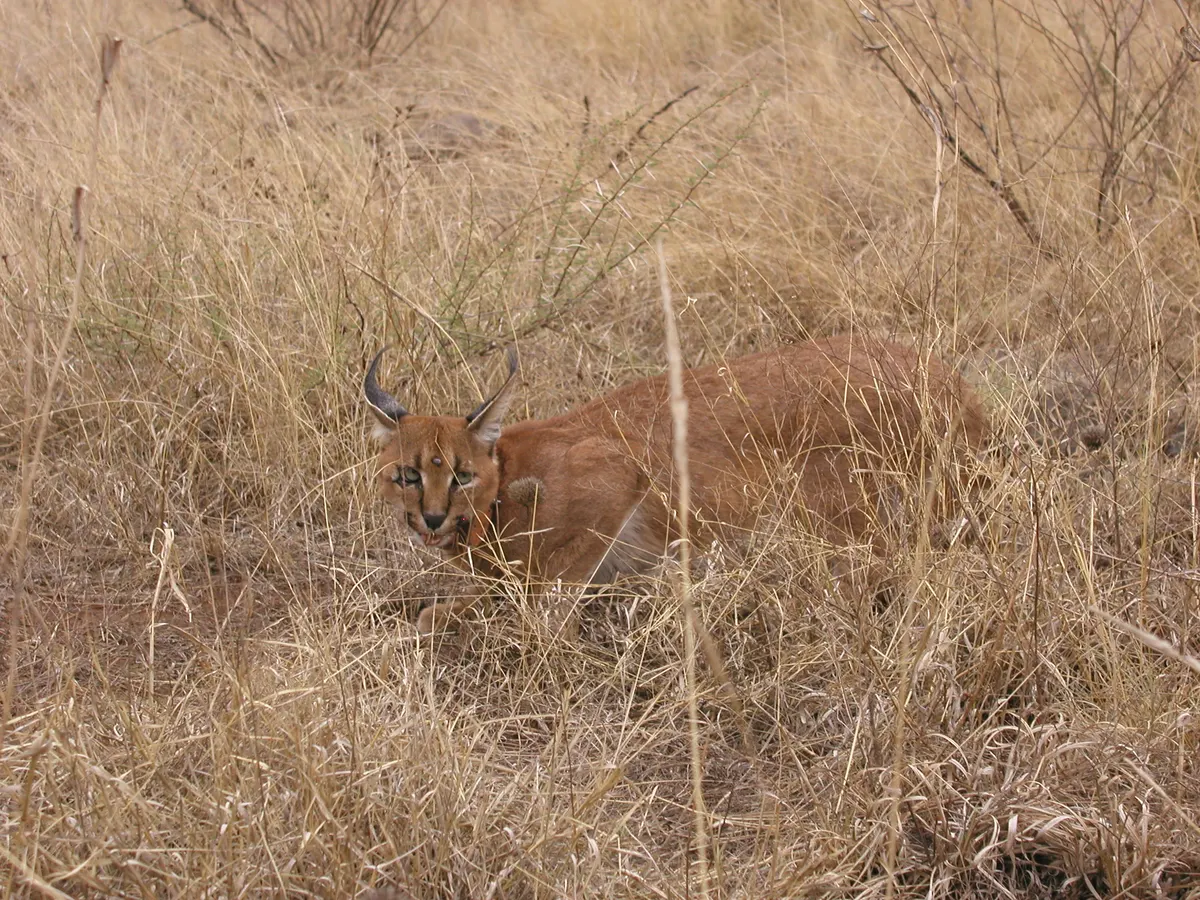
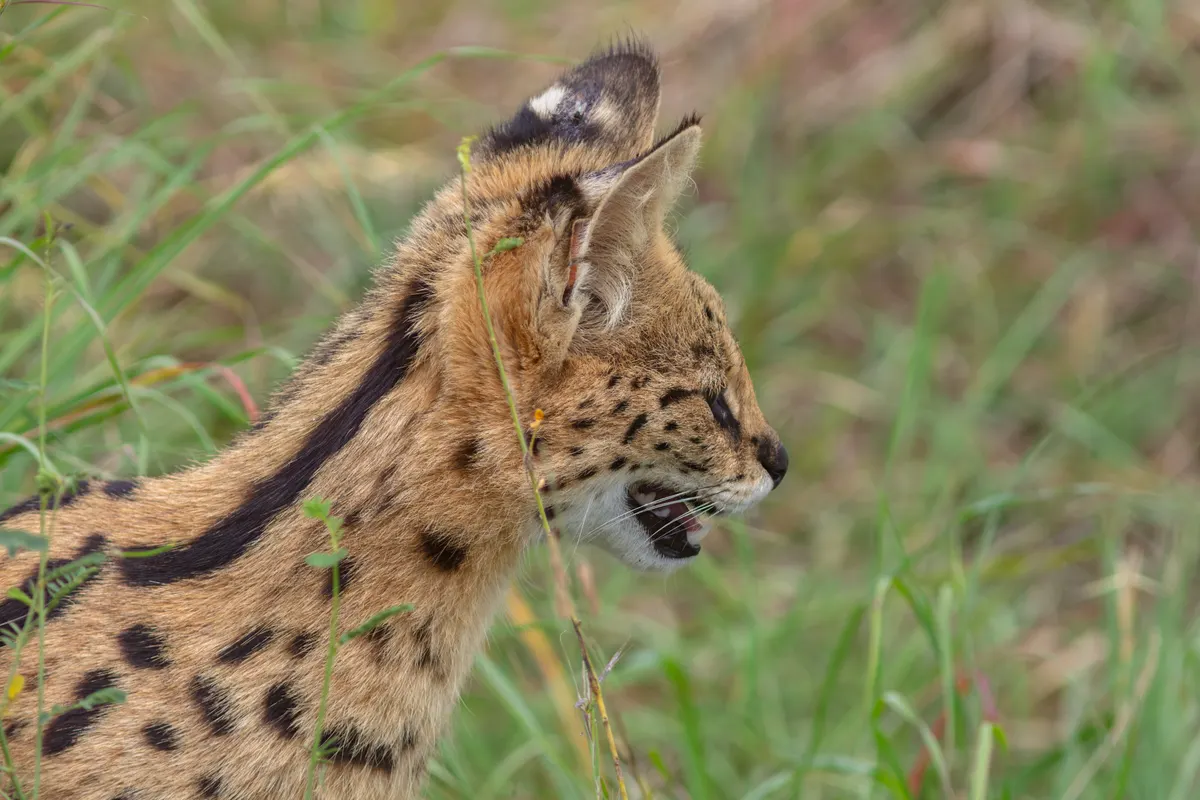
The serval is a slender African cat with the longest legs and largest ears relative to body size of any cat.
MammaliaLeast Concern
Serval
“The serval has the longest legs of any cat relative to its body size, an adaptation for hunting in tall grass.”
The serval (Leptailurus serval) is a slender wild cat of sub-Saharan Africa's wetland-fringed grasslands and savannas. It has the longest legs and largest ears relative to body size of any cat, adaptations that support a high leaping pounce and a hunting success rate of roughly 50 percent. The IUCN lists it as Least Concern with a stable overall population.