
Caracal caracal / Leptailurus serval
Caracal vs Serval
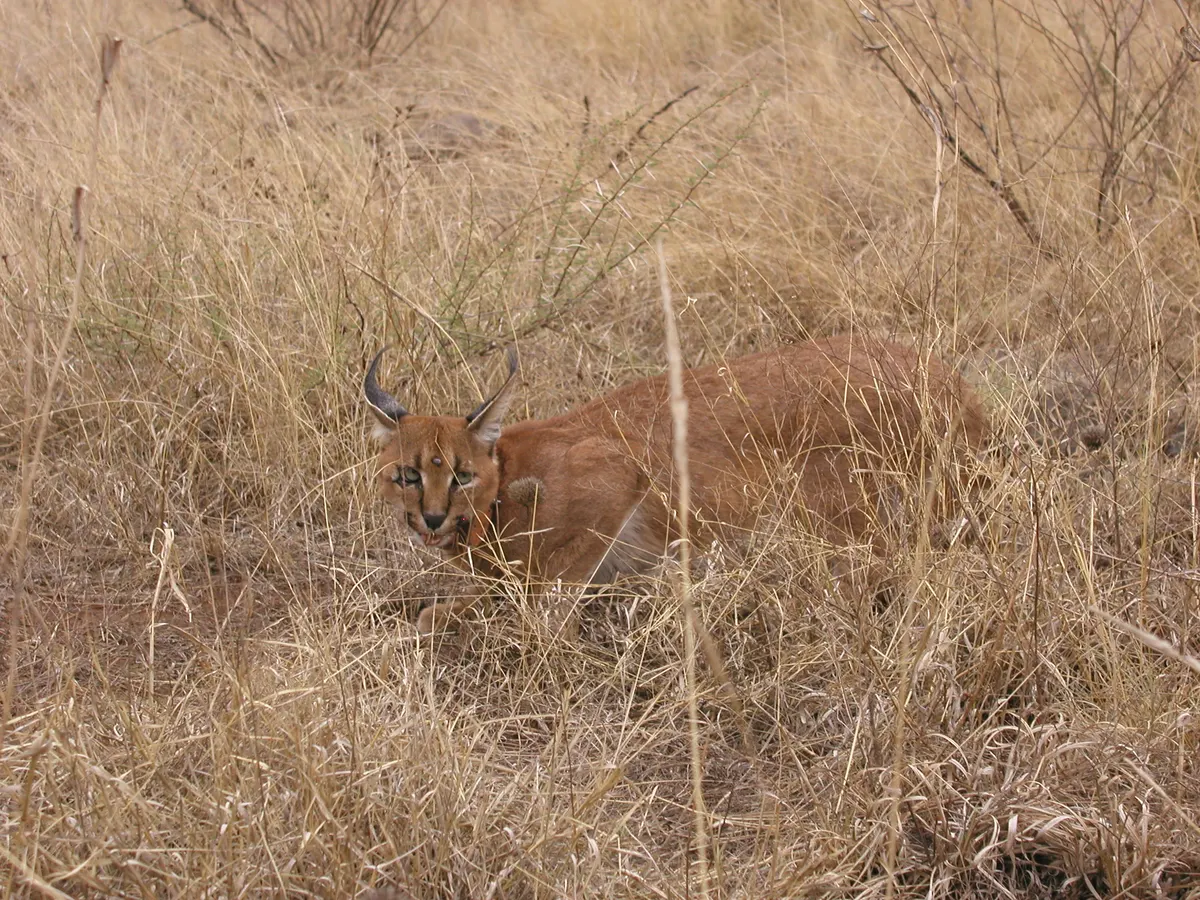
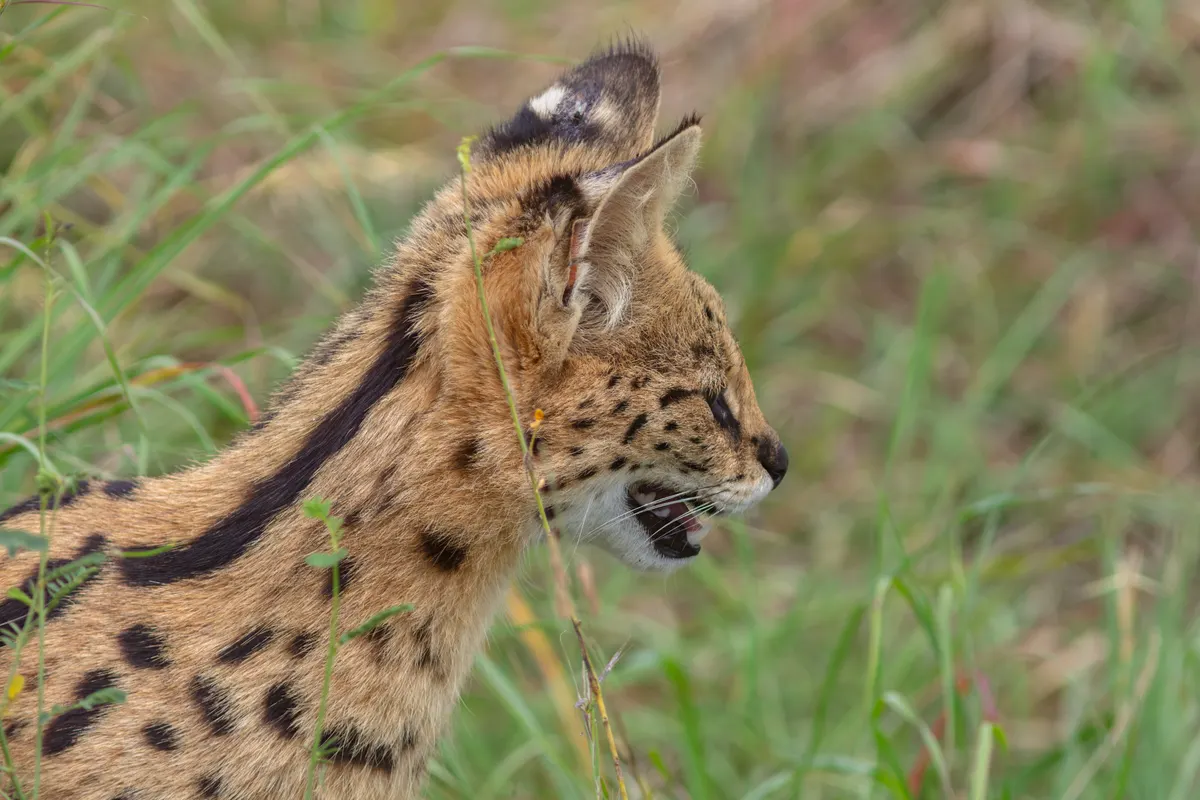
Caracals and servals are medium-sized African cats often confused with each other, but the caracal has plain fur and long black ear tufts while the serval is spotted with very tall legs and huge rounded ears.
By An Nguyen · Updated
At a glance
Published species data from both WildlifeDB profiles, aligned trait by trait. Size metrics highlight the larger value with a relative bar.
- Scientific name
- CaracalCaracal caracal
- ServalLeptailurus serval
- Classification
- CaracalMammalia · Felidae
- ServalMammalia · Felidae
- Native range
- CaracalAfrica, Asia
- ServalAfrica
- Primary habitat
- CaracalGrassland
- ServalGrassland
- Diet
- CaracalCarnivore
- ServalCarnivore
- Typical food
- CaracalRodents, Hares, Hyraxes, Birds, Small antelope
- ServalRodents, Birds, Frogs, Reptiles, Insects
- Body length
- Caracal60 cm – 92 cm
- Serval67 cm – 100 cm
- Shoulder height
- Caracal—
- Serval—
- Weight
- Caracal8 kg – 19 kg
- Serval8 kg – 18 kg
- Top speed
- CaracalFast over short distances; leaps more than 3 m vertically
- ServalFast over short distances
- Wild lifespan
- CaracalAbout 12 years
- ServalAbout 10 years
- Social pattern
- CaracalHunting mainly at night, Leaping to catch birds in flight, Caching or hauling large kills
- ServalHunting mainly at dawn and dusk, Pouncing on prey with a high vertical leap, Rotating the ears to locate hidden prey by sound
- Key adaptations
- CaracalLong black ear tufts used in signalling, Powerful hind limbs built for jumping, Vertical leaps of over 3 metres to swat birds from the air
- ServalLongest legs relative to body size of any cat, Very large ears with acute hearing to detect rodents, High vertical pounce that stuns prey on landing
- Conservation
- CaracalLeast Concern · Unknown
- ServalLeast Concern · Stable
- Reproduction
- CaracalAbout 68 to 81 days (roughly 2.5 months); 1 to 4 kittens (occasionally up to 6)
- ServalAbout 2 to 3 months; 1 to 4 kittens
Ear tufts or spots: the one-glance test
A caracal has a plain reddish or tawny coat and long black tufts on the tips of pointed ears. A serval has a pale coat covered in bold black spots and bars, with very large rounded ears and no long tufts. Coat pattern alone settles it: plain means caracal, spotted means serval.
The tufts are about 4.5 cm long and are thought to work as a signal between caracals. The name itself records them — caracal comes from the Turkish karakulak, "black ear."
Close relatives, not close look-alikes
Both are medium-sized cats in the same evolutionary group of African felids, along with the African golden cat. The serval, Leptailurus serval, is the only living member of its genus. The caracal, Caracal caracal, gives its name to the lineage.
Old names cause some of the confusion. The caracal was once called the "African lynx," but it is not a true lynx; its nearest relatives are the serval and the African golden cat, not the short-tailed Lynx species.
Same weight, very different legs
The two cats are close in length and mass. Caracals measure roughly 60 to 92 cm in head and body length and weigh about 8 to 19 kg. Servals are slightly longer at 67 to 100 cm and weigh a similar 8 to 18 kg.
Height is where they separate. The serval has the longest legs relative to body size of any cat, so it stands noticeably taller on the same body weight. The caracal is stockier and more powerfully built, with heavy hindquarters. Two animals of identical weight can therefore look like different sizes of cat.
Listening for rodents against leaping at birds
Both hunt by stalking close and finishing with a rush or leap; neither is a distance runner. The technique after that differs.
A serval hunts largely by sound. Its huge ears rotate independently to pinpoint a rodent moving through grass or below ground, and it then leaps high and pins the prey with its forepaws on landing. Studies record a hunting success rate near 50 percent, among the highest of any wild cat, and higher still when only rodents are counted.
A caracal is known for explosive vertical leaps of more than three metres to swat birds out of the air with a forepaw. It also relies on acute hearing, helped by large mobile ears, and its muscular build lets it kill prey two to three times its own body mass — well beyond what a serval normally attempts.
Rodent specialist against broad-menu hunter
Both are carnivores taking small prey, but the breadth differs. The serval concentrates on rodents, with birds, frogs, reptiles, and insects filling in; rodents make up the large majority of its diet, and one serval may take thousands in a year.
The caracal's list runs wider: rodents, hares, hyraxes, birds, and small antelope. That range, plus the strength to handle larger prey, is why the two cats can share a landscape without competing directly for the same food.
Wet grassland against dry scrub
The serval favours moist grassland, reed beds, and wetland fringes across sub-Saharan Africa, where tall grass hides abundant rodents and its long neck lets it look over the tops.
The caracal is a dryland cat of savanna, scrub, and semi-desert, and its range is far larger — across Africa, into the Middle East, and through Central and South Asia. A wild caracal in Iran or Saudi Arabia is entirely normal; a wild serval there is not.
Both Least Concern, both traded
Both are listed as Least Concern, and both lose ground to habitat conversion, persecution, and the exotic-pet trade. The serval carries an additional pressure: it is used in breeding Savannah cat hybrids, which sustains demand for wild-caught and captive-bred animals. Historically, caracals were tamed in India and Persia and trained to hunt birds and small game for royalty — an old form of the same trade in a wild cat's usefulness to people.