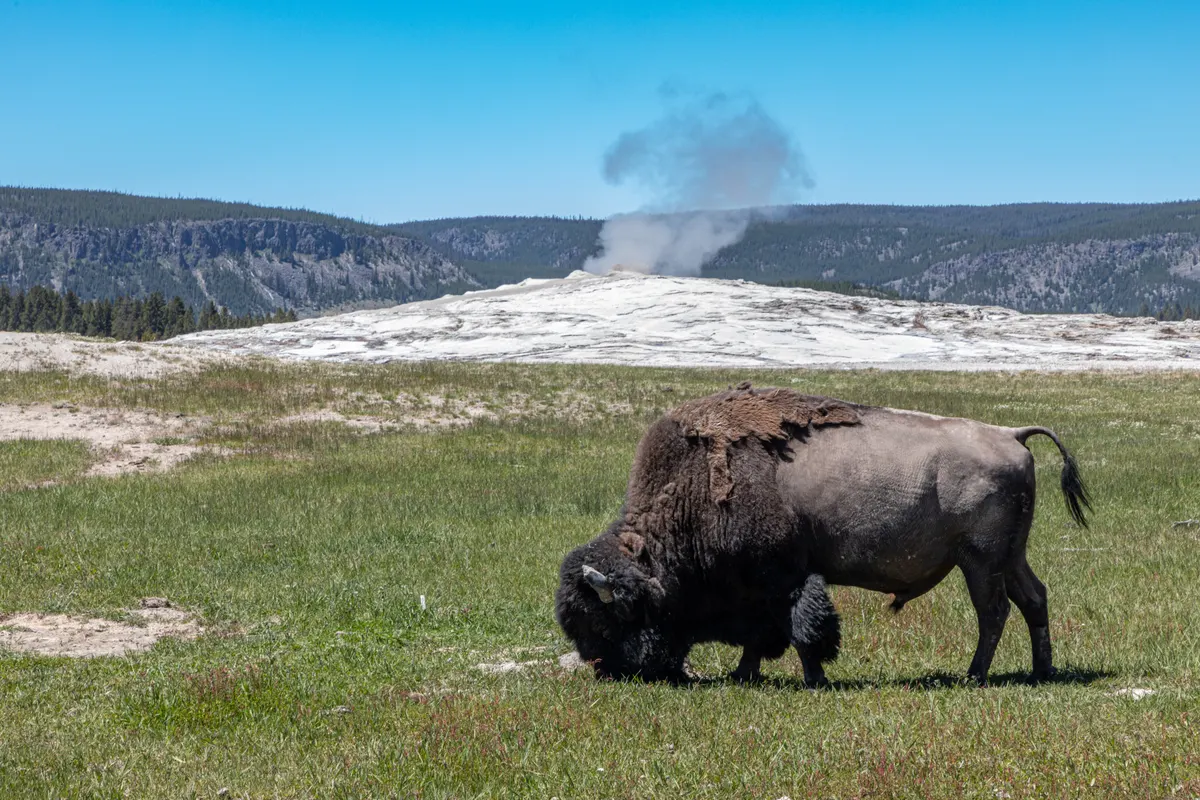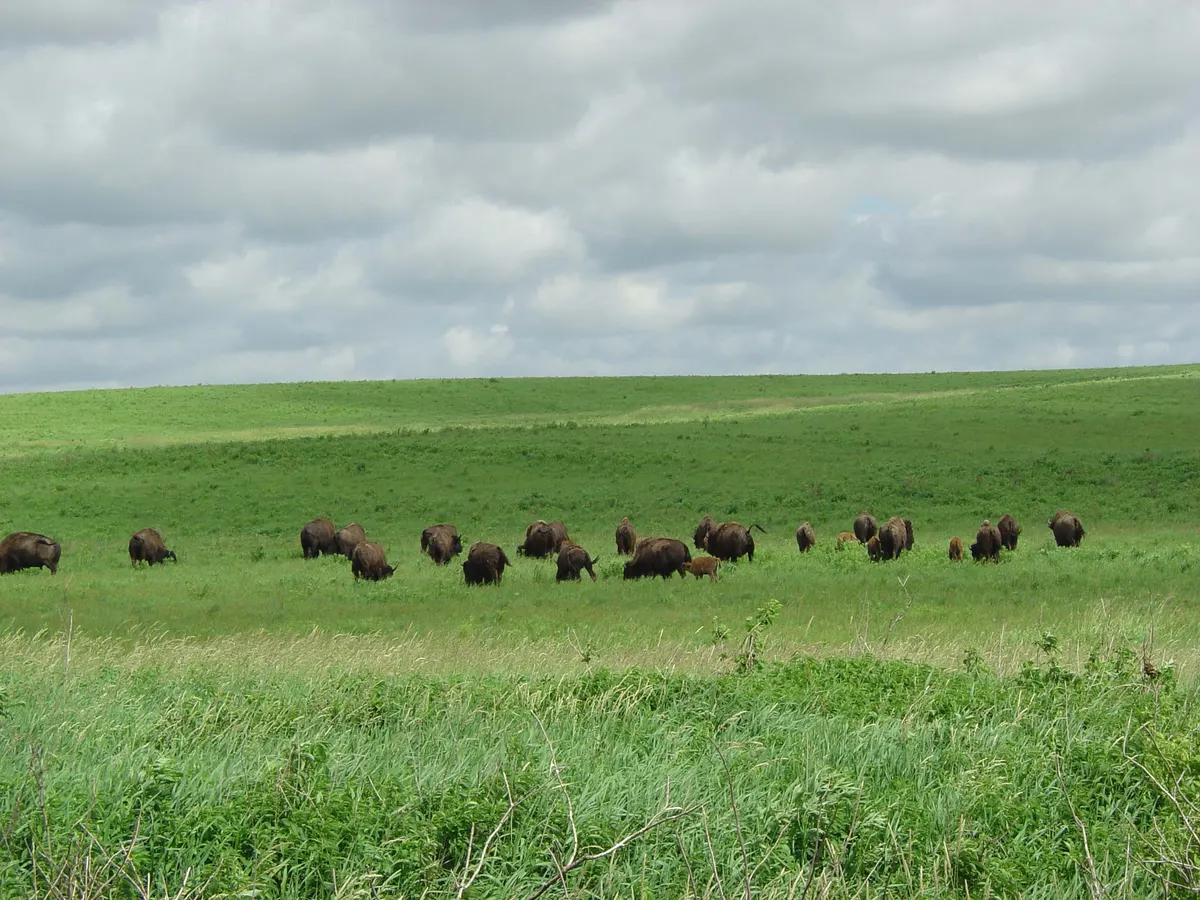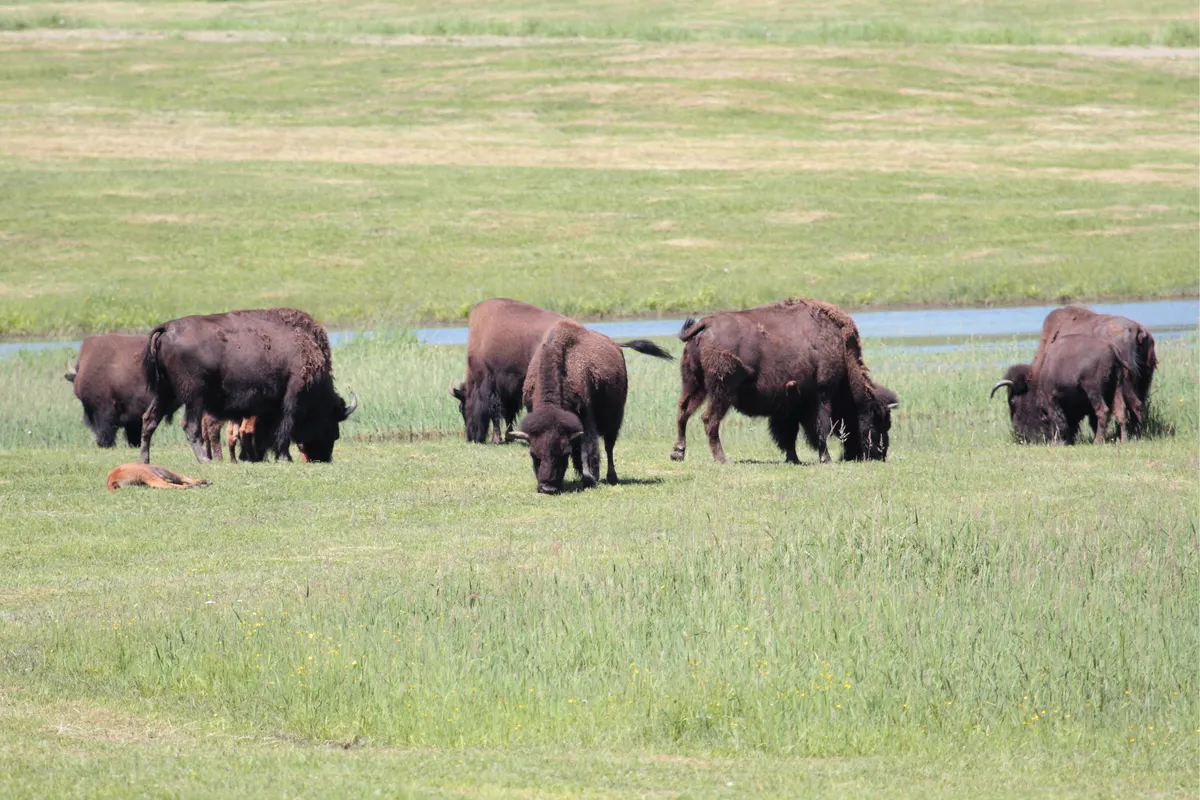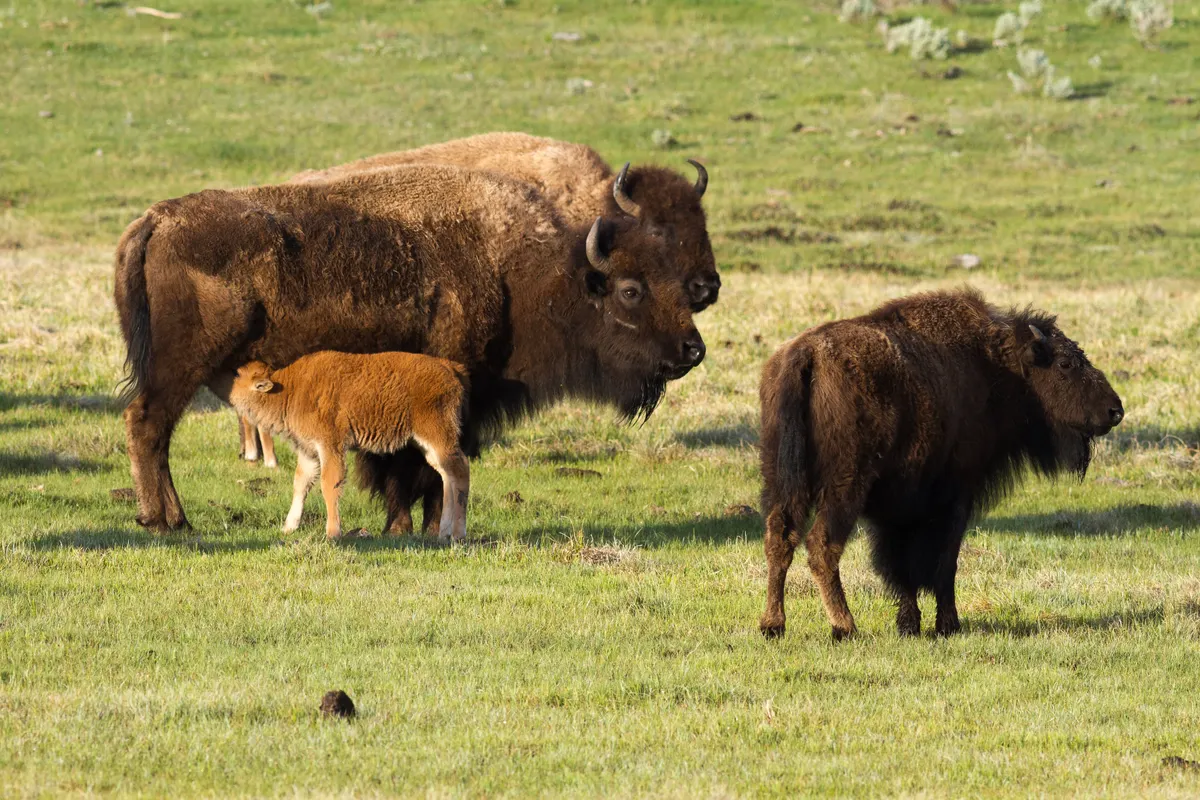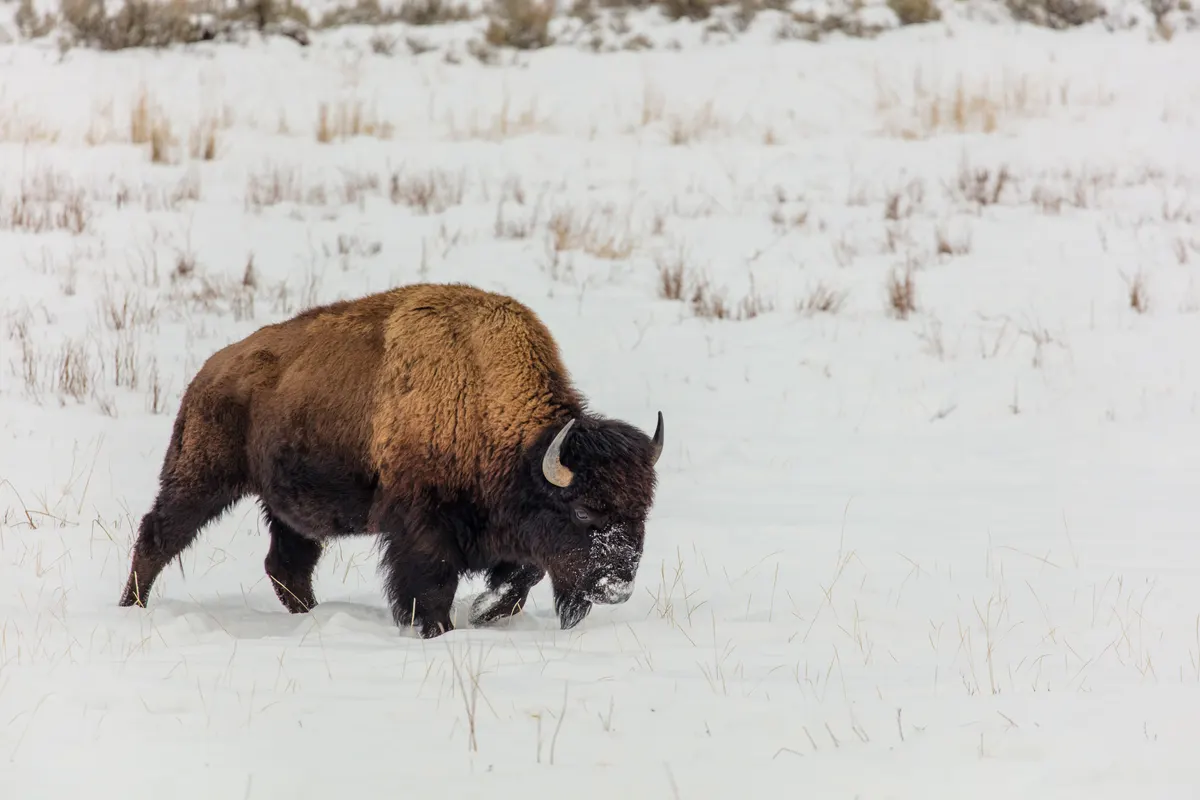
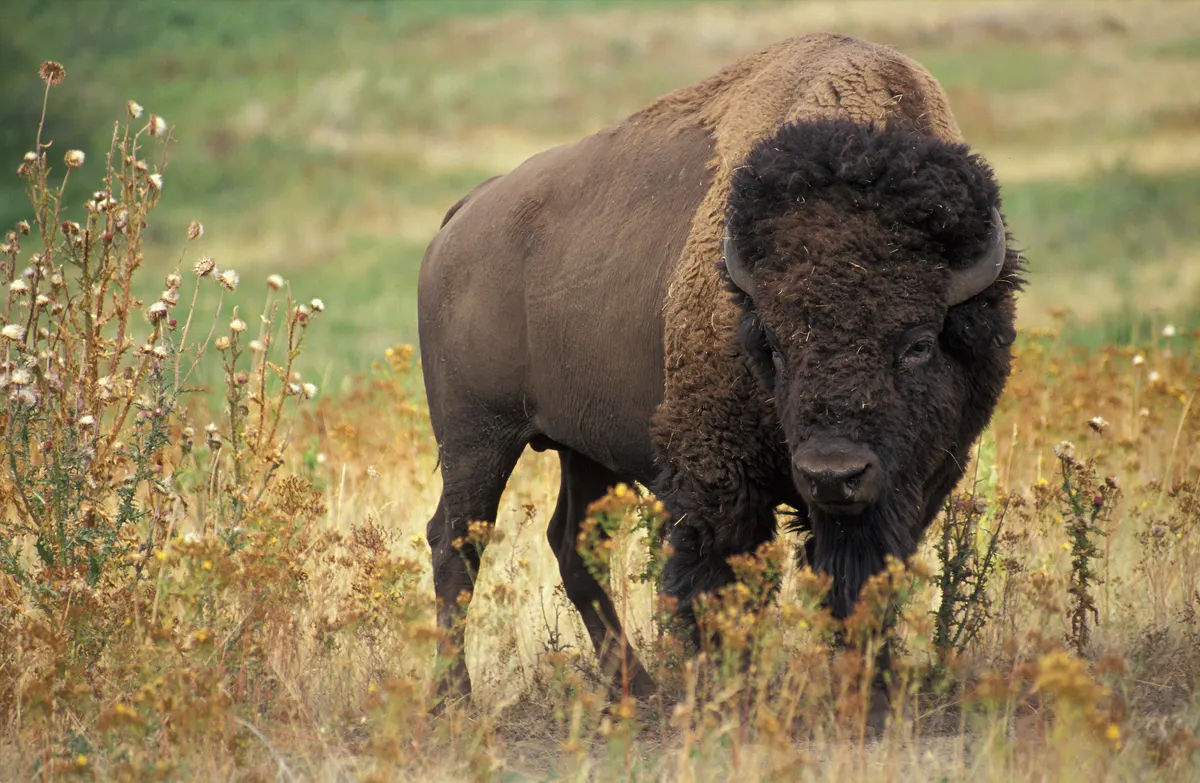
The morphology of the American bison is dominated by its massive forequarters. Adult bulls are truly monolithic, capable of reaching lengths of 12.5 feet, standing up to 6.5 feet at the shoulder, and weighing a staggering 2,200 pounds. Females, or cows, exhibit sexual dimorphism, generally being lighter and smaller but still formidable at up to 1,000 pounds.
The most striking anatomical feature is the hypertrophied shoulder hump. This structure is not a repository for fat, as seen in camels, but rather a massive framework of muscle supported by elongated thoracic vertebrae. These powerful muscles anchor the head, transforming the bison's skull into an immense biological snowplow. During the brutal prairie winters, a bison utilizes a sweeping motion of its head to move feet of packed snow, accessing the dormant grasses buried beneath.
The pelage of the bison is remarkably adapted for extreme thermal regulation. They possess a dense, woolly undercoat overlaid by coarse guard hairs, creating an insulating barrier so efficient that snow can accumulate on their backs without melting from body heat. In the spring, this thick winter coat is shed in heavy clumps to prevent hyperthermia during the blistering summer months. Both sexes are armed with short, sharply curved horns that are never shed; these are utilized for defense against apex predators and, among males, for violent intra-sexual combat during the breeding season.